

 Freedom Index
Listen to the article
The claim that Jews are imperialist “colonisers” isn’t new. It emerged from the Victorian-era antisemitism of an influential English journalist and matured in the early Soviet Union, long before the modern state of Israel was founded. As Paul Johnson (1928–2023), the great historian, observed:
The Soviet campaign against the Jews, after 1967 a permanent feature of the system, was itself conducted under the code-name of anti-Zionism, which became a cover for every variety of anti-Semitism. [The] Leninist theory of imperialism, like Marx’s theory of capitalism, had its roots in anti-Semitic conspiracy theory.
As Johnson showed, the claim that Jews are “imperialists” predated Vladimir Lenin, leader of Soviet Russia from 1917 until his death in 1924. Johnson traces the source of this claim to the English writer and journalist J.A. Hobson, who travelled to South Africa to cover the Boer War in 1899. Hobson, as Johnson relates, regarded Jews as “almost devoid of social morality,” and possessing “a superior calculating intellect” that allows them “to take advantage of every weakness, folly and vice of the society in which he lives.”
In his 1900 work, The War in South Africa: Its Causes and Effects, Hobson blamed the conflict (falsely) on “a small group of international financiers, chiefly German in origin and Jewish by race.” Two years later, in 1902, Hobson expanded on this conspiracy theory in Imperialism: A Study, which argued that international finance—directed by Jews—was “the chief force behind colonies and wars.”
In his own book about imperialism—and its supposedly Jewish causes—Lenin wrote that he’d “made use of the principal English work on imperialism, J.A. Hobson’s book, with all the care that, in my opinion, this work deserves.” As Johnson explains, Hobson’s theory that an international oligarchy of Jewish financiers—the “peculiar race,” in Hobson’s words—was behind all European colonialist projects “became the essence of Lenin’s own” view, expressed to great effect in his above-quoted 1916 work, Imperialism: The Highest Stage of Capitalism.
Keep in mind: This is 32 years before the modern state of Israel came into being. “Leninist theory,” as Johnson notes, subsequently
forms the attitudes of many Third World states toward imperialism and colonialism, as they acquired independence in the 1950s and 1960s. Granted the theory’s antisemitic roots, it was not difficult to fit into it the concept of Zionism as a form of colonialism and the Zionist state as an outpost of imperialism.… That ‘Zionism’ in practice stood for ‘the Jews’ became quickly apparent.
In the 1960s, Yasser Arafat, head of the Palestine Liberation Organisation from 1969 until his death in 2004, repurposed Hobson’s theory to suit his own political objectives. While Hobson had claimed that Jewish financiers were bankrolling the expensive colonial ventures of European governments, Arafat pivoted to the more extreme contention we see in academia today: that Jews have no historical connection to the Land of Israel at all—that they’re simply colonists in Israel, in much the same way as the British were colonists in America, India, and South Africa, among many other places.
While Hobson had claimed that Jews bankrolled the colonialism of European governments, Arafat pivoted to the more extreme contention we see in academia today: that Jews have no historical connection to Israel at all
As support for this claim, Arafat often would say that Jews had dug around the Temple Mount in Jerusalem and found “nothing there.” More recently, Mahmoud Abbas, Arafat’s successor and the president of the Palestinian Authority—now in the twentieth year of his four-year term—has been parroting Arafat, claiming that “Israel dug under the al-Aqsa [mosque]… and they could not find anything.”
This contention was once (properly) seen as outlandish. At the Camp David Summit in 2000, for example, US envoy Dennis Ross cautioned Arafat not to make this sort of frivolous historical argument to Bill Clinton: “If he hears you denying [the Temple’s] existence [in Jerusalem], he will never again take you seriously.” In more recent years, however, the claim that Jews are colonists in Israel has become mainstream on college campuses, at the United Nations, and in many Western media outlets.
But this claim fundamentally inverts the concept of colonisation and ignores the historical evidence—casting the Jewish people, who have ancient and continuous ties to the land, as colonists while attributing indigenous status to Muslim Arab populations whose presence stems only from later conquests of the region.
Colonialism is a political and economic process by which one nation exerts its dominance over foreign territories and populations. There are two kinds of colonialism: extractive colonialism and settler colonialism. Extractive colonialism occurs when a foreign nation exploits a native population merely for the purpose of enriching or empowering its own empire. Settler colonialism, by contrast, occurs when a foreign population immigrates to a new land and, once there, displaces or dominates the indigenous people of that land.
The essential element of both categories of colonialism is the foreignness of the colonising population. The colonists don’t speak the land’s language, practise its religion, or share any of its cultural heritage. They also carry the names of their own ancestors, and they typically pass those naming conventions down to their descendants.
Podcast #332: The Historical Case for Israel
In a new book, US District Court Judge Roy Altman traces Jews’ indigenous presence in the holy land over the last 3,231 years.
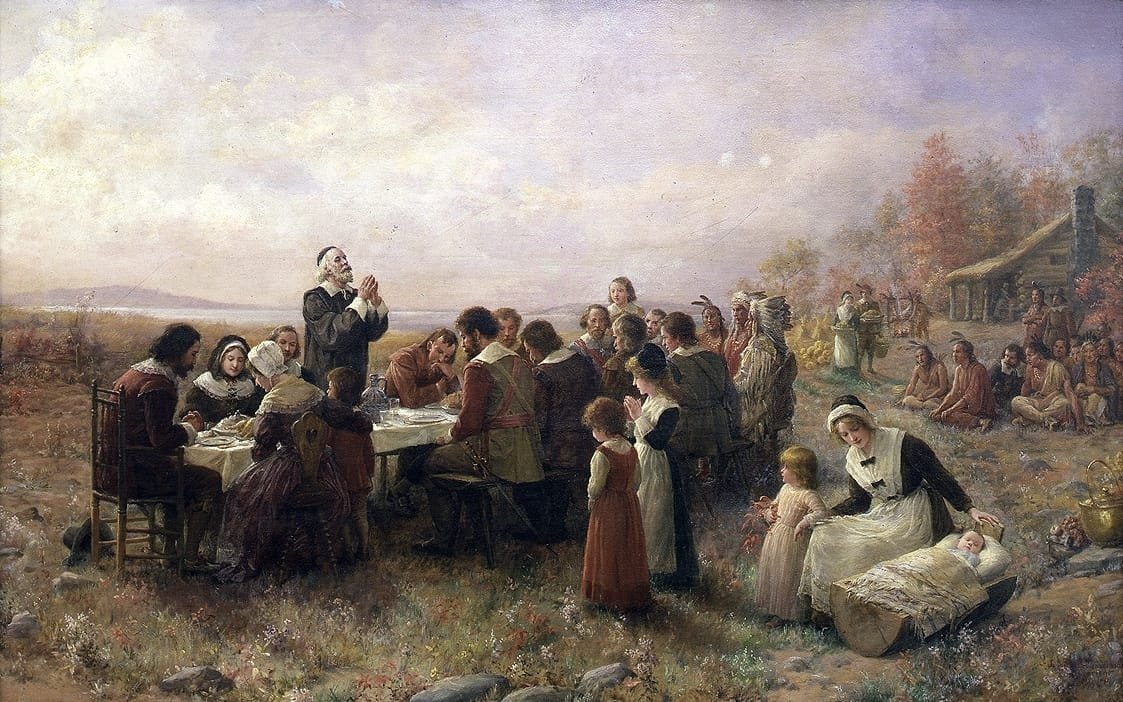
All well-accepted examples of colonisation meet this basic definition. For instance, England colonised what is now the United States by sending its citizens to distant shores (including a place now called New England)—lands on which no English person had ever set foot before—with the hope of finding raw materials that could be sent back across the pond to enrich the British Empire. This aspect of America’s colonisation meets the definition of what today we would call extractive colonialism. Before long, however, English Puritans were coming by the tens of thousands—fleeing the tyranny of Charles I and looking for a safe place to practise their religion freely. This aspect of American colonisation is an example of settler colonialism.
In either case, before they came to America, English citizens had never spoken any of America’s languages, practised its religions, nor shared in any material aspects of its culture. And, when they got here, they carried English (not Native American) names—like John Winthrop, Walter Raleigh, and Francis Drake—and they passed these names on to their descendants such that, even generations later, the English colonists in America still bore English names (like George Washington, John Adams, and Thomas Jefferson).
Take another example. The Spanish colonisation of the Americas—a prototype of the extractive model—colonised Central and South America by sending Spanish conquistadores to (what is now) Mexico, Peru, and Colombia to subdue the indigenous populations there and steal the gold and silver deposits that would finance the Spanish Empire’s global ambitions. To read Bernal Díaz del Castillo’s account of Spain’s conquest of Mexico is to understand what a colonist truly looks like: an outsider with no historical, linguistic, cultural, or religious connection to the land he’s conquering.
Dozens of similar examples abound. The case of Algeria is particularly relevant because many Palestinian Arabs (and their supporters) cite the ultimately successful national uprising against French colonial rule in Algeria as a kind of model for the Palestinian cause. That uprising took more than seven years (from late 1954 to early 1962), and resulted in the deaths of more than a million Algerian civilians. The Algerian National Liberation Front never won a battle—but, when it was all said and done, the French army packed up and moved over half a million French nationals back to France.
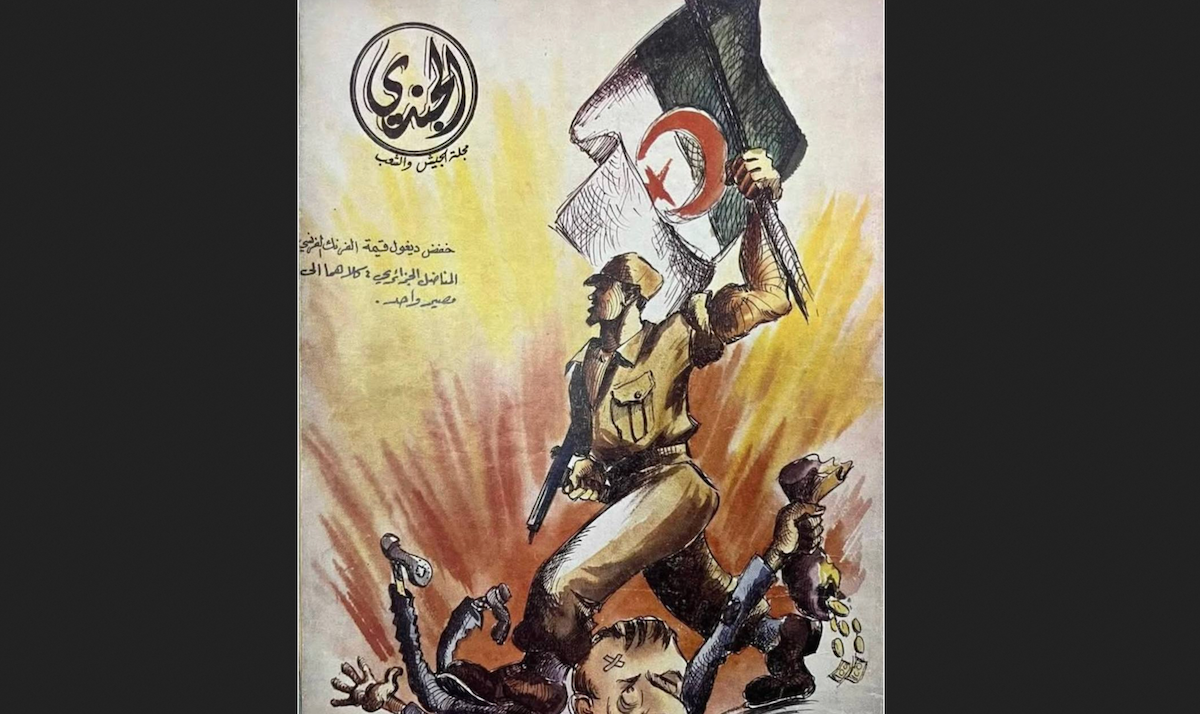
Similarly, the fact that Palestinians are weaker than Israel and that thousands of Palestinians have suffered and died (and will continue to suffer and die) in their forever war with the Jewish State—indeed, the fact that the war is protracted and indefinite—is seen as precisely the point: To defeat a militarily superior “colonist,” the argument goes, the indigenous population must only outlast him. Outlasting him isn’t easy, of course. But if a native population struggles long enough, the Palestinians believe, the foreign oppressors will ultimately tire of fighting (and dying) on foreign soil and, cutting their losses, will turn around and go home—as the French did in Algeria.
The problem with this Palestinian narrative is that it ignores the available evidence—the basic facts on the ground—which would lead any neutral observer to understand that Israel meets none of the commonly accepted definitions of colonisation. Israelis aren’t foreign to the land they now govern
Jews, not just in Israel, but all over the world, share a common DNA ancestry—DNA that, as dozens of genetic studies have shown, spread from the Levant (where Israel is today) thousands of years ago. Israeli Jews also speak the same language, practise the same religion, and share a deep cultural and historical connection to the Jews who have lived continuously in Israel for thousands of years.
Indeed, even today, the Jews of Israel pass on to their children the very same names that, according to the archaeological record, have been given to Jewish children in the land of Israel for millennia. No less significantly, the state of Israel wasn’t at its founding (and isn’t today) a colony of any foreign government.
As Golda Meir once quipped to then-Senator Joe Biden, Israelis have a secret weapon: “We have nowhere else to go.” Israel, in other words, wasn’t created to enrich (or expand the influence of) any European power. It thus cannot be—and has never been—a colonialist state.
History itself makes plain that, if anyone has “colonised” the Land of Israel, it has been the succession of Muslim armies from Arabia, Egypt, Damascus, Baghdad, and Turkey (not to mention Christian Crusaders, Roman and Byzantine emperors, and British colonists) that ruled Jerusalem as foreign occupiers for almost two millennia.
Throughout all these occupations, thousands of Jews remained in the Land of Israel. We know this because archaeologists in Israel have found Jewish synagogues and cemeteries dating all the way back to the 1st century AD. And new discoveries are often being made. In 2025, for instance, archaeologists excavated a Jewish synagogue in the Yehudiya Nature Reserve, located in Israel’s Golan Heights, dating back to the 6th century AD.
We know it because, when the Arabs built the Dome of the Rock in 691 AD, it was maintained for years by 300 black slaves, 20 Jewish servants, and 10 Christians.
We know it because the Seljuk Turks (whose empire would envelop the entire region during the 11th century) tell us that, in the AD 940s, the Jewish community of Jerusalem had split in two—with the followers of the traditional scholar-judges (called gaons) on one side and the Karaites (a novel sect whose members rejected any law but the Torah and who believed in a return to Jewish sovereignty in Israel) on the other.
We know it because, in the years leading up to AD 1011, the Fatimid occupiers of Israel allowed their Jewish subjects to build a synagogue on the Mount of Olives, to maintain a rabbinic academy in Jerusalem, and to pray at the Eastern Wall of the Temple Mount.
We know it because occupying Muslim forces passed an ever-evolving series of laws addressing the rights of their Jewish subjects. In AD 1266, for instance, the Arabs forbade the Jews of Israel from entering the Cave of Machpelah, in the foothills of Hebron, where the Patriarchs are buried—and where King David was anointed—to pray.
We know it because of a long litany of Muslim massacres against Jews in Israel—the most notorious coming in AD 1518, when occupying Ottomans slaughtered hundreds of Hebron’s Jews.
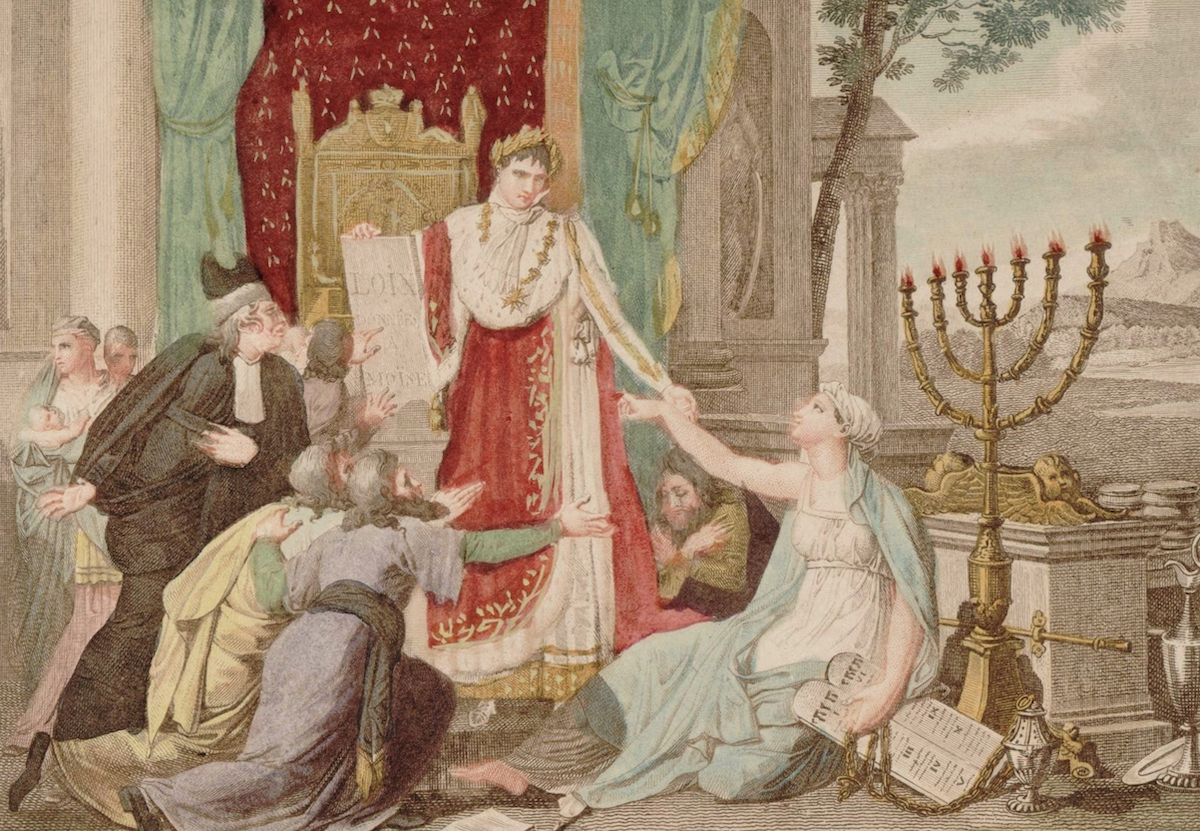
We know it also because, after Napoleon Bonaparte won Egypt for France at the Battle of the Pyramids in 1798, he marched his army through Gaza and up toward Jerusalem, where he found a mostly desolate country, ignored by Ottoman occupiers and populated mainly by small communities of Jews, Christians, and Bedouins. On March 18, 1799, Napoleon laid siege to Acre—then under the command of an Ottoman dictator who called himself “the Butcher” and whose chief minister was a native-born Jewish man named Haim Farhi. Napoleon took Acre after defeating the Butcher’s army of foreign mercenaries (principally Albanians, Afghans, and Turks) before turning to Jerusalem, on the outskirts of which he issued his now-famous “Proclamation to the Jews” of April 20, 1799:
Bonaparte, commander in chief of the French Republic in Africa and Asia, to the rightful heirs of Palestine—the unique nation of Jews who have been deprived of the land of your fathers by thousands of years of lust for conquest and tyranny. Arise then with gladness, ye exiled, and take unto yourselves Israel’s patrimony. The young army has made Jerusalem my headquarters and will within a few days transfer to Damascus so you can remain there [in Jerusalem] as ruler.
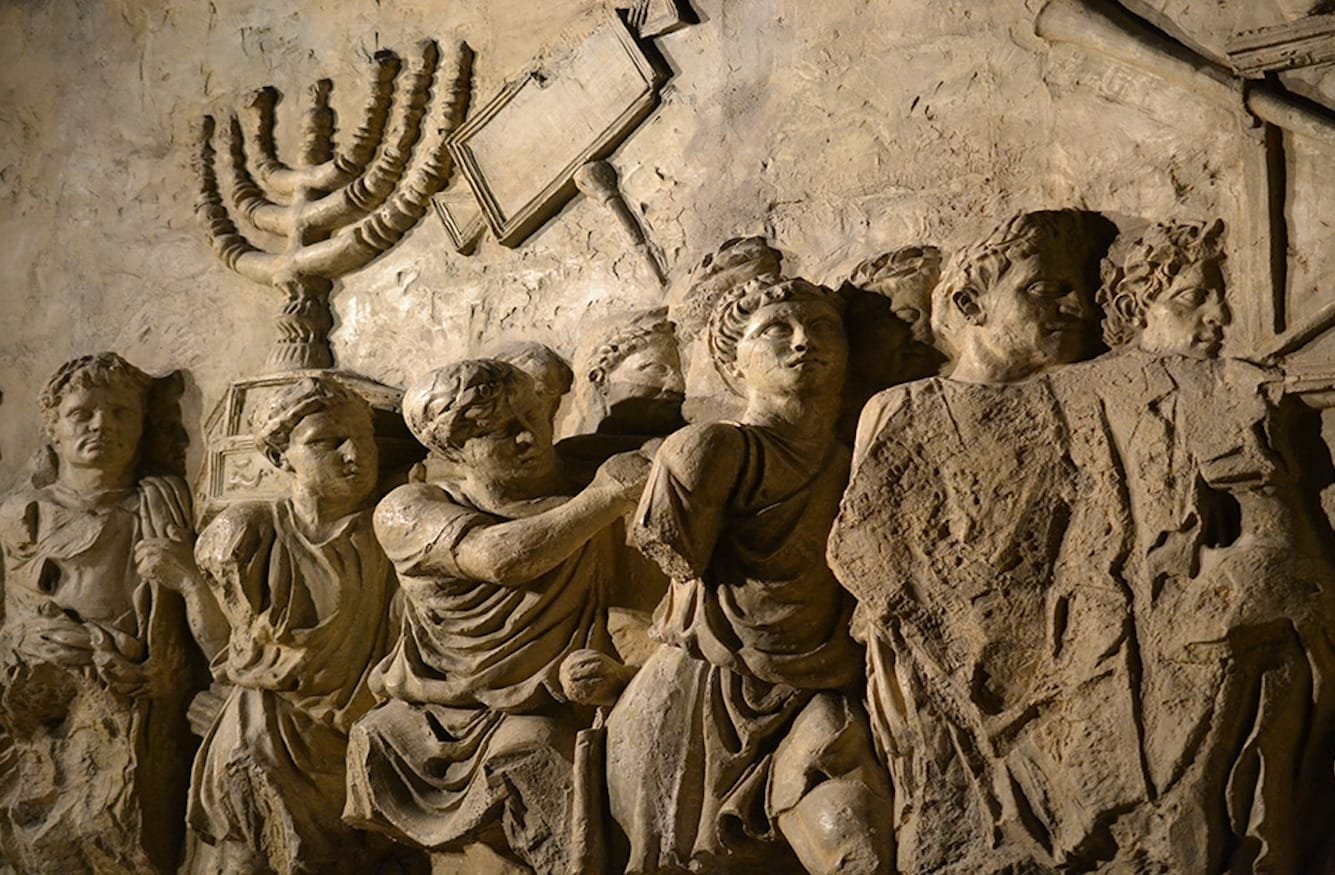
Since the destruction of the Second Temple in AD 70, the Jews of Israel pined, like their cousins in the diaspora, for the “redemption of Israel.” For centuries before the reconstitution of Jewish sovereignty, in fact, Jews returned each year to the Temple Mount on the anniversary of its destruction (the Ninth of Av in the Jewish calendar) and, praying at the Western (or Wailing) Wall, would rend their clothes. Witnessing this sorry scene in the 4th century, St. Jerome wrote: “On the day of the Destruction of Jerusalem, you see a sad people coming to visit, decrepit little women and old men encumbered with rags and years” who “weep over the ruins of the Temple.”
Judah Halevi, the great Spanish rabbi, wrote in 1141:
O [Jerusalem] city of the world, most chastely fair,
In the far West, behold I sigh for thee.
Oh! Had I eagles’ wings, I’d fly to thee.
And with my falling tears make moist thine earth…
When I dream of the return of thy captivity,
I am a harp for thy songs.
And every year at the end of their Passover Seder, Jews the world over would sing—then as now—the ancient refrain: “Next year in Jerusalem!”
The earliest textual evidence we have is the Merneptah Stele, a granite slab from 1208 BC inscribed with an account of the pharaoh Merneptah’s military victories—including his campaign against Israel. If you go back to the period of the Stele’s creation 3,200 years ago, and look at all the different peoples who existed at that time, there is only one people who still speaks the same language, who still practises the same religion, who still lives (and governs) in the same land as it then did—and those are the Jews who live and govern in Israel today.
So, if we care about the rights of indigenous peoples—if we care at all about decolonisation projects that liberate native populations from the imperial forces that have occupied their homelands for centuries—we should recognise that the story of modern-day Israel represents one of the most successful decolonisation projects in human history.
And that was once the view even of Arab leaders. In March 1918, for instance, after the fall of the Ottoman Empire, King Hussein—leader of the Arab armies that fought, together with T.E. Lawrence (of “Lawrence of Arabia” fame), to dismantle Ottoman rule in the Middle East—penned an op-ed in the Al Qibla newspaper. In it, he wrote that “the country [Israel] was for its original sons [the Jews] a sacred and beloved homeland,” and that “the return of these exiles to their homeland” would be beneficial to the Arab inhabitants of the region.
Nine months later, in December 1918, Hussein’s son, Faisal I, who would become the first king of Iraq, held a banquet in Jerusalem. At that event, Faisal gave a toast, toward the end of which he said, “No true Arab can be suspicious or afraid of Jewish nationalism.… We are demanding Arab freedom and we would show ourselves unworthy of it, if we did not now, as I do, say to the Jews—welcome back home.”
Prince Faisal would later send a letter to US Supreme Court Justice Felix Frankfurter—who, like his friend and fellow justice, Louis Brandeis, was a passionate Zionist—expressing his strong support for the Zionist cause.
That’s all unsurprising. The Quran itself makes clear that Allah promised Israel to the Jewish people: “And remember,” the Quran says, “when Moses said to his people, ‘O my people! call to mind the goodness of God towards you when he appointed Prophets among you, and appointed you kings, and gave you what never had been given before to any human beings: Enter, O my people! the holy land which God hath destined for you.’”
This text is adapted from the author’s newly published book, Israel on Trial: Examining the History, the Evidence, and the Law. Copyright © 2026 by Roy K. Altman. Reprinted in adapted form with the permission of Advantage Books. The views expressed in this article are the author’s alone and are not those of the federal judiciary.
Quillette invites thoughtful responses to its essays.
Selected responses are published once per week as part of a curated Letters to the Editor feature. If selected, letters appear under the contributor’s real name and may be edited for clarity and length.
To submit a letter for consideration, please email [email protected].
Read the full article here
Fact Checker
Verify the accuracy of this article using AI-powered analysis and real-time sources.