

 Freedom Index
Listen to the article
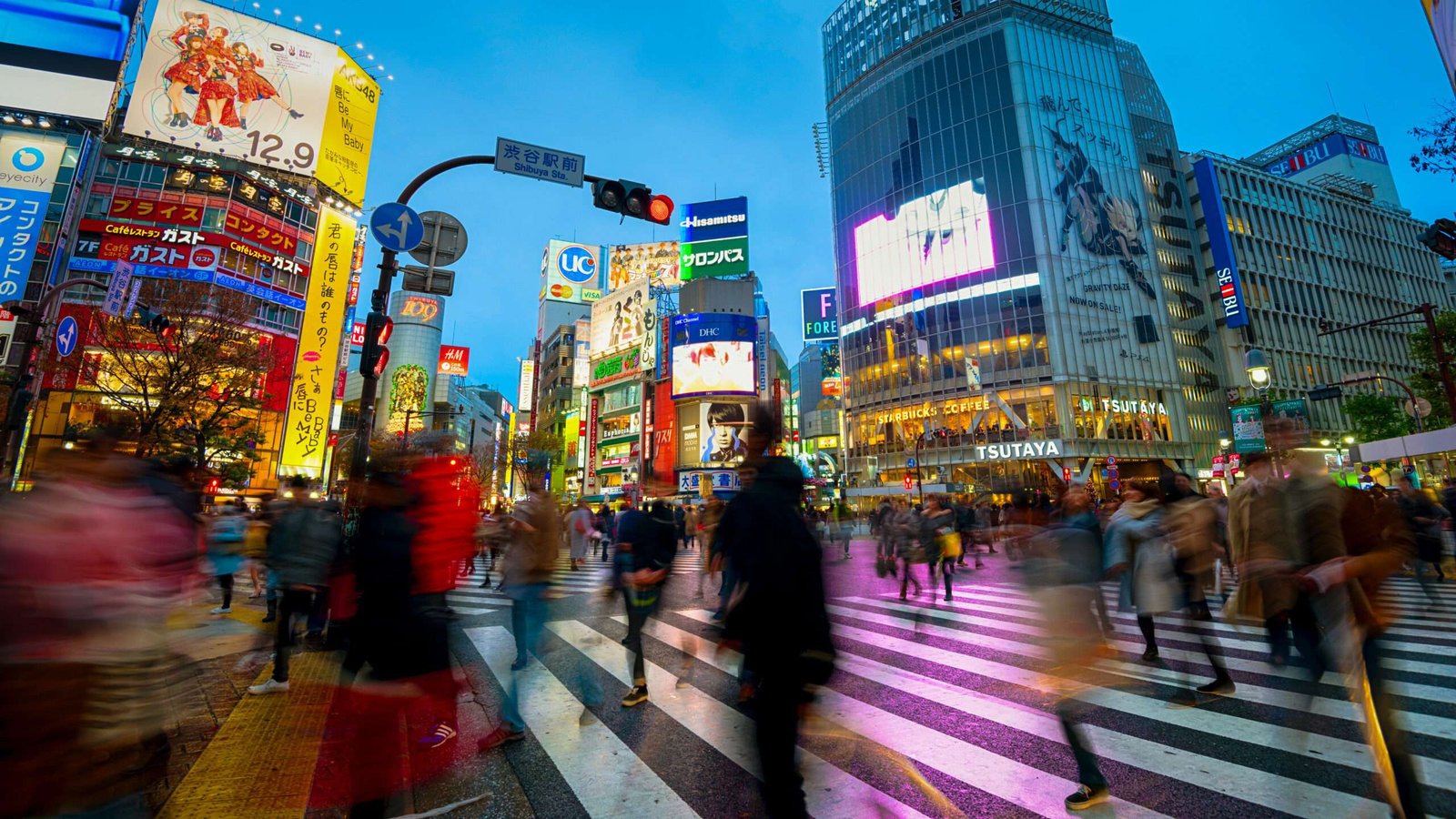
After a trip to Japan, tourists often return dazzled by the beauty of the land, the politeness of the people, the safety of the cities, the world-class transportation systems, and the delicious food. Many also come away with the impression that Japan enjoys a high degree of economic and personal freedom. Construction flourishes. Businesses thrive. Goods from all over the world are available, and shopping seems to be a national pastime. Homeless people are nowhere to be seen. People travel freely throughout the country.
But behind Japan’s economic success lies a government and a legal system that clearly prioritize social stability and group harmony over individual rights.
The Japanese Constitution, drafted at the end of World War II, derives much of its wording from the U.S. Bill of Rights. It guarantees freedom of speech, press, religion, and assembly, along with trial by jury, property rights, universal suffrage by secret ballot, and freedom from illegal search and seizure. It also guarantees equality under the law, regardless of “race, creed, sex, social status, or family origin.” Slavery and torture are banned, as are censorship and invasions of privacy. There is a strict separation of religion and government. A warrant is required to arrest someone, unless the person is caught in the act of committing a crime. And people don’t have to testify against themselves.
The Constitution’s support of individual rights is imperfect, however. For example, it defines marriage as being based only on the “mutual consent of both sexes.” Eminent domain is legal. Though homeschooling is beginning to emerge, nine years of state-organized, tax-funded education are mandatory. And one curious clause, Article 27, says, “All people shall have the right and the obligation to work”—though enforcement of that obligation is unclear in practice.
There are laws that severely limit individual freedoms, based on a desire strongly held by most Japanese people to maintain a peaceful, cooperative, safe society. Transactions between people must be peaceable, meaning they must not impose coercive effects on third parties. But it is in the Japanese definition of “peaceable” that we find the most restrictions on free human action.
“Group harmony” is a fundamental moral imperative in this country, to the extent that a popular adage says, “The nail that sticks out gets hammered down.” What counts as socially acceptable is far more widely and uniformly agreed upon in Japan than in the U.S. If the effect of your personal action runs against the social consensus, the result is at best social ostracism, and at worst fines or imprisonment. As a basic social principle, group harmony leads people to accept much more state control than Americans would tolerate.
I asked five Japanese citizens what they think about some key libertarian issues: same-sex marriage, drugs, guns, and police power. Their answers reveal that, at least for the people I talked to, certain restrictions on individual liberty are accepted, if not actually valued.
First, same-sex marriage is not legal, although there are lawsuits challenging this. The younger Japanese people I spoke with were generally accepting of same-sex marriage, though they still framed the issue through social and family expectations. Keiko, a 20-year-old law student, tells me, “Homosexuality has a long history in Japan. I think it’s fine. It’s good to leave descendents, but not mandatory.” For Mariko, a 23-year-old university student, the issue is more practical: “It’s sad that you can’t inherit things from the person you love.”
Japan’s drug laws are far less tolerant. There are harsh penalties, including prison and hard labor, for use or possession of marijuana or any more potent drug. Even some over-the-counter drugs available in the U.S., such as Advil and Sudafed, are banned and can get you kicked out of the country.
“There is no place in our society for such poison,” says Himari, a 40-year-old 3D graphics designer. “I trust the government’s definition of which substances are healthy and which are not.”
“I hear that marijuana is bad for your health. But then so is tobacco. And secondhand smoke harms people,” Mariko adds.
Gun ownership is treated with similar suspicion. There is no equivalent of the U.S. Second Amendment; civilian ownership of handguns is simply prohibited. Rifles and shotguns are available for hunting or sport, but are extremely difficult to get. Haruto, a 45-year-old man who runs a café and bar, says, “We Japanese see no need for weapons.” Keiko is blunter: “No! Dangerous! We are a peace-loving society.”
It is true that Japan is a country free of mass shootings. Their homicide rate is 80 percent lower than the U.S. rate. But Chikako, a 63-year-old housewife, points out, “Not having guns doesn’t prevent murder. People use knives or strangulation.” Last month, for example, a mother and daughter were found stabbed to death in their home.
Regarding police power, although the Constitution guarantees one’s right to remain silent and to retain counsel if arrested, police are not required to stop questioning when the suspect claims these rights. The current law allows police to hold someone for 23 days without filing a charge and to continue questioning throughout that period. Statistics suggest that more than half of these interrogations result in self-incriminating statements or confessions. This matters all the more in a criminal justice system known for conviction rates above 99 percent. Further, there are stop-and-frisk laws that make you liable to be searched at any time. Foreigners are especially vulnerable to this because drug enforcement is so strict, and police assume drugs will enter the country carried by foreigners.
“I don’t like the feeling of society controlling me, but some people need control,” says Taiga, a 40-year-old oil company employee. “Police sometimes abuse their power, but we can’t be lenient with criminals. And the government thinks this kind of police power is necessary.”
To me, the defining feature of Japanese society is its reliance on the principle of non-disturbance of others. This is so basic a public value that it is enshrined in its Constitution: “The peoples’ right to life, liberty and the pursuit of happiness shall, to the extent that it does not interfere with the public welfare, be the supreme consideration in legislation.” That qualification makes the difference between liberty in the U.S. and in Japan. If an action is deemed by society to act against “public welfare,” even if it’s something we would consider victimless, then it is forbidden. Though Japan has many admirable qualities, this willingness to put public order above individual freedom makes it far from a libertarian paradise.
Read the full article here
Fact Checker
Verify the accuracy of this article using AI-powered analysis and real-time sources.