

 Freedom Index
Listen to the article
I.
Scene One: My father is shaving. I’m thirteen and watching him drag his straight razor across his face. We’d been discussing happiness in class, so it occurred to me to ask him if he was happy. He was a nice man and an indulgent parent, who entertained all manner of questions from his endlessly curious son over the years. But on this occasion, he put down his razor, turned to me and said, “Son, a man doesn’t have time to ask himself such questions. A man just does what needs doing.”
Scene Two comes courtesy of a former academic peer, who shared it before a faculty meeting. The previous night, he and his wife had words over a dirty dish he’d left in the sink. She began by pointing out that it required but a few seconds to rinse the dish and place it in the dishwasher. He apologised and headed for the living room, but she had more to say. “You know,” she began, “I’ve told you about leaving dishes in the sink before. That you keep doing it makes me think you don’t respect me as a partner or put my priorities on par with your own.” He apologised again, promised to do better, and sat down on the sofa. The “finality” of this move (as she put it) only annoyed her more. “As smart as you are,” she continued, “you clearly have no emotional intelligence.” He asked if she might be overreacting, and she became enraged. “So you think,” she persisted, her voice rising, “that the fault lies with my hypersensitivity rather than your disregard for my feelings?” She accused him of gaslighting and refusing to validate her. This went on until she announced that she lacked the emotional energy to continue and was heading to bed, where she expected to sleep alone.
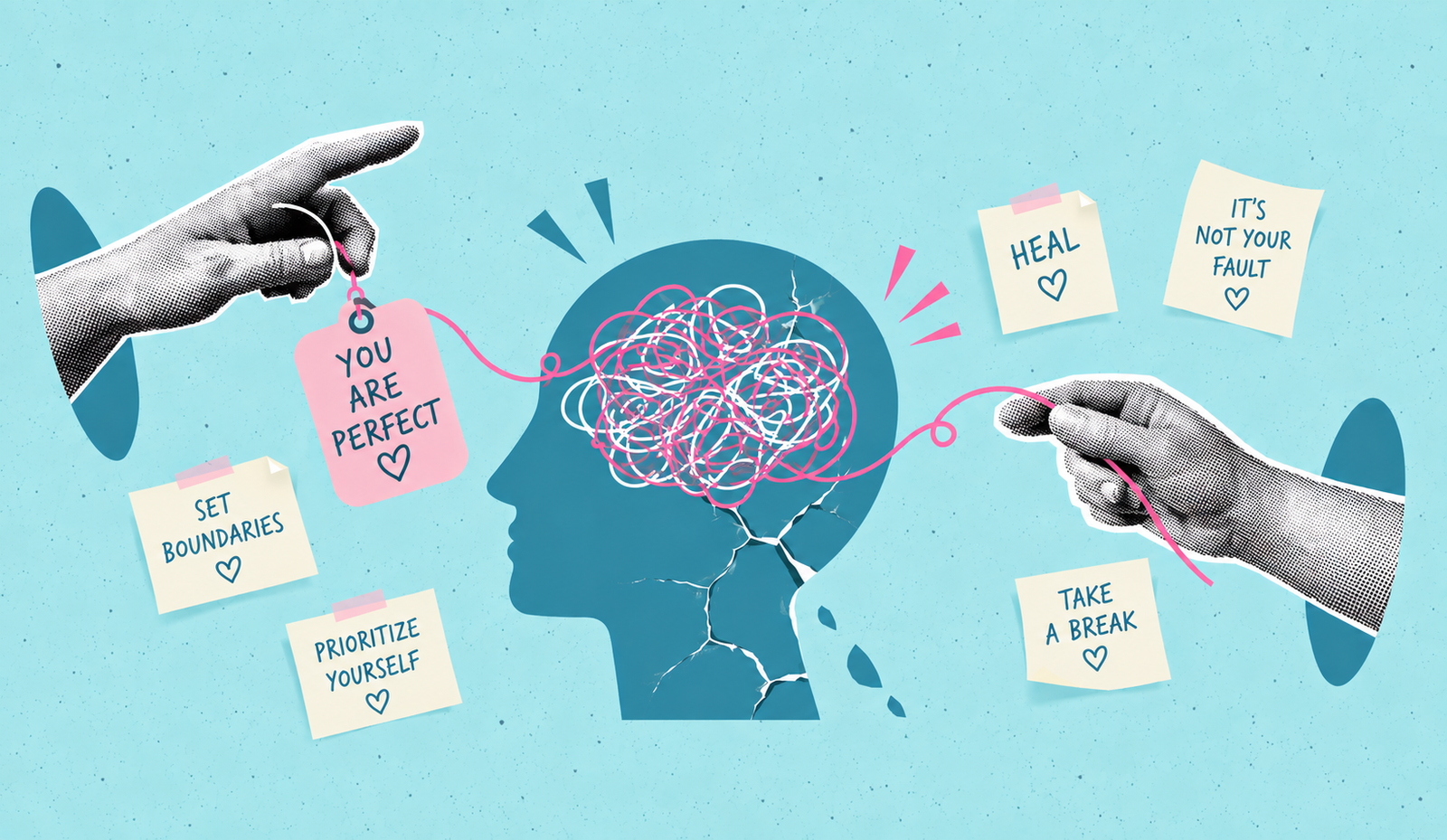
Somewhere between my father’s crisp stoicism and the suffocating emotionalism of my colleague’s wife lies a reasonable way of navigating daily life. Regrettably, America in 2026 looks and sounds far too much like the second paradigm. We are awash in the language and ethos of clinical psychology, which has escaped its containment area (the shrink’s couch) and moved into the mainstream where it seems to be driving us all out of our minds. “We are encouraging people to monitor their emotions, search their past for explanations, identify triggers, and ask whether every interaction is meeting their emotional needs,” psychotherapist Jonathan Alpert, author of Therapy Nation, tells me. “Disagreement becomes evidence of harm. Once enough people are trained to interpret discomfort this way, coexisting with others starts to feel impossible.”
Impassivity is passé today. We shrug nothing off. Bad things don’t “just happen” anymore; the simplest acts are invested with hurtful subtexts, and thoughtlessness is routinely confused with malice. A dish in a sink is no longer just a dish in a sink. “This mindset now permeates every corner of our society,” Alpert writes in his book. We are becoming a nation of whining, wheedling, neurotic weenies. In our perpetual state of hypersensitivity, we slog through the day logging slights and sins and expecting (if not demanding) explanations and/or apologies from those we begrudge for acting with deliberate disregard for our feelings. Trivial issues grow in importance as a result of the inordinate amount of time we spend “communicating” them, rubbing salt into imaginary wounds. Perfectly good personal and professional relationships succumb to this obsessive need to focus in minute detail on everything that happens; partners and parents become toxic, bosses become abusive. One wonders how any relationship can survive such microscopic examination.
Of my father’s mindset, notes Alpert, “There were obvious costs. But we’ve overcorrected. We’ve gone from ‘don’t talk about your feelings’ to believing that every feeling needs to be examined, verbalised, and validated.” He emphasises, “The more closely you monitor yourself for psychological injury, the more psychological injury you’re likely to find.” Taking the pulse of our happiness on a minute-by-minute basis, we harangue each other in a lexicon borrowed from the analyst’s couch, reframing perfectly normal interactions as manifestations of someone else’s pathology.
Part of the problem is that an astonishing number of us have reclined on that couch. For the first time in history, a majority of Americans—62 percent—say they have seen a therapist at some point in their lives, a sharp rise from 43 percent in 2023. Yes, that could imply just one visit, but ongoing mental-health utilisation is also startling. Just under a quarter of the 269 million Americans aged eighteen and over “received mental health treatment or counselling” each year between 2022 and 2025—between 55 and 60 million adults. These numbers jumped after the pandemic, but the trajectory was already unmistakable. Among Millennials, a whopping 72 percent report that they are likely to visit a therapist in the next twelve months. Demographically, substantially more whites than blacks see therapists, and substantially more women than men.
Source: Statista
There seems to be no escaping cultural messages promoting self-care. Dour public-service announcements urge us to open up about our struggles. Days off for mental recharging are increasingly in vogue in workplaces. Schools teach good mental-health habits alongside the three Rs. There are already an estimated 20,000 wellness apps of various kinds. And yet we are terribly unwell. In July, psychologist Clay Routledge sketched the dimensions of the epidemic for the New York Times:
The percentage of Americans who report being in poor mental health has been rising for decades. Over half of U.S. doctors surveyed in 2023 reported a decline in their patients’ mental health. That same year, more than three-quarters of companies reported rising mental health concerns among their workforces.
It doesn’t take a genius to surmise that therapy culture has done a lousy job of healing us.
Read the full article here
Fact Checker
Verify the accuracy of this article using AI-powered analysis and real-time sources.