

 Freedom Index
Listen to the article
When Ubisoft’s Watch Dogs 2 was released in 2016, it was a headtrip for those of us working on digital-rights issues in the Bay Area. During the day, I’d fight tech-authoritarianism from EFF’s San Francisco offices and then, at night, I’d fight tech-authoritarianism in an uncanny simulation of San Francisco from my home gaming console.
Watch Dogs 2 is an open-world video game that follows a hacktivist collective called Dedsec as they take on surveillance tech and discriminatory AI systems that are being controlled by tech bros, government contractors, and corrupt cops. The game’s missions often felt like they were ripped from the pages of EFF’s Deeplinks blog.
EFF’s mission is defending civil liberties in the digital world, and we do that with activists, technologists, and lawyers. If you’ve ever dreamt of joining Dedsec, you should definitely join us as a member.
Join the movement to Take Back CTRL.
In fact, we’ve even got the same merch aesthetic. I cosplayed as the lead character, Marcus, at Dragon Con, and no one even knew I was in costume.
Dave (left) as Marcus takes a selfie with a Wrench cosplayer at Dragon Con 2018.
To commemorate Watch Dog 2’s 10th anniversary, I’ll be speaking on a panel at San Diego Comic-Con reflecting on how the game predicted tech issues we’re facing today. Organized by Mia Ginae of The Mighty Hostess and Black in Gaming, we’ve got voice actors Ruffin Prentiss lll and Shawn Baichoo, cinematic producer Timmy Fisher, and music producer Hudson Mohawke, who did the soundtrack, with Mia Ginae moderating. That’s at 3:15 PM on Friday, July 24 in room 6BCF.

But not everyone can get to Comic-Con and I certainly have more to say that can fit in. So here are a few ways where Watch Dogs 2 mirrored our work back then and foresaw what we’re facing today.
Check out our full San Diego Comic Schedule, including panels and a meet-up.
Insecure Surveillance Cameras
One of the signature gameplay elements of the Watch Dogs series is the ability for your character to hack into nearby security cameras from your phone and use that to gain a strategic advantage over hostile adversaries.
About a year before, that’s exactly the issue that we were working on. EFF Technologist Cooper Quintin and I used the service Shodan to identify a slew of automated license plate readers (ALPRs) that Louisiana police had left unprotected on the internet. We found that the controls were open to anyone to manipulate and, just like in the game, you could watch the live video feeds.
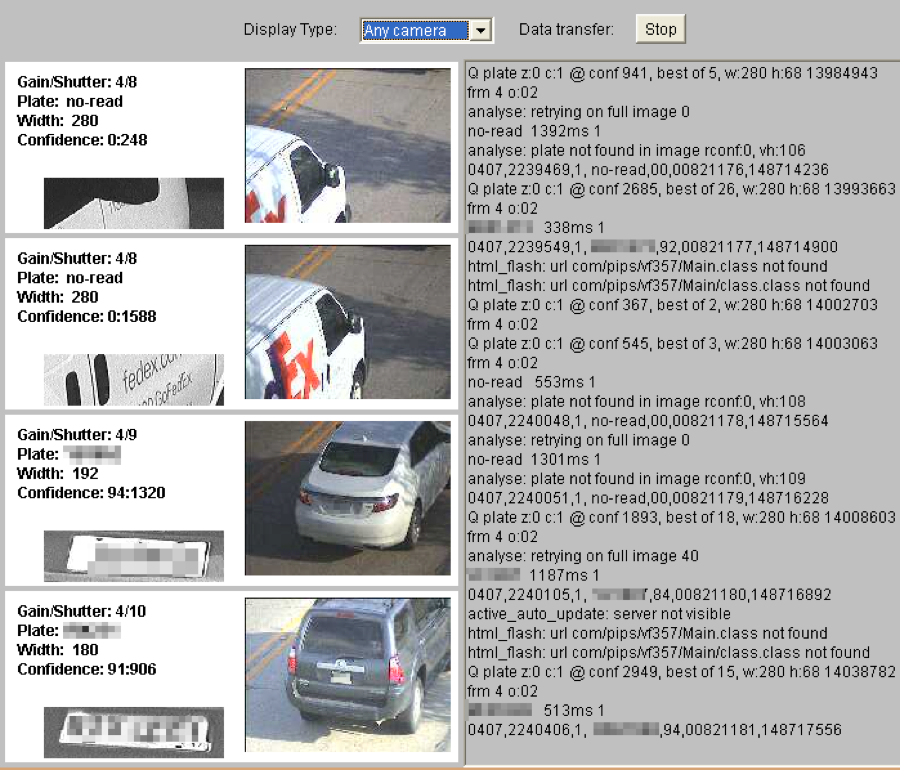
We didn’t use the data to acquire a skill point or collectible outfit. Instead, we forced police agencies to lock down their equipment and then used what we learned to persuade then Gov. Bobby Jindal to veto a bill that would have created a new statewide surveillance dragnet.
This issue still persists today. Most recently, security researchers Benn Jordan and Jon “GainSec” Gaines, and the award-winning journalists at 404 Media, uncovered how at least 60 pan-tilt-zoom cameras from the vendor Flock Safety were left exposed online.
Cell-Site Simulators
In Watch Dogs 2 there’s a mission called “Stolen Signals,” in which Marcus and his best friend Wrench are trying to locate “stingrays,” police devices that gather nearby cell-phone data by masquerading as legit cellular towers. We call these “cell-site simulators” (CSSs) and they’re are an extremely alarming mass surveillance technology that allows police to track individual users through their phone identifiers. We’ve long advocated that this should require a search warrant.
Like Dedsec, we also had initiated a project to do the exact same thing. And in true Dedsec fashion, we also gave it a pop-culture name: Crocodile Hunter, an homage to wildlife expert Steve Irwin, who had famously died after a stingray attack.
But while Marcus was running around Telegraph Hill, staff technologist Cooper Quintin and I were running around downtown San Francisco, testing out our own device for detecting suspicious cell phone towers during Salesforce’s annual Dreamforce conference. And while we didn’t find a CSS that day, we did find a mobile surveillance tower that a start-up had set up for the event.
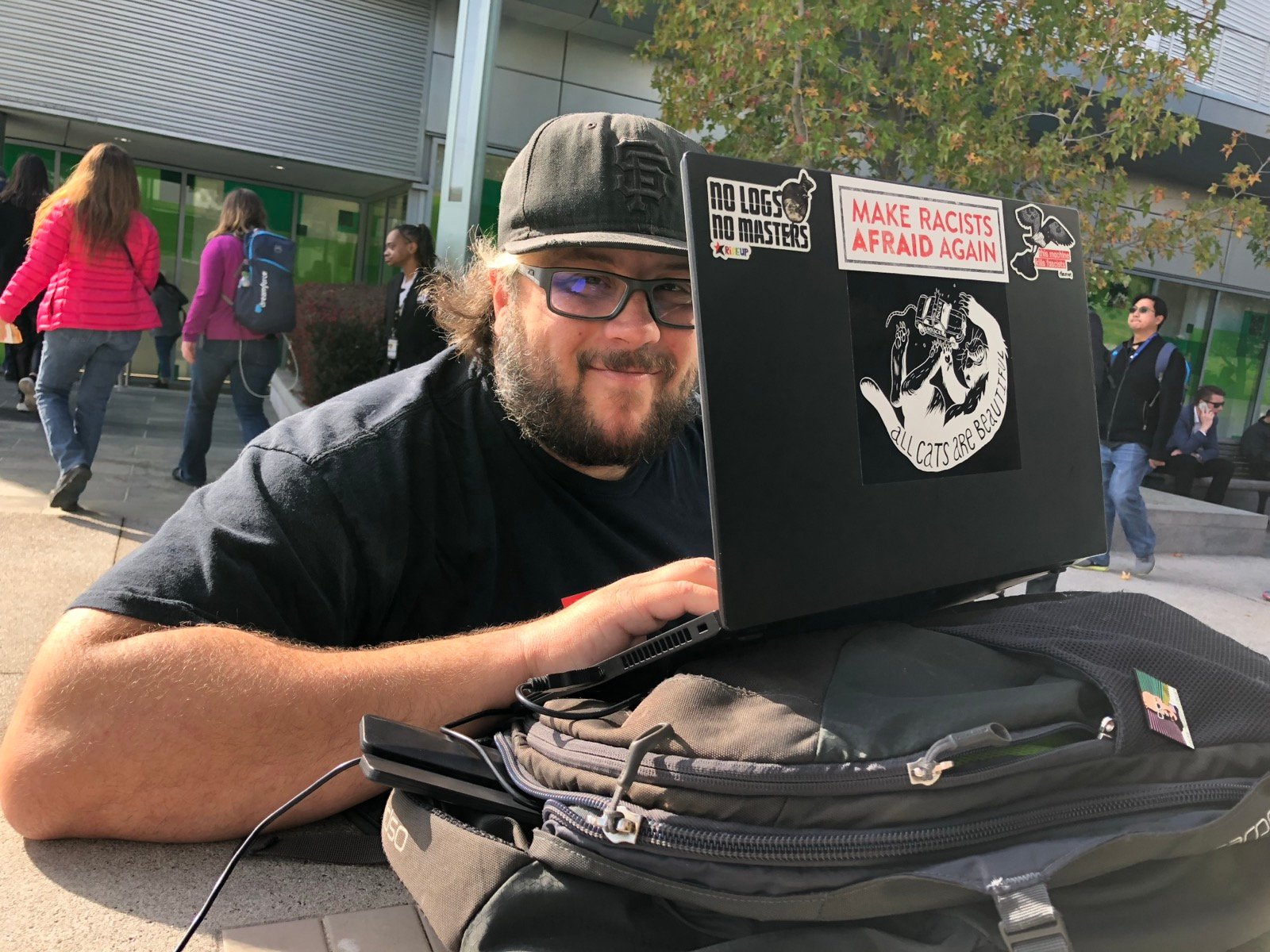
Cooper Quintin, EFF’s own ‘Wrench,’ testing out Crocodile Hunter at Dreamforce
Today, that project has evolved into Rayhunter, which allows anyone to use a cheap mobile hotspot to detect the type of cellular anomalies associated with CSSs. We’re proud to say that now there’s a whole international Dedsec-style network of researchers using this technology to look for surveillance at protests, at the border, and in metropolitan areas.
Security Robots
Throughout the game, Marcus encounters a number of autonomous pickle-shaped security robots wandering the city. At one point, Wrench reprograms one to become “Wrench Jr,” a bona fide member of the Dedsec team.
In real life, these robots are made by a company called Knightscope, and EFF started shining light on them in 2020-2021, when they were first being deployed by companies and government agencies.
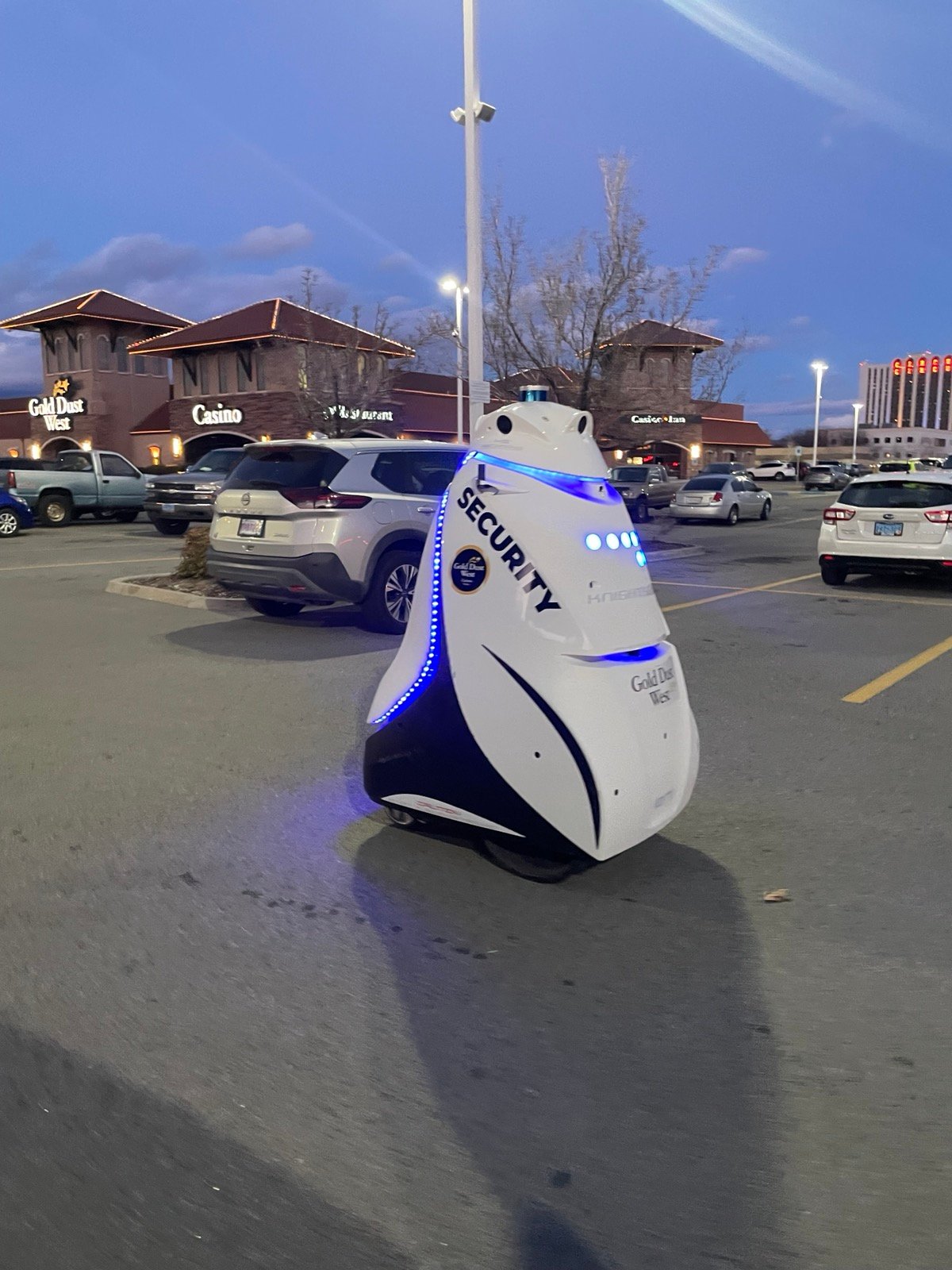
A Knightscope robot patrols a casino parking lot in Reno, Nevada.
Today, law enforcement is pursuing weaponized robots and drones, and EFF is at the forefront to stop this dystopian reality. In fact, in December 2022, we successfully fought for San Francisco to ban the police department from weaponizing drones. In 2024, New York Police Department also retired its subway robot.
A Citywide Surveillance “Operating System”
In the Watch Dog series, one of the ominous developments is CTOS 2.0 (Central Operating System 2.0). Through this system, Blume, a government contractor, tries to collect a massive amount of data through citywide sensors and infrastructure, and to combine all that data into one unified—and totally insecure—analytics system.
At the time we’d only just begun to see this idea floated, with a limited number of cities trying tools like Palantir’s Gotham to manage data.
Today, it is a frighteningly competitive market, particularly when it comes to law enforcement surveillance. For example, both Axon and Flock Safety are trying to offer products that integrate with every function of policing that sound like CTOs. In fact, Flock Safety product is literally titled, “Flock OS.”
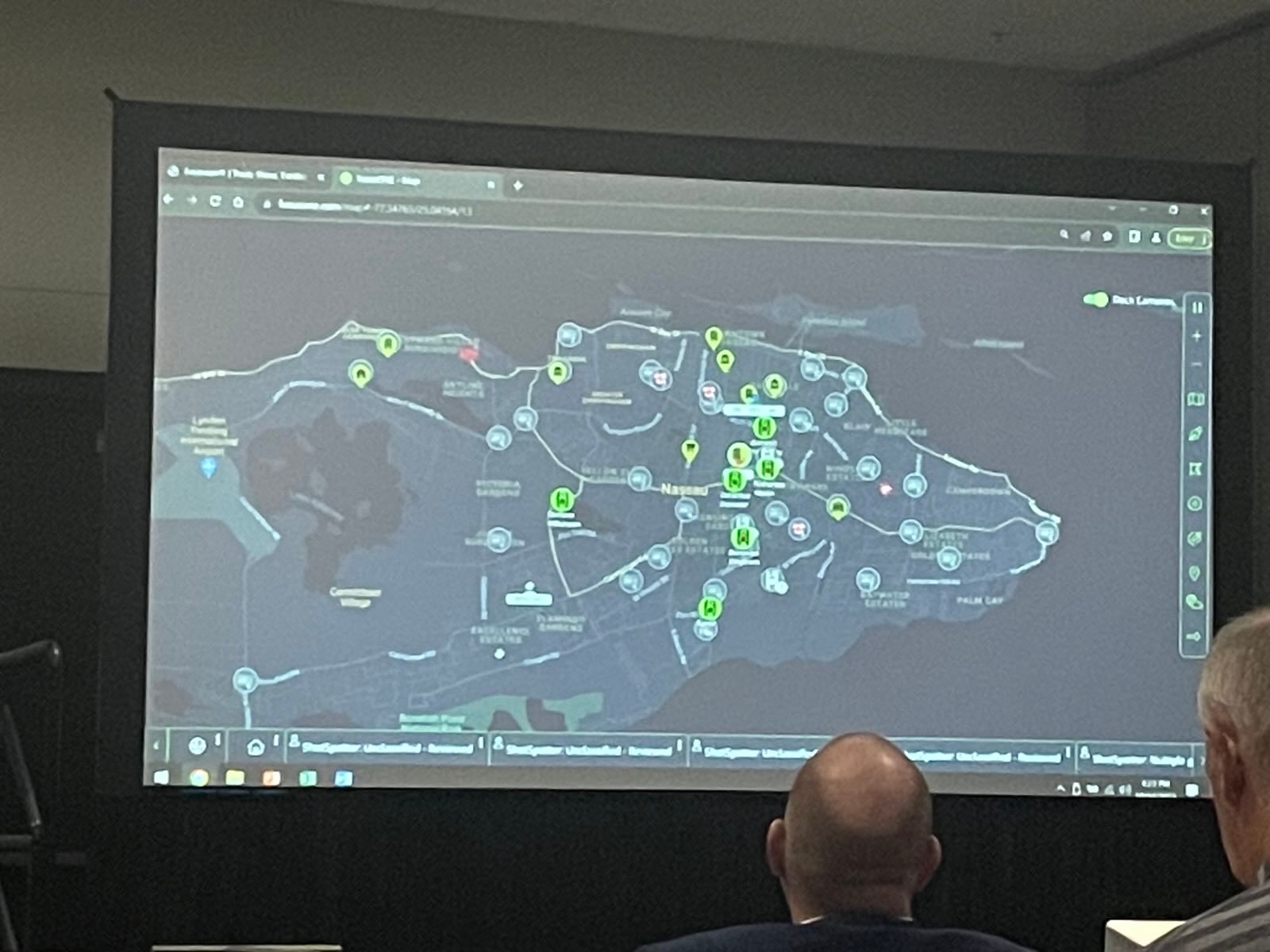
Fusus demonstrated at a police chief’s conference.
Meanwhile, Axon’s camera networking product, “Fusus,” sounds like it came straight from the Watch Dogs’ writers room. Fusus allows for central live-streaming of all types of surveillance cameras in a city, including body-worn cameras, which was another prediction from the Watch Dog series that came true.
EFF has been part of many local battles to reject Flock and Axon surveillance systems, and we’ve also advocated against recent efforts at the federal level to consolidate government data.
Join the Fight Against Authoritarian Tech
Watch Dogs 2’s protagonists aren’t just the merry band of core hackers: It’s a distributed movement spread across the region and social media. The sequel, Watch Dogs Legion, is even designed so that every single person in the city of London is a potential playable Dedsec member, ready to take on tech tyranny with whatever skills they have.
That’s also our philosophy: If you use tech, if you’re affected by tech, this is your fight. And it’s time to take back control.
There are a lot of ways to do this. You can become a member by donating. You can contact public officials through our Action Center. You can join the thousands of volunteers who are helping gather data on surveillance through our Atlas of Surveillance project. You can also hunt cell-site simulators with us—and help improve our code—through the Rayhunter project.
And just like Watch Dogs 2, this is a game we can win if we work together.
Read the full article here
Fact Checker
Verify the accuracy of this article using AI-powered analysis and real-time sources.