Close Menu
FSNN | Free Speech News NetworkFSNN | Free Speech News Network
  • Home
  • News
    • Politics
    • Legal & Courts
    • Tech & Big Tech
    • Campus & Education
    • Media & Culture
    • Global Free Speech
  • Opinions
    • Debates
  • Video/Live
  • Community
  • Freedom Index
  • About
    • Mission
    • Contact
    • Support
Trending

You Can’t Vote Out Amazon Web Services: Fighting Internet Contracts One Library At A Time

8 minutes ago

The Gem State Shines on Zoning Reform

11 minutes ago

How the Pentagon is trying to control the narrative

14 minutes ago
Facebook X (Twitter) Instagram
Facebook X (Twitter) Discord Telegram
FSNN | Free Speech News NetworkFSNN | Free Speech News Network
Market Data Newsletter
Tuesday, April 21
  • Home
  • News
    • Politics
    • Legal & Courts
    • Tech & Big Tech
    • Campus & Education
    • Media & Culture
    • Global Free Speech
  • Opinions
    • Debates
  • Video/Live
  • Community
  • Freedom Index
  • About
    • Mission
    • Contact
    • Support
FSNN | Free Speech News NetworkFSNN | Free Speech News Network
Home»News»Global Free Speech»Hong Kong media tycoon Jimmy Lai, the publisher of shuttered Hong Kong newspaper Apple Daily, during an interview in 2020. Photo: AP Photo/Vincent Yu/Alamy For simply documenting Iranian attacks, hundreds of people have been detained in the United Arab Emirates, all charged under the UAE’s draconian cybercrime laws. They could be jailed for life. Around 70 of those are UK citizens. There should be an outcry from our government. But is there? No, none. No minister has made a public statement condemning the arrests. Instead the Foreign Office has issued statements like this one calling the Gulf countries “our partners” and ones along these lines that offer support to get overseas Brits home – that is, those who aren’t in prison. According to the Foreign Office’s own admission, it’s only offering consular assistance to a select few of the 70 incarcerated. The families of those detained are now voicing their frustration and calling the response inadequate. They’re right but sadly their cries are likely to fall on deaf ears. I cannot tell you the number of meetings and conferences I’ve attended with current and former hostages and their families to discuss the UK government’s woeful response to the plight of people held abroad. Sebastian Lai and a legal team at Doughty Street Chambers have been asking the British government for years to put pressure on China to release Jimmy Lai, who’s been held since 2020; the relatives of Jagtar Singh Johal, a human rights defender from Dumbarton in Scotland held by the Indian government, have been campaigning even longer. Both men are British nationals. The UK should have moved mountains to get them home. But no government has even moved a mound. It’s a trend that goes back decades. Jill Morrell became a fixture of the news in the 1980s after her boyfriend, British journalist John McCarthy, was kidnapped in Beirut. While he was eventually released, he lost years of his life to jail and it was the dogged persistence of Morrell which forced ministers to act. We should be ashamed by all this, even more so when you consider that countries like Ireland and Australia have a better track record. I could joke that a British passport might get you into lots of countries but it sure as hell won’t get you out of them.  Except it’s not the remotest bit funny. A 2023 report by the foreign affairs select committee, which took evidence from Richard and Nazanin Zaghari-Ratcliffe and the families of other political prisoners, condemned the Foreign Office’s attitude as secretive, inconsistent and built on an erroneous belief that quiet diplomacy works. Three years on and it’s hard to see any change. Why exactly are we so callous about our political prisoners abroad? We at Index simply don’t know, though we do have theories (prioritisation of trade over human rights, the diminishing stature of Britain on the global stage, political football around dual nationals, a fear of giving in to hostage-taking – to list four). All we know for certain is the terrible impact of our policy on those incarcerated and on their families. What a sorry state. We have a group of people languishing overseas for simply exercising their free expression rights, and successive governments including our current one which appear unwilling to defend their right to do so. READ MORE
Global Free Speech

Hong Kong media tycoon Jimmy Lai, the publisher of shuttered Hong Kong newspaper Apple Daily, during an interview in 2020. Photo: AP Photo/Vincent Yu/Alamy For simply documenting Iranian attacks, hundreds of people have been detained in the United Arab Emirates, all charged under the UAE’s draconian cybercrime laws. They could be jailed for life. Around 70 of those are UK citizens. There should be an outcry from our government. But is there? No, none. No minister has made a public statement condemning the arrests. Instead the Foreign Office has issued statements like this one calling the Gulf countries “our partners” and ones along these lines that offer support to get overseas Brits home – that is, those who aren’t in prison. According to the Foreign Office’s own admission, it’s only offering consular assistance to a select few of the 70 incarcerated. The families of those detained are now voicing their frustration and calling the response inadequate. They’re right but sadly their cries are likely to fall on deaf ears. I cannot tell you the number of meetings and conferences I’ve attended with current and former hostages and their families to discuss the UK government’s woeful response to the plight of people held abroad. Sebastian Lai and a legal team at Doughty Street Chambers have been asking the British government for years to put pressure on China to release Jimmy Lai, who’s been held since 2020; the relatives of Jagtar Singh Johal, a human rights defender from Dumbarton in Scotland held by the Indian government, have been campaigning even longer. Both men are British nationals. The UK should have moved mountains to get them home. But no government has even moved a mound. It’s a trend that goes back decades. Jill Morrell became a fixture of the news in the 1980s after her boyfriend, British journalist John McCarthy, was kidnapped in Beirut. While he was eventually released, he lost years of his life to jail and it was the dogged persistence of Morrell which forced ministers to act. We should be ashamed by all this, even more so when you consider that countries like Ireland and Australia have a better track record. I could joke that a British passport might get you into lots of countries but it sure as hell won’t get you out of them.  Except it’s not the remotest bit funny. A 2023 report by the foreign affairs select committee, which took evidence from Richard and Nazanin Zaghari-Ratcliffe and the families of other political prisoners, condemned the Foreign Office’s attitude as secretive, inconsistent and built on an erroneous belief that quiet diplomacy works. Three years on and it’s hard to see any change. Why exactly are we so callous about our political prisoners abroad? We at Index simply don’t know, though we do have theories (prioritisation of trade over human rights, the diminishing stature of Britain on the global stage, political football around dual nationals, a fear of giving in to hostage-taking – to list four). All we know for certain is the terrible impact of our policy on those incarcerated and on their families. What a sorry state. We have a group of people languishing overseas for simply exercising their free expression rights, and successive governments including our current one which appear unwilling to defend their right to do so. READ MORE

News RoomBy News Room1 hour agoNo Comments3 Mins Read673 Views
Share Facebook Twitter Pinterest Copy Link LinkedIn Tumblr Email VKontakte Telegram
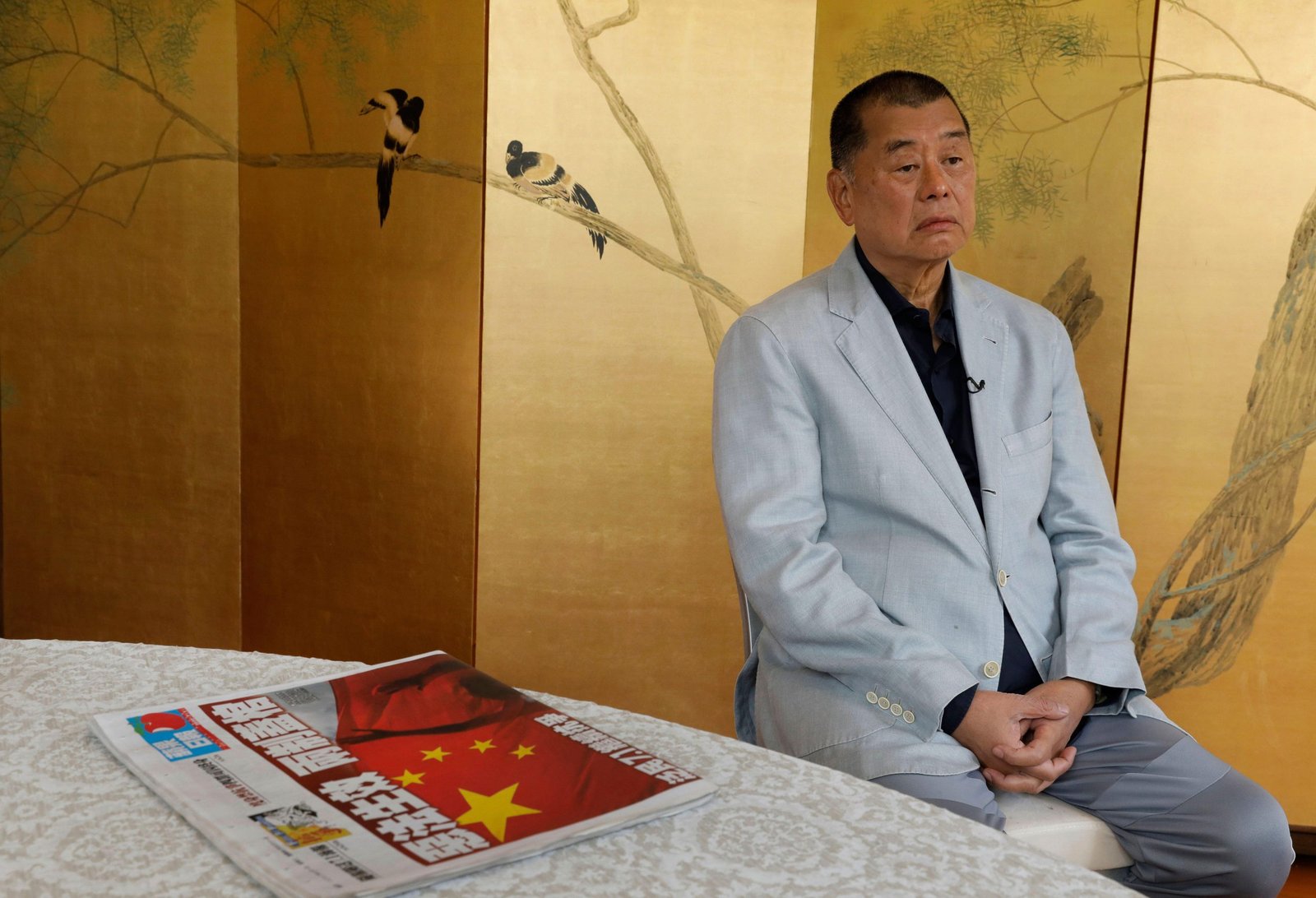
Hong Kong media tycoon Jimmy Lai, the publisher of shuttered Hong Kong newspaper Apple Daily, during an interview in 2020. Photo: AP Photo/Vincent Yu/Alamy


				For simply documenting Iranian attacks, hundreds of people have been detained in the United Arab Emirates, all charged under the UAE’s draconian cybercrime laws. They could be jailed for life. Around 70 of those are UK citizens. There should be an outcry from our government. But is there? No, none. No minister has made a public statement condemning the arrests. Instead the Foreign Office has issued statements like this one calling the Gulf countries “our partners” and ones along these lines that offer support to get overseas Brits home – that is, those who aren’t in prison. According to the Foreign Office’s own admission, it’s only offering consular assistance to a select few of the 70 incarcerated.
The families of those detained are now voicing their frustration and calling the response inadequate. They’re right but sadly their cries are likely to fall on deaf ears. I cannot tell you the number of meetings and conferences I’ve attended with current and former hostages and their families to discuss the UK government’s woeful response to the plight of people held abroad. Sebastian Lai and a legal team at Doughty Street Chambers have been asking the British government for years to put pressure on China to release Jimmy Lai, who’s been held since 2020; the relatives of Jagtar Singh Johal, a human rights defender from Dumbarton in Scotland held by the Indian government, have been campaigning even longer. Both men are British nationals. The UK should have moved mountains to get them home. But no government has even moved a mound.
It’s a trend that goes back decades. Jill Morrell became a fixture of the news in the 1980s after her boyfriend, British journalist John McCarthy, was kidnapped in Beirut. While he was eventually released, he lost years of his life to jail and it was the dogged persistence of Morrell which forced ministers to act.
We should be ashamed by all this, even more so when you consider that countries like Ireland and Australia have a better track record. I could joke that a British passport might get you into lots of countries but it sure as hell won’t get you out of them.  Except it’s not the remotest bit funny.
A 2023 report by the foreign affairs select committee, which took evidence from Richard and Nazanin Zaghari-Ratcliffe and the families of other political prisoners, condemned the Foreign Office’s attitude as secretive, inconsistent and built on an erroneous belief that quiet diplomacy works. Three years on and it’s hard to see any change.
Why exactly are we so callous about our political prisoners abroad? We at Index simply don’t know, though we do have theories (prioritisation of trade over human rights, the diminishing stature of Britain on the global stage, political football around dual nationals, a fear of giving in to hostage-taking – to list four). All we know for certain is the terrible impact of our policy on those incarcerated and on their families.
What a sorry state. We have a group of people languishing overseas for simply exercising their free expression rights, and successive governments including our current one which appear unwilling to defend their right to do so.


				READ MORE
Share
Facebook Twitter Pinterest Email Copy Link

Listen to the article

0:00
0:00

Key Takeaways

Playback Speed

Select a Voice

For simply documenting Iranian attacks, hundreds of people have been detained in the United Arab Emirates, all charged under the UAE’s draconian cybercrime laws. They could be jailed for life. Around 70 of those are UK citizens. There should be an outcry from our government. But is there? No, none. No minister has made a public statement condemning the arrests. Instead the Foreign Office has issued statements like this one calling the Gulf countries “our partners” and ones along these lines that offer support to get overseas Brits home – that is, those who aren’t in prison. According to the Foreign Office’s own admission, it’s only offering consular assistance to a select few of the 70 incarcerated.

The families of those detained are now voicing their frustration and calling the response inadequate. They’re right but sadly their cries are likely to fall on deaf ears. I cannot tell you the number of meetings and conferences I’ve attended with current and former hostages and their families to discuss the UK government’s woeful response to the plight of people held abroad. Sebastian Lai and a legal team at Doughty Street Chambers have been asking the British government for years to put pressure on China to release Jimmy Lai, who’s been held since 2020; the relatives of Jagtar Singh Johal, a human rights defender from Dumbarton in Scotland held by the Indian government, have been campaigning even longer. Both men are British nationals. The UK should have moved mountains to get them home. But no government has even moved a mound.

It’s a trend that goes back decades. Jill Morrell became a fixture of the news in the 1980s after her boyfriend, British journalist John McCarthy, was kidnapped in Beirut. While he was eventually released, he lost years of his life to jail and it was the dogged persistence of Morrell which forced ministers to act.

We should be ashamed by all this, even more so when you consider that countries like Ireland and Australia have a better track record. I could joke that a British passport might get you into lots of countries but it sure as hell won’t get you out of them.  Except it’s not the remotest bit funny.

A 2023 report by the foreign affairs select committee, which took evidence from Richard and Nazanin Zaghari-Ratcliffe and the families of other political prisoners, condemned the Foreign Office’s attitude as secretive, inconsistent and built on an erroneous belief that quiet diplomacy works. Three years on and it’s hard to see any change.

Why exactly are we so callous about our political prisoners abroad? We at Index simply don’t know, though we do have theories (prioritisation of trade over human rights, the diminishing stature of Britain on the global stage, political football around dual nationals, a fear of giving in to hostage-taking – to list four). All we know for certain is the terrible impact of our policy on those incarcerated and on their families.

What a sorry state. We have a group of people languishing overseas for simply exercising their free expression rights, and successive governments including our current one which appear unwilling to defend their right to do so.

Read the full article here

Fact Checker

Verify the accuracy of this article using AI-powered analysis and real-time sources.

Get Your Fact Check Report

Enter your email to receive detailed fact-checking analysis

5 free reports remaining

Continue with Full Access

You've used your 5 free reports. Sign up for unlimited access!

Already have an account? Sign in here

Share. Facebook Twitter Pinterest LinkedIn Tumblr Email Telegram Copy Link
News Room
  • Website
  • Facebook
  • X (Twitter)
  • Instagram
  • LinkedIn

The FSNN News Room is the voice of our in-house journalists, editors, and researchers. We deliver timely, unbiased reporting at the crossroads of finance, cryptocurrency, and global politics, providing clear, fact-driven analysis free from agendas.

Related Articles

Global Free Speech

How the Pentagon is trying to control the narrative

14 minutes ago
Global Free Speech

Journalist Mehmet Yetim arrested in Turkey for ‘spreading disinformation’

1 hour ago
Global Free Speech

Budapest, Hungary. 13th Apr, 2026. Peter Magyar waves the Hungarian flag after his speech during the TISZA party’s election night event in Budapest. Photo: ZUMA Press/Alamy The Index team has been absorbed in everything Hungary-related this week. No surprise there, given Péter Magyar’s seismic election victory on Sunday, and Index’s roots in eastern Europe. Our latest magazine – just launched – explored the effect Orbán’s had in Hungary and on spreading his brand of illiberal democracy. We’re deep in the conjecture stage, awaiting what happens next and asking what an ex-Fidesz conservative who rode to power on an anti-corruption campaign will mean for freedom of expression. Could be good, could be the same old. We’ll be watching closely. Already some positive news there though: Magyar has announced that he will suspend the Orbánised state media and only restore it when objective and impartial reporting can be ensured. It’s a similar move to the one Donald Tusk made when he became Prime Minister of Poland. Magyar also announced that he’d be looking into Viktor Orbán’s influence campaigns. Martin Bright reported on this for the latest magazine, attending a conference in Brussels which was funded by the Hungarian government and intended to bring together far right parties from around Europe. The event was part of a much wider project paid for partly by Russian oil money (filtered through Hungary) which smacked of foreign interference in European democracy. There now needs to be an urgent investigation of the funding of UK-based organisations and politicians by the Orbán government. And when it comes to illiberal forces meddling in overseas affairs, there is way too much of that around. The Guardian rather made the point for me when they broke the story this week of London’s Victoria and Albert Museum censoring its own catalogues to keep in with Beijing. A series of images were removed upon the request of the Chinese printers. One of the images was a historic map of the British Empire, which included China. Presumably its 1930s borders didn’t dovetail with Beijing’s current narrative around Xinjiang and Tibet. This is not the first time the V&A has done an image swap upon the request of Beijing. Nor is the V&A alone, such interference has been happening for a while. The V&A’s justification came down to cost. Apparently using a Chinese printer is half the price of a British or European one. I don’t doubt that. But while I have no idea of the financial margins we’re talking about here, I do know about the broader consequence: An emboldened China, a country that places bounties on the heads of Hong Kong dissidents and harasses lawyers, protesters, activists and journalists alike over here. This is the real cost of doing business on Beijing’s terms. It’s depressing that our cultural institutions – which are meant to be the leading incubators of plural thought after all – are playing ball. The cost also isn’t confined to China; such capitulation emboldens others. So yes it’s great that this week we’ve potentially been rescued from the full-scale Orbánisation of Europe, but he was ultimately just a symptom of a rotten global order, one where speech rights can be bought by the highest bidder – or in the case of the V&A the one offering the cheapest paper. READ MORE

2 hours ago
Global Free Speech

A Fairytale for Everyone is a children’s book about marginalised people. Illustration: Labrisz / Lilla Bölecz This article first appeared in the Spring 2026 issue of Index on Censorship, The monster unleashed: How Hungary’s illliberal vision is seducing the Western world published on 2 April 2026. The article was published before Viktor Orbán’s defeat in the Hungarian elections on 12 April.  Anyone browsing the children’s section of a Hungarian bookshop will notice something unusual: books sealed in plastic wrappers. The popular young adult book Heartstopper by Alice Oseman will be one of them – if it’s on the shelf at all. Heartstopper is not alone. All children’s books with LGBTQ+ themes face this fate. Hungary’s second largest bookstore chain, Líra, was made an example of in 2023 after selling Heartstopper without a wrapper. It received a large fine, and a legal battle ensued. While the landscape has long been hostile for LGBTQ+ people in Hungary, the use of wrappers stems from a government regulation implementing a law introduced in 2021, ostensibly to protect children. In practice, the regulation conflates paedophilia with depictions of LGBTQ+ lives and was soon dubbed the anti-LGBTQ+ law. Another provision of the regulation says bookshops within 200 metres of churches and schools are banned from selling any books which portray LGBTQ+ identities. In small towns, navigating this is almost impossible. Grammatical pedantry wins Hungary has two major publishing house and bookshop chains and they have both fallen foul of the law. One is Líra, the other is Libri. Líra received a fine of $37,200 and two additional fines, while the much larger Libri received a fine of only $3,100. Earlier in 2023 Libri was taken over by the Matthias Corvinus Collegium, a foundation with close links to Prime Minister Viktor Orbán. Following the takeover, Libri stepped into line over the plastic wrapping directive. “There was a big question mark [over] whether Líra should challenge these decisions. But I think they made a very brave decision, and they said that they wanted to challenge [them],” Lendvai said. They won all three cases at the first instance through pure and simple grammatical pedantry. “We were about to write the petition and then an editor at the book publishing company said, ‘Well, it seems to be that a comma is missing,’” Lendvai explained. He said that the wording suggested books aimed at children with LGBTQ+ themes must be placed into sealed packaging if they were distributed separately, while the government had interpreted it to mean books must be in closed packaging and also separated. Líra neither packaged nor separated its books. As a business, arguing about a point of grammar felt much safer as the first line of argument than challenging the wider issues at stake. Líra continued to sell their books without wrappers. The law, it felt, was on its side. It also launched its Unsealed Books campaign, using audiobooks read by contemporary authors, actors and public intellectuals to give free access to titles. Two of the court decisions became final, but its ruling on the $37,200 fine was quashed by the Supreme Court. In that hearing, Lendvai tried to read out a passage from a contemporary book about a young LGBTQ+ man being welcomed by a Christian community to demonstrate why it should not be banned from sale near churches. “The chairwoman of the panel of the tribunal banned me from reading that passage and she said that this is not about books and it’s not about free speech,” he said. The law was amended, the misplaced comma was fixed. More changes meant that only books with decisive LGBTQ+ themes had to be wrapped, meaning fewer books may be affected by the law. Publishers would also have to alert bookshops when their titles fell under the provision. Líra has since filed a claim with the European Court of Human Rights, which is pending. Challenged by Europe The general law on LGBTQ+ content (which also bans such content from primetime TV and schools) has been challenged by the European Commission. Tamara Ćapeta, the advocate general at the Court of Justice of the European Union (CJEU), has said that it violates EU law. [On 21 April 2026, the Court of Justice of the European Union ordered Hungary to scrap the legislation.] Tamás Dombos of the Háttér Society – Hungary’s largest LGBTQ+ civil society organisation – said the law could be understood only in the country’s broader context of how it deals with LGBTQ+ identities. This includes a media campaign smearing LGBTQ+ people and organisations, a recent ban on LGBTQ+ gatherings, the banning of legal gender recognition for transgender people, and the restriction of adoption rights for unmarried couples. “The political message of the government is very clear: LGBTQI people are second-class citizens who do not deserve the same level of protection, and the discussion of LGBTQ+ topics in the public sphere is harmful for children,” he said. Organisations bound by legislation, he said, implemented the bans in a broad way. They don’t include same-sex couples in adverts and don’t publish books with these themes. Some take these actions because they fear being targeted by anti-LGBTQ+ campaigns and some bookshops now avoid stocking books with LGBTQ+ themes altogether. In October 2025, Hungary had its first known Banned Books Week event, where among other things students could explore an exhibition about the history of book censorship in Hungary. Gergely Gosztonyi, the head of the Digital Authoritarianism Research Lab at Eötvös Loránd University, took a lead role in the event. We asked Gosztonyi whether any of the books featured in the exhibition were titles currently being challenged in Hungary. “We came to the conclusion that we didn’t want the pilot to be very political,” he said. “We had so many books in Hungarian history that have been banned, that it was easy to pick different ones.” He is well aware of the self-censorship, and the irony. At the same time, this was a pilot project, and he didn’t want it to be the last. A fairytale ending? In 2020, A Fairytale for Everyone, edited by Boldizsár M Nagy, was the unlucky star of a very unusual press conference. Dóra Dúró, a politician from the Our Homeland Movement party, called journalists together, walked out onto the podium and shredded the book. Dorottya Rédai is executive director of Labrisz Lesbian Association, an NGO based in Budapest which raises awareness of discrimination against sexual minority women. She was also the project co-ordinator for A Fairytale for Everyone which featured our cover illustrator Lilla Bölecz. Labrisz had the idea about creating a fairytale book from a feminist perspective on the back of their education programme. Some of the stories in the book would be reworked classics and others original, with half written by established writers and the rest by emerging voices. They put out a call for the unknown writers, which Rédai said was noticed by the far right and the government. A national television show, which Rédai described as propaganda, invited her to talk about the book. “People from the community were congratulating me for days for coming out alive from the lion’s den,” Rédai told Index. Dúró’s book shredding was not the only political attack on the book. Orbán told a radio show that the LGBTQ+ community should “leave our children alone” and the book’s publisher was ordered to print disclaimers that the stories contained “behaviour inconsistent with traditional gender roles”. Booksellers were attacked for stocking it, Rédai said, adding that fascist groups put stickers on shop windows in an echo of the Nazi practice of intimidating Jewish shops. Community members rallied round, taking flowers and chocolates to the impacted shops to show their support. With all the attention, the book ended up being a bestseller. Foreign publishers picked it up and international media followed the story. “The book became a symbol of democracy and resistance against the Orbán regime,” Rédai said. “We figured out from this story that cultural resistance is very, very important.” Books are just the start It’s not just books that are under threat. Other artistic endeavours are being censored, too. In 2023, one particular story hit the international headlines. At the World Press Photo exhibition at the National Museum in Budapest, a complaint was filed over a set of photographs spotlighting a care home for elderly LGBTQ+ people in the Philippines. A notice was placed at the entrance to the museum, saying under-18s were not allowed. Museum director Laszlo Simon, a former member of the Fidesz government, was later ousted, with the government claiming he had failed to follow his legal obligations. Soon afterwards, at the National Museum of Ethnography, a small selection of photos documenting a gay couple in 1960s Brazil were hidden from view. A black cordon was strung around the section, with a woman blocking the entrance and asking everyone if they were over 18. “Two people challenged this ban,” Dombos said. “One was an underage person, and she was not let in. And then another person – that was me – said that cordoning off such content is a form of harassment against LGBTQI people.” They both recently lost their cases, although Dombos aims to take his to Strasbourg. Gideon Horváth’s sculpture which pays tribute to unfulfilled non-heteronormative love. Photo: Gideon Horváth Gideon Horváth, a Hungarian-French visual artist who often creates sculptures from beeswax, explores queer theories, subcultures and histories as part of his work. He told Index about the times he has faced censorship. In 2023 he was part of an open-air exhibition, using the term “queer ecology”. “The organiser of the exhibition first accepted it, and then she wrote to me and told me that she was informed that it would be wise regarding the political climate to not use the word ‘queer,’” he said. It was the first time he had experienced anything like this, and he said he had to put his foot down. The organiser then agreed to keep the wording, although Horváth said he saw an email from above saying it should not be allowed. A sculpture for Sidewalk the first Budapest Biennale of Contemporary Public Art labelled as “a memorial for unfulfilled, non-heteronormative loves” was allowed, he said, because the programme was organised by Budapest Gallery, which is under the municipal control of the capital’s liberal mayor. But in another municipal gallery in the capital, where he was invited to exhibit his piece from the park, he was asked to delete a number of words from the accompanying plaque with the excuse that the gallery welcomed children. He believes they were afraid of the consequences if they got it wrong. He refused to delete the words, suggesting they should be blacked out so that the self-censorship was visible. When he was shortlisted for the Esterházy Art Award in 2023, he was told by the Ludwig Museum (which falls directly under the Ministry of Culture) that the sculpture would need to be hidden and roped off. He won the battle over his work being visible but did not win the war of words. “I fought as hard as I could, but my only [other] option would have been to step out of the competition altogether,” he said. He did not want to become known as the censored gay artist from Hungary and told the museum he would not be making any changes, saying “If you change the text that’s on you”. “The curator changed it, and I was really ashamed of it all,” he said. He was announced as one of three winners of the award, a decision which he still cannot make sense of. “What I’ve seen is that institutions don’t necessarily wait for an authority to step in and tell them they can’t do something. They immediately self-censor before even having any threats,” he said. And so they go further than the law requires. The result is an erasure of LGBTQ+ voices and stories, which is likely the entire point. READ MORE

3 hours ago
Global Free Speech

EU must suspend agreement with Israel over Gaza, West Bank violations

4 days ago
Global Free Speech

CPJ urges US lawmakers to enact reforms to protect press freedom from warrantless surveillance 

4 days ago
Add A Comment
Leave A Reply Cancel Reply

Editors Picks

The Gem State Shines on Zoning Reform

11 minutes ago

How the Pentagon is trying to control the narrative

14 minutes ago

Prediction markets are the new secret weapon for Coinbase (COIN) and Robinhood (HOOD) growth

19 minutes ago

New York Sues Coinbase, Gemini Over Unlicensed Markets

20 minutes ago
Latest Posts

Google Fixes AI Coding Tool Flaw That Let Attackers Execute Malicious Code: Report

21 minutes ago

Copyright and DMCA Best Practices for Fediverse Operators

1 hour ago

Retired Pastor Faces Trial Under U.K. Speech Laws for Preaching John 3:16 Near Hospital

1 hour ago

Subscribe to News

Get the latest news and updates directly to your inbox.

At FSNN – Free Speech News Network, we deliver unfiltered reporting and in-depth analysis on the stories that matter most. From breaking headlines to global perspectives, our mission is to keep you informed, empowered, and connected.

FSNN.net is owned and operated by GlobalBoost Media
, an independent media organization dedicated to advancing transparency, free expression, and factual journalism across the digital landscape.

Facebook X (Twitter) Discord Telegram
Latest News

You Can’t Vote Out Amazon Web Services: Fighting Internet Contracts One Library At A Time

8 minutes ago

The Gem State Shines on Zoning Reform

11 minutes ago

How the Pentagon is trying to control the narrative

14 minutes ago

Subscribe to Updates

Get the latest news and updates directly to your inbox.

© 2026 GlobalBoost Media. All Rights Reserved.
  • Privacy Policy
  • Terms of Service
  • Our Authors
  • Contact

Type above and press Enter to search. Press Esc to cancel.

🍪

Cookies

We and our selected partners wish to use cookies to collect information about you for functional purposes and statistical marketing. You may not give us your consent for certain purposes by selecting an option and you can withdraw your consent at any time via the cookie icon.

Cookie Preferences

Manage Cookies

Cookies are small text that can be used by websites to make the user experience more efficient. The law states that we may store cookies on your device if they are strictly necessary for the operation of this site. For all other types of cookies, we need your permission. This site uses various types of cookies. Some cookies are placed by third party services that appear on our pages.

Your permission applies to the following domains:

  • https://fsnn.net
Necessary
Necessary cookies help make a website usable by enabling basic functions like page navigation and access to secure areas of the website. The website cannot function properly without these cookies.
Statistic
Statistic cookies help website owners to understand how visitors interact with websites by collecting and reporting information anonymously.
Preferences
Preference cookies enable a website to remember information that changes the way the website behaves or looks, like your preferred language or the region that you are in.
Marketing
Marketing cookies are used to track visitors across websites. The intention is to display ads that are relevant and engaging for the individual user and thereby more valuable for publishers and third party advertisers.