From the very beginning of this recent obsession with identifying everyone online (yes, they like to call it “age” verification, but it always ends up as identity verification), we’ve been pointing out that it was a huge privacy nightmare waiting to happen. Or maybe it wasn’t waiting. Maybe it was already happening.
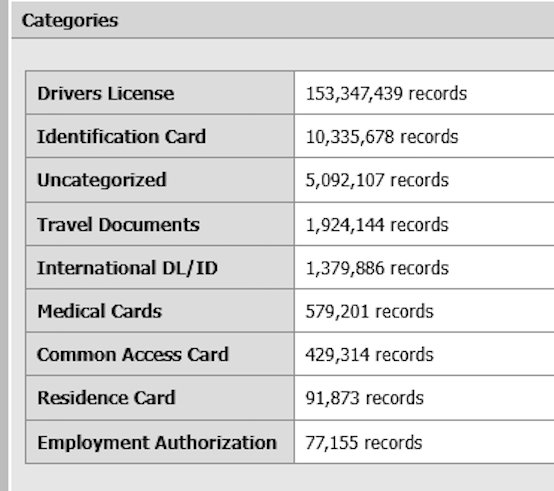
This week a massive new data breach has been revealed that should put the nail in the coffin for the idea that any sort of age or identity verification could be safe. 153 million scans of drivers licenses easily available based on this breach, with more being added all the time. Literally on the day it was revealed (and right before the site was taken down) it added another 400,000 records to its available database.
There is no safe age verification. There is no age verification that doesn’t put people at risk.
Last year, Eric Goldman wrote the definitive piece on how all of these technologies — no matter what they tell you — are huge privacy risks, but people are still living in denial. This is despite the numerous examples we’ve had in just the past few years of verification providers and their customers having massive data breaches.
The latest comes to us via Brian Krebs, who reports on a massive breach of scanned IDs — more than 153 million drivers licenses from people across the US and Canada, now for sale on the dark web:
A new identity theft service launched on the dark web this week is selling digital scans of more than 153 million drivers licenses from people in the United States and Canada. Based on interviews with individuals whose licenses are available for purchase on this service, it appears to be siphoning images collected by a widely-used identity verification company based in Louisiana. KrebsOnSecurity also has learned that the New Orleans field office of theFederal Bureau of Investigation(FBI) today launched an official inquiry into the source of the images.
Krebs traces the breach back to an ID verifier that appears to be used by many companies, including Hertz, the rental car company. It appears to not be limited to them either, as he checked with a number of people who were in the database, and by looking at the date they were added alongside their calendars, found examples of other people who shared their ID at places like a pot dispensary.
That company turns out to be IDScan.net, based in Louisiana, which has contracts with thousands of dispensaries, not to mention Hertz, FedEx, and Target. And while Krebs is focused on how many of the leaked IDs are connected to real world businesses, it’s worth noting that IDScan.net is also doing age verification for a bunch of tech companies, has a page tracking state age verification laws and company implementations, and even has written positively about laws like KOSA, the Kids Online Safety Act, that would effectively require age verification.
So, yes, we have a company that is a big player in the age verification space, talking up age and identity verification laws, that appears to have had a long-standing ongoing leak of every ID it scanned.
Yiiiiiikes.
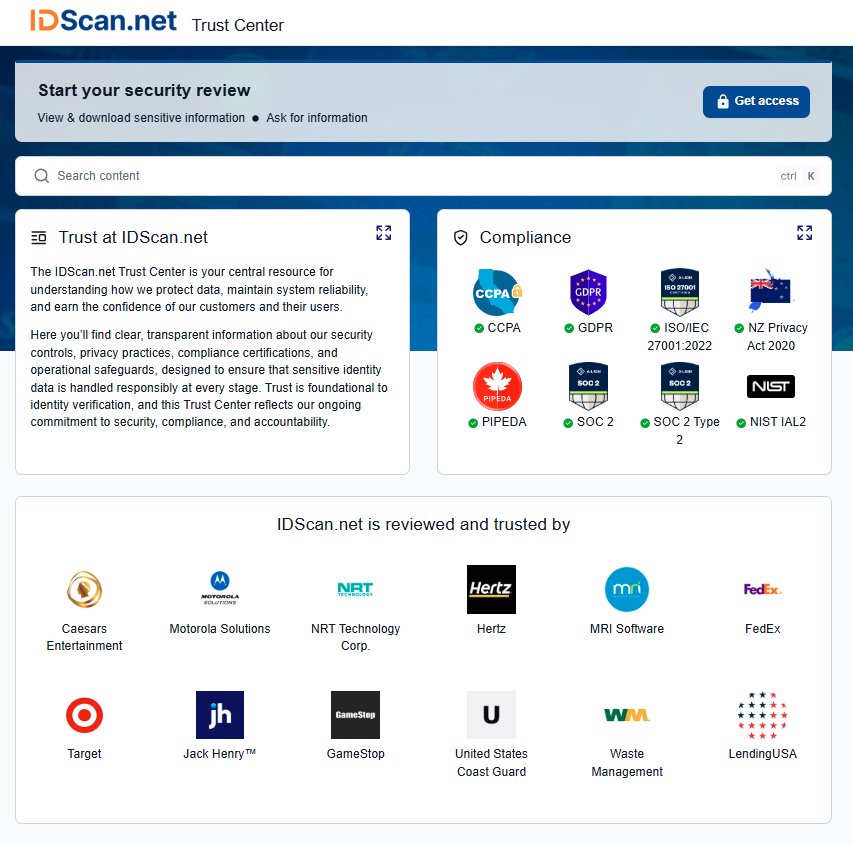
And, of course, like all age and identity verification providers, IDScan has spent years talking up how secure it keeps all this data, even as every single record appeared to be leaking in realtime. Here’s their “Trust Center” page which is still up days after the hack was revealed:
That’s the company that spent over a year leaking 150 million drivers licenses in real time, explaining “how we protect data, maintain system reliability, and earn the confidence of our customers and their users.” Might be time to update that page.
But also, this should be a massive warning to everyone pushing for age verification laws. You can have a “trusted” company in the space who brags about all the certifications it has. It’s in “compliance” with the GDPR, the CCPA, and every other law. It is “transparent” about its “privacy practices” and how its “sensitive identity data is handled responsibly” and…. for over a year it’s been leaking all of those sensitive records.
And it appears no one internally at the company noticed.
As Krebs makes clear, the breach included many, many millions of records and ID scans that were being swiped in real time by the hackers who breached the system:
The people behind Nexus claim the license images are coming from an active breach at “a major identity verification company” whose customers include multiple Fortune 500 companies.
The record totals listed by the Nexus identity theft service. The number of drivers license records increased by nearly 400,000 in the span of just 24 hours.
“We have been continuously exfiltrating new data for over a year into our private database,” the service enthused in its introductory post on Exploit. “Records are available to preview before purchase with pertinent information redacted. Customer photos are displayed if available.”
Indeed, over the past 24 hours, the number of drivers license records listed as available in Nexus has increased by nearly 400,000, suggesting that freshly stolen license data is being harvested and uploaded to this serviceon a semi-regular basis.
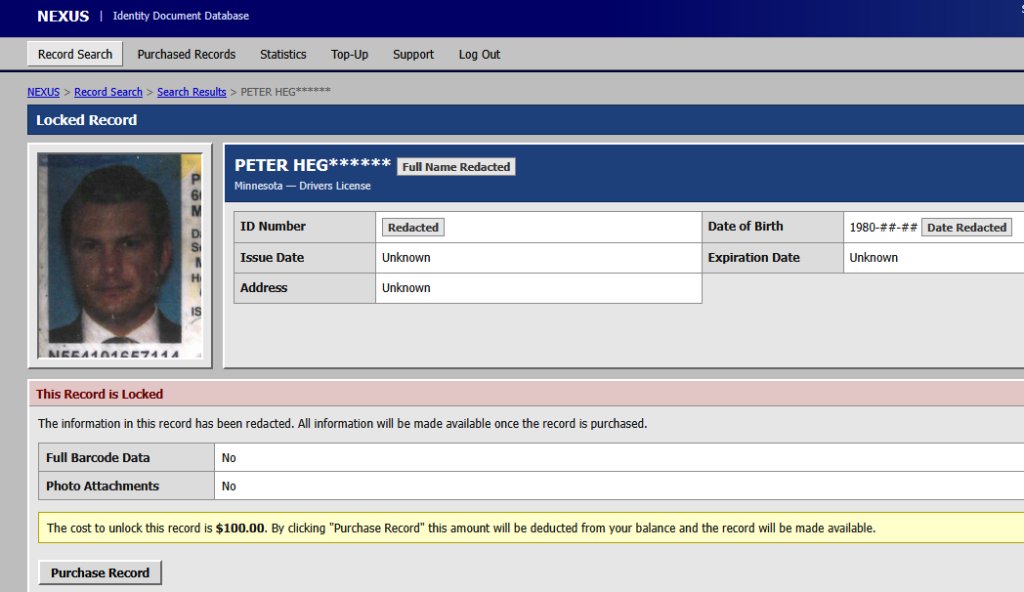
And the exposed records aren’t just random members of the public. Krebs found the driver’s license of the sitting Secretary of Defense sitting in there for sale:
A bargain! Only $100 to get a scan of the Secretary of Defense’s driver’s license.
Anyway, each time we highlight a breach people play it down and insist that mandating age verification is perfectly safe and nothing to worry about. Yet here’s one of the largest identity verification companies in the country, with a pipeline so wide open that hackers had a real-time feed of every government ID it scanned, for over a year, without anyone at the company noticing.
Krebs spoke to a security researcher at Cybera, named Larry Baldwin, who talks about how this kind of data can do real damage:
Baldwin said the Nexus identity theft service presents multiple serious security and privacy threats, noting that state-issued drivers licenses are commonly used as proof of one’s identity when opening new lines of credit. Baldwin said the service could also dangerously expose many people who do not wish to be found but who cannot meaningfully change their appearance (or at least not enough to fool today’s AI-based image matching tools).
This category of people, he said, includes those fleeing domestic violence, and even people who have been assigned a whole new life and identity as part of the federal government’s witness protection program, which is generally reserved for criminal defendants in racketeering and conspiracy investigations who agree to cooperate with federal authorities.
“Just when it seems like we’re making some headway in improving authentication controls through drivers license verification systems, this happens and the very thing those improvements are dependent on are compromised,” Baldwin said.
At this point, anyone still supporting age verification requirements, especially claiming it’s for “child safety,” should have to answer for all the millions of people put needlessly at risk due to data breaches like this.
You cannot do age or identity verification safely. It always creates some sort of record and that set of records will always become a target. That’s what happened here. And it’s what will happen with any such systems.
The FSNN News Room is the voice of our in-house journalists, editors, and researchers. We deliver timely, unbiased reporting at the crossroads of finance, cryptocurrency, and global politics, providing clear, fact-driven analysis free from agendas.
We and our selected partners wish to use cookies to collect information about you for functional purposes and statistical marketing. You may not give us your consent for certain purposes by selecting an option and you can withdraw your consent at any time via the cookie icon.
Cookies are small text that can be used by websites to make the user experience more efficient. The law states that we may store cookies on your device if they are strictly necessary for the operation of this site. For all other types of cookies, we need your permission. This site uses various types of cookies. Some cookies are placed by third party services that appear on our pages.
Your permission applies to the following domains:
https://fsnn.net
Necessary
Necessary cookies help make a website usable by enabling basic functions like page navigation and access to secure areas of the website. The website cannot function properly without these cookies.
Statistic
Statistic cookies help website owners to understand how visitors interact with websites by collecting and reporting information anonymously.
Preferences
Preference cookies enable a website to remember information that changes the way the website behaves or looks, like your preferred language or the region that you are in.
Marketing
Marketing cookies are used to track visitors across websites. The intention is to display ads that are relevant and engaging for the individual user and thereby more valuable for publishers and third party advertisers.


 Freedom Index