

 Freedom Index
Listen to the article
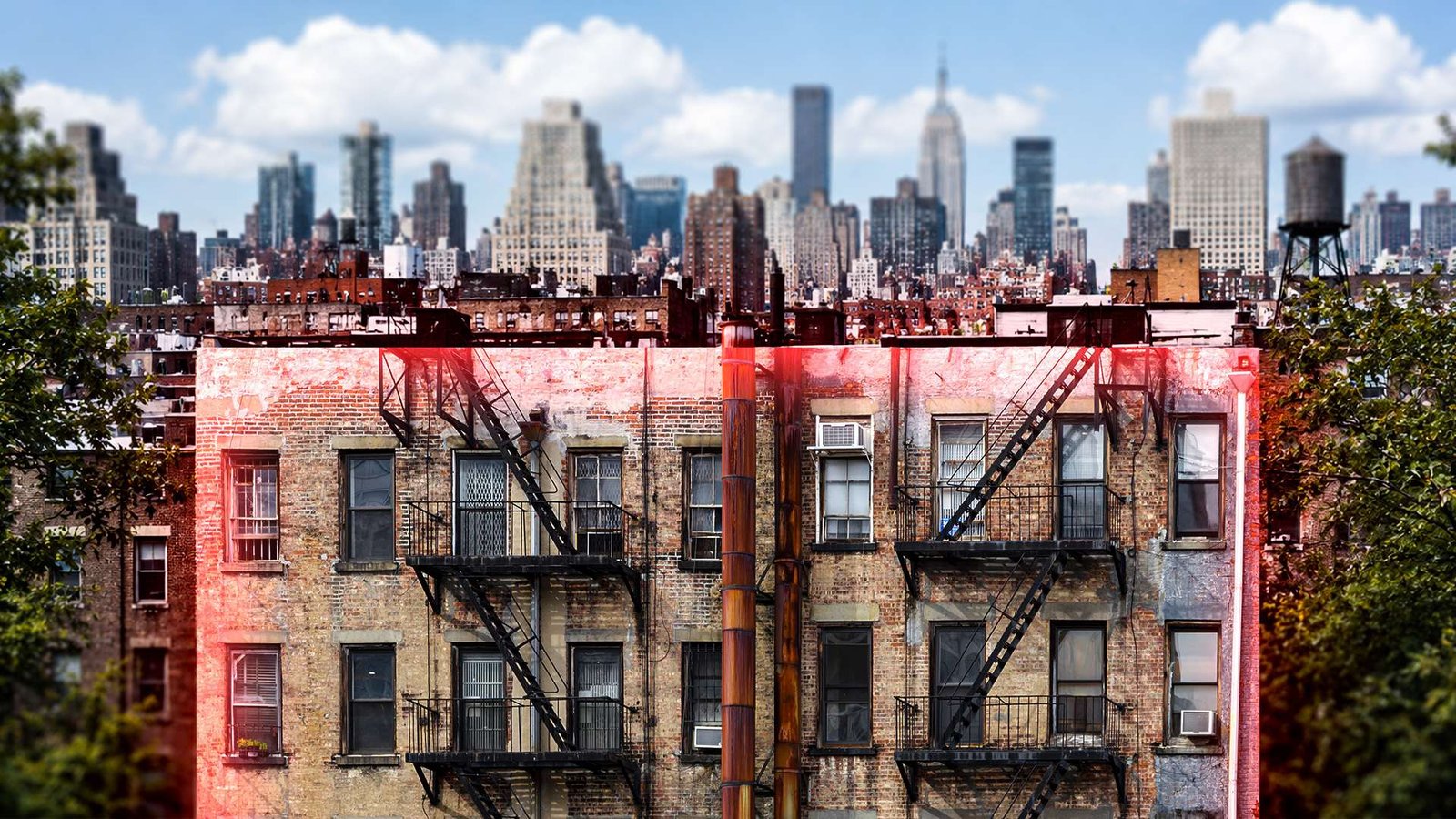
“The math just doesn’t math,” says Sophia, a New York City landlord. All of her major expenses—insurance, labor, fuel, and property taxes—are going up. Now she can no longer cover those costs by raising the rent she charges.
When New York’s Rent Guidelines Board (RGB) approved a rent increase of 0 percent in June, the city’s new mayor celebrated with a frozen treat. A short video posted to social media shows Zohran Mamdani reaching into a freezer to grab an ice cream bar while announcing that the “independent” board froze rents for the 2 million tenants living in the city’s nearly 1 million rent-stabilized apartments. Close to a third of all New York’s homes are rent-stabilized.
“It might be hot outside but the rent is freezing,” read the video caption on Instagram.
The vote was a major political victory for the mayor. Mamdani’s left-wing platform included everything from free childcare to free city buses, but his need to balance the budget has largely prevented him from making good on promises that actually cost the city money. The rent freeze was one headline policy the mayor could enact without directly adding red ink to the balance sheet.
But that does not mean the freeze is costless. Instead, that red ink will show up on the balance sheets of the city’s rent-stabilized buildings, an increasing share of which are losing money each year.
Close to 10 percent of New York’s rent-stabilized buildings have operating costs that exceed their revenues. That’s a near doubling of financial distress within just five years. Nearly 60,000 rent-stabilized apartments sit empty because their owners can’t afford to renovate them and put them back on the market. Bankruptcies of rent-stabilized buildings continue to rise each year, with no sign of stopping.
Meanwhile, city reports and academic studies show a steady decline in the physical quality of rent-stabilized housing stock.
The cause of the financial and physical deterioration of New York’s rent-stabilized apartments can be traced to a law passed in 2019 that aggressively tightened the state’s rent regulation regime. That law eliminated most avenues through which owners could remove their apartments from rent stabilization. It also largely ended their ability to raise rents to cover repairs and capital improvements and to bring rents closer to market rates on vacant units.
Those changes set many buildings on the course to bankruptcy. It’s in this environment of suppressed revenues and exploding operating costs that the Rent Guidelines Board—a majority of which was appointed by Mamdani—voted to freeze rents.
“[It’s] not as if one singular decision, one rent freeze this year, is all of a sudden what puts us on this path. We have been on this path for the better part of a decade,” says Kenny Burgos, CEO of the New York Apartment Association.
For socialist activists in and outside of the Mamdani administration, the financial ruin of privately owned rent-stabilized housing is all to the good. It represents a needed correction to the alleged “speculation” that drove building values too high, they say. If buildings go bankrupt, the argument goes, nonprofits or the city itself can take them over.
But even nonprofits are struggling to maintain rent-stabilized buildings in the face of rising costs and frozen rents. The rent freeze is one more s
That would be another financial headache for the city’s mayor—worse than an ice-cream-induced brain freeze.
Before the Rent Guidelines Board issues its final decree on rent increases, it holds a series of public hearings every year.
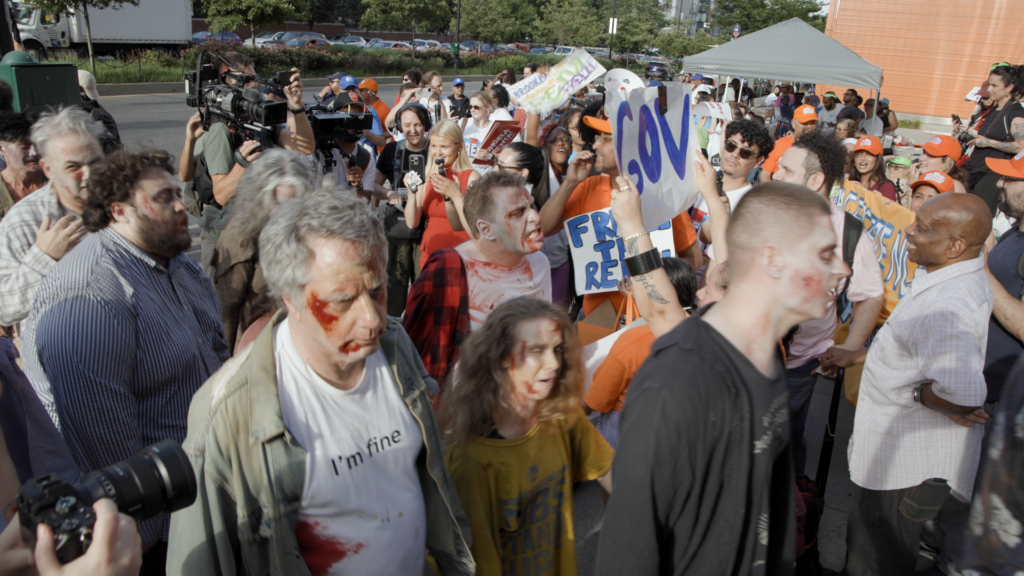
Tenant activists who oppose any rent increase on principle come out in force to make their voices heard. The result is usually a circus, but this year it was more of a horror show.
At the RGB’s Brooklyn hearing in mid-June, the “eat the rich” protesters were joined by a horde of zombies who wanted to eat anyone, anyone at all. The zombies were, in fact, actors hired by the Gotham Housing Alliance, a landlord trade association, to serve as a colorful living representation of “zombie” rent-stabilized apartments—units that sit empty because owners can’t make a profit by fixing them up and putting them back on the market.
In 2025, an estimated 57,000 rent-stabilized apartments sat vacant in New York City, according to public records obtained by The City Reporter. About 5.6 percent of rent-stabilized apartments are housing no one—five times the rent-stabilized vacancy rate reported by the previous Housing Vacancy Survey, conducted by the U.S. Census Bureau in 2023.
It may seem bizarre that below-market apartment buildings in New York City, which has some of the highest market rents in the world, would stay vacant. But property owners have a straightforward explanation for this economic oddity: The 2019 rent laws eliminated the “vacancy bonus” rent increases landlords could charge on empty units.
That change made it completely uneconomical to bring online apartments that become vacant after a long tenancy.
A well-documented effect of rent control is that tenants stay in their units for longer. For tenant activists, this is a primary benefit of the policy: “stability” for people who might otherwise leave because of rising rent.
In New York, the longer a rent-stabilized unit is occupied by the same tenant, the bigger the gulf between the rent the landlord can legally charge and the rent the apartment could fetch in the open market. Under the pre-2019 system, this was a less severe problem. Once a long-occupied unit was vacated, the landlord could claim the automatic 20 percent vacancy rent increase. The costs of renovations could also be factored into the rent the next tenant would pay.
But the 2019 changes ended vacancy bonuses and capped the renovation costs at that could be passed on at no more than $15,000 (later raised to $50,000 for renovations on empty units). Those would have to be spread over 15 years, for a maximum monthly rent increase of $347.
“The [vacant] units are subjected to an extremely low rent cap. These very same units will often need hundreds of thousands of dollars of renovations so that they may be legally rented,” says Robert Johnson, an attorney with the libertarian Institute for Justice. “The sum total of all this is there are tens of thousands of units that are sitting vacant.”
The Institute for Justice is suing New York state, New York City, and the Rent Guidelines Board on behalf of several rental property owners. They argue the rent caps are so low that they’ve made it impossible for landlords to make money on their vacant units.
One of the plaintiffs has a vacant unit that needs $100,000 in renovations to bring it up to code. The maximum legal rent on that unit is $710 a month.
Because the owner can reclaim only half those renovation costs via rent increases spread over 15 years, it’s cheaper to simply leave the apartment empty.
This year’s rent freeze is not the RGB’s first. The board also capped rent increases at 0 percent for one-year leases in 2015, 2016, and 2020. But the 2026 freeze bites a lot more, given the many other costs imposed by the 2019 law.
For a few decades, beginning in the early 1990s, New York’s rent regulations were relatively flexible. Landlords could raise rents by 20 percent on vacant units. They were also able to raise rents to cover the full cost of renovations and major capital improvements. Landlords could also “deregulate” rent-stabilized units and charge whatever they wanted on them, once legal rents allowed under rent stabilization rose above a certain threshold.
The reforms of the 1990s helped bring New York’s rent-stabilized buildings back to good financial health.
In 1991, 13.9 percent of rent-stabilized buildings were financially distressed, meaning that their operating costs exceeded their operating incomes. By the end of the decade, only 6 percent of buildings were in financial distress.
A near-20 percent property tax hike in the early 2000s, followed by the Great Recession, saw financial distress ripple through the rent-stabilized sector again. But by the mid- and late 2010s, the percentage of buildings operating in the red was holding steady at around 5 percent.
As market rents in New York rose in the 2000s, this relatively flexible system of rent regulation saw a lot of capital invested into rent-stabilized housing from investors eager to deregulate these units. Investors would purchase dilapidated buildings and renovate them. The rent increases they claimed from vacancy bonuses and apartment improvements enabled them to push legal rents above the threshold necessary to remove apartments entirely from rent regulation.
The RGB reports that from 1994 through 2019, New York witnessed a net decline of 145,312 rent-stabilized units, the vast majority of which exited the system through high-rent deregulation or condominium or cooperative conversion.
One can certainly tell a positive story about the slow, steady deregulation of New York’s rent-stabilized housing stock. The law incentivized investors to pour capital into older buildings in desperate need of maintenance. Individual rents would rise on deregulated units, but more apartments entering the market would put downward pressure on rents overall.
But the critics had their story to tell too. Press coverage complained of landlords exploiting “loopholes” to jack up rents. Tenant activists argued that landlords had an incentive to harass tenants until they moved out in order to claim vacancy bonuses.
In 2018, progressive candidates, many of them affiliated with Democratic Socialists of America, helped flip the state Senate, which for decades had been controlled by Republicans.
The following year, these progressives passed the Housing Stability and Tenant Protection Act, which did away with the deregulation of the 1990s. Vacancy bonuses were eliminated. The rent increases that could be claimed on renovation and capital improvements were strictly capped. Almost every avenue through which an owner could remove a unit from rent stabilization was ended.
New York’s zombie apartments are the most obvious sign of the 2019 law’s unworkability. The fundamentals of occupied buildings don’t look much better.
When that law passed, “the sentiment was that these buildings lost 30 percent [of their value] overnight,” says Greg Corbin, president and founder of Northgate Real Estate Group, which specializes in bankruptcy sales of rent-stabilized buildings.
The truth turned out to be a lot worse, Corbin says.
Many owners had borrowed money to buy rent-stabilized buildings on the expectation that they could renovate vacant units and then, through high-rent deregulation, bring rents up to market rates. When the 2019 law shut the door on this business plan, owners were left with units whose legal rents would never be enough to cover their rising operating costs and financing costs.
The most cash-strapped owners moved to sell their buildings in bankruptcy sales. When those bankruptcy sale prices showed building values had declined a lot more than 30 percent, that put downward pressure on even more buildings’ valuations.
This kicked off a vicious cycle of more owners pursuing bankruptcy sales, which put more downward pressure on building valuations, and on and on.
About 9.2 percent of buildings containing rent-stabilized units are “financially distressed,” according to the Rent Guidelines Board, meaning their operating costs exceed rent revenues. That’s up from the 6 percent of buildings that were considered distressed before the 2019 rent law.
The RGB figures on financially distressed buildings do not include their owners’ financing costs. Once those are factored in, the financial trouble is much more widespread.
An estimated 460,000 units are in buildings where 90 percent or more of the apartments are rent stabilized.
“In my assumption, at least half of those buildings are unhealthy, and something needs to happen,” says Corbin. His firm alone is currently handling 60 bankruptcy or foreclosure sales of rent-stabilized buildings.
New York University’s Furman Center likewise notes that the sales volume of rent-stabilized buildings continues to decline, as lenders and investors become more wary of financing these deals. Some 4 percent of heavily rent-stabilized buildings have significant unpaid property, water, or sewer bills, according to the Furman Center.
Cea Weaver, the leftist tenant activist Mamdani tapped to lead his Office to Protect Tenants, told The New York Times Magazine in March that declining building valuations are a positive effect of the 2019 laws.
“There was a business model that was based on speculation. Now there needs to be a new business model that is based on the reality that these buildings are rent-stabilized and are going to stay rent-stabilized,” she said.
“Loopholes” in the pre-2019 rent laws encouraged purchases of these buildings at speculatively high rates, she argued; those loopholes are now closed, and the speculative bubble is being deflated.
Whatever one thinks of that assessment, the post-2019 law has invited its own form of speculation. Corbin says the primary buyers of rent-stabilized properties today are “generational real estate investors” with very long time horizons, who are banking on an eventual policy change. They reason that New York’s rent laws can’t stay this tight forever—and that when the state eventually deregulates, a decade or two from now, the owners of distressed rent-stabilized buildings will experience a windfall.
“If [the law] change[s], people are going to say, I can’t believe I didn’t buy every building I could get my hands on in 2027,” Corbin says.
Changing New York’s rent laws in a way that benefits building owners will require policymakers and the public to feel more warmly toward property owners than they do right now.
The 2019 rent law makes that shift in attitudes less likely. The law’s suppression of rents reduces landlords’ incentive and ability to keep their buildings in good repair. Building quality thus declines, giving tenants grievances against individual landlords and heightening anger at landlords as a whole.
This doom loop of bad policy fueling bad attitudes was on full display during the RGB hearings. Landlords said they can’t afford to fix anything because their costs are going through the roof. Tenants demanding a rent freeze asked why they should be paying more when their landlord isn’t even keeping the building in good repair.
Under the 2019 law, the annual increases allowed by the RGB are the only real avenue landlords have left to raise rents. This year, seven of the board’s nine members, six of them appointed by Mamdani, voted to close that avenue too.
One member of the board—Christina Smyth, who was appointed during Eric Adams’ term as mayor to represent building owners—resigned in protest before the final vote. “This year’s RGB order was decided last year on the campaign trail,” she wrote in her resignation letter. The board, she said, crossed a “legal line” by ignoring the data and approving the mayor’s rent freeze.
The sole dissenting vote against the freeze came from Arpit Gupta, an associate professor of finance at New York University. Gupta tells Reason he believed the Mamdani administration didn’t place any undue pressure on the board to vote a certain way.
In one sense, that’s good news: The RGB is legally constituted as an independent body, and it acted like one. But the other side of the equation, says Gupta, is that this independent board looked at the data showing tenant income rising steadily, owners’ expenses rising faster than their rental incomes, and worsening financial distress among landlords—and still voted for a freeze.
“What I don’t have a clear picture of is, What data would they need to see to make a different decision in the future?” he says.
Should the board continue to enforce rent freezes year after year while landlords’ operating costs continue to rise, Gupta says, New York could see a return of the bad old days when property owners walked away from insolvent buildings that aren’t even worth the property tax bill.
New York’s past problems with building abandonment came at a time when the city was suffering from high crime, low economic growth, and population loss. The city’s rent laws threaten to create those same conditions at rent-stabilized buildings in a time of general prosperity in the city.
Mamdani has floated various so-called off-ramps to save rent-stabilized housing without reforming the 2019 rent law. His plan includes stepped-up code enforcement and shifting ownership of the most troubled buildings to nonprofits or the city.
During this year’s RGB hearings, Gupta heard from many nonprofit owners who, despite not paying property taxes (the largest single expense for most owners), are having trouble making the numbers work: “Even the nonprofit ones who don’t pay [property taxes] are coming to us and saying, ‘Hey, we can’t make these buildings work. Just the math doesn’t add up.'”
In New York’s current political moment, where socialists are ascendant, we seem unlikely to see market-based reforms to the state’s rent laws. Absent reform, the city can expect frozen rents and broken buildings.
For the foreseeable future, the math won’t math.
Read the full article here
Fact Checker
Verify the accuracy of this article using AI-powered analysis and real-time sources.