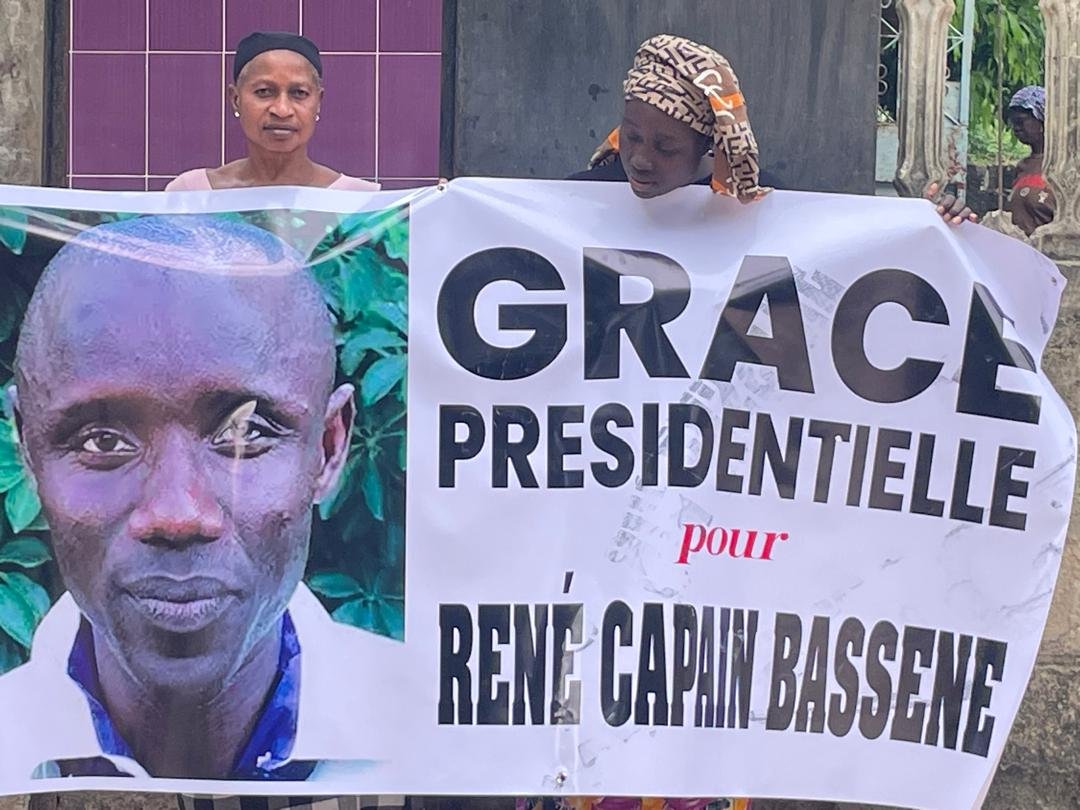
Close Menu
FSNN | Free Speech News NetworkFSNN | Free Speech News Network
  • Home
  • News
    • Politics
    • Legal & Courts
    • Tech & Big Tech
    • Campus & Education
    • Media & Culture
    • Global Free Speech
  • Opinions
    • Debates
  • Video/Live
  • Community
  • Freedom Index
  • About
    • Mission
    • Contact
    • Support
Trending

Why bitcoin investors should trade the cycle, not dollar-cost average

16 minutes ago

Ledn Launches Tether Gold-Backed Loans With XAUt Collateral

18 minutes ago

Everyday Savers Bet Big on Bitcoin Giant Strategy’s STRC—Now It’s Falling

23 minutes ago
Facebook X (Twitter) Instagram
Facebook X (Twitter) Discord Telegram
FSNN | Free Speech News NetworkFSNN | Free Speech News Network
Market Data Newsletter
Thursday, June 18
  • Home
  • News
    • Politics
    • Legal & Courts
    • Tech & Big Tech
    • Campus & Education
    • Media & Culture
    • Global Free Speech
  • Opinions
    • Debates
  • Video/Live
  • Community
  • Freedom Index
  • About
    • Mission
    • Contact
    • Support
FSNN | Free Speech News NetworkFSNN | Free Speech News Network
Home»News»Global Free Speech»EXCLUSIVE: Senegal’s grave miscarriage of justice in the case of René Capain Bassène
Global Free Speech

EXCLUSIVE: Senegal’s grave miscarriage of justice in the case of René Capain Bassène

News RoomBy News Room3 weeks agoNo Comments6 Mins Read1,387 Views
Share Facebook Twitter Pinterest Copy Link LinkedIn Tumblr Email VKontakte Telegram
EXCLUSIVE: Senegal’s grave miscarriage of justice in the case of René Capain Bassène
Share
Facebook Twitter Pinterest Email Copy Link

Listen to the article

0:00
0:00

Key Takeaways

Playback Speed

Select a Voice

Journalist René Capain Bassène devoted his career to restoring peace to Senegal’s troubled Casamance region. The government accused him of being a rebel who ordered the murder of 14 men and jailed him for life. Now a rebel leader and a U.S. diplomat involved in peace negotiations have refuted the prosecution’s fundamentally flawed theory. The evidence of a miscarriage of justice is clear.

Editor’s note: René Capain Bassène was released on May 27, 2026, as CPJ was finalizing this report, which has been edited to reflect this update.

On the morning of January 6, 2018, 14 men went into a forest in southern Senegal to collect wood. None of them came home. They were shot to death in one of the most brutal episodes of violence in the decades long Casamance conflict. 

What happened next was perhaps even more shocking. A journalist and writer who had spent years trying to end the fighting was arrested, tortured in custody, and sentenced to life imprisonment for the massacre.

René Capain Bassène speaks at a conference in this undated photo. (Photo: Courtesy of René Capain Bassène’s family)

His name is René Capain Bassène. He had devoted three books and countless radio broadcasts to understanding, and ultimately stopping, a war that had displaced his own family.

CPJ regards Bassène’s case as one of the worst miscarriages of justice in Senegalese history, where a journalist trusted by all sides has been convicted of mass murder. 

In a new development that casts further doubt on the integrity of Bassène’s conviction, two men with intimate knowledge of the separatist militant group — that Bassène was alleged to have instructed to carry out the killings — have repudiated the prosecution’s case.

One is César Atoute Badiate, the exiled leader of one of the Movement of Democratic Forces of Casamance’s (MFDC) main factions, and the very man that the prosecution claims Bassène ordered to carry out the killings. The other is Mark Boulware, a former U.S. career diplomat appointed in 2014 by the Obama administration as a special envoy to support peace efforts in Casamance. 

Justice has failed

MFDC leader César Atoute Badiate (right) is seen in an undated photo.
MFDC leader César Atoute Badiate (right) is seen in an undated photo. (Screenshot: Groupe Médias du Sud/YouTube)

CPJ interviewed the rebel and the diplomat for a new podcast, which presented fresh evidence about one of West Africa’s most emblematic press freedom concerns, proving that justice had failed and an innocent man was paying the price.

Listen to CPJ’s podcast “René Capain Bassène, wrongly convicted,” which examines the journalist’s life, career, and trial, through the voices of those involved. 

The Casamance conflict began in 1982 amid longstanding grievances over political and economic marginalization. Bassène grew up in that region and his family was displaced from their village on the frontline. 

The journalist conducted hundreds of interviews with rebels and soldiers and regularly appeared on a radio program called “Carrefour de la paix” (Crossroads of peace), on local Zig FM, which focuses on resolving the conflict. The title of his 2017 book, in which he revealed that threats from multiple directions were intensifying, Bassène asked the blunt question: When will there ever be peace?

The 14 loggers were killed in a protected forest near Casamance’s largest town, Ziguinchor, in one of the most violent attacks since peace agreements were signed in 2004 and 2014. The MFDC denied involvement. 

Prosecutors built a theory: Bassène was a secret MFDC operative who had incited Badiate to order the killings. In June 2022, a Casamance court convicted both men of complicity in murder, attempted murder and criminal association.

‘I knew him as a journalist’

Separatists belonging to the Movement of Democratic Forces of Casamance (MFDC) arrive ahead of the release of seven captured Senegalese soldiers at an abandoned settlement, Baipal in Gambia on February 14, 2022. Separatist rebels from Senegal's southern Casamance region on Monday handed over seven Senegalese soldiers whom they had captured three weeks ago, AFP reporters saw, demanding nothing in return.
MFDC rebels arrive in Gambia in 2022 to hand over seven Senegalese soldiers whom they had captured three weeks earlier. (Photo: AFP/ Muhamadou Bittaye)

Replying to questions from CPJ, Badiate — who was convicted in absentia and is participating in peace negotiations with the Senegalese government in neighboring Guinea-Bissau — was unambiguous. 

“René Capain Bassène is neither an MFDC representative nor a leader to give me orders (to  kill). He was neither a member nor a spokesman for the MFDC. I knew him as a journalist and writer,” Badiate wrote to CPJ in March.

While Bassène spent the last eight years behind bars, Badiate met freely with Senegalese officials, signing a peace deal in August 2022 and a follow-up plan in February 2025. The government chose to negotiate with the rebel commander it claimed Bassène directed, while keeping the journalist behind bars.

“His absence, facilitated by Senegal’s unwillingness to bring him to trial, deprived me of a unique opportunity to prove my innocence, “ Bassène told CPJ from prison in Senegal’s capital, Dakar.

MFDC members Louis Tendeng and Samba Goudiaby, who introduced Bassène to Badiate, also told CPJ that the journalist never belonged to the movement. Instead, he sought their help in interviewing MFDC rebels as part of his research.

Boulware’s assessment was no less striking. As a diplomat supporting mediation between the government and the rebels, he described Bassène as an “invaluable resource” and a “completely independent” journalist who documented the conflict without favoring either side.

“The accusation of being the mastermind of such an operation seemed laughable to me. It didn’t make sense,” Boulware told CPJ.

Stripped naked, beaten
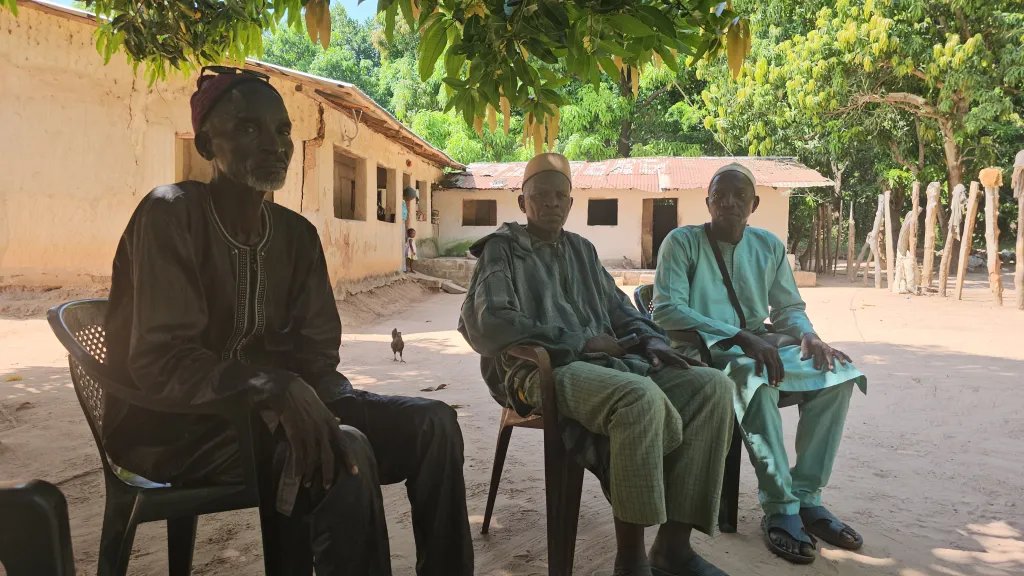
Senegalese prosecutors said Ibou Sané, Abdoulaye Diédhiou, and Abdou Karim Sagna (pictured left to right) participated in meetings in which the massacre was planned. They told CPJ that they were unaware of such meetings and they were forced to sign transcripts of interviews altered to include inaccurate information. (Photo: CPJ/Moussa Ngom)

These latest interviews follow CPJ’s extensive 2025 investigation in which several former co-defendants — all acquitted in 2022 — revealed that they were forced, through beatings and electric shocks, to falsely implicate Bassène. Some said they did not even know the journalist. Meanwhile, Bassène said he was stripped naked, beaten until he lost hearing in one ear, and his genitals were electrocuted during interrogation.

In addition, four witnesses told CPJ that they saw Bassène miles away from the crime scene that afternoon, and that he watched a football match in Ziguinchor, raising doubts about the prosecution’s evidence over the geolocation of his phone. CPJ’s reporting also cast doubt on the authenticity of emails that the prosecution alleged were sent from Bassène’s account.

Despite this, the Supreme Court upheld Bassène’s life sentence.

While Bassène was in prison, his wife raised their four children alone. 

“His children need their father’s love, ”Odette Victorine Coly told CPJ. 

Presidential spokesperson Ousseynou Ly, government spokesperson Marie Rose Khady Fatou Faye, Defense Minister Birame Diop’s offices, and the gendarmerie have not responded to CPJ’s requests for comment.

Read the full article here

Fact Checker

Verify the accuracy of this article using AI-powered analysis and real-time sources.

Get Your Fact Check Report

Enter your email to receive detailed fact-checking analysis

5 free reports remaining

Continue with Full Access

You've used your 5 free reports. Sign up for unlimited access!

Already have an account? Sign in here

Share. Facebook Twitter Pinterest LinkedIn Tumblr Email Telegram Copy Link
News Room
  • Website
  • Facebook
  • X (Twitter)
  • Instagram
  • LinkedIn

The FSNN News Room is the voice of our in-house journalists, editors, and researchers. We deliver timely, unbiased reporting at the crossroads of finance, cryptocurrency, and global politics, providing clear, fact-driven analysis free from agendas.

Related Articles

Global Free Speech

World Refugee Day 2026: Supporting journalists in exile amid transnational repression

2 hours ago
Global Free Speech

On Tuesday 16 June, Baroness Tina Stowell introduced her anti-SLAPP Bill in the House of Lords. Photo: Parliament TV The UK Anti-SLAPP Coalition, which is co-chaired by Index on Censorship, had a significant campaign success this week when coordinated Bills were introduced in both the House of Lords and the House of Commons. On Tuesday 16 June, Baroness Tina Stowell introduced her anti-SLAPP Bill in the House of Lords. The next day, Sir John Whittingdale MP introduced a parallel bill in the Commons. Remind me: what is a SLAPP? SLAPP stands for strategic lawsuit against public participation. The term describes legal threats and actions that are used to intimidate and harass journalists, whistleblowers, campaigners, academics, and survivors of abuse (among others) by burdening them with time-consuming and costly litigation. Anyone who speaks out on an issue of public interest is at risk. Even if a defendant has every chance of succeeding at trial, the lengthy process of preparing a legal defence is so prohibitively expensive that they are forced to quietly submit to the claimant’s demands. This means they are silenced. SLAPPs threaten our right to freedom of expression and our democracy by preventing ordinary people from being able to hold power to account. They also remove information from the public domain, which means that SLAPPs have an impact on all of us. We have published case studies of a small number of the SLAPPs that have crossed our desks in the UK Anti-SLAPP Coalition. From cosmetic surgery patients to environmentalists, abuse survivors and campaigners, you can read them here. So, what would the new bills actually do? The proposal is simple: Anyone who believes that they are facing a SLAPP would be able to ask a judge to examine the case at an early stage. If the court concludes that the claim is being used to suppress public-interest speech, it could be dismissed before huge legal costs begin to accumulate. This “early dismissal” mechanism would shift the balance away from wealthy claimants who can use litigation as a pressure tactic, and towards defendants who currently face years of stress, uncertainty and expense. What these bills definitely won’t do is to protect public-interest speech across the UK. This is a devolved issue, and legislation passed in Westminster will only cover England and Wales. Separate anti-SLAPP bills will need to be passed in Scotland and Northern Ireland to ensure that everyone in the UK is protected from SLAPPs. Why now? Successive governments have acknowledged the problem of SLAPPs, but have failed to bring forward comprehensive legislation. Anti-SLAPP measures were, yet again, left out of this year’s King’s Speech despite repeated and widespread calls for their inclusion. Even after the speech, Deputy Prime Minister David Lammy confirmed that the government would bring forward legislation “as soon as time allows”. The introduction of parallel Private Members’ Bills is therefore as much a political signal as a legislative exercise: Parliament is being asked to show that the issue has not gone away. Will these Bills become law? The honest answer is that we don’t know. The second reading for Whittingdale’s bill is scheduled for late November, and no date has yet been set for Stowell’s bill. However, the impact is immediate as it keeps anti-SLAPP reform firmly on Parliament’s agenda, providing a ready-made legislative blueprint to show that legislation to stamp out SLAPPs can be done effectively and easily within the existing legal framework. In other words, the real question is not whether Stowell’s or Whittingdale’s bills become law exactly as drafted. It is whether the government will finally listen to mounting pressure to back these bills, and put their weight behind ensuring comprehensive anti-SLAPP legislation that will protect anyone who speaks out in the public interest. But I heard that anti-SLAPP legislation has already been enacted. Why then is the UK Anti-SLAPP Coalition pushing for more legislation? Because the UK’s existing anti-SLAPP protections are very limited. The Economic Crime and Corporate Transparency Act (ECCTA) introduced anti-SLAPP provisions in 2023, but they apply only to cases linked to economic crime. Many abusive cases fall outside that definition. It also depends on a subjective test, forcing the court to undertake a time-intensive process by which the intentions of the SLAPP filer have been identified. That’s why we need a broader law that can protect anyone facing a SLAPP, regardless of the subject matter. What can I do to support the UK Anti-SLAPP Coalition as they continue to call on the government to enact comprehensive anti-SLAPP legislation? You can support the work of the Coalition by writing to your MP, by posting your support for action on SLAPPs using the hashtag #StopSLAPPs, and by signing up to the newsletter of the Anti-SLAPP Coalition here. READ MORE

2 hours ago
Global Free Speech

Mozambique’s Estacio Valoi faces ‘clear intimidation’ over environmental reporting

24 hours ago
Global Free Speech

News leader Maritza Félix on covering immigration in Arizona

1 day ago
Global Free Speech

These 6 foreign journalists have been denied entry by Israel 

1 day ago
Global Free Speech

In Mali, 2 more journalists arrested under cybercrime law for criticizing authorities

2 days ago
Add A Comment

Comments are closed.

Editors Picks

Ledn Launches Tether Gold-Backed Loans With XAUt Collateral

18 minutes ago

Everyday Savers Bet Big on Bitcoin Giant Strategy’s STRC—Now It’s Falling

23 minutes ago

A Slow Thursday At The Court

57 minutes ago

Foundation loses another key leader as Hsiao-Wei Wang resigns

1 hour ago
Latest Posts

What happens when ChatGPT becomes the front door to crypto

1 hour ago

Jerome Powell Supports Fed’s New Stablecoin Policies—But Chair Kevin Warsh Abstains

1 hour ago

The Most Interesting Supreme Court Opinion Line-Up You Will See This Year

2 hours ago

Subscribe to News

Get the latest news and updates directly to your inbox.

At FSNN – Free Speech News Network, we deliver unfiltered reporting and in-depth analysis on the stories that matter most. From breaking headlines to global perspectives, our mission is to keep you informed, empowered, and connected.

FSNN.net is owned and operated by GlobalBoost Media
, an independent media organization dedicated to advancing transparency, free expression, and factual journalism across the digital landscape.

Facebook X (Twitter) Discord Telegram
Latest News

Why bitcoin investors should trade the cycle, not dollar-cost average

16 minutes ago

Ledn Launches Tether Gold-Backed Loans With XAUt Collateral

18 minutes ago

Everyday Savers Bet Big on Bitcoin Giant Strategy’s STRC—Now It’s Falling

23 minutes ago

Subscribe to Updates

Get the latest news and updates directly to your inbox.

© 2026 GlobalBoost Media. All Rights Reserved.
  • Privacy Policy
  • Terms of Service
  • Our Authors
  • Contact

Type above and press Enter to search. Press Esc to cancel.

🍪

Cookies

We and our selected partners wish to use cookies to collect information about you for functional purposes and statistical marketing. You may not give us your consent for certain purposes by selecting an option and you can withdraw your consent at any time via the cookie icon.

Cookie Preferences

Manage Cookies

Cookies are small text that can be used by websites to make the user experience more efficient. The law states that we may store cookies on your device if they are strictly necessary for the operation of this site. For all other types of cookies, we need your permission. This site uses various types of cookies. Some cookies are placed by third party services that appear on our pages.

Your permission applies to the following domains:

  • https://fsnn.net
Necessary
Necessary cookies help make a website usable by enabling basic functions like page navigation and access to secure areas of the website. The website cannot function properly without these cookies.
Statistic
Statistic cookies help website owners to understand how visitors interact with websites by collecting and reporting information anonymously.
Preferences
Preference cookies enable a website to remember information that changes the way the website behaves or looks, like your preferred language or the region that you are in.
Marketing
Marketing cookies are used to track visitors across websites. The intention is to display ads that are relevant and engaging for the individual user and thereby more valuable for publishers and third party advertisers.