Close Menu
FSNN | Free Speech News NetworkFSNN | Free Speech News Network
  • Home
  • News
    • Politics
    • Legal & Courts
    • Tech & Big Tech
    • Campus & Education
    • Media & Culture
    • Global Free Speech
  • Opinions
    • Debates
  • Video/Live
  • Community
  • Freedom Index
  • About
    • Mission
    • Contact
    • Support
Trending

Democrats Are Undoing California’s Pension Reforms. Why Are Republicans Going Along With It?

28 minutes ago

Ethena looks beyond crypto to squeeze yield from booming equity perpetuals

48 minutes ago

Who Is Legally Liable When An AI Agent Goes Rogue?

51 minutes ago
Facebook X (Twitter) Instagram
Facebook X (Twitter) Discord Telegram
FSNN | Free Speech News NetworkFSNN | Free Speech News Network
Market Data Newsletter
Friday, August 28
  • Home
  • News
    • Politics
    • Legal & Courts
    • Tech & Big Tech
    • Campus & Education
    • Media & Culture
    • Global Free Speech
  • Opinions
    • Debates
  • Video/Live
  • Community
  • Freedom Index
  • About
    • Mission
    • Contact
    • Support
FSNN | Free Speech News NetworkFSNN | Free Speech News Network
Home»News»Global Free Speech»  Every year, as 4 June approaches, an old ritual unfolds in China. Censors spring into action. Social media posts disappear. Searches for “Tiananmen”, “June Fourth”, “1989”, and even more cryptic references are scrubbed from the internet. Activists are placed under surveillance, or sent on forced holidays. Foreign journalists gather in Hong Kong, Taipei, London and Washington to commemorate an event that officially never happened. For more than three decades, the Party has tried to erase the memory of Tiananmen. The effort itself suggests how deeply it remains haunted by it. I know because I was there. Not in Tiananmen Square itself, but in Nanjing, where I was a 25-year-old factory worker. Like millions of Chinese, I watched events unfold with excitement and hope. The student demonstrations soon spread beyond the universities. People from all walks of life joined in. I organised a large protest by workers from my missile factory in support of the students. For the first time in my life, I felt history opening before me. My fellow protesters and I believed that ordinary people could help shape our country’s future. Then, in the darkness before dawn on 4 June, came the sound of gunfire. The movement was crushed. The hopes of a generation were shattered. Like many others, I learned a painful lesson about the limits of political change in China. What has fascinated me ever since is not only the crackdown itself but the Chinese Communist Party’s determination to erase it from public memory. The campaign has been remarkably successful. Many young Chinese know little or nothing about Tiananmen. Some have never heard of it. Others know only fragments. In 2013, shortly before Xi Jinping came to power, when the political atmosphere was still somewhat more relaxed than it is today, I gave a book talk attended by university students. Afterwards, an earnest-looking young man approached me. “Did the government really open fire on the students on 4 June 1989?” he asked. “That was just Western propaganda, wasn’t it?” I have often been struck by the gap between my memories and their knowledge. Personally, I have never regretted what I did in 1989. I was repeatedly interrogated by the police and suspended from work, yet it remains the most meaningful thing I have ever done in my life. It shaped not only my understanding of China but also a lifelong fascination with politics and power. Looking back, I do not see 4 June simply as a tragedy. I also see it as a watershed. The movement arose not only from a desire for democracy and human rights, but also from widespread frustration with everyday life. Corruption was rampant, inflation was rising, and personal freedom was limited. The Party’s response was twofold. Politically, it tightened control. Economically, however, it accelerated reform and gradually gave people more personal freedom. Chinese citizens today can choose where to live, what careers to pursue and, to a much greater extent than before, how to live. The cage remains, but it has grown so large that many no longer feel its bars. In that sense, the protests of 1989 were not an absolute failure. Some of the grievances that fuelled it were addressed. Without that shock, China’s rulers might never have felt compelled to expand the cage. The Party may have defeated the movement, but it has never fully escaped its legacy. It fears Tiananmen not because it threatens its power today. China’s young people are more likely to worry about jobs, housing prices and economic uncertainty than political reform. What Tiananmen represents, however, is a challenge to the Party’s preferred narrative. The official story of modern China is one of stability, prosperity and national rejuvenation under Communist rule. Tiananmen reminds people that there was another possible path, and another vision of China’s future. When I was young, the Chinese government encouraged us to remember past humiliations and injustices. It understood that memory shapes identity. The same principle applies to Tiananmen. An event of such magnitude cannot be permanently erased. It survives in family stories, private conversations, overseas communities, memoirs and fragments of testimony. Now, 37 years later, the Party may have largely succeeded in making Tiananmen invisible. It has not succeeded in making it irrelevant. The impulses that brought people onto the streets in 1989 have not entirely disappeared. The desire for dignity, fairness and a voice in public life still surface quietly: parents challenging school policies on WeChat, residents petitioning local authorities over pollution or land disputes, women speaking out despite the risks. These are not movements in any formal sense, but they reveal something persistent – a wish to be heard. When repression goes too far, people are willing to push back, as seen in the White Paper Movement of late 2022, spontaneous protests which erupted nationwide against suffocating Covid rules. For me, the events of 1989 remain a reminder of a moment when millions of Chinese briefly imagined a different future. The tanks ended that dream, but they did not entirely extinguish the questions that inspired it. That is why, every June, the censors return to work. Not because Tiananmen is remembered too much, but because it is remembered at all. READ MORE
Global Free Speech

  Every year, as 4 June approaches, an old ritual unfolds in China. Censors spring into action. Social media posts disappear. Searches for “Tiananmen”, “June Fourth”, “1989”, and even more cryptic references are scrubbed from the internet. Activists are placed under surveillance, or sent on forced holidays. Foreign journalists gather in Hong Kong, Taipei, London and Washington to commemorate an event that officially never happened. For more than three decades, the Party has tried to erase the memory of Tiananmen. The effort itself suggests how deeply it remains haunted by it. I know because I was there. Not in Tiananmen Square itself, but in Nanjing, where I was a 25-year-old factory worker. Like millions of Chinese, I watched events unfold with excitement and hope. The student demonstrations soon spread beyond the universities. People from all walks of life joined in. I organised a large protest by workers from my missile factory in support of the students. For the first time in my life, I felt history opening before me. My fellow protesters and I believed that ordinary people could help shape our country’s future. Then, in the darkness before dawn on 4 June, came the sound of gunfire. The movement was crushed. The hopes of a generation were shattered. Like many others, I learned a painful lesson about the limits of political change in China. What has fascinated me ever since is not only the crackdown itself but the Chinese Communist Party’s determination to erase it from public memory. The campaign has been remarkably successful. Many young Chinese know little or nothing about Tiananmen. Some have never heard of it. Others know only fragments. In 2013, shortly before Xi Jinping came to power, when the political atmosphere was still somewhat more relaxed than it is today, I gave a book talk attended by university students. Afterwards, an earnest-looking young man approached me. “Did the government really open fire on the students on 4 June 1989?” he asked. “That was just Western propaganda, wasn’t it?” I have often been struck by the gap between my memories and their knowledge. Personally, I have never regretted what I did in 1989. I was repeatedly interrogated by the police and suspended from work, yet it remains the most meaningful thing I have ever done in my life. It shaped not only my understanding of China but also a lifelong fascination with politics and power. Looking back, I do not see 4 June simply as a tragedy. I also see it as a watershed. The movement arose not only from a desire for democracy and human rights, but also from widespread frustration with everyday life. Corruption was rampant, inflation was rising, and personal freedom was limited. The Party’s response was twofold. Politically, it tightened control. Economically, however, it accelerated reform and gradually gave people more personal freedom. Chinese citizens today can choose where to live, what careers to pursue and, to a much greater extent than before, how to live. The cage remains, but it has grown so large that many no longer feel its bars. In that sense, the protests of 1989 were not an absolute failure. Some of the grievances that fuelled it were addressed. Without that shock, China’s rulers might never have felt compelled to expand the cage. The Party may have defeated the movement, but it has never fully escaped its legacy. It fears Tiananmen not because it threatens its power today. China’s young people are more likely to worry about jobs, housing prices and economic uncertainty than political reform. What Tiananmen represents, however, is a challenge to the Party’s preferred narrative. The official story of modern China is one of stability, prosperity and national rejuvenation under Communist rule. Tiananmen reminds people that there was another possible path, and another vision of China’s future. When I was young, the Chinese government encouraged us to remember past humiliations and injustices. It understood that memory shapes identity. The same principle applies to Tiananmen. An event of such magnitude cannot be permanently erased. It survives in family stories, private conversations, overseas communities, memoirs and fragments of testimony. Now, 37 years later, the Party may have largely succeeded in making Tiananmen invisible. It has not succeeded in making it irrelevant. The impulses that brought people onto the streets in 1989 have not entirely disappeared. The desire for dignity, fairness and a voice in public life still surface quietly: parents challenging school policies on WeChat, residents petitioning local authorities over pollution or land disputes, women speaking out despite the risks. These are not movements in any formal sense, but they reveal something persistent – a wish to be heard. When repression goes too far, people are willing to push back, as seen in the White Paper Movement of late 2022, spontaneous protests which erupted nationwide against suffocating Covid rules. For me, the events of 1989 remain a reminder of a moment when millions of Chinese briefly imagined a different future. The tanks ended that dream, but they did not entirely extinguish the questions that inspired it. That is why, every June, the censors return to work. Not because Tiananmen is remembered too much, but because it is remembered at all. READ MORE

News RoomBy News Room3 months agoNo Comments5 Mins Read3 Views
Share Facebook Twitter Pinterest Copy Link LinkedIn Tumblr Email VKontakte Telegram
 
Every year, as 4 June approaches, an old ritual unfolds in China.
Censors spring into action. Social media posts disappear. Searches for “Tiananmen”, “June Fourth”, “1989”, and even more cryptic references are scrubbed from the internet. Activists are placed under surveillance, or sent on forced holidays. Foreign journalists gather in Hong Kong, Taipei, London and Washington to commemorate an event that officially never happened.
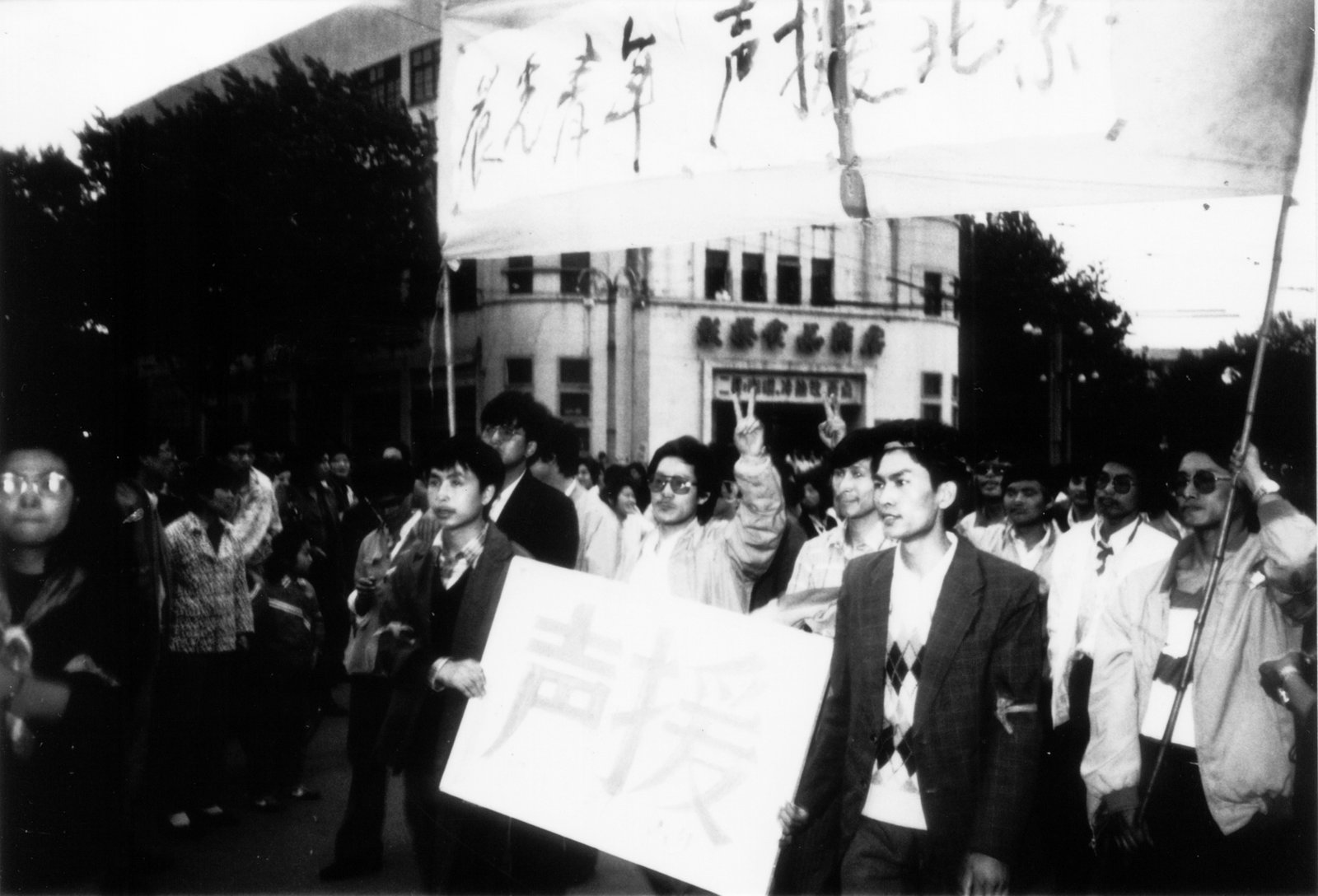
For more than three decades, the Party has tried to erase the memory of Tiananmen. The effort itself suggests how deeply it remains haunted by it. I know because I was there. Not in Tiananmen Square itself, but in Nanjing, where I was a 25-year-old factory worker. Like millions of Chinese, I watched events unfold with excitement and hope. The student demonstrations soon spread beyond the universities. People from all walks of life joined in. I organised a large protest by workers from my missile factory in support of the students. For the first time in my life, I felt history opening before me. My fellow protesters and I believed that ordinary people could help shape our country’s future.
Then, in the darkness before dawn on 4 June, came the sound of gunfire. The movement was crushed. The hopes of a generation were shattered. Like many others, I learned a painful lesson about the limits of political change in China.
What has fascinated me ever since is not only the crackdown itself but the Chinese Communist Party’s determination to erase it from public memory. The campaign has been remarkably successful. Many young Chinese know little or nothing about Tiananmen. Some have never heard of it. Others know only fragments.
In 2013, shortly before Xi Jinping came to power, when the political atmosphere was still somewhat more relaxed than it is today, I gave a book talk attended by university students. Afterwards, an earnest-looking young man approached me.
“Did the government really open fire on the students on 4 June 1989?” he asked. “That was just Western propaganda, wasn’t it?”
I have often been struck by the gap between my memories and their knowledge.
Personally, I have never regretted what I did in 1989. I was repeatedly interrogated by the police and suspended from work, yet it remains the most meaningful thing I have ever done in my life. It shaped not only my understanding of China but also a lifelong fascination with politics and power.
Looking back, I do not see 4 June simply as a tragedy. I also see it as a watershed. The movement arose not only from a desire for democracy and human rights, but also from widespread frustration with everyday life. Corruption was rampant, inflation was rising, and personal freedom was limited.
The Party’s response was twofold. Politically, it tightened control. Economically, however, it accelerated reform and gradually gave people more personal freedom. Chinese citizens today can choose where to live, what careers to pursue and, to a much greater extent than before, how to live. The cage remains, but it has grown so large that many no longer feel its bars.
In that sense, the protests of 1989 were not an absolute failure. Some of the grievances that fuelled it were addressed. Without that shock, China’s rulers might never have felt compelled to expand the cage.
The Party may have defeated the movement, but it has never fully escaped its legacy. It fears Tiananmen not because it threatens its power today. China’s young people are more likely to worry about jobs, housing prices and economic uncertainty than political reform.
What Tiananmen represents, however, is a challenge to the Party’s preferred narrative. The official story of modern China is one of stability, prosperity and national rejuvenation under Communist rule. Tiananmen reminds people that there was another possible path, and another vision of China’s future.
When I was young, the Chinese government encouraged us to remember past humiliations and injustices. It understood that memory shapes identity. The same principle applies to Tiananmen. An event of such magnitude cannot be permanently erased. It survives in family stories, private conversations, overseas communities, memoirs and fragments of testimony.
Now, 37 years later, the Party may have largely succeeded in making Tiananmen invisible. It has not succeeded in making it irrelevant. The impulses that brought people onto the streets in 1989 have not entirely disappeared. The desire for dignity, fairness and a voice in public life still surface quietly: parents challenging school policies on WeChat, residents petitioning local authorities over pollution or land disputes, women speaking out despite the risks. These are not movements in any formal sense, but they reveal something persistent – a wish to be heard. When repression goes too far, people are willing to push back, as seen in the White Paper Movement of late 2022, spontaneous protests which erupted nationwide against suffocating Covid rules.
For me, the events of 1989 remain a reminder of a moment when millions of Chinese briefly imagined a different future. The tanks ended that dream, but they did not entirely extinguish the questions that inspired it.
That is why, every June, the censors return to work. Not because Tiananmen is remembered too much, but because it is remembered at all.


				READ MORE
Share
Facebook Twitter Pinterest Email Copy Link

Listen to the article

0:00
0:00

Key Takeaways

Playback Speed

Select a Voice


Every year, as 4 June approaches, an old ritual unfolds in China.

Censors spring into action. Social media posts disappear. Searches for “Tiananmen”, “June Fourth”, “1989”, and even more cryptic references are scrubbed from the internet. Activists are placed under surveillance, or sent on forced holidays. Foreign journalists gather in Hong Kong, Taipei, London and Washington to commemorate an event that officially never happened.

For more than three decades, the Party has tried to erase the memory of Tiananmen. The effort itself suggests how deeply it remains haunted by it. I know because I was there. Not in Tiananmen Square itself, but in Nanjing, where I was a 25-year-old factory worker. Like millions of Chinese, I watched events unfold with excitement and hope. The student demonstrations soon spread beyond the universities. People from all walks of life joined in. I organised a large protest by workers from my missile factory in support of the students. For the first time in my life, I felt history opening before me. My fellow protesters and I believed that ordinary people could help shape our country’s future.

Then, in the darkness before dawn on 4 June, came the sound of gunfire. The movement was crushed. The hopes of a generation were shattered. Like many others, I learned a painful lesson about the limits of political change in China.

What has fascinated me ever since is not only the crackdown itself but the Chinese Communist Party’s determination to erase it from public memory. The campaign has been remarkably successful. Many young Chinese know little or nothing about Tiananmen. Some have never heard of it. Others know only fragments.

In 2013, shortly before Xi Jinping came to power, when the political atmosphere was still somewhat more relaxed than it is today, I gave a book talk attended by university students. Afterwards, an earnest-looking young man approached me.

“Did the government really open fire on the students on 4 June 1989?” he asked. “That was just Western propaganda, wasn’t it?”

I have often been struck by the gap between my memories and their knowledge.

Personally, I have never regretted what I did in 1989. I was repeatedly interrogated by the police and suspended from work, yet it remains the most meaningful thing I have ever done in my life. It shaped not only my understanding of China but also a lifelong fascination with politics and power.

Looking back, I do not see 4 June simply as a tragedy. I also see it as a watershed. The movement arose not only from a desire for democracy and human rights, but also from widespread frustration with everyday life. Corruption was rampant, inflation was rising, and personal freedom was limited.

The Party’s response was twofold. Politically, it tightened control. Economically, however, it accelerated reform and gradually gave people more personal freedom. Chinese citizens today can choose where to live, what careers to pursue and, to a much greater extent than before, how to live. The cage remains, but it has grown so large that many no longer feel its bars.

In that sense, the protests of 1989 were not an absolute failure. Some of the grievances that fuelled it were addressed. Without that shock, China’s rulers might never have felt compelled to expand the cage.

The Party may have defeated the movement, but it has never fully escaped its legacy. It fears Tiananmen not because it threatens its power today. China’s young people are more likely to worry about jobs, housing prices and economic uncertainty than political reform.

What Tiananmen represents, however, is a challenge to the Party’s preferred narrative. The official story of modern China is one of stability, prosperity and national rejuvenation under Communist rule. Tiananmen reminds people that there was another possible path, and another vision of China’s future.

When I was young, the Chinese government encouraged us to remember past humiliations and injustices. It understood that memory shapes identity. The same principle applies to Tiananmen. An event of such magnitude cannot be permanently erased. It survives in family stories, private conversations, overseas communities, memoirs and fragments of testimony.

Now, 37 years later, the Party may have largely succeeded in making Tiananmen invisible. It has not succeeded in making it irrelevant. The impulses that brought people onto the streets in 1989 have not entirely disappeared. The desire for dignity, fairness and a voice in public life still surface quietly: parents challenging school policies on WeChat, residents petitioning local authorities over pollution or land disputes, women speaking out despite the risks. These are not movements in any formal sense, but they reveal something persistent – a wish to be heard. When repression goes too far, people are willing to push back, as seen in the White Paper Movement of late 2022, spontaneous protests which erupted nationwide against suffocating Covid rules.

For me, the events of 1989 remain a reminder of a moment when millions of Chinese briefly imagined a different future. The tanks ended that dream, but they did not entirely extinguish the questions that inspired it.

That is why, every June, the censors return to work. Not because Tiananmen is remembered too much, but because it is remembered at all.

Read the full article here

Fact Checker

Verify the accuracy of this article using AI-powered analysis and real-time sources.

Get Your Fact Check Report

Enter your email to receive detailed fact-checking analysis

5 free reports remaining

Continue with Full Access

You've used your 5 free reports. Sign up for unlimited access!

Already have an account? Sign in here

Share. Facebook Twitter Pinterest LinkedIn Tumblr Email Telegram Copy Link
News Room
  • Website
  • Facebook
  • X (Twitter)
  • Instagram
  • LinkedIn

The FSNN News Room is the voice of our in-house journalists, editors, and researchers. We deliver timely, unbiased reporting at the crossroads of finance, cryptocurrency, and global politics, providing clear, fact-driven analysis free from agendas.

Related Articles

Global Free Speech

Photo: Sergio Kian/UnSplash There are many things to adore about China. The high-speed rail networks are great. Zooming from Shanghai international airport into the city at 431 km per hour is an extraordinary experience. The food is varied and delicious. While the country has a problem with sexual and domestic abuse within relationships, the streets are very safe. I miss being able to walk home at any hour down a dark lane without clutching keys in my hands. I could go on and many in fact do. A current trend – Chinamaxxing – sees young people from the West in thrall to China and taking to social media to say as such. One choice phrase is: “You met me at a very Chinese time in my life.” Chinamaxxers often overlook or downplay the negative parts of the country. The retort will typically be: “our countries aren’t perfect”. And they’re right. Europe, the UK and the USA do have problems, ones we often point out at Index. Still, some perspective is needed. We’re not talking about sporadic violations; we’re talking about systematic abuse at scale. I was bemused by an article in The New World this week interviewing a Chinamaxxer who had to change his VPN three times just to do the interview and muffle his voice when speaking about Tibet and Tiananmen Square. In the UK, a VPN is still very much a choice, not a requirement, and speaking quietly is usually done out of respect to neighbours and noise pollution, rather than from a fear you’re being spied on and could receive a knock at the door. I wonder too what the Chinamaxxers make of the fact that Gao Zhen, a prominent Chinese-American artist known for provocative sculptures of Mao Zedong, was sentenced Tuesday to three years in prison for slandering China’s “heroes and martyrs”? I wonder what they’d make of Guo Degang, lauded for his comedy on the national stage, now being investigated for allegedly improvising parts of a patriotic song? How would they respond to a new report from the International Campaign for Tibet, which showed how Beijing is tightening its grip on the region further, the recently passed and euphemistically labelled Promoting Ethnic Unity and Progress Law helping here? In Hong Kong, activist Chow Hang-tung was convicted simply for organising Tiananmen vigils. A letter from her published by us spoke of the subtle torture of handcuffs designed to constrict and contort the body. Thoughts on this? And what about the woman who was arrested outside the same courtroom for wearing a t-shirt with Japanese characters, which were apparently deemed seditious? These are just some examples from the last week. This isn’t a case of whataboutery. I’m not asking Chinamaxxers to comment on the rights record of Venezuela or Belarus. I’m not even asking them to remark on all these individual cases. But for those who call themselves spiritually Chinese, to bypass the bad and the ugly in favour of just the good is either wilful ignorance, self-censorship or both. READ MORE

6 hours ago
Global Free Speech

Ugandan journalist Remmy Asiteza detained on `fake news’ charges

21 hours ago
Global Free Speech

Protecting against advertising technology

23 hours ago
Global Free Speech

The cost of truth: Inside Iran’s mounting media crackdown 

1 day ago
Global Free Speech

CPJ, IAPA warn broadcast fee proposal will force Costa Rican news outlets off air

2 days ago
Global Free Speech

Pentagon fires Stars and Stripes staffers after editorial independence comments

3 days ago
Add A Comment

Comments are closed.

Editors Picks

Ethena looks beyond crypto to squeeze yield from booming equity perpetuals

48 minutes ago

Who Is Legally Liable When An AI Agent Goes Rogue?

51 minutes ago

240 Crypto Millionaires Booked Over Half of Britain’s Taxable Crypto Gains

55 minutes ago

Republicans Stumble In Bid To Flood Midterm Airwaves With Discounted Ads

1 hour ago
Latest Posts

The Clarity Act slipped to September. Banks are building anyway

2 hours ago

California Senate passes bill to ban memecoin issuance by public officials

2 hours ago

Morning Minute: Solana Jumps with Network Inflation Set to Drop

2 hours ago

Subscribe to News

Get the latest news and updates directly to your inbox.

At FSNN – Free Speech News Network, we deliver unfiltered reporting and in-depth analysis on the stories that matter most. From breaking headlines to global perspectives, our mission is to keep you informed, empowered, and connected.

FSNN.net is owned and operated by GlobalBoost Media
, an independent media organization dedicated to advancing transparency, free expression, and factual journalism across the digital landscape.

Facebook X (Twitter) Discord Telegram
Latest News

Democrats Are Undoing California’s Pension Reforms. Why Are Republicans Going Along With It?

28 minutes ago

Ethena looks beyond crypto to squeeze yield from booming equity perpetuals

48 minutes ago

Who Is Legally Liable When An AI Agent Goes Rogue?

51 minutes ago

Subscribe to Updates

Get the latest news and updates directly to your inbox.

© 2026 GlobalBoost Media. All Rights Reserved.
  • Privacy Policy
  • Terms of Service
  • Our Authors
  • Contact

Type above and press Enter to search. Press Esc to cancel.

🍪

Cookies

We and our selected partners wish to use cookies to collect information about you for functional purposes and statistical marketing. You may not give us your consent for certain purposes by selecting an option and you can withdraw your consent at any time via the cookie icon.

Cookie Preferences

Manage Cookies

Cookies are small text that can be used by websites to make the user experience more efficient. The law states that we may store cookies on your device if they are strictly necessary for the operation of this site. For all other types of cookies, we need your permission. This site uses various types of cookies. Some cookies are placed by third party services that appear on our pages.

Your permission applies to the following domains:

  • https://fsnn.net
Necessary
Necessary cookies help make a website usable by enabling basic functions like page navigation and access to secure areas of the website. The website cannot function properly without these cookies.
Statistic
Statistic cookies help website owners to understand how visitors interact with websites by collecting and reporting information anonymously.
Preferences
Preference cookies enable a website to remember information that changes the way the website behaves or looks, like your preferred language or the region that you are in.
Marketing
Marketing cookies are used to track visitors across websites. The intention is to display ads that are relevant and engaging for the individual user and thereby more valuable for publishers and third party advertisers.