Close Menu
FSNN | Free Speech News NetworkFSNN | Free Speech News Network
  • Home
  • News
    • Politics
    • Legal & Courts
    • Tech & Big Tech
    • Campus & Education
    • Media & Culture
    • Global Free Speech
  • Opinions
    • Debates
  • Video/Live
  • Community
  • Freedom Index
  • About
    • Mission
    • Contact
    • Support
Trending

BTC difficulty jumps 15% largest increase since 2021, despite price slump

8 minutes ago

Illicit Stablecoin Activity Hit a Five-Year High in 2025

11 minutes ago

What’s the Best AI Model to Run Your Business? The One That Lies Best, Apparently

14 minutes ago
Facebook X (Twitter) Instagram
Facebook X (Twitter) Discord Telegram
FSNN | Free Speech News NetworkFSNN | Free Speech News Network
Market Data Newsletter
Friday, February 20
  • Home
  • News
    • Politics
    • Legal & Courts
    • Tech & Big Tech
    • Campus & Education
    • Media & Culture
    • Global Free Speech
  • Opinions
    • Debates
  • Video/Live
  • Community
  • Freedom Index
  • About
    • Mission
    • Contact
    • Support
FSNN | Free Speech News NetworkFSNN | Free Speech News Network
Home»News»Global Free Speech»Cambodian journalists Pheap Phara and Phon Sopheap given 14-year prison sentences for treason
Global Free Speech

Cambodian journalists Pheap Phara and Phon Sopheap given 14-year prison sentences for treason

News RoomBy News Room2 hours agoNo Comments2 Mins Read1,592 Views
Share Facebook Twitter Pinterest Copy Link LinkedIn Tumblr Email VKontakte Telegram
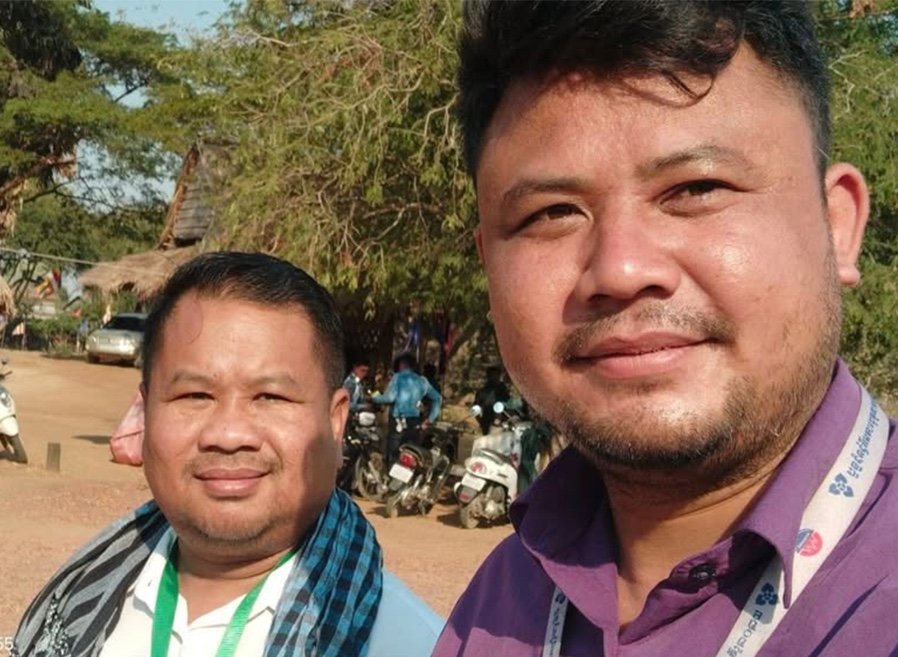
Cambodian journalists Pheap Phara and Phon Sopheap given 14-year prison sentences for treason
Share
Facebook Twitter Pinterest Email Copy Link

Listen to the article

0:00
0:00

Key Takeaways

Playback Speed

Select a Voice

Bangkok, February 20, 2026—The Committee to Protect Journalists condemns the harsh 14-year prison sentences handed to Cambodian journalists Pheap Phara and Phon Sopheap for treason, after they were found guilty of “supplying a foreign state with information prejudicial to national defense.”

Phara, a reporter with the local TSP 68 TV Online, and Sopheap, a journalist with the local Battambang Post TV Online, were convicted in a one-day trial on December 17, 2025, under Section 445 of the criminal code, an anti-state provision that carries a maximum 15-year prison sentence, according to local news reports citing their lawyer.

The sentencing was only revealed when the reporters appealed on Monday, according to the news reports.

“Cambodian authorities must not challenge Pheap Phara and Phon Sopheap’s appeal against these outrageous convictions and should stop using vague national security laws to criminalize legitimate reporting,” said Shawn Crispin, CPJ’s senior Southeast Asia representative. “Equating news reporting with treason is farcical and shows the extraordinary lengths Cambodian authorities will go to suppress the news.”

Siem Reap court spokesperson Yin Srang said a statement on the convictions would be issued shortly, but declined to answer questions about the ruling, the news reports said. The journalists’ lawyer, Un Chanthol, said they would both appeal the ruling, the reports said.

Phara and Sopheap were both arrested on July 31, 2025, after returning from reporting on a Cambodia-Thailand border dispute in northwestern Oddar Meanchey province.

It was not immediately clear which reports prompted the treason charges, but both reporters were photographed before their arrests with Cambodian soldiers in front of a Buddhist temple with what appeared to be unplaced landmines, the reports said.

Cambodian officials have denied Thai government allegations that Cambodian forces have laid new landmines in contested border areas during recent hostilities, which would represent a violation of Cambodia’s obligations under the Ottawa treaty banning landmines.

Cambodia’s Ministry of Information did not immediately respond to CPJ’s emailed request for comment. Cambodia is among Asia’s worst jailers of journalists, with at least six reporters held behind bars, according to CPJ’s data.  

Read the full article here

Fact Checker

Verify the accuracy of this article using AI-powered analysis and real-time sources.

Get Your Fact Check Report

Enter your email to receive detailed fact-checking analysis

5 free reports remaining

Continue with Full Access

You've used your 5 free reports. Sign up for unlimited access!

Already have an account? Sign in here

Share. Facebook Twitter Pinterest LinkedIn Tumblr Email Telegram Copy Link
News Room
  • Website
  • Facebook
  • X (Twitter)
  • Instagram
  • LinkedIn

The FSNN News Room is the voice of our in-house journalists, editors, and researchers. We deliver timely, unbiased reporting at the crossroads of finance, cryptocurrency, and global politics, providing clear, fact-driven analysis free from agendas.

Related Articles

Global Free Speech

Senegalese commentator arrested for remarks about student’s death

12 hours ago
Global Free Speech

CPJ calls for accountability in Ukrainian journalist surveillance allegations 

15 hours ago
Global Free Speech

Creators have only three seconds to hook users before they scroll away. Photo: Ben Iwara/Unsplash Short-form video is the medium of our time. The average teenager will spend hours a day on TikTok and Instagram reels, which are the main sources of news and entertainment for the 18-24 demographic. Adam Mosseri, head of Instagram, administers the most important algorithm in the English-speaking world. He is undoubtedly as consequential as David Zaslav or Rupert Murdoch – the CEO of Warner Bros and the owner of News Corp – but his name rarely makes headlines. On Mosseri’s Instagram, videos proven to hold users’ attention will be shown to more people. “Watch-time” is the basic currency of his algorithm. This has forced creators, many of whom earn a living on the platform, to abide by a golden formula: hook, secondary hook, payoff. The algorithm has spawned an entire coaching industry in which aspiring influencers pay veteran creators for crash courses in perfecting the formula. Each course teaches more or less the same thing: promise the viewer an answer to a question, keep promising, then answer at the end. Better yet, don’t answer it – promise to answer it in the next video. Where watch-time is the quantitative component of these algorithms, “trends” are the qualitative. If a particular word, image or sound appears to be trending among a certain data demographic, unrelated content will be algorithmically choked out of that demographic’s feed. This forces creators to cluster their content around proven trends. A trend is never a story. It is always a concept or feeling that can be immediately communicated within three seconds, because it is generally understood that creators have only three seconds to hook users before they scroll away. As influential creator coach Dominik Rieger will often remark: “The viewer must immediately know ‘This is for me’.” When Sean “Diddy” Combs trends, as he often does, it is never regarding a piece of evidence or a development in one of his trials. What is, on paper, a story about sexual coercion and exploitation of power is translated by the algorithm into a static portrait: a shame-faced Puff Daddy slick with baby oil. Searching “Diddy” will take you to a trove of baby oil related brainrot, and barely a single piece of factual reporting. Diddy’s actions did not create a story to be followed but a crude vignette to be gawked at. When US president Donald Trump’s shocking birthday letter to Jeffrey Epstein was published by The Wall Street Journal, it did not become a major trend on TikTok or Instagram because the only way to parse the story was by reading the letter itself, which takes more than three seconds. As far as the algorithm is concerned, if an event’s essence cannot be compressed into a three-second span, it may as well have never happened. The proliferation of short-form video has created a media environment structurally hostile to sequential reasoning. Young people’s attention is guided by an ever-narrowing algorithmic spotlight. Stories that are too big to be rendered by the spotlight are able to bask in pitch darkness and the people we allow to control the algorithms are not interested in changing that. In fact, Mosseri has been open about his efforts to speed up trends: “I want us to be better at trends. It takes still too long for things to pop on Instagram.” The political implications of this media environment are clear. If short-form video platforms continue to transmute real-world events into less-than-superficial spectacles, the rich and powerful need not manually censor anything. If all chains of cause and effect have found their terminus in the platform algorithms, and if public consciousness is held inert by the same three-second hooks, what will be worth censoring? READ MORE

23 hours ago
Global Free Speech

Palestinian journalists recount abuse in Israeli prisons, CPJ report finds 

1 day ago
Global Free Speech

U2 supports CPJ as it launches new EP ‘Days of Ash’

2 days ago
Global Free Speech

Funding of just 8.9 million euro would only be sufficient to cover RTK’s basic operational needs. Photo: Arianit/CC BY-SA 4.0 The undersigned international media freedom and journalist organisations today express our serious concerns about the underfunding of Kosovo’s public broadcaster, Radio Television of Kosovo (RTK), and urgently call for legal budget requirements to be met. The Assembly of Kosovo is currently discussing the RTK budget, which is anticipated to be passed in two readings on 19 and 20 February 2026. According to the draft Law on the Budget for 2026, the parliament, based on the government’s proposal, will allocate only 8.9 million euros, which is sufficient only to cover basic operational needs such as staff salaries. The Law on RTK foresees that the public broadcaster should receive 0.7 percent of the total state budget of around three billion euros. This would mean that RTK should be allocated approximately 22 million euros. If passed, the current budget would be only 40% of this legally mandated total. A budget shortfall of this scale would seriously undermine the ability of the public broadcaster to operate independently and to fulfil its mission to inform citizens on matters of public interest. If RTK were to receive the budget it is legally entitled to, it would allow it to operate independently from any interference from the government and Parliament, while also enabling investment and development of the public broadcaster. We note that Article 5 of the European Union’s European Media Freedom Act (EMFA) requires Member States – which Kosovo aspires to become – to provide sustainable and adequate funding to public service media to allow for their stable and independent operations. The proposed budgetary system, which conflicts with the existing legal framework, would, if applicable, clearly violate this EMFA provision. We take this opportunity to invite the Government and the Parliament to initiate work on the implementation of the EMFA, as well as to begin discussions on reforming the funding and governance of RTK to ensure that its editorial and functional independence is guaranteed. Ahead of the pending budgetary decision, our organisations therefore jointly ask the Prime Minister and President of Lëvizja Vetëvendosje, Albin Kurti, and the Speaker of the Kosovo assembly, Albulena Haxhiu, to ensure that the public broadcaster receives the adequate and equitable budget in accordance with the law and that it is not subjected to political pressure through budget limitations. Signed: European Centre for Press and Media Freedom (ECPMF) International Press Institute (IPI) European Federation of Journalists (EFJ) Index on Censorship Osservatorio Balcani Caucaso Transeuropa (OBCT) READ MORE

2 days ago
Add A Comment
Leave A Reply Cancel Reply

Editors Picks

Illicit Stablecoin Activity Hit a Five-Year High in 2025

11 minutes ago

What’s the Best AI Model to Run Your Business? The One That Lies Best, Apparently

14 minutes ago

Brad Garlinghouse says CLARITY bill has ‘90% chance’ of passing by April

1 hour ago

Crypto, Banks Meet Again to Move Forward Crypto Bill

1 hour ago
Latest Posts

What Is Base? The Ethereum Layer-2 Network Launched by Coinbase

1 hour ago

Judging the Alito Retirement Rumors

2 hours ago

Cambodian journalists Pheap Phara and Phon Sopheap given 14-year prison sentences for treason

2 hours ago

Subscribe to News

Get the latest news and updates directly to your inbox.

At FSNN – Free Speech News Network, we deliver unfiltered reporting and in-depth analysis on the stories that matter most. From breaking headlines to global perspectives, our mission is to keep you informed, empowered, and connected.

FSNN.net is owned and operated by GlobalBoost Media
, an independent media organization dedicated to advancing transparency, free expression, and factual journalism across the digital landscape.

Facebook X (Twitter) Discord Telegram
Latest News

BTC difficulty jumps 15% largest increase since 2021, despite price slump

8 minutes ago

Illicit Stablecoin Activity Hit a Five-Year High in 2025

11 minutes ago

What’s the Best AI Model to Run Your Business? The One That Lies Best, Apparently

14 minutes ago

Subscribe to Updates

Get the latest news and updates directly to your inbox.

© 2026 GlobalBoost Media. All Rights Reserved.
  • Privacy Policy
  • Terms of Service
  • Our Authors
  • Contact

Type above and press Enter to search. Press Esc to cancel.

🍪

Cookies

We and our selected partners wish to use cookies to collect information about you for functional purposes and statistical marketing. You may not give us your consent for certain purposes by selecting an option and you can withdraw your consent at any time via the cookie icon.

Cookie Preferences

Manage Cookies

Cookies are small text that can be used by websites to make the user experience more efficient. The law states that we may store cookies on your device if they are strictly necessary for the operation of this site. For all other types of cookies, we need your permission. This site uses various types of cookies. Some cookies are placed by third party services that appear on our pages.

Your permission applies to the following domains:

  • https://fsnn.net
Necessary
Necessary cookies help make a website usable by enabling basic functions like page navigation and access to secure areas of the website. The website cannot function properly without these cookies.
Statistic
Statistic cookies help website owners to understand how visitors interact with websites by collecting and reporting information anonymously.
Preferences
Preference cookies enable a website to remember information that changes the way the website behaves or looks, like your preferred language or the region that you are in.
Marketing
Marketing cookies are used to track visitors across websites. The intention is to display ads that are relevant and engaging for the individual user and thereby more valuable for publishers and third party advertisers.