Close Menu
FSNN | Free Speech News NetworkFSNN | Free Speech News Network
  • Home
  • News
    • Politics
    • Legal & Courts
    • Tech & Big Tech
    • Campus & Education
    • Media & Culture
    • Global Free Speech
  • Opinions
    • Debates
  • Video/Live
  • Community
  • Freedom Index
  • About
    • Mission
    • Contact
    • Support
Trending

Bitcoin steady as Japan holds rates at 1%, keeping the yen carry trade alive

8 minutes ago

Trump’s Boat Strikes Killed 221 People, but Didn’t Win the War on Drugs

50 minutes ago

Major bitcoin wallet flaw drains 594 BTC in 25-minute sweep

1 hour ago
Facebook X (Twitter) Instagram
Facebook X (Twitter) Discord Telegram
FSNN | Free Speech News NetworkFSNN | Free Speech News Network
Market Data Newsletter
Friday, July 31
  • Home
  • News
    • Politics
    • Legal & Courts
    • Tech & Big Tech
    • Campus & Education
    • Media & Culture
    • Global Free Speech
  • Opinions
    • Debates
  • Video/Live
  • Community
  • Freedom Index
  • About
    • Mission
    • Contact
    • Support
FSNN | Free Speech News NetworkFSNN | Free Speech News Network
Home»News»Global Free Speech»Palestinian journalists recount abuse in Israeli prisons, CPJ report finds 
Global Free Speech

Palestinian journalists recount abuse in Israeli prisons, CPJ report finds 

News RoomBy News Room5 months agoNo Comments5 Mins Read351 Views
Share Facebook Twitter Pinterest Copy Link LinkedIn Tumblr Email VKontakte Telegram
Palestinian journalists recount abuse in Israeli prisons, CPJ report finds 
Share
Facebook Twitter Pinterest Email Copy Link

Listen to the article

0:00
0:00

Key Takeaways

Playback Speed

Select a Voice

International community must pursue accountability for Palestinian journalists harmed in Israeli custody

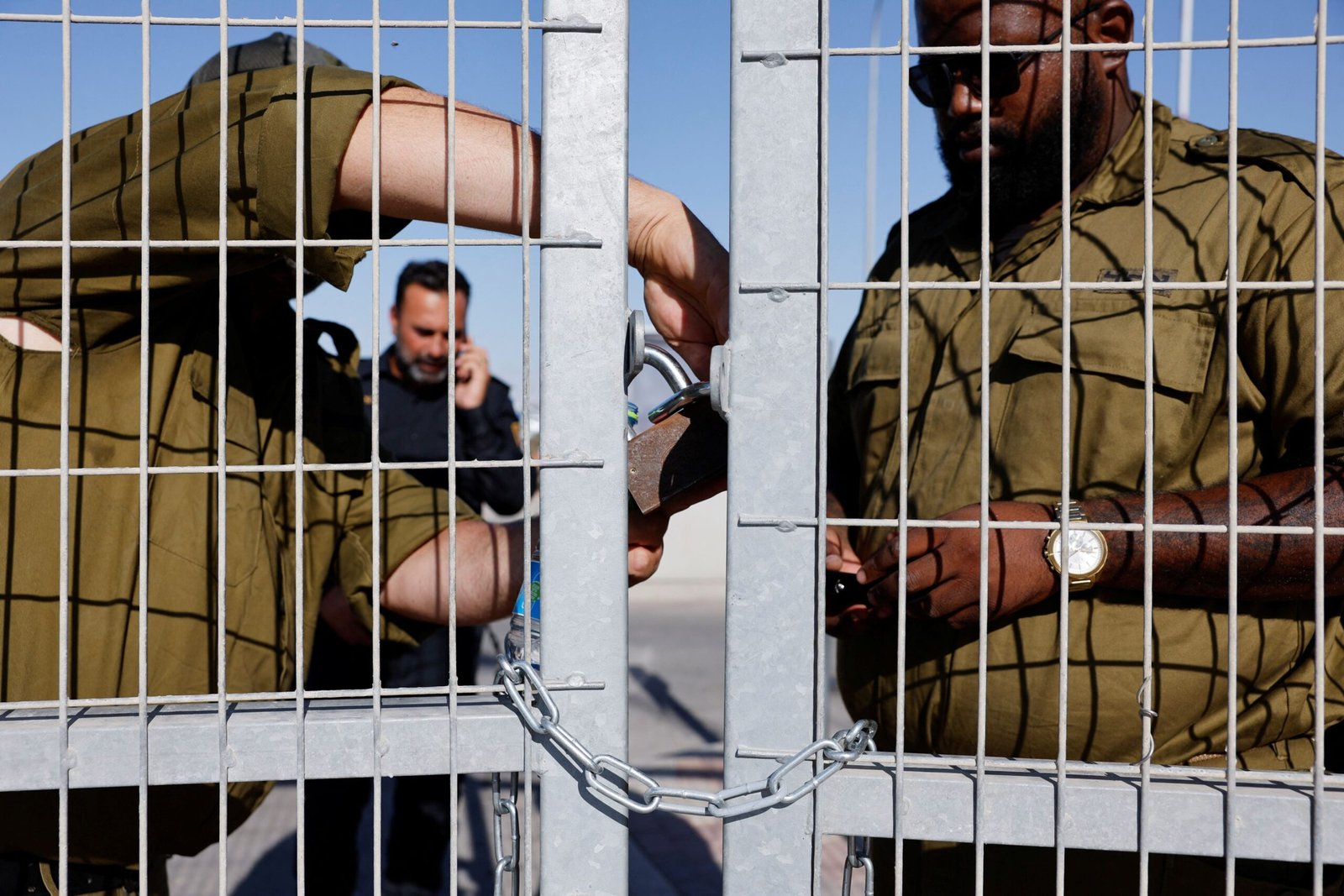
Amman, February 19, 2026 — Palestinian journalists describe being systematically abused, beaten and starved in Israel prisons, according to a new report published by the Committee to Protect Journalists (CPJ). 

The report, ‘We returned from hell’: Palestinian journalists recount torture in Israeli prisons, documents allegations of systematic abuse of Palestinian journalists by their Israeli captors while detained by Israel between October 2023 to January 2026. Of the 59 journalists released by Israel during this period that CPJ interviewed, all but one reported being subjected to what they described as torture, abuse, or other forms of violence while in Israeli custody. CPJ also reviewed supporting evidence provided by the detainees, including photographs, medical reports, and legal documents. 

“CPJ’s reporting shows a clear pattern in how Palestinian journalists were treated in Israeli custody,” said CPJ CEO Jodie Ginsberg. “The scale and consistency of these testimonies point to something far beyond isolated misconduct. When dozens of journalists independently describe physical and psychological abuse, the international community must take action. Humanitarian law sets unequivocal standards for the treatment of detainees and there needs to be meaningful accountability for failure to meet these standards.” 

In their testimonies, journalists described beatings, some resulting in severe injuries, starvation, medical neglect, as well as sexual violence, including rape. Many also describe psychological threats, stress positions causing prolonged pain, and being subjected to prolonged exposure to high-volume sound, including continuous music. 

CPJ documented the detention of at least 94 Palestinian journalists and one media worker during the period covered by the report: 32 journalists and one media worker from Gaza, 60 from the West Bank, and two in Israel. Thirty remain in custody, as of February 17, 2026. 

More than 80 percent (48 of 58) of the Palestinian journalists interviewed were never charged with any crime and were held under Israel’s administrative detention system, which allows for an individual to be held without charge and can be renewed indefinitely. Journalists also reported not being allowed access to their lawyers, an experience broadly reflected by what other rights groups have reported. At least 21 said they were denied adequate legal representation, with 17 stating they were not allowed to speak to a lawyer at all. 

“These are not isolated incidents,” said CPJ Regional Director Sara Qudah. “Across dozens of cases, CPJ documented a recurring set of abuse – from beating to starvation, sexual violence, and medical neglect – directed at journalists because of their work. They expose a deliberate

strategy to intimidate and silence journalists, and destroy their ability to bear witness. The continued silence from the international community only enables this.” 

CPJ documented 27 accounts of medical neglect often compounding injuries during beatings or interrogations and, in several cases, the complicity of health workers in violence against detainees. In addition to unsanitary living conditions and chronic food shortages, journalists reported wounds stitched without anaesthesia, untreated fractures and eye injuries, and the deliberate neglect of serious pre-existing and newly sustained health conditions. 

Fifty-five of the 59 journalists interviewed reported extreme hunger or malnutrition. CPJ calculated an average weight loss of 23.5 kilograms (54 pounds) among the group by comparing journalists’ reported weight before and after detention. Photographs provided to CPJ as evidence show dramatic transformations, with journalists displaying gaunt faces, protruding ribs, and hollowed cheeks. 

Two of the 59 Palestinian journalists also told CPJ they were raped in detention. Descriptions of sexual violence appeared repeatedly in the testimonies, with journalists describing assaults as intended to humiliate, terrorize, and permanently scar them. 

At least 14 journalists told CPJ they were subjected to prolonged exposure to high-volume sound while in Israeli detention facilities, particularly at Sde Teiman, including continuous amplified music, resulting in sleep deprivation and sensory disorientation. 

CPJ has called for Israel to allow independent international monitors, including UN special rapporteurs, access to detention facilities and for there to be transparent, impartial investigations into all allegations. 

CPJ emailed Israel’s Ministry of National Security for comment but received no response. It sent multiple requests to the Israeli military’s press office seeking comment on specific allegations raised by journalists. An army spokesperson said “individuals detained are treated in accordance with international law,” adding that the armed forces “have never, and will never, deliberately target journalists,” and that any violations of protocol “will be looked into.” 

### 

About the Committee to Protect Journalists 

The Committee to Protect Journalists is an independent, nonprofit organization that promotes press freedom worldwide. We defend the right of journalists to report the news safely and without fear of reprisal. 

To interview a CPJ expert, please email [email protected].

CPJ interviewed 59 journalists and one media worker, starting from September 2024 to January 2026. CPJ tried to contact the remaining five released journalists, four refused to speak to CPJ and one was murdered before CPJ could interview him. 

The research conducted by CPJ was based on qualitative and interviews and structured thematic analysis of detainee testimonies, and focused on conditions of arrest, detention, interrogation, and imprisonment as described by journalists who were released from detention.

Read the full article here

Fact Checker

Verify the accuracy of this article using AI-powered analysis and real-time sources.

Get Your Fact Check Report

Enter your email to receive detailed fact-checking analysis

5 free reports remaining

Continue with Full Access

You've used your 5 free reports. Sign up for unlimited access!

Already have an account? Sign in here

Share. Facebook Twitter Pinterest LinkedIn Tumblr Email Telegram Copy Link
News Room
  • Website
  • Facebook
  • X (Twitter)
  • Instagram
  • LinkedIn

The FSNN News Room is the voice of our in-house journalists, editors, and researchers. We deliver timely, unbiased reporting at the crossroads of finance, cryptocurrency, and global politics, providing clear, fact-driven analysis free from agendas.

Related Articles

Global Free Speech

CPJ urges Tanzania to commit to press freedom at UN rights review

15 hours ago
Global Free Speech

Afghan journalist and director of Rukhshana Media, Zahra Joya. Photo: Associated Press / Alamy Stock Photo Nearly five years after the Taliban took control of her country and she fled Kabul, Afghan journalist Zahra Joya is telling her story. Her book The Vanishing Girl of Kabul, written with British-American journalist Amie Ferris-Rotman, is a mirror not just for Joya’s life, but for millions of other Afghan women and girls, who she describes as currently living in “home prisons”. The book tells the story of the Taliban’s brutal silencing of women and Joya’s own life of resistance. How she pretended to be a boy in the 1990s so she could go to school. How her family quickly packed up her grandfather’s handwritten Persian epic while the Taliban raided local villages for banned books. And how she feared for her life when the Taliban returned five years ago. Being a Hazara woman  – Hazaras are a persecuted minority in Afghanistan – she grew up with extreme violence levelled at her people. “It was important for me to record it, for people to understand, for the next generation and the history of Afghanistan,” Joya told Index. The day before the Taliban returned, she recounts in her book, she had the freedom to go the beauty salon. The next day offered a stark contrast. “Everything collapsed, including my own freedom,” she said. As the Taliban drew further into Kabul, she and her colleagues at the women-led publication which she had founded, Rukhshana Media, continued reporting. As Joya saw it, she was standing up for her rights and for freedom of expression, and was making sure the world knew about what was unfolding. “We never imagined that the Taliban would come to power so quickly, and everything would vanish very soon. We never thought that one day journalism would be a huge risk for the whole team,” she said. Joya had set up Rukhshana Media only a year before, and even then she was doing something courageous. In Afghanistan’s patriarchal society, the media space was dominated by men, who often held leadership positions. Now, Joya continues to run Rukhshana Media from London. Her journalists across Afghanistan work underground, protecting their identities by remaining anonymous and never meeting each other. Joya feels she has a heavy responsibility on her shoulders. Just before she spoke with Index, she received a voice message from one of her journalists describing how she wakes up every morning afraid of what she is going to lose on that particular day. Women and girls are banned from secondary and university education, and most jobs are closed to them. They must cover their bodies completely and even visiting a doctor requires a male chaperone. “The reality of Afghanistan under the Taliban regime is a complete gender apartheid system,” Joya said. Since she’s been in the UK, Joya has received a vast number of direct messages on social media from Taliban supporters, threatening her directly for her work and sending her videos of sexual abuse. But she has received supportive messages too. Now, she hopes readers of her book will reflect on the story, perhaps even take a photo of themselves with it and send her a message. Writing about her own life has been a difficult experience, and she has had to be careful around details of her relatives who are still in Afghanistan. But Joya said that remaining silent is not a solution. “It is part of my struggle against the misogyny, discrimination and injustice that is ongoing in Afghanistan,” she said. “The Vanishing Girl of Kabul. Maybe it’s me because I have had to disappear many times and find myself again, but I feel like she could just as easily be the millions of women of Afghanistan.” The Vanishing Girl of Kabul was published by Robinson on 23 July 2026 READ MORE

15 hours ago
Global Free Speech

Australia ranks highly for LGBTQ rights. Photo: Tristien, CC BY-SA 4.0 A large Australian HIV charity which wanted to promote information about new treatments to its Facebook and YouTube followers has found its posts banned by Meta. The charity in question, the National Association of People with HIV Australia (NAPWHA), believe their posts were targeted by what they describe as a “loosely organised campaign of spurious complaints motivated by stigma” towards HIV and the communities affected by it (which include gay and bisexual men, other queer people, trans folks, sex workers and drug users). It’s a growing trend in Australia for organisations which promote sexual health and reproductive rights, and some rights groups fear that the social media teen ban in the country is just making the problem worse as platforms become more cautious about what they promote. When NAPWHA first launched its campaign in 2023 to inform people with same sex and other partners that new treatments meant they couldn’t pass on HIV, they found their ads were suspended on YouTube and Facebook. Sydney-based NAPWHA said that Facebook told them their promotional posts was rejected because they did not comply with their policies on ads about “social issues, elections or politics”. Eighteen months on, NAPWHA suspects that the campaign was subject to censorship via platform moderation and online hostility. They partnered with Swinburne University in Melbourne to investigate and last week published a report containing a legal and policy guide and a communications pack that provides practical tips and strategies for community-led public health organisations facing the same problem. Daniel Reeders, senior project officer at NAPWHA Learning, told Index at the report’s launch there had been an “absolute outpouring of stress and frustration” from small organisations facing a similar predicament. He said: “Platforms like TikTok, Meta and Google have walked away from their duty to moderate fairly and effectively, and we’re left with the wreckage of civil discourse.” The crackdown is part of a broader censorship of crucial sexual and reproductive health and rights information tracked by global NGO ReproUncensored all around the world. Founder and executive director Martha Dimitratou told Index they have documented nearly 600 cases across big tech platforms in Australia and globally, with more than a dozen new cases reported in just the last few days. Dimitratou said that Australia’s world-first teen social media ban, introduced last year and now set to be followed by about 20 other countries, could be to blame. Adam Finch, marketing, branding and communications coordinator for Brisbane-based nonprofit HIV charity, Queensland Positive People, said that he had recently had one set of the same posts approved one day but then censored the next. “I think we’ve just managed to dodge a bullet (but) in many ways it’s a matter of time,” he told Index, adding that they were starting to self-censor. Dimitratou said that Meta and Google must be held accountable and provide full transparency on why awareness campaigns were being restricted. “They must take immediate steps to ensure their moderation systems do not block lawful, evidence-based public health information,” she said. “Finally, governments must reclaim democratic oversight from the growing sovereignty of US big tech companies, enforce the law, and call these practices what they are: illegal.” Reeders said they were calling on Australia’s eSafety Commissioner, the Australian Government’s independent online safety regulator, to “take a moment away from banning things” – referring to the new social media law – to “consider how platforms can be regulated to allow better access for organisations promoting public health”. Meta has been contacted for a comment. READ MORE

17 hours ago
Global Free Speech

CPJ calls for release of ailing Sudanese journalists held by RSF, protection of Darfur 24 reporters

18 hours ago
Global Free Speech

Israel’s Channel 12 attacked for second time, journalists receive death threat 

2 days ago
Global Free Speech

Photojournalist injured by police while covering protest in Spain’s Mallorca

2 days ago
Add A Comment

Comments are closed.

Editors Picks

Trump’s Boat Strikes Killed 221 People, but Didn’t Win the War on Drugs

50 minutes ago

Major bitcoin wallet flaw drains 594 BTC in 25-minute sweep

1 hour ago

US Spot Bitcoin ETFs Post Strongest Inflows in More Than Three Weeks

1 hour ago

Drones Over Egypt

2 hours ago
Latest Posts

Bitcoin at $64,000 as Kospi’s record 17% surge leaves crypto untouched

2 hours ago

Tokenized Gold Survives DeFi Test as Lending Adoption Lags

2 hours ago

Homeland Security Is Spending $1 Billion on ‘Autonomous’ Border Surveillance Towers

3 hours ago

Subscribe to News

Get the latest news and updates directly to your inbox.

At FSNN – Free Speech News Network, we deliver unfiltered reporting and in-depth analysis on the stories that matter most. From breaking headlines to global perspectives, our mission is to keep you informed, empowered, and connected.

FSNN.net is owned and operated by GlobalBoost Media
, an independent media organization dedicated to advancing transparency, free expression, and factual journalism across the digital landscape.

Facebook X (Twitter) Discord Telegram
Latest News

Bitcoin steady as Japan holds rates at 1%, keeping the yen carry trade alive

8 minutes ago

Trump’s Boat Strikes Killed 221 People, but Didn’t Win the War on Drugs

50 minutes ago

Major bitcoin wallet flaw drains 594 BTC in 25-minute sweep

1 hour ago

Subscribe to Updates

Get the latest news and updates directly to your inbox.

© 2026 GlobalBoost Media. All Rights Reserved.
  • Privacy Policy
  • Terms of Service
  • Our Authors
  • Contact

Type above and press Enter to search. Press Esc to cancel.

🍪

Cookies

We and our selected partners wish to use cookies to collect information about you for functional purposes and statistical marketing. You may not give us your consent for certain purposes by selecting an option and you can withdraw your consent at any time via the cookie icon.

Cookie Preferences

Manage Cookies

Cookies are small text that can be used by websites to make the user experience more efficient. The law states that we may store cookies on your device if they are strictly necessary for the operation of this site. For all other types of cookies, we need your permission. This site uses various types of cookies. Some cookies are placed by third party services that appear on our pages.

Your permission applies to the following domains:

  • https://fsnn.net
Necessary
Necessary cookies help make a website usable by enabling basic functions like page navigation and access to secure areas of the website. The website cannot function properly without these cookies.
Statistic
Statistic cookies help website owners to understand how visitors interact with websites by collecting and reporting information anonymously.
Preferences
Preference cookies enable a website to remember information that changes the way the website behaves or looks, like your preferred language or the region that you are in.
Marketing
Marketing cookies are used to track visitors across websites. The intention is to display ads that are relevant and engaging for the individual user and thereby more valuable for publishers and third party advertisers.