Close Menu
FSNN | Free Speech News NetworkFSNN | Free Speech News Network
  • Home
  • News
    • Politics
    • Legal & Courts
    • Tech & Big Tech
    • Campus & Education
    • Media & Culture
    • Global Free Speech
  • Opinions
    • Debates
  • Video/Live
  • Community
  • Freedom Index
  • About
    • Mission
    • Contact
    • Support
Trending

California’s Prison Reform Experiment Worked. The State’s Crime Rate Has Fallen by 27% in 15 Years.

4 minutes ago

Plaintiff Argues That, If She Does Not Use Her Chosen Name, She Will Suffer Serious and Lasting Effects to Her Mental Health

1 hour ago

Tariff Man

2 hours ago
Facebook X (Twitter) Instagram
Facebook X (Twitter) Discord Telegram
FSNN | Free Speech News NetworkFSNN | Free Speech News Network
Market Data Newsletter
Saturday, July 25
  • Home
  • News
    • Politics
    • Legal & Courts
    • Tech & Big Tech
    • Campus & Education
    • Media & Culture
    • Global Free Speech
  • Opinions
    • Debates
  • Video/Live
  • Community
  • Freedom Index
  • About
    • Mission
    • Contact
    • Support
FSNN | Free Speech News NetworkFSNN | Free Speech News Network
Home»News»Media & Culture»California’s Prison Reform Experiment Worked. The State’s Crime Rate Has Fallen by 27% in 15 Years.
Media & Culture

California’s Prison Reform Experiment Worked. The State’s Crime Rate Has Fallen by 27% in 15 Years.

News RoomBy News Room4 minutes agoNo Comments4 Mins Read1,904 Views
Share Facebook Twitter Pinterest Copy Link LinkedIn Tumblr Email VKontakte Telegram
California’s Prison Reform Experiment Worked. The State’s Crime Rate Has Fallen by 27% in 15 Years.
Share
Facebook Twitter Pinterest Email Copy Link

Listen to the article

0:00
0:00

Key Takeaways

Playback Speed

Select a Voice

For those of us who are more interested in policy than politics, it’s frustrating to try a rational discussion about any issue once it’s caught up in a partisan maelstrom. Few matters are more given to hysteria than crime, for the obvious reason that everyone (except criminals) is against it—and politicians are incentivized to use crime-related policy to score political points.

We have to await the passage of time to analyze which anti-crime policies worked, which created unintended consequences, and which made little difference. I’m long past expecting politicians to learn about past policy, but it’s worth trying. So I cheer the Legislative Analyst’s Office, which last month released a report evaluating the results of a brouhaha that most of us have forgotten: prison realignment. The short take: the doomsayers were wrong.

Fifteen years ago, California prisons were filled to 180% of their design capacity—the result of 1990s tough-on-crime initiatives that boosted sentences and created larger populations. A 2009 federal court decision agreed that overcrowding undermined inmates’ right to receive “adequate” healthcare, but the court stayed the full implementation of California’s proposed fixes while the case made its way to the U.S. Supreme Court.

In May 2011, the high court agreed with the lower court: “[W]ithout a reduction in overcrowding, there will be no efficacious remedy for the unconstitutional care of the sick and mentally ill,” as a 2011 LAO report noted. Democratic Gov. Jerry Brown’s solution was Assembly Bill 109, which “shifted to counties the responsibility for monitoring, tracking and incarcerating lower-level offenders previously bound for state prison,” per the Stanford Criminal Justice Center.

This was a bipartisan problem. Problems arose during the Republican Schwarzenegger administration, but came to a head under Brown. Although the ruling was backed by the court’s liberals, one conservative provided the deciding vote. Regardless of the court’s ideology—and whether it was right in its determination—its decision required California to reduce its prison population. State leaders, regardless of their philosophy, had no choice but to act.

Many anti-realignment arguments centered on the capability of locals to handle the influx of prisoners, which was a legitimate concern. Some progressives were angry that the law mainly moved prisoners around rather than reduced their sentences, which was tone deaf. But Republicans opposed the bill and then started ramping up emotional tactics, arguing that realignment would lead to carnage—even though Brown’s solution upheld sound conservative principles regarding local control.

Shortly after realignment began, Assembly Republicans “began an online video campaign to get Californians outraged over Brown’s prisoner shift program,” reported ABC 7 in Sacramento. The ad featured “scary-looking thugs and ominous music.” Two years later, Republicans pushed to unravel realignment and go on a prison-building spree.

GOP fear-mongering became so obnoxious that two conservative former Assembly members, Pat Nolan (R–Glendale) and Chuck DeVore (R–Irvine), published a 2013 column in the Los Angeles Times complaining that, “Some Republicans…are trying to score short-term political points by employing old scare tactics about the state’s prison ‘realignment’ plan. Realignment gives local jails the responsibility—and funding—to oversee low-level inmates, while violent and career offenders remain the responsibility of costlier state prisons. This is a common-sense division of responsibility.”

Years later, after crime spiked during the pandemic, conservatives were still pointing their fingers at realignment, although they fell silent after crime rates dropped again. So what exactly are the results of this policy—one that seems rather modest in hindsight, but was depicted as a radical gutting of the criminal-justice system at the time? Drum roll, please.

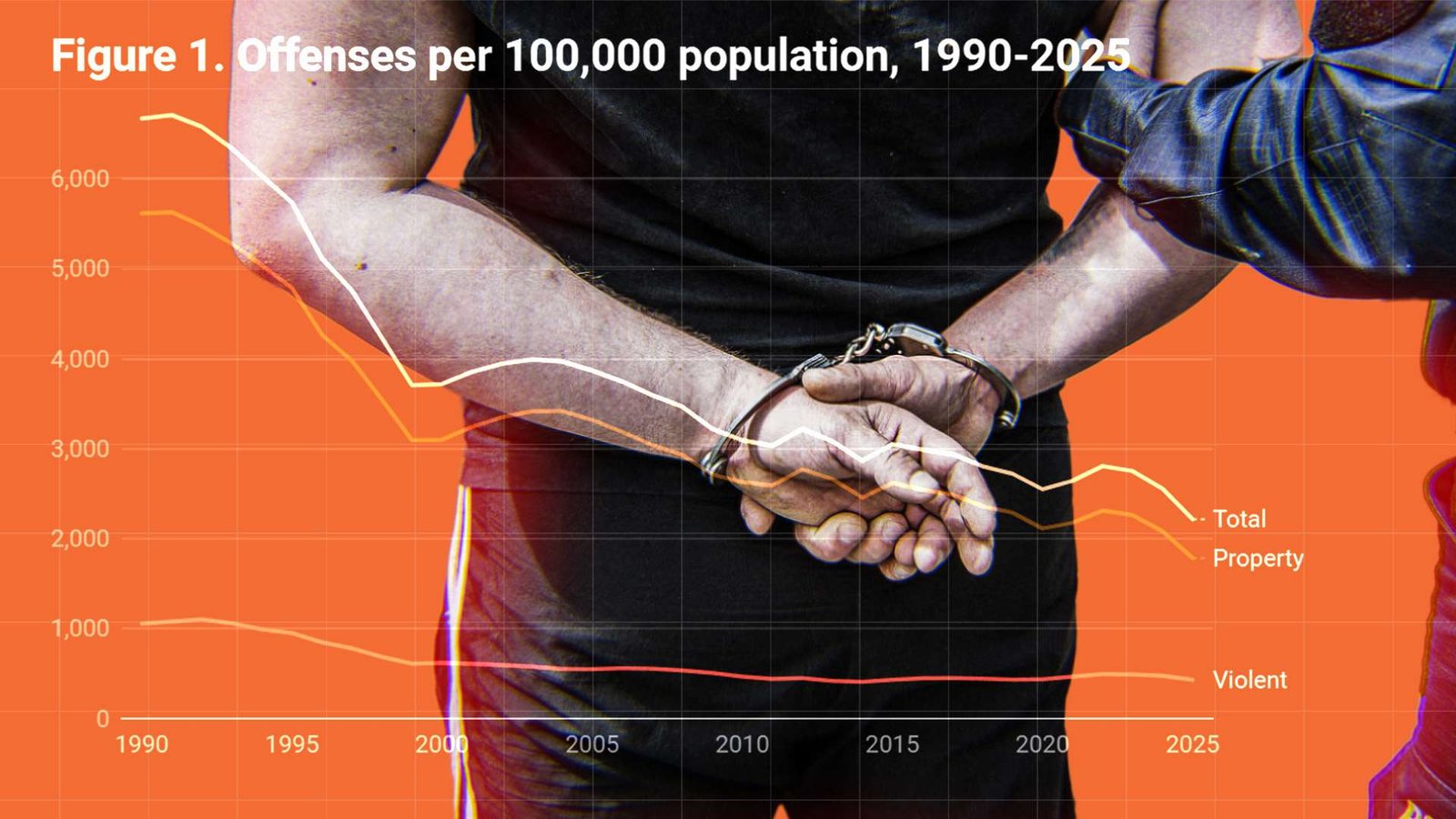
Per the LAO, the effort “contributed to a modest increase in property crime and had no effect on violent crime.” Realignment enabled California to meet its court obligations: “Without it, the state would have had to pay for significantly more prison capacity and/or allow the federal courts to release tens of thousands of people from prison.” Although the reform altered some sentences for lower-level offenders, it could have been worse had courts been granted release power. Meanwhile, “sentences for violent crimes were largely unaffected.”

The law did increase pressure on county jails, but subsequent initiatives “mitigated the population pressures created by realignment.” Realignment also created better fiscal management: “[C]ounties now bear a greater share of the costs of felony sentences. As a result, county decisions about sentencing now incorporate the costs of incarceration for many felony sentences—thereby better aligning counties’ costs with their decision-making authority.”

What about overall crime in California? Rates are 27 percent lower now than they were in 2011, which was not only the beginning of realignment—but the beginning of a series of criminal-justice reforms mostly passed by voter initiative. Did I mention that California has been shuttering prisons rather than embarking on costly prison-building efforts? Too bad we had to wait 15 years to confirm that all the alarmism was political nonsense.

This column was first published in The Orange County Register.

Read the full article here

Fact Checker

Verify the accuracy of this article using AI-powered analysis and real-time sources.

Get Your Fact Check Report

Enter your email to receive detailed fact-checking analysis

5 free reports remaining

Continue with Full Access

You've used your 5 free reports. Sign up for unlimited access!

Already have an account? Sign in here

#CivicEngagement #FreePress #IndependentMedia #NarrativeControl #OpenDebate
Share. Facebook Twitter Pinterest LinkedIn Tumblr Email Telegram Copy Link
News Room
  • Website
  • Facebook
  • X (Twitter)
  • Instagram
  • LinkedIn

The FSNN News Room is the voice of our in-house journalists, editors, and researchers. We deliver timely, unbiased reporting at the crossroads of finance, cryptocurrency, and global politics, providing clear, fact-driven analysis free from agendas.

Related Articles

Media & Culture

Plaintiff Argues That, If She Does Not Use Her Chosen Name, She Will Suffer Serious and Lasting Effects to Her Mental Health

1 hour ago
Media & Culture

Tariff Man

2 hours ago
Media & Culture

Will This Mississippi Man on Death Row Get a Chance To Prove His Innocence?

3 hours ago
Media & Culture

Trump Fires Court-Appointed US Attorney One Hour After Appointment, Immediately Gets Sued

4 hours ago
Media & Culture

Second Lawsuit Challenging Trump’s New Section 301 Tariffs Filed

4 hours ago
Media & Culture

What Jimothy the Raccoon Reveals About Seattle

5 hours ago
Add A Comment
Leave A Reply Cancel Reply

Editors Picks

Plaintiff Argues That, If She Does Not Use Her Chosen Name, She Will Suffer Serious and Lasting Effects to Her Mental Health

1 hour ago

Tariff Man

2 hours ago

EU Widens Belarus Crypto Ownership Ban Under MiCA

3 hours ago

Will This Mississippi Man on Death Row Get a Chance To Prove His Innocence?

3 hours ago
Latest Posts

Bitcoin Miner Poolin Files for Chapter 11 Bankruptcy

4 hours ago

Trump Fires Court-Appointed US Attorney One Hour After Appointment, Immediately Gets Sued

4 hours ago

Second Lawsuit Challenging Trump’s New Section 301 Tariffs Filed

4 hours ago

Subscribe to News

Get the latest news and updates directly to your inbox.

At FSNN – Free Speech News Network, we deliver unfiltered reporting and in-depth analysis on the stories that matter most. From breaking headlines to global perspectives, our mission is to keep you informed, empowered, and connected.

FSNN.net is owned and operated by GlobalBoost Media
, an independent media organization dedicated to advancing transparency, free expression, and factual journalism across the digital landscape.

Facebook X (Twitter) Discord Telegram
Latest News

California’s Prison Reform Experiment Worked. The State’s Crime Rate Has Fallen by 27% in 15 Years.

4 minutes ago

Plaintiff Argues That, If She Does Not Use Her Chosen Name, She Will Suffer Serious and Lasting Effects to Her Mental Health

1 hour ago

Tariff Man

2 hours ago

Subscribe to Updates

Get the latest news and updates directly to your inbox.

© 2026 GlobalBoost Media. All Rights Reserved.
  • Privacy Policy
  • Terms of Service
  • Our Authors
  • Contact

Type above and press Enter to search. Press Esc to cancel.

🍪

Cookies

We and our selected partners wish to use cookies to collect information about you for functional purposes and statistical marketing. You may not give us your consent for certain purposes by selecting an option and you can withdraw your consent at any time via the cookie icon.

Cookie Preferences

Manage Cookies

Cookies are small text that can be used by websites to make the user experience more efficient. The law states that we may store cookies on your device if they are strictly necessary for the operation of this site. For all other types of cookies, we need your permission. This site uses various types of cookies. Some cookies are placed by third party services that appear on our pages.

Your permission applies to the following domains:

  • https://fsnn.net
Necessary
Necessary cookies help make a website usable by enabling basic functions like page navigation and access to secure areas of the website. The website cannot function properly without these cookies.
Statistic
Statistic cookies help website owners to understand how visitors interact with websites by collecting and reporting information anonymously.
Preferences
Preference cookies enable a website to remember information that changes the way the website behaves or looks, like your preferred language or the region that you are in.
Marketing
Marketing cookies are used to track visitors across websites. The intention is to display ads that are relevant and engaging for the individual user and thereby more valuable for publishers and third party advertisers.