

 Freedom Index
Listen to the article
Media freedom in Bulgaria faces entrenched challenges in a climate of political polarisation and legislative inertia, with urgent action needed by government and public authorities to push forward both domestic and EU-mandated reforms, a coalition of international press freedom organisations said today.
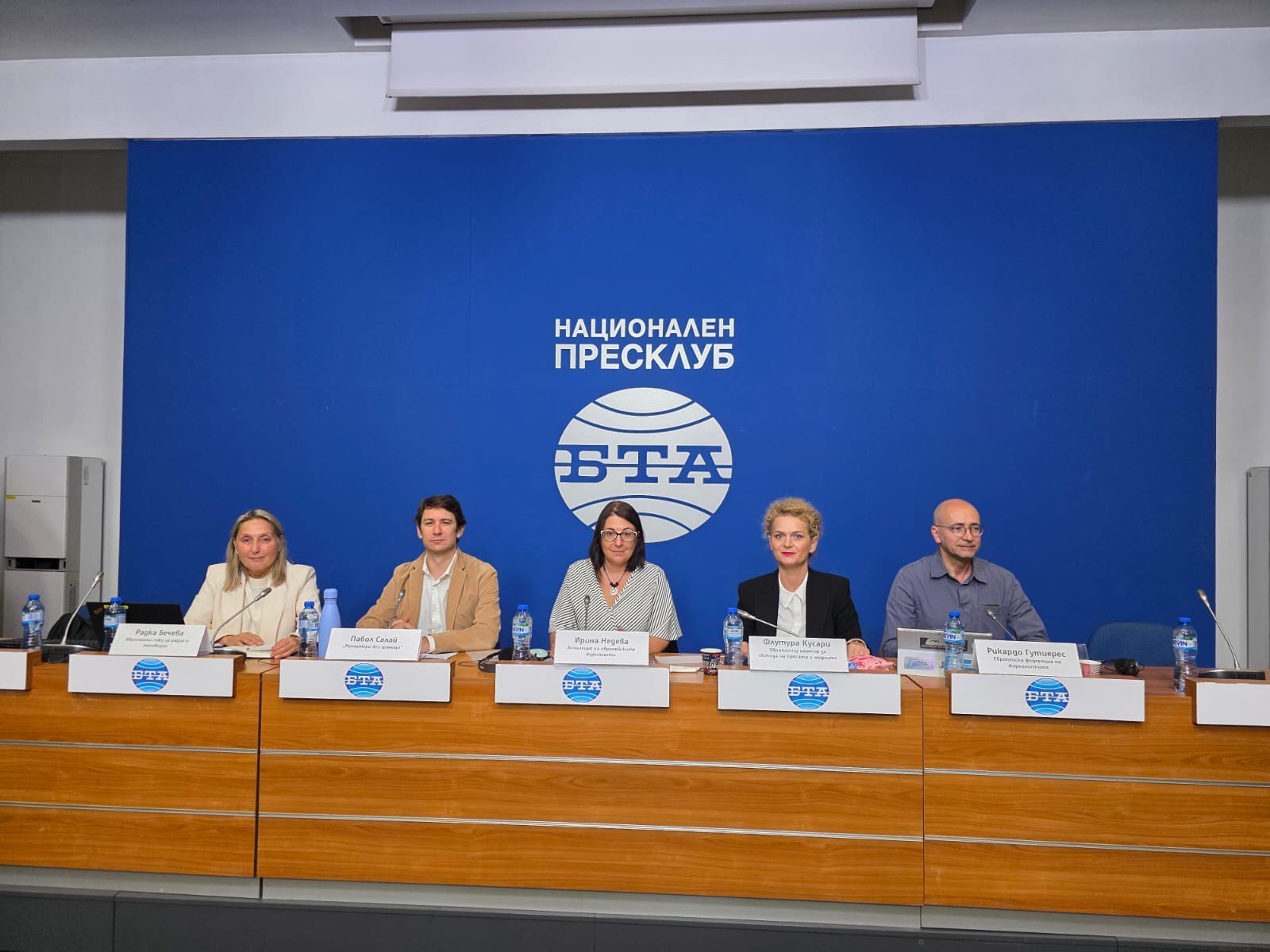
Following a three-day mission to Sofia between 24 and 26 September, the delegation concluded that progress is needed to prevent and prosecute attacks on journalists, resolve the ongoing dispute over the leadership of the public broadcaster, guarantee the independence of the Council for Electronic Media (CEM) and pass anti-SLAPP legislation. Despite the important work of key journalist associations, there is a low level of solidarity within the journalistic profession.
The mission, organised by the Council of Europe’s Safety of Journalists Platform and the Media Freedom Rapid Response (MFRR), also found that Bulgaria is lagging behind in implementing the European Media Freedom Act (EMFA), in force since August this year. A government working group has been suspended, with no indication of when discussions involving all relevant authorities and stakeholders will resume.
The mission did not have the opportunity to discuss the issue with the body in charge of media policies, the Ministry of Culture, since it was the only relevant public authority which refused to meet the delegation, despite repeated requests.
Following the mission, the partner organisations jointly call for greater political will and cross-party support to address deepening institutional paralysis and drive forward much needed reforms under the EMFA, which if properly implemented will help safeguard media freedom, pluralism and independence.
Safety of journalists
Though serious physical attacks on reporters and media workers in Bulgaria remain relatively uncommon, some media stakeholders told the mission that general hostility against the journalistic profession had increased in recent years. The mission called on the authorities to promptly investigate several assaults against media workers recorded on the Safety of Journalists Platform and bring those responsible to justice. Political pressures including intimidation and insults against journalists by politicians remain a cause of concern, even though direct political pressures on journalists have lessened compared to previous years.
The Council of Europe’s Platform for the Safety of Journalists currently has 34 active alerts involving attacks on journalists or threats against media freedom. Physical attacks account for one third of the cases, although their number has also dropped compared to previous years. Threats, including death threats, against journalists remain a serious concern but are too rarely sanctioned by authorities.
The mission notes the low levels of trust by journalists in the law enforcement authorities and prosecutors to secure justice in cases of attacks. Previous cases involving attacks on journalists by police have suffered from delayed justice. Certain stakeholders raised ongoing concerns about politicised investigation
The Council for Electronic Media and the public broadcaster
The mission concludes that the ongoing dispute between the Director General of the Bulgarian National Television and the CEM risks undermining public trust in the public broadcaster and the regulator’s appointment process. Two elections by the CEM have failed to reach a majority on appointing a new director general, with the incumbent continuing in the role three years past his original mandate, as pointed out by the European Commission’s 2025 Rule of Law Report.
A judicial review into the process is ongoing and a new attempt to appoint a director general is scheduled to take place on 16 October. The mission organisations call for the process to appoint a new director general of BNT to be conducted in a fair and transparent manner and for parties involved to act in accordance with the law.
The mission also heard criticism from some stakeholders about the editorial independence of BNT, reflecting concerns raised in the EU Rule of Law Report and the Media Pluralism Monitor. It is essential that EMFA-mandated reforms are implemented to strengthen the broadcaster’s editorial independence, which must be also guaranteed by adequate, sustainable and predictable financial resources.
The delegation concludes that reforms are required to both insulate CEM from political influence and bolster its operational resources. Multiple stakeholders noted perceived political affiliations of certain council members. The mission supports legislative proposals for reforms to strengthen the independence of all future candidates, in line with the provisions of the EMFA.
However, changes to the makeup or election process for the CEM must be conducted under the principles of independence, legality and pluralism. The healthy functioning of the CEM is vital for the effective regulation of the media ecosystem in Bulgaria. The regulator also requires greater operational resources to carry out its expanded mandate. Proposals to merge the CEM with other regulatory bodies risks disrupting its mandate and weakening its regulatory powers.
Legal threats, SLAPPs and defamation
The legal environment in Bulgaria creates persistent risks for journalists. According to journalists the mission met, there are dozens of active strategic lawsuits against public participation (SLAPPs) targeted at media and journalists. Investigative journalists and those probing crime and corruption are among the most targeted by SLAPPs, with major businesses and insurance companies, politicians, and judges among the most common plaintiffs. Many of these cases involve extortionate demands for financial compensation.
The mission welcomes the preparations by the Ministry of Justice for the transposition of the 2024 Anti-SLAPP Directive. However, the organisations also express concern that the focus appears to be solely on the implementation of the EU Directive without equal attention to the Council of Europe Recommendation on SLAPPs. A key concern is that criminal defamation remains a legal tool in Bulgaria and politicians missed the opportunity to fully decriminalise defamation during recent criminal code changes.
Recent amendments lowered the minimum fines for insult and defamation and eliminated the automatic aggravated qualification when the person concerned is a civil servant. The reforms also introduced the possibility of waiving criminal liability and replacing it with administrative sanctions in cases concerning insult or defamation of state officials acting in their official capacity. Nevertheless, the continued criminalisation of defamation remains inconsistent with international freedom of expression standards and continues to allow the strategic use of criminal law against the media and journalists.
Legislation, pluralism and media capture
Repeated cycles of elections and the subsequent disruption of government working groups have resulted in delays to reforms that are badly needed to bring about a healthy media ecosystem in Bulgaria. Though initial work was done to prepare for the implementation of the EMFA, which came into full force in August 2025, the mission learnt that the Ministry of Culture has suspended the process.
Implementation of the EMFA is vital for addressing many of the systemic challenges facing media freedom and pluralism in Bulgaria. The mission concluded that the country suffers from some levels of media capture, with the non-transparency of media ownership, particularly anonymous online media, and the non-transparency of state advertising among most acute concerns. At the local and regional level, the economic dependence of media on advertising from local authorities has exposed them to financial pressures and in many cases weakened editorial independence.
Media pluralism in Bulgaria remains limited and independent journalism faces pressures from many sides, including ownership interference, self-censorship, threats to economic viability of watchdog journalism, and lingering concerns over the independence of major television broadcasters. Though Bulgaria has professional investigative journalists probing crime and corruption, they work in a climate of pressure, including death threats, harassment and vexatious lawsuits.
The legislative climate for access to information is inadequate and continues to face challenges, with journalists facing obstructions stemming from a general culture of opacity from state bodies. Requests for interviews with political leaders are routinely rejected and Freedom of Information (FOI) requests are often either ignored or partially answered. Parliamentary reporters continue to face disproportionate limits on their movement within the new parliament building, limiting scrutiny.
The precarious working conditions of many journalists in Bulgaria, including low pay and weak labour protections, pose further challenges for the profession, undermining the ability of media workers to oppose threats to editorial independence in their newsrooms.
Institutional and regulatory dysfunction, problematic media ownership and political influence have combined to weaken public trust in journalism in Bulgaria, with the country ranking among the lowest in Europe for trust in news, and among the highest levels of news avoidance.
This has created a vacuum in which disinformation can more easily spread, particularly on social media. Despite this clear threat, the government has failed to create a national disinformation strategy, with the work of the multi-stakeholder Bulgarian Coalition Against Disinformation remaining frozen since 2023. It is vital that Bulgaria swiftly designate and empower a national Digital Services Coordinator (DSC) and establish rules for penalties under the Digital Services Act(DSA).
Following the mission, the partner organisation call on the European Commission to closely observe the implementation of the EMFA in Bulgaria, provide concrete and measurable recommendations within the Rule of Law Report, deepen conditionality on EU funds, and to use all tools available to ensure compliance with the EMFA, the anti-SLAPP directive and other European standards, such as the Digital Services Act.
Recommendations
The mission outlines the following recommendations to improve the situation for media freedom in Bulgaria. More detailed recommendations will be provided in the full report to follow.
Safety of journalists
● Government and political authorities should refrain from and condemn all cases of denigration, vilification, intimidation and threats against journalists, including online attacks
● Review and improve legislation to strengthen the criminal code with stronger sanctions for those convicted of attacking journalists and create a system for specifically recognising and c
● The Bulgarian government should encourage the establishment of, and support the operation of, early-warning and rapid-response mechanisms, such as hotlines, online platforms or 24-hour emergency contact points, by journalists’ organisations or civil society, to ensure that journalists and other media actors have immediate access to protective measures when they are threatened.
CEM and public broadcasters
● The process by CEM to appoint a new Director General of BNT must be conducted in a fair and transparent manner and all parties involved must act in accordance with the law.
● The government should implement reforms in line with the EMFA which strengthen the safeguards for editorial and institutional independence of BNT and BNR while also guaranteeing adequate, sustainable and predictable financial resources to both broadcasters.
● The government should implement reforms in line with the EMFA which insulate the Council for Electronic Media from political influence and interference and strengthen its functional independence, while also providing it with sufficient resources for operational stability.
Strategic lawsuits against public participation (SLAPPs)
● The Ministry of Justice should transpose and implement both the EU Directive and the Council of Europe (CoE) Recommendation against SLAPPs, to ensure that both cross-border and domestic SLAPPs are effectively addressed.
● The government should ensure that the indicators for identifying SLAPPs, as foreseen in the CoE Recommendation, are incorporated into national law to assist judges in recognizing such cases. During the drafting process, the Ministry of Justice should make use of the expertise available from the CoE.
● Authorities should continue to train judges, prosecutors, lawyers, and police officers on European standards related to media freedom, including defamation, SLAPPs, hate speech, access to information, and the protection of whistleblowers and journalistic sources. This is essential to ensure that court rulings and practices align with the standards of the European Court of Human Rights.
● The government and the parliament of Bulgaria should fully decriminalise defamation
Media legislation and EMFA
● The government should swiftly implement and align domestic legislation with the European Media Freedom Act under a transparent and inclusive process.
● In addition to reforms to the public service media and media regulators outlined above, the government should implement reforms mandated under the EMFA which require the establishment of a media ownership registry, which must be transparent, functional, up-to-date and easily accessible for journalists and citizens.
● The government should implement reforms outlined in the EMFA for fair and transparent distribution of public funds and state advertising to the media. Only media companies which have registered in the ownership database and provided up-to-date information about their direct and beneficial ownership should be eligible to receive state advertising.
● In addition, the government should consider establishing conditions that only media outlets which abide by the Ethical Code of Journalists should be eligible for receiving state advertising, as a means of defunding disinformation.
● Media professionals should unite with journalistic associations and other bodies to strengthen solidarity and cooperation within the journalistic profession.
More detailed recommendations will follow in the full report from the mission.
—————–
The mission to Sofia was coordinated as part of the Council of Europe’s Safety of Journalists Platform and the Media Freedom Rapid Response (MFRR). The delegation was composed of representatives from ARTICLE 19, Association of European Journalists (AEJ), European Centre for Press and Media Freedom (ECPMF), European Broadcasting Union (EBU), European Federation of Journalists (EFJ), Index on Censorship, International Press Institute (IPI), Reporters Without Borders (RSF) and the Osservatorio Balcani e Cau
The delegation met with a range of stakeholders, including leading journalists and editors from print, online and investigative media, as well as media associations and unions, media experts and civil society. Separate meetings were held with the Bulgarian National Radio and the Bulgarian National Television. Meetings were also held with the Bulgarian President; Ministry of Justice; Ministry of Interior; Council of Electronic Media (CEM); Office of General Prosecutor; Commission for Personal Data Protection; Central Election Commission and representatives of embassies.
The mission held a press conference on 26 September in Sofia. A full report is due to be published after the mission and will be shared with all domestic political stakeholders, the Council of Europe, the European Union and international organisations.
Read the full article here
Fact Checker
Verify the accuracy of this article using AI-powered analysis and real-time sources.