Close Menu
FSNN | Free Speech News NetworkFSNN | Free Speech News Network
  • Home
  • News
    • Politics
    • Legal & Courts
    • Tech & Big Tech
    • Campus & Education
    • Media & Culture
    • Global Free Speech
  • Opinions
    • Debates
  • Video/Live
  • Community
  • Freedom Index
  • About
    • Mission
    • Contact
    • Support
Trending

Brickbat: Sacré Bleu

14 minutes ago

The bond market is flashing a clear signal on interest rates. Bitcoin bulls should take note

35 minutes ago

Bitcoin Rodney Pleads Guilty In $1.8B HyperFund Crypto Fraud

38 minutes ago
Facebook X (Twitter) Instagram
Facebook X (Twitter) Discord Telegram
FSNN | Free Speech News NetworkFSNN | Free Speech News Network
Market Data Newsletter
Thursday, June 18
  • Home
  • News
    • Politics
    • Legal & Courts
    • Tech & Big Tech
    • Campus & Education
    • Media & Culture
    • Global Free Speech
  • Opinions
    • Debates
  • Video/Live
  • Community
  • Freedom Index
  • About
    • Mission
    • Contact
    • Support
FSNN | Free Speech News NetworkFSNN | Free Speech News Network
Home»News»Global Free Speech»Bulgaria: Press freedom undermined by political polarisation and delayed reforms
Global Free Speech

Bulgaria: Press freedom undermined by political polarisation and delayed reforms

News RoomBy News Room9 months agoNo Comments12 Mins Read1,101 Views
Share Facebook Twitter Pinterest Copy Link LinkedIn Tumblr Email VKontakte Telegram
Bulgaria: Press freedom undermined by political polarisation and delayed reforms
Share
Facebook Twitter Pinterest Email Copy Link

Listen to the article

0:00
0:00

Key Takeaways

Playback Speed

Select a Voice

Media freedom in Bulgaria faces entrenched challenges in a climate of political polarisation and legislative inertia, with urgent action needed by government and public authorities to push forward both domestic and EU-mandated reforms, a coalition of international press freedom organisations said today.

Following a three-day mission to Sofia between 24 and 26 September, the delegation concluded that progress is needed to prevent and prosecute attacks on journalists, resolve the ongoing dispute over the leadership of the public broadcaster, guarantee the independence of the Council for Electronic Media (CEM) and pass anti-SLAPP legislation. Despite the important work of key journalist associations, there is a low level of solidarity within the journalistic profession.

The mission, organised by the Council of Europe’s Safety of Journalists Platform and the Media Freedom Rapid Response (MFRR), also found that Bulgaria is lagging behind in implementing the European Media Freedom Act (EMFA), in force since August this year. A government working group has been suspended, with no indication of when discussions involving all relevant authorities and stakeholders will resume.

The mission did not have the opportunity to discuss the issue with the body in charge of media policies, the Ministry of Culture, since it was the only relevant public authority which refused to meet the delegation, despite repeated requests.

Following the mission, the partner organisations jointly call for greater political will and cross-party support to address deepening institutional paralysis and drive forward much needed reforms under the EMFA, which if properly implemented will help safeguard media freedom, pluralism and independence.

Safety of journalists

Though serious physical attacks on reporters and media workers in Bulgaria remain relatively uncommon, some media stakeholders told the mission that general hostility against the journalistic profession had increased in recent years. The mission called on the authorities to promptly investigate several assaults against media workers recorded on the Safety of Journalists Platform and bring those responsible to justice. Political pressures including intimidation and insults against journalists by politicians remain a cause of concern, even though direct political pressures on journalists have lessened compared to previous years.

The Council of Europe’s Platform for the Safety of Journalists currently has 34 active alerts involving attacks on journalists or threats against media freedom. Physical attacks account for one third of the cases, although their number has also dropped compared to previous years. Threats, including death threats, against journalists remain a serious concern but are too rarely sanctioned by authorities.

The mission notes the low levels of trust by journalists in the law enforcement authorities and prosecutors to secure justice in cases of attacks. Previous cases involving attacks on journalists by police have suffered from delayed justice. Certain stakeholders raised ongoing concerns about politicised investigations by prosecutorial authorities against the media. The mission welcomes the support of the Chief Prosecutor’s Office and the President for proposals to monitor and record serious cases and strengthen provisions within the criminal code to introduce higher sanctions for those convicted of attacking journalists.

The Council for Electronic Media and the public broadcaster

The mission concludes that the ongoing dispute between the Director General of the Bulgarian National Television and the CEM risks undermining public trust in the public broadcaster and the regulator’s appointment process. Two elections by the CEM have failed to reach a majority on appointing a new director general, with the incumbent continuing in the role three years past his original mandate, as pointed out by the European Commission’s 2025 Rule of Law Report.

A judicial review into the process is ongoing and a new attempt to appoint a director general is scheduled to take place on 16 October. The mission organisations call for the process to appoint a new director general of BNT to be conducted in a fair and transparent manner and for parties involved to act in accordance with the law.

The mission also heard criticism from some stakeholders about the editorial independence of BNT, reflecting concerns raised in the EU Rule of Law Report and the Media Pluralism Monitor. It is essential that EMFA-mandated reforms are implemented to strengthen the broadcaster’s editorial independence, which must be also guaranteed by adequate, sustainable and predictable financial resources.

The delegation concludes that reforms are required to both insulate CEM from political influence and bolster its operational resources. Multiple stakeholders noted perceived political affiliations of certain council members. The mission supports legislative proposals for reforms to strengthen the independence of all future candidates, in line with the provisions of the EMFA.

However, changes to the makeup or election process for the CEM must be conducted under the principles of independence, legality and pluralism. The healthy functioning of the CEM is vital for the effective regulation of the media ecosystem in Bulgaria. The regulator also requires greater operational resources to carry out its expanded mandate. Proposals to merge the CEM with other regulatory bodies risks disrupting its mandate and weakening its regulatory powers.

Legal threats, SLAPPs and defamation

The legal environment in Bulgaria creates persistent risks for journalists. According to journalists the mission met, there are dozens of active strategic lawsuits against public participation (SLAPPs) targeted at media and journalists. Investigative journalists and those probing crime and corruption are among the most targeted by SLAPPs, with major businesses and insurance companies, politicians, and judges among the most common plaintiffs. Many of these cases involve extortionate demands for financial compensation.

The mission welcomes the preparations by the Ministry of Justice for the transposition of the 2024 Anti-SLAPP Directive. However, the organisations also express concern that the focus appears to be solely on the implementation of the EU Directive without equal attention to the Council of Europe Recommendation on SLAPPs. A key concern is that criminal defamation remains a legal tool in Bulgaria and politicians missed the opportunity to fully decriminalise defamation during recent criminal code changes.

Recent amendments lowered the minimum fines for insult and defamation and eliminated the automatic aggravated qualification when the person concerned is a civil servant. The reforms also introduced the possibility of waiving criminal liability and replacing it with administrative sanctions in cases concerning insult or defamation of state officials acting in their official capacity. Nevertheless, the continued criminalisation of defamation remains inconsistent with international freedom of expression standards and continues to allow the strategic use of criminal law against the media and journalists.

Legislation, pluralism and media capture

Repeated cycles of elections and the subsequent disruption of government working groups have resulted in delays to reforms that are badly needed to bring about a healthy media ecosystem in Bulgaria. Though initial work was done to prepare for the implementation of the EMFA, which came into full force in August 2025, the mission learnt that the Ministry of Culture has suspended the process.

Implementation of the EMFA is vital for addressing many of the systemic challenges facing media freedom and pluralism in Bulgaria. The mission concluded that the country suffers from some levels of media capture, with the non-transparency of media ownership, particularly anonymous online media, and the non-transparency of state advertising among most acute concerns. At the local and regional level, the economic dependence of media on advertising from local authorities has exposed them to financial pressures and in many cases weakened editorial independence.

Media pluralism in Bulgaria remains limited and independent journalism faces pressures from many sides, including ownership interference, self-censorship, threats to economic viability of watchdog journalism, and lingering concerns over the independence of major television broadcasters. Though Bulgaria has professional investigative journalists probing crime and corruption, they work in a climate of pressure, including death threats, harassment and vexatious lawsuits.

The legislative climate for access to information is inadequate and continues to face challenges, with journalists facing obstructions stemming from a general culture of opacity from state bodies. Requests for interviews with political leaders are routinely rejected and Freedom of Information (FOI) requests are often either ignored or partially answered. Parliamentary reporters continue to face disproportionate limits on their movement within the new parliament building, limiting scrutiny.

The precarious working conditions of many journalists in Bulgaria, including low pay and weak labour protections, pose further challenges for the profession, undermining the ability of media workers to oppose threats to editorial independence in their newsrooms.

Institutional and regulatory dysfunction, problematic media ownership and political influence have combined to weaken public trust in journalism in Bulgaria, with the country ranking among the lowest in Europe for trust in news, and among the highest levels of news avoidance.

This has created a vacuum in which disinformation can more easily spread, particularly on social media. Despite this clear threat, the government has failed to create a national disinformation strategy, with the work of the multi-stakeholder Bulgarian Coalition Against Disinformation remaining frozen since 2023. It is vital that Bulgaria swiftly designate and empower a national Digital Services Coordinator (DSC) and establish rules for penalties under the Digital Services Act(DSA).

Following the mission, the partner organisation call on the European Commission to closely observe the implementation of the EMFA in Bulgaria, provide concrete and measurable recommendations within the Rule of Law Report, deepen conditionality on EU funds, and to use all tools available to ensure compliance with the EMFA, the anti-SLAPP directive and other European standards, such as the Digital Services Act.

Recommendations

The mission outlines the following recommendations to improve the situation for media freedom in Bulgaria. More detailed recommendations will be provided in the full report to follow.

Safety of journalists

● Government and political authorities should refrain from and condemn all cases of denigration, vilification, intimidation and threats against journalists, including online attacks

● The Bulgarian government should join the Safety of Journalists Campaign, establish contact points for journalists in law enforcement and ministerial bodies, and improve horizontal collaboration between ministries on the safety of journalists.

● Review and improve legislation to strengthen the criminal code with stronger sanctions for those convicted of attacking journalists and create a system for specifically recognising and categorising cases of attacks on the press and media workers.

● The Bulgarian government should encourage the establishment of, and support the operation of, early-warning and rapid-response mechanisms, such as hotlines, online platforms or 24-hour emergency contact points, by journalists’ organisations or civil society, to ensure that journalists and other media actors have immediate access to protective measures when they are threatened.

CEM and public broadcasters

● The process by CEM to appoint a new Director General of BNT must be conducted in a fair and transparent manner and all parties involved must act in accordance with the law.

● The government should implement reforms in line with the EMFA which strengthen the safeguards for editorial and institutional independence of BNT and BNR while also guaranteeing adequate, sustainable and predictable financial resources to both broadcasters.

● The government should implement reforms in line with the EMFA which insulate the Council for Electronic Media from political influence and interference and strengthen its functional independence, while also providing it with sufficient resources for operational stability.

Strategic lawsuits against public participation (SLAPPs)

● The Ministry of Justice should transpose and implement both the EU Directive and the Council of Europe (CoE) Recommendation against SLAPPs, to ensure that both cross-border and domestic SLAPPs are effectively addressed.

● The government should ensure that the indicators for identifying SLAPPs, as foreseen in the CoE Recommendation, are incorporated into national law to assist judges in recognizing such cases. During the drafting process, the Ministry of Justice should make use of the expertise available from the CoE.

● Authorities should continue to train judges, prosecutors, lawyers, and police officers on European standards related to media freedom, including defamation, SLAPPs, hate speech, access to information, and the protection of whistleblowers and journalistic sources. This is essential to ensure that court rulings and practices align with the standards of the European Court of Human Rights.

● The government and the parliament of Bulgaria should fully decriminalise defamation.

Media legislation and EMFA

● The government should swiftly implement and align domestic legislation with the European Media Freedom Act under a transparent and inclusive process.

● In addition to reforms to the public service media and media regulators outlined above, the government should implement reforms mandated under the EMFA which require the establishment of a media ownership registry, which must be transparent, functional, up-to-date and easily accessible for journalists and citizens.

● The government should implement reforms outlined in the EMFA for fair and transparent distribution of public funds and state advertising to the media. Only media companies which have registered in the ownership database and provided up-to-date information about their direct and beneficial ownership should be eligible to receive state advertising.

● In addition, the government should consider establishing conditions that only media outlets which abide by the Ethical Code of Journalists should be eligible for receiving state advertising, as a means of defunding disinformation.

● Media professionals should unite with journalistic associations and other bodies to strengthen solidarity and cooperation within the journalistic profession.

More detailed recommendations will follow in the full report from the mission.

—————–

The mission to Sofia was coordinated as part of the Council of Europe’s Safety of Journalists Platform and the Media Freedom Rapid Response (MFRR). The delegation was composed of representatives from ARTICLE 19, Association of European Journalists (AEJ), European Centre for Press and Media Freedom (ECPMF), European Broadcasting Union (EBU), European Federation of Journalists (EFJ), Index on Censorship, International Press Institute (IPI), Reporters Without Borders (RSF) and the Osservatorio Balcani e Caucaso Transeuropa (OBCT).

The delegation met with a range of stakeholders, including leading journalists and editors from print, online and investigative media, as well as media associations and unions, media experts and civil society. Separate meetings were held with the Bulgarian National Radio and the Bulgarian National Television. Meetings were also held with the Bulgarian President; Ministry of Justice; Ministry of Interior; Council of Electronic Media (CEM); Office of General Prosecutor; Commission for Personal Data Protection; Central Election Commission and representatives of embassies.

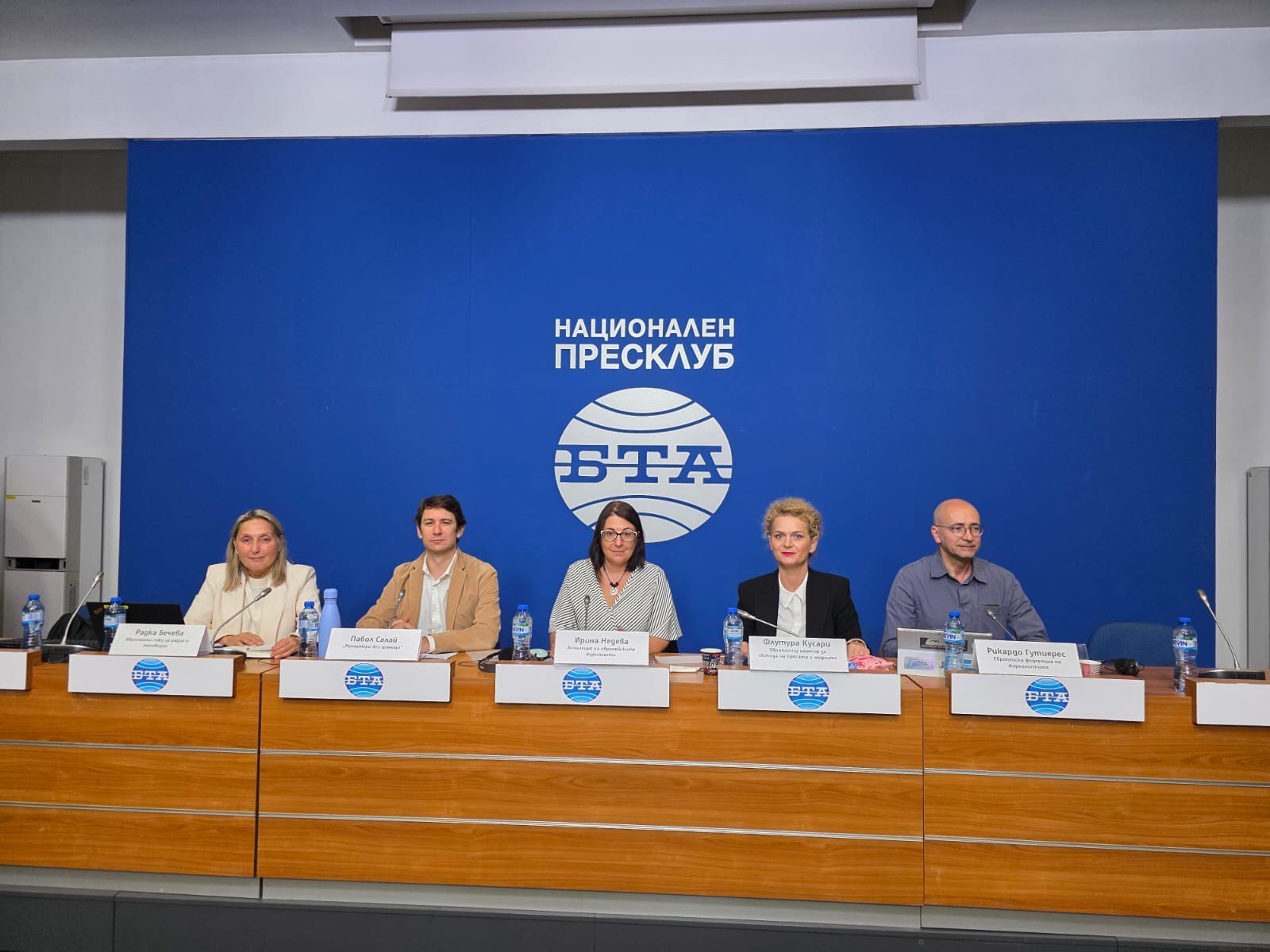
The mission held a press conference on 26 September in Sofia. A full report is due to be published after the mission and will be shared with all domestic political stakeholders, the Council of Europe, the European Union and international organisations.

Read the full article here

Fact Checker

Verify the accuracy of this article using AI-powered analysis and real-time sources.

Get Your Fact Check Report

Enter your email to receive detailed fact-checking analysis

5 free reports remaining

Continue with Full Access

You've used your 5 free reports. Sign up for unlimited access!

Already have an account? Sign in here

Share. Facebook Twitter Pinterest LinkedIn Tumblr Email Telegram Copy Link
News Room
  • Website
  • Facebook
  • X (Twitter)
  • Instagram
  • LinkedIn

The FSNN News Room is the voice of our in-house journalists, editors, and researchers. We deliver timely, unbiased reporting at the crossroads of finance, cryptocurrency, and global politics, providing clear, fact-driven analysis free from agendas.

Related Articles

Global Free Speech

Mozambique’s Estacio Valoi faces ‘clear intimidation’ over environmental reporting

15 hours ago
Global Free Speech

News leader Maritza Félix on covering immigration in Arizona

17 hours ago
Global Free Speech

These 6 foreign journalists have been denied entry by Israel 

20 hours ago
Global Free Speech

In Mali, 2 more journalists arrested under cybercrime law for criticizing authorities

2 days ago
Global Free Speech

The UK plans to ban under 16s from accessing social media. Photo: Nick Fancher/Unsplash The UK government has announced a ban on social media for under-16s and then some kind of social media curfew at night for children between 17 and 18. I’m pretty sympathetic to the idea that we need to hold social media companies to account for children and young people’s unfettered access to the kind of content that would be pretty bad for me as an adult if I sought it out. I know of young teenagers who have been lured into sending nude pictures to a sexy “woman” online and then told the images will be sent to all their friends unless they hand over a lot of money. And anorexic girls who find others online to compare what food they have eaten and how to outwit the doctors and parents who are trying to help them. And 14-year-old boys who are pushed vile misogynistic content from the manosphere because the algorithm has identified them as being just that, a 14-year-old boy. Most young people will have seen hardcore violent porn – stuff that my generation couldn’t have even accessed in licensed porn shops – by the age of 11 or 12. At one time a few years ago, kids regularly shared videos of beheadings in the playground. When we carried out research for our Gen Z themed issue last year, many young people said they had seen the video footage of Charlie Kirk being shot. But ban children from most social media platforms altogether? What is their right to free expression? YouTube can push you manosphere videos, but many young people use YouTube to learn: from understanding maths to grasping complicated concepts. This is important in general and especially important for dyslexic kids who have problems reading, or for children from poorer households without books. Social media – often a gateway to the internet more broadly – can open up a world that as a teenager you might never experience at home: music, books and culture. Social media often gives people the words to describe how they feel and who they are. Instagram is just as much a place to share dance routines and comedy sketches as it is to learn about politics and news. Social media is a place of protest too, and yes, even for the under-18s. We didn’t object to the revelation that youth revolts against an elderly oligarchy in Nepal were organised via the gaming site Discord, and that a viral video of a schoolboy kicked them off. In 2026 digital rights are a central part of freedom of expression, not just an add-on, and freedom of expression is not just something you get as a grown-up. This is before we consider whether a social media ban is possible. It undoubtedly isn’t. Australia which introduced a ban (although not on YouTube, gaming sites or education sites) has shown us that young people and families can very well circumvent it. At least 60% of young people are still on social media, including on many much less regulated than sites like Snapchat. VPNs make it easier to bypass all national regulation. We use VPNs at Index as an extra layer of security and privacy and we acknowledge the crucial role they play in authoritarian states. Do we want the government to ban them too – or fine children’s parents if they let them use them? How the hell do you police a curfew for 17 to 18 year olds anyway? Will neighbours report young people hanging around the streets after 9pm on their phones? Governments who introduce policies they know won’t work just discredit themselves. The thing that shocked me most about Prime Minister Keir Starmer’s announcement was that there was no mention of the trade-offs between a social media ban and free expression as if it simply wasn’t an issue. No reassurance that the government wouldn’t decide at some stage that the ban on social media and gaming might extend to adults taking part in perfectly legitimate behaviour which the government might disapprove of. Or an admission that the government itself uses social media sites freely to push its own messages (including the latest announcement). In many ways, the government’s ban on social media for children feels like an evasion. The government doesn’t want to address the deep problems social media causes for all of us: that X is a platform run by a US-based trillionaire, Elon Musk, who wants to use it to influence our national politics. Or that Mark Zuckerberg talks a good free speech game but his company, Meta, is trying to suppress a book, Sarah Wynn Williams’ Careless People, about how the company operates. Or that extremist views and racist conspiracy theories – including from bad actors which ban social media in their own countries –  are being used to cause deep societal divisions and bring huge financial rewards for the social media companies themselves. That’s before we even talk about tax evasion and the way our data (and our children’s data) is being monetised.  How social media platforms operate is untransparent, complicated and changing all the time. How children are affected – or not – is doubly complicated. Platforms have vast computing resources – and could be regulated by government to be more transparent about the way they operate without affecting free expression. Then we might all be able to decide democratically what sort of a society we want online –  for us and our children. My kids, now in their 20s, grew up in the current atmosphere. Their generation distrust many things they read online, share tips on how to avoid scams and go on regular detoxes from social media so they don’t endlessly scroll. They have vast networks of real friends online but are increasingly trying to do more things IRL (in real life). They are incredibly lucky to be living in a liberal democracy, which mostly doesn’t restrict access to social media and where the internet has opened up their minds to untold possibilities and ideas. In China, social media is accessed through government-monitored websites centred round WeChat: every interaction can be seen by the censors if they choose to. VPNs regularly get blocked. Russia is tightening its grip on cyber space and people often find the internet has been taken down by the security services. It’s a similar story in Iran, which is just coming out of a months-long internet blockade. And in these countries and others, we regularly hear of people who comment or like a social media post from a person or organisation the government doesn’t like and end up in prison or worse. It would be hyperbolic at this stage to suggest the UK is moving in the direction of China, Russia and Iran. But nor should we downplay what a paternalistic move this is. It bypasses the benefits of the internet for children without actually tackling the risks. The internet, when it started, opened up a world of free expression. Today governments should be thinking about how to protect that right to free expression for everyone including young people, not issuing unenforceable bans that will ultimately punish teenagers and their parents –  and which ministers know won’t work. Perhaps the Prime Minister and his cabinet should be looking a little carefully at the older generation’s behaviour. Recent US research showed that it is the over 65s who are most likely to spread misinformation and fake news online. Or is this the next step? Remove the internet from the teens, next the boomers and then all of us.   READ MORE

2 days ago
Global Free Speech

Photo: Fauzan Saari/Unsplash George Orwell didn’t mince his words when it came to international sporting events. In 1945, following Dynamo Moscow’s draw with Chelsea FC – a result that delighted Joseph Stalin – Orwell described such fixtures as “mimic warfare” and “orgies of hate”. Football fans will no doubt take issue with Orwell, arguing that the beautiful game is just as unifying as it is divisive and I’ll admit to a soft spot for a major tournament. But as with all things Orwell, the man has a point. Today the 2026 World Cup begins, hosted between the USA, Canada and Mexico. Players and referees have already been denied entry to the USA in a sign that the Trump administration’s immigration policy impacts everyone. This isn’t really a free speech issue, but it speaks to a broader chill around immigration, that has also targeted people on the basis of their speech. Organisations that campaign for media freedom are worried. The Press Freedom Tracker has expressed concerns about the role of ICE agents during the tournament and how journalists may be detained for less than favourable reporting. The Committee to Protect Journalists (CPJ) have issued guidance for foreign reporters in the country too. Seeing this, a friend of mine, a former Moscow correspondent, noted that the advice was strikingly reminiscent of guidance issued during the 2018 World Cup in Vladimir Putin’s Russia. Your average sports correspondent may not have a problem. Football is fairly safe to report on if you stick to what’s happening on the pitch. It does though become more dangerous once you probe beneath. Speak to journalists behind Football Leaks, a cross-border investigation that revealed “how agents, intermediaries and club officials are perverting sporting ethics and tax regulations to maximise their access to the riches generated from football, at the expense of the quality of the game, the development of talent and the wishes of the fans”. Getting the stories out as part of this investigation was riddled with risk. It makes sense. We know the rich and powerful abuse legal systems and professional football is a game of the rich and powerful. Of more immediate concern are the stories beyond the fixtures, the ones that curious journalists may understandably want to pursue once on the ground in the three countries. While media freedom in Canada remains high, it’s far more fragile in the USA and even more so in Mexico. I’ve heard reports of walls being erected and banners deployed to conceal poverty and urban decay in Mexico. As the nation tries to put its best foot forward, in every sense, will they want reporters snapping away at this? But it’s not all bad. Teachers in Mexico are protesting near the World Cup stadium in an attempt to use this sensitive moment to push through a pay rise. They may very well succeed and the president, Claudia Sheinbaum, has apparently ruled out a heavy-handed response, presumably in part concerned about the current global spotlight. This is far from the grotesque sportswashing exercise of Qatar 2022, a tournament “built on the corpses of migrant workers and the stolen wealth of the Qatari people”, and as a Qatari human rights activist wrote for us at the time. READ MORE

3 days ago
Add A Comment

Comments are closed.

Editors Picks

The bond market is flashing a clear signal on interest rates. Bitcoin bulls should take note

35 minutes ago

Bitcoin Rodney Pleads Guilty In $1.8B HyperFund Crypto Fraud

38 minutes ago

Texas Landowners Face a Difficult Decision: Allow Border Wall or Lose Right to Property

1 hour ago

Bitcoin and ether ETFs lost $111 million combined as rate-cut hopes died

2 hours ago
Latest Posts

Wife of FTX Exec Salame to Face Campaign Finance Charges

2 hours ago

A New Bipartisan Bill Promises Innovation and Choice. It Will Deliver Neither.

2 hours ago

XRP slips 4% below $1.20 after breakout rally stalls near key resistance

3 hours ago

Subscribe to News

Get the latest news and updates directly to your inbox.

At FSNN – Free Speech News Network, we deliver unfiltered reporting and in-depth analysis on the stories that matter most. From breaking headlines to global perspectives, our mission is to keep you informed, empowered, and connected.

FSNN.net is owned and operated by GlobalBoost Media
, an independent media organization dedicated to advancing transparency, free expression, and factual journalism across the digital landscape.

Facebook X (Twitter) Discord Telegram
Latest News

Brickbat: Sacré Bleu

14 minutes ago

The bond market is flashing a clear signal on interest rates. Bitcoin bulls should take note

35 minutes ago

Bitcoin Rodney Pleads Guilty In $1.8B HyperFund Crypto Fraud

38 minutes ago

Subscribe to Updates

Get the latest news and updates directly to your inbox.

© 2026 GlobalBoost Media. All Rights Reserved.
  • Privacy Policy
  • Terms of Service
  • Our Authors
  • Contact

Type above and press Enter to search. Press Esc to cancel.

🍪

Cookies

We and our selected partners wish to use cookies to collect information about you for functional purposes and statistical marketing. You may not give us your consent for certain purposes by selecting an option and you can withdraw your consent at any time via the cookie icon.

Cookie Preferences

Manage Cookies

Cookies are small text that can be used by websites to make the user experience more efficient. The law states that we may store cookies on your device if they are strictly necessary for the operation of this site. For all other types of cookies, we need your permission. This site uses various types of cookies. Some cookies are placed by third party services that appear on our pages.

Your permission applies to the following domains:

  • https://fsnn.net
Necessary
Necessary cookies help make a website usable by enabling basic functions like page navigation and access to secure areas of the website. The website cannot function properly without these cookies.
Statistic
Statistic cookies help website owners to understand how visitors interact with websites by collecting and reporting information anonymously.
Preferences
Preference cookies enable a website to remember information that changes the way the website behaves or looks, like your preferred language or the region that you are in.
Marketing
Marketing cookies are used to track visitors across websites. The intention is to display ads that are relevant and engaging for the individual user and thereby more valuable for publishers and third party advertisers.