Close Menu
FSNN | Free Speech News NetworkFSNN | Free Speech News Network
  • Home
  • News
    • Politics
    • Legal & Courts
    • Tech & Big Tech
    • Campus & Education
    • Media & Culture
    • Global Free Speech
  • Opinions
    • Debates
  • Video/Live
  • Community
  • Freedom Index
  • About
    • Mission
    • Contact
    • Support
Trending

Bricks & Minifigs Really Doesn’t Want You To Know About The BAM Map, Sues To Unmask Whoever Runs It

2 minutes ago

I Asked the White House’s New AI Chatbot About Tariffs. It Told the Truth.

5 minutes ago

Wall Street giant BNY discusses infrastructure tie-up with Kraken parent Payward

16 minutes ago
Facebook X (Twitter) Instagram
Facebook X (Twitter) Discord Telegram
FSNN | Free Speech News NetworkFSNN | Free Speech News Network
Market Data Newsletter
Friday, October 2
  • Home
  • News
    • Politics
    • Legal & Courts
    • Tech & Big Tech
    • Campus & Education
    • Media & Culture
    • Global Free Speech
  • Opinions
    • Debates
  • Video/Live
  • Community
  • Freedom Index
  • About
    • Mission
    • Contact
    • Support
FSNN | Free Speech News NetworkFSNN | Free Speech News Network
Home»News»Media & Culture»Bricks & Minifigs Really Doesn’t Want You To Know About The BAM Map, Sues To Unmask Whoever Runs It
Media & Culture

Bricks & Minifigs Really Doesn’t Want You To Know About The BAM Map, Sues To Unmask Whoever Runs It

News RoomBy News Room2 minutes agoNo Comments6 Mins Read0 Views
Share Facebook Twitter Pinterest Copy Link LinkedIn Tumblr Email VKontakte Telegram
Bricks & Minifigs Really Doesn’t Want You To Know About The BAM Map, Sues To Unmask Whoever Runs It
Share
Facebook Twitter Pinterest Email Copy Link

Listen to the article

0:00
0:00

Key Takeaways

Playback Speed

Select a Voice

A few days ago I wrote about the anti-SLAPP motion filed by “Reckless” Ben Schneider against Bricks & Minifigs (BAM Franchising) over the ridiculous RICO suit they filed against him for his efforts to get BAM to pay back the money owed to Bryan Mansell. The original suit was based on the laughable claim that Ben and Mansell were involved in a conspiracy to extort money from BAM — a claim that is undermined by the fact that BAM then turned around and settled with Mansell, returning some of his Lego sets and cutting him a check (while still insisting it did nothing wrong, of course. For what it’s worth, even after the settlement, Mansell says BAM returned only about 35 of the 387 sets its own records showed as unsold, and seven of those weren’t even his, which makes me wonder what exactly the settlement said and how that didn’t get worked out ahead of time).

In researching that previous article, I came across the site used for that last link, The BAM Map, which is an invaluable journalistic goldmine, in that whoever is behind it is cataloging in great detail basically every sketchy or nefarious thing that BAM is doing.

But digging through that site, I discovered that BAM (and the McNeff family behind it) appear to have launched a new censorial bit of SLAPP litigation and general lawfare against The BAM Map as well.

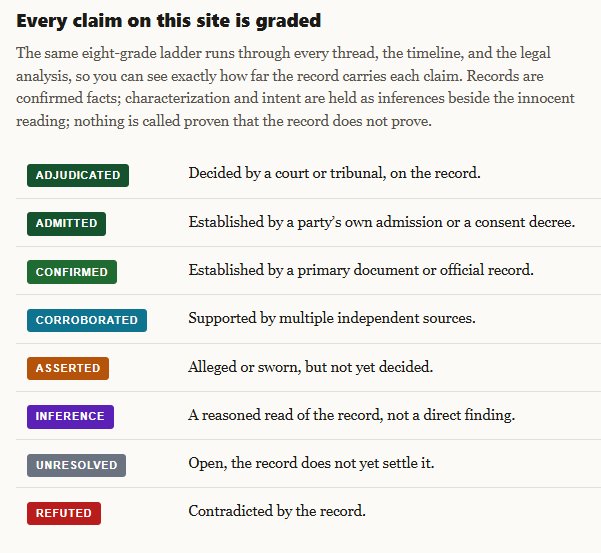
Sites that catalog corporate shenanigans aren’t always the most trustworthy, but The BAM Map goes out of its way to detail and post their evidence, and flag whether particular claims are merely asserted as opposed to proven as fact. It’s actually quite impressive.

Anyway, it appears that the lawfare against the BAM Map started with some highly questionable DMCA takedown claims, aka the coward’s censorship tool. BAM first issued a DMCA notice to The BAM Map’s host because the site had posted an internal BAM document that analyzed the impact on their stores from Reckless Ben’s reporting on how BAM refused to abide by the consignment agreement they had taken over. While it is an internal document, so long as The BAM Map itself broke no laws in obtaining the document, they had every legal right as journalists to publish it. The idea that it’s copyright infringement is laughable on its face. That’s not what copyright is for, and also there’s no indication that BAM ever even registered the copyright, which it would need to do before it could even sue for copyright infringement. Indeed, since any registration would then come after the alleged infringement, statutory damages are also completely off the table, leaving only “actual damages” from… being unable to license their internal documents?

In other words, the DMCA takedown is bullshit.

And then they did it again. Just last week they filed a second DMCA notice, once again demanding that BAM’s internal documents that The BAM Map published be removed (even though, as far as I can tell, the first notice had already gotten them taken down).

Let’s be clear: this is abuse of copyright law by BAM. DMCA notices are supposed to be for stopping actual infringement: someone distributing your work in a way the law doesn’t allow. But publishing documents as part of news reporting is a strong fair use case (especially for factual material like sales data and PR talking points). Not to mention, if you could just DMCA any internal corporate files that journalists received from whistleblowers, you would basically end whistleblowing completely. Using copyright this way isn’t just abuse of the DMCA, it’s an attack on First Amendment-protected reporting.

But BAM didn’t stop there. It then filed a John Doe suit against the site’s anonymous operators, once again using Dentons, the massive global law firm that it used to file the SLAPP suit against Schneider and Mansell. Notably, while the lawsuit mentions the DMCA notice and the existence of “copyrighted materials,” it does not include any copyright claims. Instead, it claims that Google Drive audit logs show someone with “franchise-level access” downloaded the files. So, according to the lawsuit, whoever runs The BAM Map is likely a current or former franchisee (or some other insider) who is breaching their contract with BAM and misappropriating trade secrets under both Utah’s trade secrets law and the federal Defend Trade Secrets Act. For what it’s worth, the operators of the site claim that the knowledge base that is central to the claims was not only accessible to those who had specific permissions but rather “was open to anyone on September 26th” and that it was only earlier this week that BAM locked it down.

This case is marginally stronger than the lawsuit against Reckless Ben, but only barely. Even if the documents are coming from an insider, it’s hard to see how BAM can credibly claim that its crisis PR talking points about Reckless Ben qualify as “trade secrets” that “derive economic value” from being kept secret. The entire point of this lawsuit just seems focused on creating massive chilling effects for whoever is operating the site to silence them. To me, that makes it a pretty clear SLAPP suit.

The key point of the lawsuit is BAM trying to unmask who is behind The BAM Map, and to that end, after filing the lawsuit, BAM got a magistrate judge to approve expedited discovery, authorizing subpoenas to Vercel and GoDaddy for subscriber records and IP logs to identify who is behind the BAM Map, in order to properly serve them and include them in the lawsuits. While magistrates granting subpoenas like this isn’t uncommon, it’s a bit worrisome that it was done with no supporting declaration, and the order has no notice provision or period to object.

Under the First Amendment, you have a right to speak anonymously, but it’s not absolute. The way this generally works is that a court will allow the subpoena to issue, and then (one hopes) the companies on the receiving end (GoDaddy and Vercel) alert the site’s operators so they can move to quash. There are a couple of different standards that courts use to determine when it’s okay to unmask an anonymous speaker, with Dendrite and Cahill being the most common. In the past, the federal courts in Utah have recognized the Dendrite test in quashing a subpoena when Koch Industries tried to unmask an anonymous critic.

Hopefully the anonymous operators of The BAM Map have access to lawyers who understand this, and can step up in response to the subpoenas, in order to protect their anonymity. At the very least, they’ve started a GoFundMe for legal support.

Bricks & Minifigs’ continued efforts to abuse the legal system to suppress reporting by critics says an awful lot about the McNeff family, both in how they run their business and in how they treat the people who call out their practices. It’s an attack on First Amendment protected speech and an attempt to create a chilling effect to scare off future reports or whistleblowers.

And, finally, shame on Dentons. A giant global law firm putting its name on this is just embarrassing.

Read the full article here

Fact Checker

Verify the accuracy of this article using AI-powered analysis and real-time sources.

Get Your Fact Check Report

Enter your email to receive detailed fact-checking analysis

5 free reports remaining

Continue with Full Access

You've used your 5 free reports. Sign up for unlimited access!

Already have an account? Sign in here

#AI #DigitalTransformation #FutureOfMedia #IndependentMedia #InformationAge #TechNews
Share. Facebook Twitter Pinterest LinkedIn Tumblr Email Telegram Copy Link
News Room
  • Website
  • Facebook
  • X (Twitter)
  • Instagram
  • LinkedIn

The FSNN News Room is the voice of our in-house journalists, editors, and researchers. We deliver timely, unbiased reporting at the crossroads of finance, cryptocurrency, and global politics, providing clear, fact-driven analysis free from agendas.

Related Articles

Media & Culture

I Asked the White House’s New AI Chatbot About Tariffs. It Told the Truth.

5 minutes ago
Cryptocurrency & Free Speech Finance

Once a $2.3 Billion Network, Ethereum Layer-2 Blast Is Shutting Down

19 minutes ago
AI & Censorship

Congress Has Another Site-Blocking Bill, And This One Targets VPNs

58 minutes ago
Media & Culture

Tom Cruise’s New Climate Disaster Movie, Digger, Is a Disaster

1 hour ago
Cryptocurrency & Free Speech Finance

Bitcoin Heads Higher on Macro Moves: Where Does BTC Go Next?

1 hour ago
AI & Censorship

Victory! Court Rejects Government Effort to Dismiss Social Media Surveillance Lawsuit

2 hours ago
Add A Comment
Leave A Reply Cancel Reply

Editors Picks

I Asked the White House’s New AI Chatbot About Tariffs. It Told the Truth.

5 minutes ago

Wall Street giant BNY discusses infrastructure tie-up with Kraken parent Payward

16 minutes ago

Blast to Shut Down as Ethereum L2 Economics Fall Short

18 minutes ago

Once a $2.3 Billion Network, Ethereum Layer-2 Blast Is Shutting Down

19 minutes ago
Latest Posts

Congress Has Another Site-Blocking Bill, And This One Targets VPNs

58 minutes ago

Tom Cruise’s New Climate Disaster Movie, Digger, Is a Disaster

1 hour ago

The six detained journalists At 12 noon on Friday, Cairo time, Eman Ouf, the rapporteur of the Women’s Committee and the Freedoms Committee at the Egyptian Press Syndicate, was rushing to the public prosecutor’s office. Technically, it was her day off, but the public prosecutor was working as normal, and she – along with other members of the syndicate’s board – feared that the six detained journalists who make up the editorial team of the fact-checking newsroom Matsada2sh would be brought before prosecutors without warning. “I’m too scared they’d be brought in alone,” Ouf told Index on Censorship. “We were here all day yesterday too, because, typically, statements from the [Ministry of] Interior would be followed by being brought to the public prosecutor.” Mohamed Ashraf Abu Emeira, Abdallah Qadry, Islam Barakat, Omar Helal, Mohamed Mahmoud and Mohamed Adel were detained by Egyptian security forces, in a coordinated operation spanning several governorates, and in a period of less than 24 hours. Starting on Monday evening, security personnel raided homes, confiscated electronic devices – including devices belonging to family members – and did not show arrest or search warrants, nor did they tell the families where the journalists were being taken. Some were arrested on the streets of Cairo. As of the time of writing, none of the six journalists have been brought before a judicial authority, according to the Egyptian Initiative for Personal Rights (EIPR), which represents all six. Neither their families nor their lawyers have been allowed to contact them, and their whereabouts remain officially unknown. The arrests brought the number of Egyptian journalists detained in connection with their work to 26, according to EIPR. They also represent something with no recent precedent: the simultaneous detention of an entire independent newsroom’s editorial staff. “Rather than targeting an individual journalist over a specific piece of reporting, the authorities aim to take an entire independent media platform offline by arresting its whole team,” Lobna Darwish, EIPR’s advocacy director, told Index on Censorship. Journalists treated as national security issue Matsada2sh – Arabic for “Don’t Believe It” – was founded in 2018 and has built a reputation for fact-checking government statements, scrutinising official claims, and producing open-source investigative reporting. In a media landscape tightly controlled by the government and mocked by critics for delivering content largely dictated word-for-word by officials, the platform has faced pressure before. In 2023, journalist Karim Asaad was arrested after Matsada2sh published information about Egyptian nationals detained in Zambia alongside a plane carrying cash and weapons. He was released after one day following pressure from the Press Syndicate. The Egyptian Ministry of Interior subsequently issued a statement on Thursday accusing Matsada2sh of being “part of the media committees of the terrorist Muslim Brotherhood group,” operating from abroad, spreading “false and fabricated news,” and receiving foreign funding. The invocation of the Muslim Brotherhood, which Egypt designated a terrorist organisation in 2013, carries significant legal consequences for the accused, according to Darwish. “The apparent use of the counterterrorism framework against the six journalists raises serious concerns about the state’s approach to media freedom,” she told Index on Censorship. “It also raises concerns that invoking terrorism allegations may be used to undermine the journalists’ basic due process rights and the constitutional guarantees protecting against imprisonment for offences committed through publication or other forms of expression.” The invocation of the Muslim Brotherhood, which Egypt designated a terrorist organisation in 2013, carries significant legal consequences for the accused “Unfortunately, this is not new,” she said, adding that the state invokes counterterrorism charges in most cases of arrests based on speech as well as publication of false news, to undermine due process rights and constitutional guarantees. She concluded: “More broadly, the statement treats journalistic activity as a national security issue.” Alarming precedent and unclear red lines In its statement, the ministry also noted that five of the six detained journalists are not registered members of the Egyptian Press Syndicate, an observation which CPJ’s Qudah said could not be used to justify their detention. “The fact that some of the detained journalists are not members of the Journalists’ Syndicate does not justify their detention or invalidate their work as journalists,” Sara Qudah told Index on Censorship. “Any genuine licensing or registration issue should be addressed through transparent administrative or judicial procedures, not through arrests or prolonged detention.” Qudah noted that one of the detained journalists is a Syndicate member, yet was detained regardless. “This should not be viewed simply as a dispute over professional registration,” she said. The arrests follow a well-documented pattern of press suppression in Egypt. Egypt is holding the highest number of journalists behind bars since record-keeping began. In 2024, Egypt ranked 170th out of 180 countries in the World Press Freedom Index issued by Reporters Without Borders. “The ‘red lines’ for independent journalism and public criticism in Egypt have become increasingly unclear and constantly shifting,” Darwish said. “Journalists often have no way of knowing what particular piece of reporting might provoke a security response.” The arrests follow a well-documented pattern of press suppression in Egypt Qudah echoed the concern about wider effects. “The fact that an entire newsroom has been detained is particularly alarming,” she said. “It risks sending a message to other journalists that investigative reporting, fact-checking government statements, or scrutinising officials can expose them to serious repercussions. That can contribute to greater self-censorship across the media sector.” In recent years, Egyptian President Abdelfattah El-Sisi has repeatedly warned journalists from coverage which the state deems disruptive and dishonest, calling on newsrooms to only report what the government confirms. Back at the public prosecutor’s office, Ouf waited. The syndicate’s position was clear: whatever the charges, journalists should not face prosecutors alone. “If Egyptian authorities believe that Matsada2sh or individual journalists have violated licensing requirements or committed an actual crime,” Qudah said, “they should present the evidence and allow the allegations to be tested through due process. Journalism itself should not be treated as a security offence.” *Journalist used a pseudonym for security concerns. READ MORE

1 hour ago

Subscribe to News

Get the latest news and updates directly to your inbox.

At FSNN – Free Speech News Network, we deliver unfiltered reporting and in-depth analysis on the stories that matter most. From breaking headlines to global perspectives, our mission is to keep you informed, empowered, and connected.

FSNN.net is owned and operated by GlobalBoost Media
, an independent media organization dedicated to advancing transparency, free expression, and factual journalism across the digital landscape.

Facebook X (Twitter) Discord Telegram
Latest News

Bricks & Minifigs Really Doesn’t Want You To Know About The BAM Map, Sues To Unmask Whoever Runs It

2 minutes ago

I Asked the White House’s New AI Chatbot About Tariffs. It Told the Truth.

5 minutes ago

Wall Street giant BNY discusses infrastructure tie-up with Kraken parent Payward

16 minutes ago

Subscribe to Updates

Get the latest news and updates directly to your inbox.

© 2026 GlobalBoost Media. All Rights Reserved.
  • Privacy Policy
  • Terms of Service
  • Our Authors
  • Contact

Type above and press Enter to search. Press Esc to cancel.

🍪

Cookies

We and our selected partners wish to use cookies to collect information about you for functional purposes and statistical marketing. You may not give us your consent for certain purposes by selecting an option and you can withdraw your consent at any time via the cookie icon.

Cookie Preferences

Manage Cookies

Cookies are small text that can be used by websites to make the user experience more efficient. The law states that we may store cookies on your device if they are strictly necessary for the operation of this site. For all other types of cookies, we need your permission. This site uses various types of cookies. Some cookies are placed by third party services that appear on our pages.

Your permission applies to the following domains:

  • https://fsnn.net
Necessary
Necessary cookies help make a website usable by enabling basic functions like page navigation and access to secure areas of the website. The website cannot function properly without these cookies.
Statistic
Statistic cookies help website owners to understand how visitors interact with websites by collecting and reporting information anonymously.
Preferences
Preference cookies enable a website to remember information that changes the way the website behaves or looks, like your preferred language or the region that you are in.
Marketing
Marketing cookies are used to track visitors across websites. The intention is to display ads that are relevant and engaging for the individual user and thereby more valuable for publishers and third party advertisers.