

 Freedom Index
Listen to the article
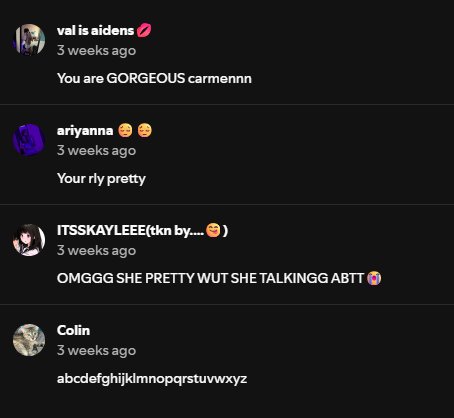
Eleven months ago, I wrote about what I thought was a truly fascinating find: that some kids appeared to be using some random old NPR podcasts on Spotify as a personal chat room to get around various restrictions. It was mentioned, somewhat in passing, on the “How to do Everything” podcast last October, where someone who did social media monitoring for NPR described noticing odd comments like these showing up on podcasts like NPR’s TED Radio Hour:
But then, a week and a half ago or so, This American Life, a much bigger podcast, also associated with public radio (though not actually part of NPR), reported that they had discovered basically the same thing (and clearly seemed unaware that anyone else had reported on it earlier, even other public radio podcasts). This American Life used it as an example of “intergenerational” confusion, because Dave Blanchard, the millennial who first spotted those comments on the (again, public radio) podcast “Wild Card,” assumed they were bots, only to be told by a Gen Z colleague that they were kids, not bots:
Ira Glass
So OK, bots, he thought, some newfangled kind of bots that respond to each other somehow. He deleted the posts.
Dave Blanchard
And I went back to the Spotify comments again. And there was a new comment that said, uh, so it deleted my com. And that felt not botty. That felt very strange that a bot would be able to recognize that the thread got deleted and post it, letting people know that it had been deleted.
Ira Glass
And then there were other responses to that.
Dave Blanchard
So someone says, username cotton/amity, parentheses, I’m back, bitches, commented, “Weird.” Aubrey commented, “That’s weirdss,” two S’s.
Ira Glass
This is really not looking like any bot behavior he’d ever seen. So he goes to NPR’s Slack channels, post some screenshots, describes what these comments are. And one of the higher-ups, Matilde, suggests reporting it to Spotify, which Dave does. And then somebody younger at NPR reads the thread. They’re 10 years younger than Dave– Gen Z, not millennial, named Hannah Chinn.
Hannah Chinn
And I click into the screenshots, and almost immediately I’m like, oh. My conclusion is really, really different than Dave’s and Matilde’s, because I’m like, these are kids. And I think that part of that is because I was a middle schooler on the internet, posting on forums and stuff.
And so I look at their display names. Their display names are, like, Ella with five emojis. And they’re the special character emojis. They’re the ones that you have to go onto the internet and type your name into a special text generator, and then it comes out as a special character, and then you have to special paste it into your profile.
Ira Glass
Their profile pictures are all cartoon characters Hannah’s never seen before. And then there’s the way that they’re commenting back and forth with each other, short little phrases. I’m sorry. That’s weird. Lots of hi’s, lots of extra exclamation points. Hannah recognized it. They grew up in a conservative home, was homeschooled, with limited access to social media.
Hannah Chinn
And so I was a kid who used weird parts of the internet not as they were originally designed to talk to my friends. I talked back and forth with my friends on Google Docs. And we would type things and then delete them, and then type things and then make them invisible by making the text white on the white background. So I think this is familiar behavior to me.
I also find it kinda hilarious that Hannah mentions how they would talk with their friends via Google Docs, because in my post from last year, that was the other example I used to demonstrate how kids will turn anything into their own personal social space.
One thing that This American Life was able to do though, was track down one of the kids, a 14-year-old girl, named Ella, whom Ira Glass speaks to. You can hear a bit of their conversation in this Bluesky post from Glass:
Or listen to the whole thing on the full podcast (which doesn’t go that much deeper into this conversation). While some of the earlier discussion was speculative, it appears that the speculation was exactly right regarding what’s happening, including the idea that if adults caught them on the Spotify page of a public radio podcast, they wouldn’t be too concerned:
Ira Glass
Ella says this all started with a video podcast that played TikTok videos. Ella thinks a kid started it. The video seemed to be chosen specifically for kids who weren’t allowed on TikTok, but were allowed on Spotify. That was Ella. She was allowed on Spotify, but on no social media. And she and the other kids would watch this girl’s podcast on Spotify and then chat in the comments of the podcast.
Ella
And her podcast ended up getting banned. And we wanted to keep talking to each other, so people would make playlists.
Ira Glass
She described exactly the system that Hannah figured out. Kids would name their playlist “chat here” or something like that, and then there’d be some podcast, and everybody would go to that podcast and talk in the comments. She says it was maybe 20 kids in the core group– lots of theater kids, she says, mostly girls, most of them with strict parents who didn’t let them on regular social media.
And can I ask, why did you guys pick NPR shows to be the ones where you went to in the comments?
Ella
I think we just looked for podcasts that didn’t have many comments.
Ira Glass
I see. So you picked NPR because it didn’t seem very popular.
Ella
Yeah, so that we wouldn’t get caught up in other people’s comments.
Ira Glass
I tell you, buddy, I do a public radio show, and that hurts a little to hear it.
Ella
[CHUCKLES]
Sorry.
Ira Glass
That’s OK. Are your parents NPR listeners?
Ella
Yeah, my mom is. She listens to podcasts all the time.
Ira Glass
Was any of this that your parents were NPR listeners, and this felt like this is the perfect cover? Like, if they catch you doing this, you can be like, look, I’m just doing this for an NPR show.
Ella
Yeah.
Ira Glass
Is that true? Did you think about that?
Ella
Yeah, a little bit.
While this feels like a silly little story, it’s actually pretty important at a time when adults keep rushing to ban social media for kids. Those bans miss the point: kids still want to socialize, to gather, and to chat. And we’ve effectively been closing down the real world places where they can do that outside of school.
Professor Kate Klonick, who studies online speech and platform governance, summed it up nicely: “All networked technology comes down to chat.” That’s a crazy important point to make, which is often lost in the wider discussions about “regulating social media.” If you are connecting people via technology, they are going to use the tools to communicate. Pretending that we can magically stop this or regulate “chat” is going to end badly.
But the attempts continue no matter how much the kids today may think “that’s weirdss” with two s’s.
Read the full article here
Fact Checker
Verify the accuracy of this article using AI-powered analysis and real-time sources.