Close Menu
FSNN | Free Speech News NetworkFSNN | Free Speech News Network
  • Home
  • News
    • Politics
    • Legal & Courts
    • Tech & Big Tech
    • Campus & Education
    • Media & Culture
    • Global Free Speech
  • Opinions
    • Debates
  • Video/Live
  • Community
  • Freedom Index
  • About
    • Mission
    • Contact
    • Support
Trending

Germany’s AllUnity expands EURAU to Solana as euro stablecoins gain traction

21 seconds ago

US Seized $500M in Iranian Crypto Assets, Treasury Secretary Says

2 minutes ago

SCOTUS Narrows the Reach of the Voting Rights Act

36 minutes ago
Facebook X (Twitter) Instagram
Facebook X (Twitter) Discord Telegram
FSNN | Free Speech News NetworkFSNN | Free Speech News Network
Market Data Newsletter
Thursday, April 30
  • Home
  • News
    • Politics
    • Legal & Courts
    • Tech & Big Tech
    • Campus & Education
    • Media & Culture
    • Global Free Speech
  • Opinions
    • Debates
  • Video/Live
  • Community
  • Freedom Index
  • About
    • Mission
    • Contact
    • Support
FSNN | Free Speech News NetworkFSNN | Free Speech News Network
Home»News»Media & Culture»Assata Shakur Stood With the Oppressors
Media & Culture

Assata Shakur Stood With the Oppressors

News RoomBy News Room7 months agoNo Comments7 Mins Read193 Views
Share Facebook Twitter Pinterest Copy Link LinkedIn Tumblr Email VKontakte Telegram
Assata Shakur Stood With the Oppressors
Share
Facebook Twitter Pinterest Email Copy Link

Listen to the article

0:00
0:00

Key Takeaways

Playback Speed

Select a Voice

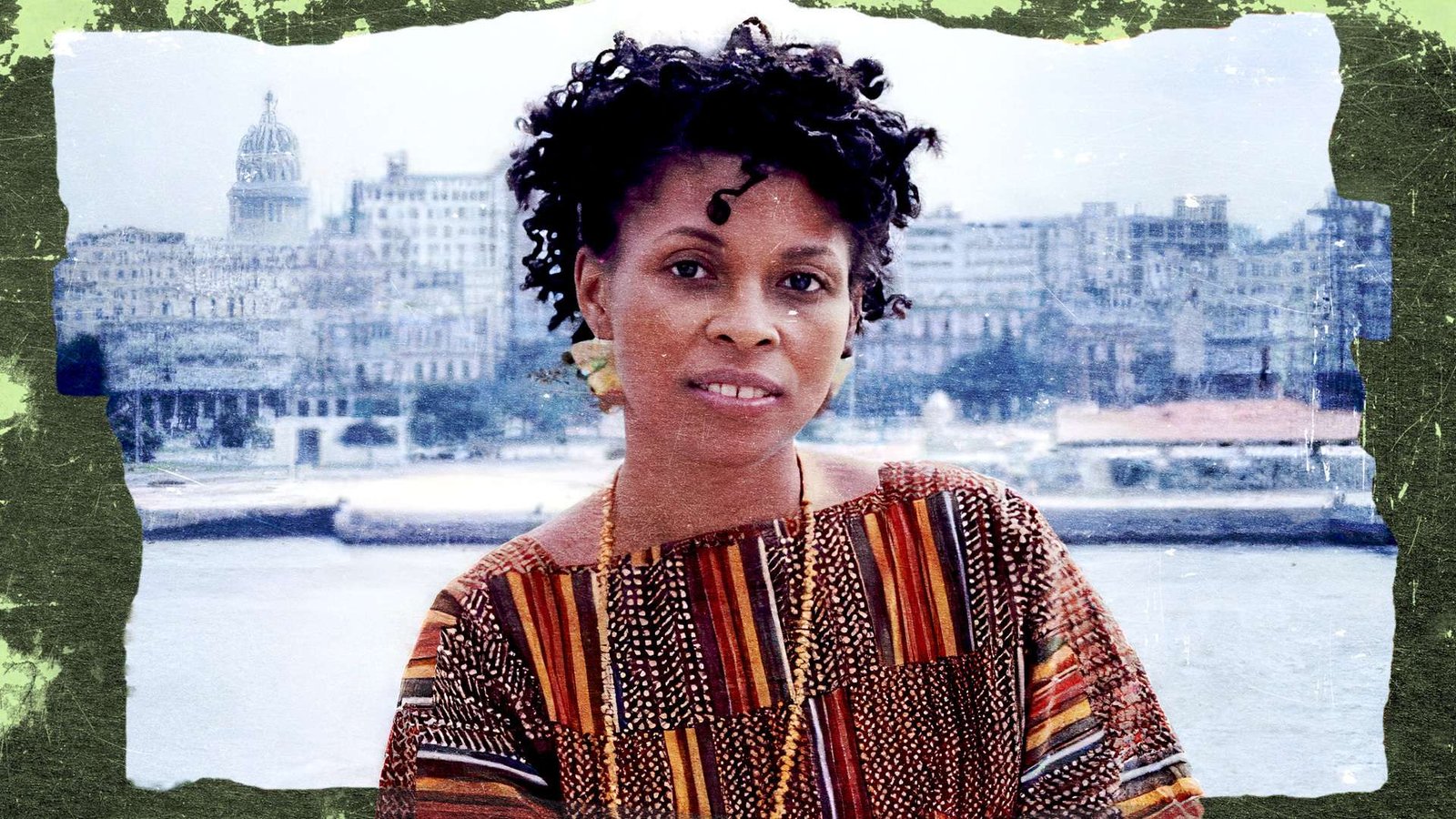
There are quite a few dramatic, almost folkloric, stories about Assata Shakur, the American militant and self-avowed anti-government revolutionary who escaped from prison in 1979, not long after she was convicted of murdering a New Jersey state trooper. But a relatively quiet one stands out to me.

During a walk, a police officer stopped and asked her for her papers. Her offense: She was black. It was the very sort of racist, dystopian targeting Shakur spent her life attempting to combat. Which is why it is richly ironic that this happened in Cuba, the place where she sought refuge from the racism and oppression of the U.S.

How did she reconcile this? “Look there’s racism here, there’s racism in the United States,” she told CNN in Havana in 1998. “The difference is that the people at the top in the United States are the ones perpetuating that racist system, and the leadership here are trying to dismantle it.”

It’s an answer that tells you a lot, not just about Shakur, but about certain political factions that still exist today. Shakur, who died last week at age 78, lived the rest of her life in—and often vocally supported—Cuba, where “the system” has long been known for imprisoning political dissidents, severely curtailing civil liberties, and forging equality in the sense that people are more equally oppressed.

By Shakur’s telling, she was a freedom fighter. In the early 1970s, after a stint with the Black Panthers, she joined the Black Liberation Army, an offshoot of the Panthers whose members were accused of murdering law enforcement officers, bombing buildings, and robbing banks, done in the name of forcefully taking freedom for black people from a government that denied it. She shed the name JoAnne Chesimard and exchanged it for what she would become widely known as: Assata (meaning “she who struggles” in Swahili) and Shakur (meaning “thankful one” in Arabic). Over the course of a few years, she was charged with multiple counts of robbery, kidnapping, attempted murder, and murder, all of which were dismissed or ended in an acquittal or a hung jury.

Until they didn’t. In 1977, she was found guilty of murdering Trooper Werner Foerster in a shootout on the New Jersey Turnpike. Two years into her life sentence, members of the Black Liberation Army sprung her from prison. She resurfaced in 1984 in Cuba, the place she would call home for over 40 years, out of reach of U.S. extradition.

Shakur’s legacy is complicated by the era in which her American activism existed. It coincided, for one, with COINTELPRO, the notorious FBI counterintelligence program that illegally surveilled and stirred the pot among political movements deemed malignant. Those unconstitutional actions—often paired with shoddy case work by prosecutors, flimsy evidence, overcharging, unreliable witnesses, and politically motivated cases—led many judges to dismiss indictments entirely. It all added fuel to why groups like the Black Liberation Army emerged in the first place. “People have constitutional rights, and you can’t shuffle them around,” a New York judge said while dismissing several charges against Shakur.

The activist and fugitive always maintained she didn’t kill Foerster. During her trial, two physicians testified that the bullet wounds she sustained on the turnpike, one of which shattered her collarbone, could only have occurred if she had her hands and arms raised above her head, precluding her ability to fire any weapon. “You have convicted a woman who had her hands in the air,” Shakur said after the guilty verdict was read.

But even if you believe her to have been wrongly convicted, the impulse among some—from the Chicago Teachers Union and the Democratic Socialists of America (DSA) to politicians, pundits, and activists—to treat her as a martyr for freedom is, to put it kindly, misguided.

There are a few reasons for that.

The Black Liberation Army was, for one, not vague about its support for “armed struggle” and urban guerrilla warfare. “People have the right to free themselves from oppression by whatever means they deem possible,” Shakur told NBC in 1998, when she again maintained she was innocent of murder. It’s a strange sort of cognitive dissonance that effectively amounts to “I didn’t do it, but if I did do it, it would have been OK.”

But the greater cognitive dissonance—and Shakur’s real legacy—is grounded in the place she found sanctuary, and whose government she said was doing it right: Cuba. “I eventually became convinced that the Cuban government was completely committed to eliminating all forms of racism,” she wrote in her autobiography, Assata. “There were no racist institutions, structures, or organizations, and i [sic] understood how the Cuban economic system undermined rather than fed racism”—the same argument she would echo throughout her life, including in her late-’90s CNN interview.

It’s a stunning claim to make, especially from an alleged radical for freedom. This is the same government that sent armed militiamen to shut down media for the offense of being opposed to Cuban dictator Fidel Castro, whom Shakur affectionately calls “Fidel” in her autobiography. It is the same government that put Christians, gays, and political dissidents in concentration camps. It is the same government that has, for decades, imprisoned people for having the audacity to criticize the state. And it is the same communist “economic system” that has tried to engineer equality such that it has resulted in hunger and widespread shortages, not just of food but of basic goods.

The argument still resonates among certain left-wing factions. “The American state brutally oppressed Assata and her Black Panther Party Comrades,” the DSA said in a statement following Shakur’s death. “The Cubans welcomed her and other Black Revolutionaries with asylum, and their solidarity and loyalty allowed Assata to live out her days in Havana.” But the asylum grants to Shakur and those like her had little to do with any devotion to freedom. “Back then if it annoyed the United States government,” a Cuban diplomat told CNN’s Patrick Oppmann, “that was a good enough reason to do something.”

In 2021, the island saw the largest anti-government protests in decades. Black Lives Matter (BLM) responded by blaming the U.S. government for “instigat[ing] suffering for the country’s 11 million people – of which 4 million are Black and Brown” with its embargo on trade, which the group said was punishment for Cuba’s “commitment to sovereignty and self-determination” in the face of adversity. “Cuba has historically demonstrated solidarity with oppressed peoples of African descent…like Assata Shakur.”

The U.S. embargo is unjust, but it isn’t the root of the island’s problems. That summer I spoke to two black Cuban residents about the protests. “What’s wrong with them?” one of them asked me about BLM. The notion that Cuban society is devoid of racism, he said, was ridiculous. So was the idea that Cubans are truly free. Our conversation took place over encrypted messaging, and a portion of it consisted of the two men deciding if they felt comfortable talking to me at all. “You have to respond in a way that doesn’t screw you over,” said the other man. “They’re arresting people at their homes.”

In other words, there is a real movement for freedom in Cuba—one that comes at great personal risk. Perhaps Assata Shakur had a change of heart before her death and stood with it. Something tells me she did not.

Read the full article here

Fact Checker

Verify the accuracy of this article using AI-powered analysis and real-time sources.

Get Your Fact Check Report

Enter your email to receive detailed fact-checking analysis

5 free reports remaining

Continue with Full Access

You've used your 5 free reports. Sign up for unlimited access!

Already have an account? Sign in here

Share. Facebook Twitter Pinterest LinkedIn Tumblr Email Telegram Copy Link
News Room
  • Website
  • Facebook
  • X (Twitter)
  • Instagram
  • LinkedIn

The FSNN News Room is the voice of our in-house journalists, editors, and researchers. We deliver timely, unbiased reporting at the crossroads of finance, cryptocurrency, and global politics, providing clear, fact-driven analysis free from agendas.

Related Articles

Media & Culture

SCOTUS Narrows the Reach of the Voting Rights Act

36 minutes ago
Media & Culture

Polo Officials Ban Genetically Enhanced Ponies To Save ‘the Magic of Breeding’

2 hours ago
Media & Culture

Brickbat: Do You Know Who You’re Talking To?

4 hours ago
Media & Culture

Andy Serkis: What Orwell Understood About Tyranny

5 hours ago
Media & Culture

All New Cars Could Have Mandatory Surveillance Tech Unless Congress Stops This Mandate.

6 hours ago
Cryptocurrency & Free Speech Finance

Computershare Taps Securitize to Tokenize Thousands of Company Stocks on Wall Street

6 hours ago
Add A Comment

Comments are closed.

Editors Picks

US Seized $500M in Iranian Crypto Assets, Treasury Secretary Says

2 minutes ago

SCOTUS Narrows the Reach of the Voting Rights Act

36 minutes ago

Journalist Ahmed Shihab-Eldin has had his Kuwaiti citizenship revoked. Photo: Mohamed Nanabhay/CC BY 2.0 One early April morning, the newsroom of a Kuwaiti television channel skipped all mention of the sirens that had wailed through the night and disrupted everyone’s sleep. American and Israeli missiles had been raining on Iran for weeks, and Kuwait was one of multiple neighbours Tehran had been lashing out against. But the crew, like many others in the tiny state, had learned that the night’s developments were not free to speak about. Najwa*, a Kuwaiti journalist with more than two decades of experience and part of that broadcaster’s team, says she has never seen censorship this bad. “The ceiling of freedom is completely shattered,” she tells Index on Censorship by phone, asking to be referred to by a pseudonym for fear of persecution. She is not alone. Since US-Israel hostilities on Iran began on 28 February, a sweeping crackdown on war-related speech has consumed the Arabian Gulf. Journalists have been silenced, residents detained, and the basic act of filming the sky – plumes of smoke, the aftermath of a strike – has become a prosecutable offence across multiple Gulf states. The legal architecture enabling these crackdowns predates the war. The conflict has provided governments a pretext to activate it at scale. The most visible case is that of Ahmed Shihab-Eldin, a prominent dual US-Kuwaiti journalist who was detained in Kuwait on 2 March after posting a geolocated video of a jet crash linked to the conflict. After global calls for his release, Shihab-Eldin has since been acquitted, but stripped of his citizenship, a tactic aggressively deployed by Kuwaiti government in recent year, impacting over 60,000 people, according to estimates. The outcome has been the complete silencing of critics, including those who were previously vocal who fear facing this fate. The practice, justified by the government in Shihab-Eldin’s case as the result his illegal dual nationality, affect not only Shihab-Eldin, but his siblings. But Shihab-Eldin’s case is part of a much larger story of media clampdown that has received little international attention. “There is no official figure, but it is informally circulated that approximately 1,200 people have been detained by state security –  either for filming strike locations or for expressing sympathy with Iran,” says Najwa. For Kuwait, the current climate carries a particular weight. The small Gulf state was long regarded as the region’s most democratic: it had the Arabian Gulf’s most combative freely-elected parliament, a constitution that meaningfully constrained the ruling family and a media spectrum that reflected and responded to that political pluralism. For decades, journalists pushed boundaries their counterparts elsewhere in the Gulf could not approach. That reputation began unravelling in 2024, when the then-new Emir suspended parliament indefinitely alongside key articles of the constitution, removing the most significant institutional check on executive power, and with it much of the legal and political cover that had allowed a relatively open press to function. It is against that backdrop that the war arrived. Najwa describes a media environment now operating under unspoken martial law. Official information about the war is channeled exclusively through a daily military briefing, prepared by military and security apparatuses and delivered on screen by a uniformed spokesperson. The briefings offer the numbers of drones and missiles intercepted. They make no mention of strike locations, infrastructure damage, or Iranian strikes on Israel. Kuwait’s media, Najwa says, has been instructed to adopt the American narrative framework wholesale. Any deviation carries grave consequences. For a country where roughly 30% of its 1.4 million people are Shiite and therefore carry close ties to Iran as the world’s preeminent Shia state, this war is a particular conundrum. On 6 April, a local press cited official Kuwaiti statements warning against content that “incites sectarian discourse” and urging the avoidance of “provocative content online.” “State security has expanded its net to include the charge of sympathising with Iran,” Najwa says. A “like” on a post, or a comment, can be interpreted as sympathy with the enemy and referred to state security for interrogation. She gives the specific example of Zainab Dashti, a broadcaster and former freelance presenter at state television, who posted opinions on X that authorities deemed pro-Iranian. According to Najwa, Dashti was detained by state security in early March and has not been released. Two other Ministry of Information broadcasters were informally suspended from work because of their association with her. Old tweets from 2012 and 2014, praising Hezbollah at a time when the organisation was not yet criminalised in Kuwait, were surfaced and used against them. Index on Censorship could not independently confirm these allegations. But Najwa is unequivocal: “Even insinuation can be reframed as sympathy with Iran.” The situation is so acute that Najwa deleted her WhatsApp conversation with this reporter the moment it ended. “Even this conversation with you,” she said before hanging up, “after we finish, I will delete it. Because at any moment, if someone searches my phone – at a checkpoint, anywhere –  and sees this conversation, I could be referred to state security. And when people are referred to state security, there is no fixed charge, no fixed timeline. There are people who have been there since the beginning of March and have not yet appeared before a court.” The pattern is regional. In Saudi Arabia – Iran’s arch-rival and competitor for regional hegemony – an expatriate journalist who has reported from the kingdom for over six years describes conditions as unprecedented. “We are not told which targets were struck, and sources refuse to share details,” they told Index, asking not to be named. “We learned from unofficial sources that workers at petroleum facilities are not allowed to bring in their phones, so as not to capture the scale and scope of damage. People are terrified of taking pictures. Street banners warn against filming anything, disseminating news, or distributing so-called rumours. There are no clear and direct instructions hindering journalists, but the overall environment is crippling.” The legal framework enabling these crackdowns, says Inès Osman, Executive Director of MENA Rights Group, predates the war but has been radically redeployed. “What has changed is the scope of who is considered a target and what is considered political. Ordinary citizens posting a video of smoke on the horizon did not necessarily see themselves as engaging in an act that could get them prosecuted. Authorities are now treating war-related content as falling within ‘endangering national security’ or ‘harming the reputation of the state’, which carry heavy sentences.” Osman points to a deeper motivation. “Gulf states have spent millions marketing themselves as stable, modern, investable. Any narrative that runs against that is ultimately threatening their very foundation,” she says, referring to booming economies in Saudi and the UAE, competing over foreign investments, and other smaller ones vying to catch up. The war, she argues, has made explicit a bargain many residents, particularly expatriates, had allowed themselves to forget. “We deliver security and prosperity, but you need to keep silent.” The numbers are stark. In the UAE, Abu Dhabi police have reportedly arrested hundreds for sharing footage of strikes and interceptions, with at least 35 individuals receiving orders related to “misleading” videos and reports suggesting up to 70 British nationals may face charges. In Qatar, more than 300 people have reportedly been detained for sharing war imagery. In Saudi Arabia, 19 journalists have been detained alongside blanket photography bans, backed by an official campaign warning that sharing such footage “serves the enemy”. A March 10 report by Reporters Without Borders documented intensifying restrictions across the region. The United Nations has raised alarm over civic repression. Even as a fragile ceasefire takes hold, Osman is not optimistic. “History has shown that emergency measures almost always become permanent. The post-9/11 counter-terrorism framework was kept and significantly expanded, well after the original justification faded. Even if the bans are formally lifted, they will leave behind a climate of fear and self-censorship.” In Kuwait, Najwa puts it more plainly. The war, she says, may pause. The silence it has enforced may not. READ MORE

52 minutes ago

Seasonal trends favor bulls even as BTC price ends April in a defensive mood: Crypto Daily

1 hour ago
Latest Posts

Crypto Tops X’s Most-Muted List, and AI Slop May Be Why

1 hour ago

Polo Officials Ban Genetically Enhanced Ponies To Save ‘the Magic of Breeding’

2 hours ago

WLFI races toward 62 billion token unlock with near-unanimous vote

2 hours ago

Subscribe to News

Get the latest news and updates directly to your inbox.

At FSNN – Free Speech News Network, we deliver unfiltered reporting and in-depth analysis on the stories that matter most. From breaking headlines to global perspectives, our mission is to keep you informed, empowered, and connected.

FSNN.net is owned and operated by GlobalBoost Media
, an independent media organization dedicated to advancing transparency, free expression, and factual journalism across the digital landscape.

Facebook X (Twitter) Discord Telegram
Latest News

Germany’s AllUnity expands EURAU to Solana as euro stablecoins gain traction

21 seconds ago

US Seized $500M in Iranian Crypto Assets, Treasury Secretary Says

2 minutes ago

SCOTUS Narrows the Reach of the Voting Rights Act

36 minutes ago

Subscribe to Updates

Get the latest news and updates directly to your inbox.

© 2026 GlobalBoost Media. All Rights Reserved.
  • Privacy Policy
  • Terms of Service
  • Our Authors
  • Contact

Type above and press Enter to search. Press Esc to cancel.

🍪

Cookies

We and our selected partners wish to use cookies to collect information about you for functional purposes and statistical marketing. You may not give us your consent for certain purposes by selecting an option and you can withdraw your consent at any time via the cookie icon.

Cookie Preferences

Manage Cookies

Cookies are small text that can be used by websites to make the user experience more efficient. The law states that we may store cookies on your device if they are strictly necessary for the operation of this site. For all other types of cookies, we need your permission. This site uses various types of cookies. Some cookies are placed by third party services that appear on our pages.

Your permission applies to the following domains:

  • https://fsnn.net
Necessary
Necessary cookies help make a website usable by enabling basic functions like page navigation and access to secure areas of the website. The website cannot function properly without these cookies.
Statistic
Statistic cookies help website owners to understand how visitors interact with websites by collecting and reporting information anonymously.
Preferences
Preference cookies enable a website to remember information that changes the way the website behaves or looks, like your preferred language or the region that you are in.
Marketing
Marketing cookies are used to track visitors across websites. The intention is to display ads that are relevant and engaging for the individual user and thereby more valuable for publishers and third party advertisers.