Close Menu
FSNN | Free Speech News NetworkFSNN | Free Speech News Network
  • Home
  • News
    • Politics
    • Legal & Courts
    • Tech & Big Tech
    • Campus & Education
    • Media & Culture
    • Global Free Speech
  • Opinions
    • Debates
  • Video/Live
  • Community
  • Freedom Index
  • About
    • Mission
    • Contact
    • Support
Trending

Aptos (APT) gains 4.4% as nearly all assets rise

9 minutes ago

Crypto Hacks Hit $630M In April as DeFi Dominates Losses

10 minutes ago

Paramount Is Trying To Blame Netflix For All The Negative Merger Press

43 minutes ago
Facebook X (Twitter) Instagram
Facebook X (Twitter) Discord Telegram
FSNN | Free Speech News NetworkFSNN | Free Speech News Network
Market Data Newsletter
Thursday, April 30
  • Home
  • News
    • Politics
    • Legal & Courts
    • Tech & Big Tech
    • Campus & Education
    • Media & Culture
    • Global Free Speech
  • Opinions
    • Debates
  • Video/Live
  • Community
  • Freedom Index
  • About
    • Mission
    • Contact
    • Support
FSNN | Free Speech News NetworkFSNN | Free Speech News Network
Home»News»Media & Culture»SCOTUS Narrows the Reach of the Voting Rights Act
Media & Culture

SCOTUS Narrows the Reach of the Voting Rights Act

News RoomBy News Room2 hours agoNo Comments4 Mins Read870 Views
Share Facebook Twitter Pinterest Copy Link LinkedIn Tumblr Email VKontakte Telegram
SCOTUS Narrows the Reach of the Voting Rights Act
Share
Facebook Twitter Pinterest Email Copy Link

Listen to the article

0:00
0:00

Key Takeaways

Playback Speed

Select a Voice

Greetings and welcome to the latest edition of the Injustice System newsletter. The U.S. Supreme Court issued not one but two significant decisions yesterday. Let’s take them in turn.

You’re reading Injustice System from Damon Root and Reason. Get more of Damon’s commentary on constitutional law and American history.

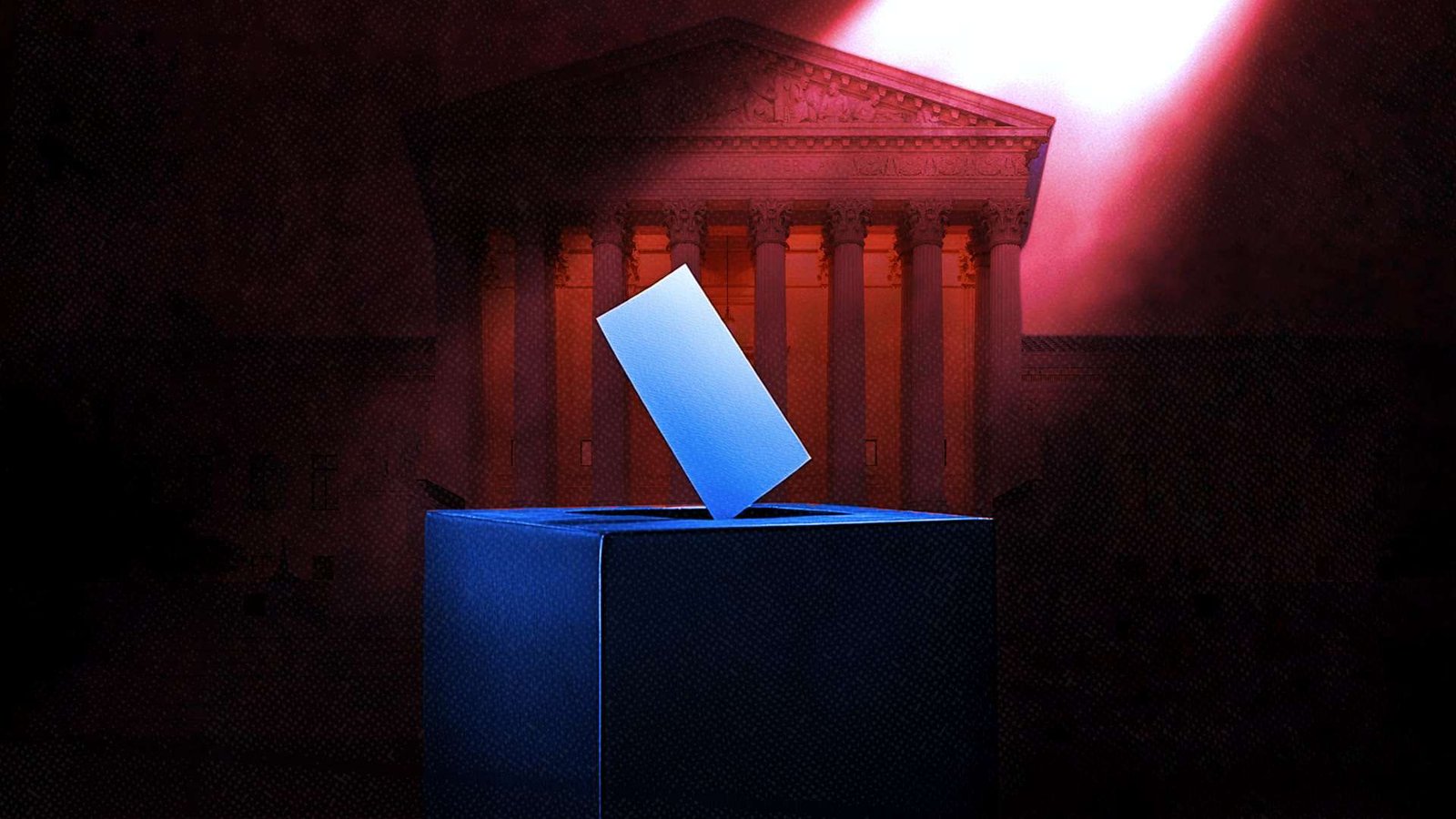
In Louisiana v. Callais, a 6–3 Court, divided along partisan lines, invalidated a majority-black congressional district as an illegal gerrymander that unconstitutionally sorted voters by race.

The dispute originated in 2022 when a group of voters challenged a new Louisiana congressional map, arguing that it violated the Voting Rights Act’s prohibition on racial discrimination in voting. A federal judge agreed, so Louisiana added a new majority-black district to its congressional map to comply with the judge’s ruling. A different group of voters, however, then challenged that new majority-black district, arguing that it was an illegal racial gerrymander.

Writing yesterday for the majority, Justice Samuel Alito held that the initial 2022 ruling by the lower court amounted to an impermissible misreading of the Voting Rights Act. According to Alito, that act should come into play “only when the evidence supports a strong inference that the State intentionally drew its districts to afford minority voters less opportunity because of their race.” And the original 2022 challenge to the Louisiana map, Alito argued, “would have failed to show an objective likelihood of intentional discrimination based on the totality of circumstances.”

Writing in dissent, Justice Elena Kagan offered a different vision of the Voting Rights Act, arguing that Congress, under its power to enforce the Fifteenth Amendment’s right to vote, can and should be able to “prohibit electoral schemes based on their vote-diluting effects, regardless whether a State could offer up some race-neutral explanation.”

In other words, while Alito emphasized the importance of identifying “intentionally” discriminatory state action, Kagan stressed that “even race-neutral [state] actions could perpetuate purposeful racial discrimination.” The triumph of the Alito view over the Kagan view means that the Voting Rights Act will now have a very limited role to play in all such redistricting cases going forward.

Yesterday’s second notable Supreme Court decision came in the matter of First Choice Women’s Resource Centers v. Davenport. In 2023, the office of New Jersey Attorney General Matthew Platkin issued a subpoena demanding the identities of the financial donors to First Choice Women’s Resource Centers, a religious nonprofit that provides anti-abortion pregnancy counseling. First Choice then went to federal court, arguing that the subpoena would scare away donors and thus violate its free association rights under the First Amendment.

But the federal district court dismissed the group’s complaint, holding that the subpoena alone did not count as a cognizable legal injury that would give First Choice the requisite legal standing needed to file suit in federal court.

Writing yesterday for a unanimous Supreme Court, Justice Neil Gorsuch rejected that lower court holding. “An injury in fact does not arise only when a defendant causes a tangible harm to a plaintiff, like a physical injury or monetary loss. It can also arise when a defendant burdens a plaintiff ‘s constitutional rights.” And “our cases,” Gorsuch wrote, “have long recognized that demands for a charity’s private member or donor information have just that effect. They ‘discourag[e]’ people from associating with groups engaged in protected First Amendment advocacy.” And because First Choice suffered a constitutional burden of that very sort, Gorsuch concluded, its First Amendment lawsuit against the state official was now free to proceed in federal court.

It might be tempting to view this decision as a kind of conservative outcome, since it did, after all, involve a Democratic political figure losing to a religious group that’s opposed to abortion. But the logic of the Supreme Court’s unanimous decision will reach far beyond the parties to this particular case. Any group—from the National Association for the Advancement of Colored People to the National Rifle Association—with a message that might be unpopular with some government official will now benefit from this emphatic reaffirmation of the right to freedom of association.

Read the full article here

Fact Checker

Verify the accuracy of this article using AI-powered analysis and real-time sources.

Get Your Fact Check Report

Enter your email to receive detailed fact-checking analysis

5 free reports remaining

Continue with Full Access

You've used your 5 free reports. Sign up for unlimited access!

Already have an account? Sign in here

#MediaAndPolitics #MediaEthics #NewsAnalysis #OpenDebate #PublicOpinion
Share. Facebook Twitter Pinterest LinkedIn Tumblr Email Telegram Copy Link
News Room
  • Website
  • Facebook
  • X (Twitter)
  • Instagram
  • LinkedIn

The FSNN News Room is the voice of our in-house journalists, editors, and researchers. We deliver timely, unbiased reporting at the crossroads of finance, cryptocurrency, and global politics, providing clear, fact-driven analysis free from agendas.

Related Articles

Media & Culture

Paramount Is Trying To Blame Netflix For All The Negative Merger Press

43 minutes ago
Media & Culture

[Anti-Harassment] Injunctions Are Not a Remedy for Interpersonal Conflict

44 minutes ago
Media & Culture

Polo Officials Ban Genetically Enhanced Ponies To Save ‘the Magic of Breeding’

3 hours ago
Media & Culture

Brickbat: Do You Know Who You’re Talking To?

5 hours ago
Media & Culture

Andy Serkis: What Orwell Understood About Tyranny

6 hours ago
Media & Culture

All New Cars Could Have Mandatory Surveillance Tech Unless Congress Stops This Mandate.

7 hours ago
Add A Comment
Leave A Reply Cancel Reply

Editors Picks

Crypto Hacks Hit $630M In April as DeFi Dominates Losses

10 minutes ago

Paramount Is Trying To Blame Netflix For All The Negative Merger Press

43 minutes ago

[Anti-Harassment] Injunctions Are Not a Remedy for Interpersonal Conflict

44 minutes ago

RightsCon 2025 took place in Taipei in Taiwan. Photo: RightsCon When your job is to campaign against censorship, sometimes censorship comes for you. And that’s exactly what has just happened to me, and indeed many others in my field. I was supposed to go to Zambia today. I had meticulously planned my trip. I’d filled out forms and booked airport transfers. My suitcase was half packed. I’d even started my course of anti-malarial pills. I would have been one of thousands heading to the capital city Lusaka for the RightsCon event which was meant to take place next week. Organised by Access Now, RightsCon is one of the largest and most important annual conferences on the intersection of human rights and technology in the world. It’s a special event, attracting a mix of leading digital rights specialists, researchers, policymakers, journalists and technologists. Except it was cancelled at the eleventh hour. Not because of any logistical mess-up, but because the Zambian government clearly didn’t want us there. I’m going to call their intervention out for what it is – censorship. Each year, Access Now carefully choose where they host RightsCon. In 2025 it was in Taipei in Taiwan. While staging the conference there was not without its complications (some were unable to attend following the withdrawal of USAID), the event was still buzzing; rich, rewarding conversations and connections flowed. This year Access Now wanted the conference to be more accessible to people from the Global South. Zambia was chosen for this reason and likely too because in Africa it’s known as one of the more stable countries. That calculation appeared to pay off. Last week the Zambian government issued a statement welcoming the event. Then came the U-turn. First on Tuesday when Zambia’s Minister of Technology and Science, Felix Mutati, said the conference needed to be postponed to ensure it “fully [aligns] with national procedures, diplomatic protocols, and the broader objective of fostering a balanced and consensus-driven platform for dialogue.” He added: “In particular, certain invited speakers and participants remain subject to pending administrative and security clearances, which have not yet been concluded.” Yesterday, the Zambian government doubled down. “The postponement was necessitated by the need for comprehensive disclosure of critical information related to key thematic issues proposed for discussion during the Summit,” said Thabo Kawana, the Permanent Secretary for the Ministry of Information and Media. “Such disclosure is essential to ensure full alignment with Zambia’s national values, policy priorities, and broader public interest considerations.” The statement is extraordinary. What does alignment with “Zambia’s national values” mean? It’s the nebulous language autocrats often use to justify punishing their critics. Could the “thematic issues” relate to discussions about LGBTQ+ rights in a country which criminalises same sex relationships and routinely detains and beats up gay people?  As for “policy priorities”, could it concern Zambia’s general elections, due to take place in August? The government has been criticised over recent constitutional changes that many believe extend its power. Other policies are leading to a shrinking civic space. Several people have been imprisoned for criticising President Hakainde Hichilema. Or could it concern Zambia’s relationship with China? Last Friday they signed an agreement to work more closely together. The relationship was already tight – Zambia is the first African country to allow mining companies to pay in yuan, China’s currency. Beijing would not be a fan of RightsCon and Beijing has a record of interference. Consider too the “broader public interest considerations”. Let’s get real. RightsCon is an event for nerds and wonks, the opposite of a rowdy crowd. Besides, wouldn’t the thousands of travellers to Lusaka be good for the hospitality industry, part of any sensible “broader public interest consideration”? The reasons given smell bad because they are. RightsCon have now formally cancelled the event. They’ve said that they “do not recommend registered participants travel to Lusaka for RightsCon.” I’m reading this as a warning – it’s not safe. I was looking forward to visiting Zambia and getting under the belly of the country or at least trying to. UNESCO, capitalising on the crowd that would be gathered there, also planned their annual World Press Freedom Day Global conference to happen just before RightsCon in Lusaka. I was part of events at both, alongside a separate workshop on encryption. I was excited to connect with people from last year’s RightsCon and to meet new ones. Solidarity is essential and especially right now, with the connections made at conferences like these invaluable. I was buoyed by the prospect of all the knowledge-sharing and to hear stories that resonate more when said to someone’s face rather than in pixelated form. There’s a reason these events have gone back to being predominantly in-person. I feel sorry for the Access Now team who would have spent months working on the programme. I feel bad for the attendees from Zambia and nearby countries who RightsCon was hoping to support. I feel guilty for the hotels and restaurants which went from being fully booked to available. Mostly of all I feel very sad about all the conversations that should have happened and now won’t. Hopefully RightsCon will be back with a bang next year. But nothing can or will fill the hole this year’s cancellation has left. READ MORE

60 minutes ago
Latest Posts

Germany’s AllUnity expands EURAU to Solana as euro stablecoins gain traction

1 hour ago

US Seized $500M in Iranian Crypto Assets, Treasury Secretary Says

1 hour ago

SCOTUS Narrows the Reach of the Voting Rights Act

2 hours ago

Subscribe to News

Get the latest news and updates directly to your inbox.

At FSNN – Free Speech News Network, we deliver unfiltered reporting and in-depth analysis on the stories that matter most. From breaking headlines to global perspectives, our mission is to keep you informed, empowered, and connected.

FSNN.net is owned and operated by GlobalBoost Media
, an independent media organization dedicated to advancing transparency, free expression, and factual journalism across the digital landscape.

Facebook X (Twitter) Discord Telegram
Latest News

Aptos (APT) gains 4.4% as nearly all assets rise

9 minutes ago

Crypto Hacks Hit $630M In April as DeFi Dominates Losses

10 minutes ago

Paramount Is Trying To Blame Netflix For All The Negative Merger Press

43 minutes ago

Subscribe to Updates

Get the latest news and updates directly to your inbox.

© 2026 GlobalBoost Media. All Rights Reserved.
  • Privacy Policy
  • Terms of Service
  • Our Authors
  • Contact

Type above and press Enter to search. Press Esc to cancel.

🍪

Cookies

We and our selected partners wish to use cookies to collect information about you for functional purposes and statistical marketing. You may not give us your consent for certain purposes by selecting an option and you can withdraw your consent at any time via the cookie icon.

Cookie Preferences

Manage Cookies

Cookies are small text that can be used by websites to make the user experience more efficient. The law states that we may store cookies on your device if they are strictly necessary for the operation of this site. For all other types of cookies, we need your permission. This site uses various types of cookies. Some cookies are placed by third party services that appear on our pages.

Your permission applies to the following domains:

  • https://fsnn.net
Necessary
Necessary cookies help make a website usable by enabling basic functions like page navigation and access to secure areas of the website. The website cannot function properly without these cookies.
Statistic
Statistic cookies help website owners to understand how visitors interact with websites by collecting and reporting information anonymously.
Preferences
Preference cookies enable a website to remember information that changes the way the website behaves or looks, like your preferred language or the region that you are in.
Marketing
Marketing cookies are used to track visitors across websites. The intention is to display ads that are relevant and engaging for the individual user and thereby more valuable for publishers and third party advertisers.