Close Menu
FSNN | Free Speech News NetworkFSNN | Free Speech News Network
  • Home
  • News
    • Politics
    • Legal & Courts
    • Tech & Big Tech
    • Campus & Education
    • Media & Culture
    • Global Free Speech
  • Opinions
    • Debates
  • Video/Live
  • Community
  • Freedom Index
  • About
    • Mission
    • Contact
    • Support
Trending

Republican Hawks Don’t Want an Iran Deal—and Opportunist Democrats Are Helping Them Along

24 minutes ago

New DeFi entrant widens field of crypto political campaign funds as elections loom

55 minutes ago

Hyperliquid Bear Flips Bullish After Losing Over $46M Betting on HYPE Price to Drop

58 minutes ago
Facebook X (Twitter) Instagram
Facebook X (Twitter) Discord Telegram
FSNN | Free Speech News NetworkFSNN | Free Speech News Network
Market Data Newsletter
Wednesday, June 3
  • Home
  • News
    • Politics
    • Legal & Courts
    • Tech & Big Tech
    • Campus & Education
    • Media & Culture
    • Global Free Speech
  • Opinions
    • Debates
  • Video/Live
  • Community
  • Freedom Index
  • About
    • Mission
    • Contact
    • Support
FSNN | Free Speech News NetworkFSNN | Free Speech News Network
Home»News»Media & Culture»As Rubio Declares Iran War ‘Over,’ Lawmakers Prepare War Powers Vote
Media & Culture

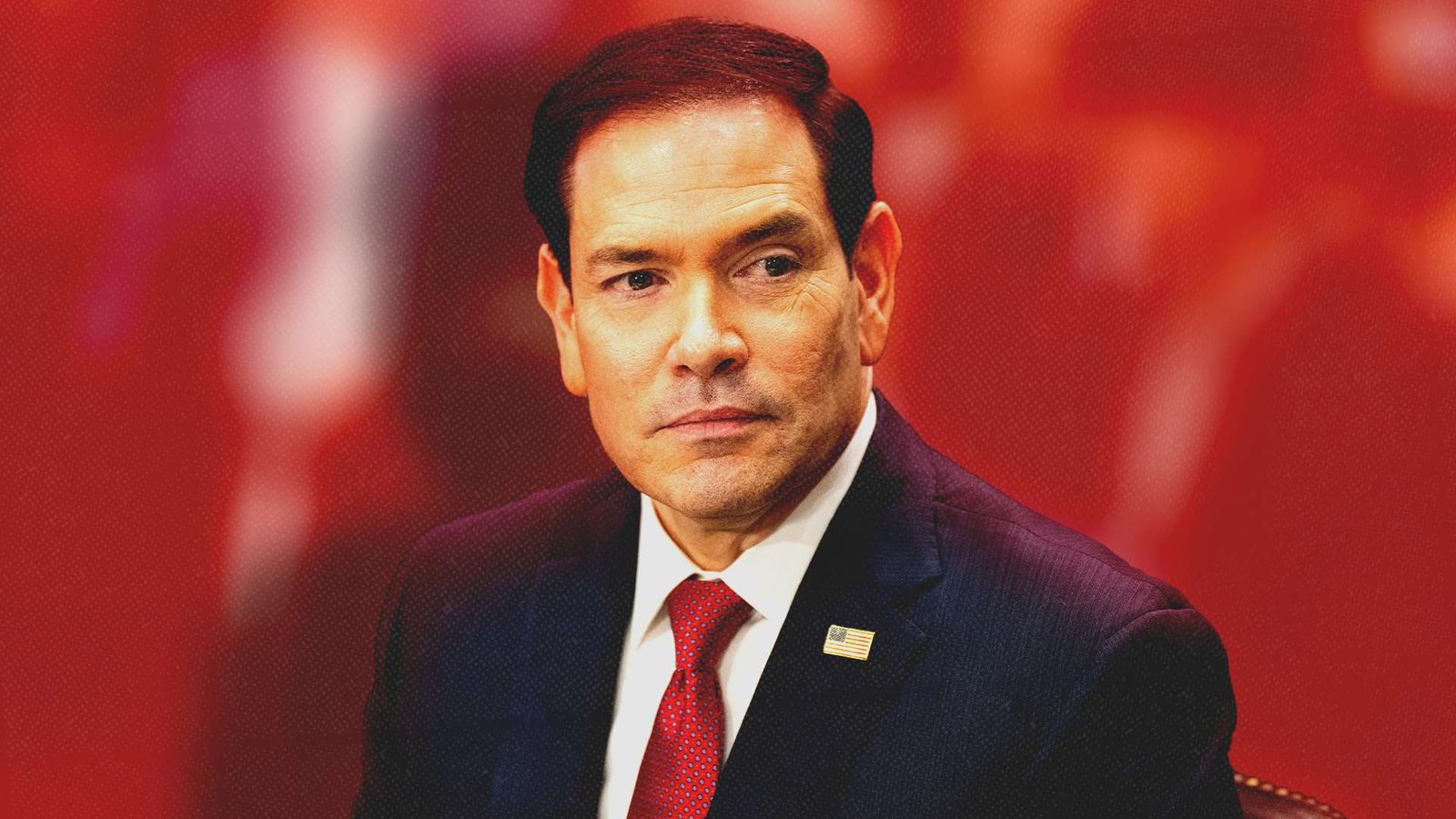
As Rubio Declares Iran War ‘Over,’ Lawmakers Prepare War Powers Vote

News RoomBy News Room1 hour agoNo Comments3 Mins Read678 Views
Share Facebook Twitter Pinterest Copy Link LinkedIn Tumblr Email VKontakte Telegram
As Rubio Declares Iran War ‘Over,’ Lawmakers Prepare War Powers Vote
Share
Facebook Twitter Pinterest Email Copy Link

Listen to the article

0:00
0:00

Key Takeaways

Playback Speed

Select a Voice

Despite continued military strikes in the Middle East, Secretary of State Marco Rubio declared this week that the Iran war is “over.”   

The statement came on Tuesday during a budget request hearing, which was also the first time that Rubio was publicly questioned by lawmakers since the administration launched its war against Iran in late February.

Although Rubio’s responses “were to date the most specific to be offered publicly on the U.S. negotiating position,” according to The Washington Post, the hearing provided little reassurance that the administration has a path forward to ending the unpopular war it started three months ago. 

In his opening statement, Rubio assured the senators and the public, “Our foreign policy is one that’s solely focused on the national interest of the United States of America.”

This reassertion of the administration’s “America First“ promise seemed to go over well with most Republican senators, including Sen. James Risch (R-Idaho), who began the hearing by thanking Rubio for involving the U.S. in Iran and then asked him broadly for an update on the war. 

But Democrats were anything but flattering toward Rubio. In an exchange with Sen. Cory Booker (D–N.J.), who repeatedly pressed Rubio on his claims that “we are winning this war,” Rubio interrupted the senator and bizarrely claimed, “Well, the war is over.”

If this were the case, however, the U.S. would not have to continue launching “self-defense strikes,” and senators would not need to spend an otherwise routine budgetary hearing grilling the secretary of state about an ongoing conflict that has already cost Americans an estimated $100 billion between increased oil costs and military spending, per a recent Moody’s estimate.

Earlier in the hearing, Sen. Chris Murphy (D–Conn.) appeared similarly exasperated with the administration’s mixed messaging on the war. Calling it “the only question that matters for American consumers right now,” he asked Rubio whether the Strait of Hormuz was going to reopen.

“If Iran wants to be able to move its oil again through the strait, they will have to open the straits,” Rubio answered. “If they refuse to do so, then we have other options available to us, but we would prefer to negotiate the opening of this.”

Rubio explained that reopening the strait is the “predicate that opens the door to phase two” of negotiations, which would seek severe limits on or the elimination of Iran’s uranium enrichment activities. Those negotiations would require a team of experts, according to Rubio, and they could take up to 90 days. He clarified that sanctions would not be removed in exchange for opening up the strait. 

Rubio’s testimony confirmed what anyone following this shambolic war could have noticed: There is a long way to go before the end of this conflict. 

Of course, lawmakers could have checked the administration for waging war without Congress’ approval weeks ago. But on multiple occasions, both the House and Senate refused to do so.  

This could change on Wednesday, however, as the House is preparing to vote on a resolution that would force President Donald Trump to either remove U.S. forces from Iran or seek congressional approval for the conflict, according to The New York Times. Some GOP members are “poised to break ranks,” reports Politico, signaling that even Republicans may be growing weary of this entanglement abroad.

Read the full article here

Fact Checker

Verify the accuracy of this article using AI-powered analysis and real-time sources.

Get Your Fact Check Report

Enter your email to receive detailed fact-checking analysis

5 free reports remaining

Continue with Full Access

You've used your 5 free reports. Sign up for unlimited access!

Already have an account? Sign in here

#InformationWar #NarrativeControl #PoliticalCoverage #PublicDiscourse #PublicOpinion
Share. Facebook Twitter Pinterest LinkedIn Tumblr Email Telegram Copy Link
News Room
  • Website
  • Facebook
  • X (Twitter)
  • Instagram
  • LinkedIn

The FSNN News Room is the voice of our in-house journalists, editors, and researchers. We deliver timely, unbiased reporting at the crossroads of finance, cryptocurrency, and global politics, providing clear, fact-driven analysis free from agendas.

Related Articles

Media & Culture

Republican Hawks Don’t Want an Iran Deal—and Opportunist Democrats Are Helping Them Along

24 minutes ago
Cryptocurrency & Free Speech Finance

Perplexity Wants Your Laptop to Do Part of the AI Work—So It Doesn’t Have To

1 hour ago
Cryptocurrency & Free Speech Finance

Why Ethereum Could Tank Another 25% Before Finding a Bottom: Analysis

2 hours ago
Media & Culture

CBP Agents Violently Arrested This Chicago Woman. Now She’s Seeking $10 Million in Damages.

2 hours ago
Legal & Courts

‘Voting By Mail is My Lifeline’: Voter with Disability Shares Importance of Mail-In Voting

3 hours ago
Cryptocurrency & Free Speech Finance

Walrus Memory Enables AI Agents to ‘Actually Learn About Us’: Mysten Labs Co-Founder

3 hours ago
Add A Comment
Leave A Reply Cancel Reply

Editors Picks

New DeFi entrant widens field of crypto political campaign funds as elections loom

55 minutes ago

Hyperliquid Bear Flips Bullish After Losing Over $46M Betting on HYPE Price to Drop

58 minutes ago

Perplexity Wants Your Laptop to Do Part of the AI Work—So It Doesn’t Have To

1 hour ago

As Rubio Declares Iran War ‘Over,’ Lawmakers Prepare War Powers Vote

1 hour ago
Latest Posts

  Every year, as 4 June approaches, an old ritual unfolds in China. Censors spring into action. Social media posts disappear. Searches for “Tiananmen”, “June Fourth”, “1989”, and even more cryptic references are scrubbed from the internet. Activists are placed under surveillance, or sent on forced holidays. Foreign journalists gather in Hong Kong, Taipei, London and Washington to commemorate an event that officially never happened. For more than three decades, the Party has tried to erase the memory of Tiananmen. The effort itself suggests how deeply it remains haunted by it. I know because I was there. Not in Tiananmen Square itself, but in Nanjing, where I was a 25-year-old factory worker. Like millions of Chinese, I watched events unfold with excitement and hope. The student demonstrations soon spread beyond the universities. People from all walks of life joined in. I organised a large protest by workers from my missile factory in support of the students. For the first time in my life, I felt history opening before me. My fellow protesters and I believed that ordinary people could help shape our country’s future. Then, in the darkness before dawn on 4 June, came the sound of gunfire. The movement was crushed. The hopes of a generation were shattered. Like many others, I learned a painful lesson about the limits of political change in China. What has fascinated me ever since is not only the crackdown itself but the Chinese Communist Party’s determination to erase it from public memory. The campaign has been remarkably successful. Many young Chinese know little or nothing about Tiananmen. Some have never heard of it. Others know only fragments. In 2013, shortly before Xi Jinping came to power, when the political atmosphere was still somewhat more relaxed than it is today, I gave a book talk attended by university students. Afterwards, an earnest-looking young man approached me. “Did the government really open fire on the students on 4 June 1989?” he asked. “That was just Western propaganda, wasn’t it?” I have often been struck by the gap between my memories and their knowledge. Personally, I have never regretted what I did in 1989. I was repeatedly interrogated by the police and suspended from work, yet it remains the most meaningful thing I have ever done in my life. It shaped not only my understanding of China but also a lifelong fascination with politics and power. Looking back, I do not see 4 June simply as a tragedy. I also see it as a watershed. The movement arose not only from a desire for democracy and human rights, but also from widespread frustration with everyday life. Corruption was rampant, inflation was rising, and personal freedom was limited. The Party’s response was twofold. Politically, it tightened control. Economically, however, it accelerated reform and gradually gave people more personal freedom. Chinese citizens today can choose where to live, what careers to pursue and, to a much greater extent than before, how to live. The cage remains, but it has grown so large that many no longer feel its bars. In that sense, the protests of 1989 were not an absolute failure. Some of the grievances that fuelled it were addressed. Without that shock, China’s rulers might never have felt compelled to expand the cage. The Party may have defeated the movement, but it has never fully escaped its legacy. It fears Tiananmen not because it threatens its power today. China’s young people are more likely to worry about jobs, housing prices and economic uncertainty than political reform. What Tiananmen represents, however, is a challenge to the Party’s preferred narrative. The official story of modern China is one of stability, prosperity and national rejuvenation under Communist rule. Tiananmen reminds people that there was another possible path, and another vision of China’s future. When I was young, the Chinese government encouraged us to remember past humiliations and injustices. It understood that memory shapes identity. The same principle applies to Tiananmen. An event of such magnitude cannot be permanently erased. It survives in family stories, private conversations, overseas communities, memoirs and fragments of testimony. Now, 37 years later, the Party may have largely succeeded in making Tiananmen invisible. It has not succeeded in making it irrelevant. The impulses that brought people onto the streets in 1989 have not entirely disappeared. The desire for dignity, fairness and a voice in public life still surface quietly: parents challenging school policies on WeChat, residents petitioning local authorities over pollution or land disputes, women speaking out despite the risks. These are not movements in any formal sense, but they reveal something persistent – a wish to be heard. When repression goes too far, people are willing to push back, as seen in the White Paper Movement of late 2022, spontaneous protests which erupted nationwide against suffocating Covid rules. For me, the events of 1989 remain a reminder of a moment when millions of Chinese briefly imagined a different future. The tanks ended that dream, but they did not entirely extinguish the questions that inspired it. That is why, every June, the censors return to work. Not because Tiananmen is remembered too much, but because it is remembered at all. READ MORE

2 hours ago

Bitcoin Cash (BCH) falls 10.7%, leading index lower

2 hours ago

Agentic payments surpass 100M transactions on Coinbase’s Base

2 hours ago

Subscribe to News

Get the latest news and updates directly to your inbox.

At FSNN – Free Speech News Network, we deliver unfiltered reporting and in-depth analysis on the stories that matter most. From breaking headlines to global perspectives, our mission is to keep you informed, empowered, and connected.

FSNN.net is owned and operated by GlobalBoost Media
, an independent media organization dedicated to advancing transparency, free expression, and factual journalism across the digital landscape.

Facebook X (Twitter) Discord Telegram
Latest News

Republican Hawks Don’t Want an Iran Deal—and Opportunist Democrats Are Helping Them Along

24 minutes ago

New DeFi entrant widens field of crypto political campaign funds as elections loom

55 minutes ago

Hyperliquid Bear Flips Bullish After Losing Over $46M Betting on HYPE Price to Drop

58 minutes ago

Subscribe to Updates

Get the latest news and updates directly to your inbox.

© 2026 GlobalBoost Media. All Rights Reserved.
  • Privacy Policy
  • Terms of Service
  • Our Authors
  • Contact

Type above and press Enter to search. Press Esc to cancel.

🍪

Cookies

We and our selected partners wish to use cookies to collect information about you for functional purposes and statistical marketing. You may not give us your consent for certain purposes by selecting an option and you can withdraw your consent at any time via the cookie icon.

Cookie Preferences

Manage Cookies

Cookies are small text that can be used by websites to make the user experience more efficient. The law states that we may store cookies on your device if they are strictly necessary for the operation of this site. For all other types of cookies, we need your permission. This site uses various types of cookies. Some cookies are placed by third party services that appear on our pages.

Your permission applies to the following domains:

  • https://fsnn.net
Necessary
Necessary cookies help make a website usable by enabling basic functions like page navigation and access to secure areas of the website. The website cannot function properly without these cookies.
Statistic
Statistic cookies help website owners to understand how visitors interact with websites by collecting and reporting information anonymously.
Preferences
Preference cookies enable a website to remember information that changes the way the website behaves or looks, like your preferred language or the region that you are in.
Marketing
Marketing cookies are used to track visitors across websites. The intention is to display ads that are relevant and engaging for the individual user and thereby more valuable for publishers and third party advertisers.