Close Menu
FSNN | Free Speech News NetworkFSNN | Free Speech News Network
  • Home
  • News
    • Politics
    • Legal & Courts
    • Tech & Big Tech
    • Campus & Education
    • Media & Culture
    • Global Free Speech
  • Opinions
    • Debates
  • Video/Live
  • Community
  • Freedom Index
  • About
    • Mission
    • Contact
    • Support
Trending

The Awful Virginia Redistricting Referendum

20 minutes ago

Bankman-Fried’s FTX sold its Cursor stake for $200,000 in 2023. It would be worth $3 billion today

32 minutes ago

FBI Security Flaw to Extract Readable Previews of Signal Messages

35 minutes ago
Facebook X (Twitter) Instagram
Facebook X (Twitter) Discord Telegram
FSNN | Free Speech News NetworkFSNN | Free Speech News Network
Market Data Newsletter
Thursday, April 23
  • Home
  • News
    • Politics
    • Legal & Courts
    • Tech & Big Tech
    • Campus & Education
    • Media & Culture
    • Global Free Speech
  • Opinions
    • Debates
  • Video/Live
  • Community
  • Freedom Index
  • About
    • Mission
    • Contact
    • Support
FSNN | Free Speech News NetworkFSNN | Free Speech News Network
Home»News»Media & Culture»America’s Longest Government Shutdown Shows Why We Must Free Air Traffic Control from Politics
Media & Culture

America’s Longest Government Shutdown Shows Why We Must Free Air Traffic Control from Politics

News RoomBy News Room6 months agoNo Comments5 Mins Read1,122 Views
Share Facebook Twitter Pinterest Copy Link LinkedIn Tumblr Email VKontakte Telegram
America’s Longest Government Shutdown Shows Why We Must Free Air Traffic Control from Politics
Share
Facebook Twitter Pinterest Email Copy Link

Listen to the article

0:00
0:00

Key Takeaways

Playback Speed

Select a Voice

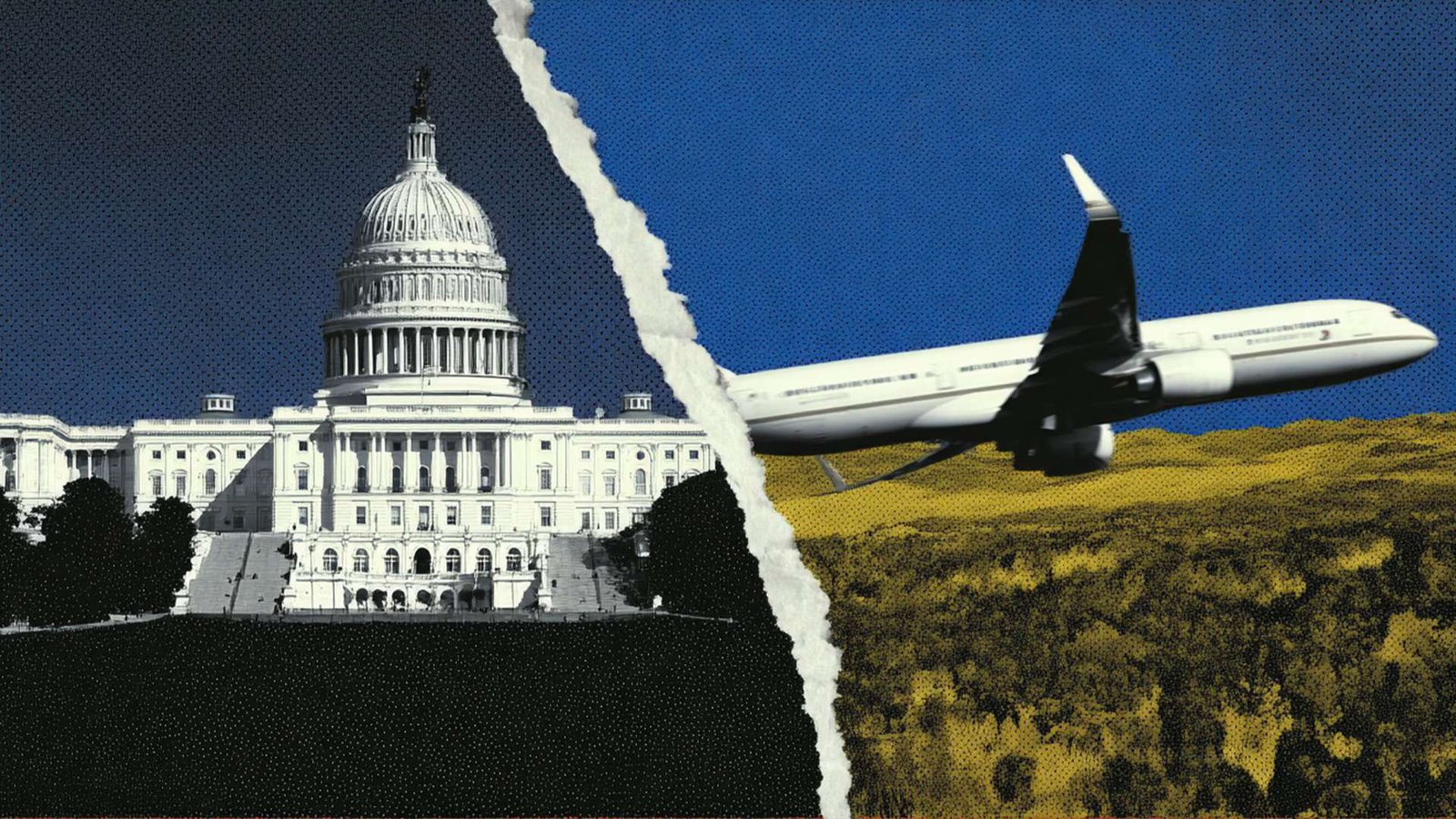
As of today, we are living through the longest federal government shutdown in U.S. history, surpassing the 35-day shutdown of 2019 during the first Trump administration. Since 1980, there have been 11 such shutdowns, most of which have left air traffic controllers to work without pay for the duration. Consequently, as the current one drags on, flight delays and cancellations continue to increase. Eventually, this shutdown will end, controllers will receive their back pay, and life will go on. But how many controllers will have resigned in the meantime?

Air traffic control (ATC) is too important to be vulnerable to politics. Around the world, governments have acknowledged this fact and depoliticized their ATC systems, beginning with the reformist Labor government of New Zealand in 1987. They removed the ATC system from their transport ministry and permitted the aviation user fees that had been paid to the government to instead be paid to the new Airways New Zealand.

It worked so well that within a decade, a dozen more governments had followed suit, realizing that ATC is essentially a public utility, analogous to electricity. A stream of ATC user-fee payments is a bondable revenue stream that has been utilized by ATC utilities to finance large-scale technology upgrades and consolidate aging ATC facilities into a smaller number of modern ones.

Today, roughly 100 countries receive their air traffic control services from user-funded utilities. Australia, Canada, Germany, and the U.K. all have newer, more-advanced technology than our Federal Aviation Administration (FAA), and all of them are self-funded and independent of government budgets. If any of their governments were to have a shutdown like ours, air traffic control would continue to operate normally.

The most powerful opponents to reforming the current ATC system are members of Congress and the business jet community. Depoliticizing U.S. air traffic control will not happen until those two obstacles are overcome.

Congress likes to micromanage the FAA. Every five years or so, when it’s time to reauthorize the FAA, Congress imposes a whole raft of demands and policy changes (some well-meaning, some make-work, and some flatly foolish). Congress also meekly accepts the FAA budget proposal, which falls far short of what is needed to modernize or replace decrepit facilities and obsolete technologies. The FAA can only submit a budget request that has been vetted by the Office of Management and Budget, which is focused on cost cutting (and keeping the FAA within the meager revenue brought in from airline ticket taxes).

There have been two attempts to make our ATC system independent of the government. As part of Vice President Al Gore’s reinventing government agenda, the Clinton administration did a major study that envisioned a self-funded U.S. Air Traffic Services corporation, with aviation user fees and bonding authority. It received one hearing in Congress and died. 

A second attempt took place during the first Trump administration, championed by Rep. Bill Shuster (R–Pa.), who chaired the House Transportation and Infrastructure Committee. It was modeled after Nav Canada—a privately run, nonprofit corporation that owns and operates Canada’s civil air navigation system—and had the support of the National Air Traffic Controllers Association. It was also supported by the Business Roundtable, nearly all the major airlines, and it received editorial endorsements from nearly all the top-10 newspapers’ editorial boards (excluding The New York Times). Two versions were approved by the committee but never reached a vote on the House floor.

The campaign against the bill was led and funded by the National Business Aviation Association (NBAA), a lobbying group for private business aviation. It bankrolled a coalition of private pilots, rural airport directors, and small-city chambers of commerce, portraying the proposed nonprofit, stakeholder-governed corporation as a takeover of ATC by the big airlines that would shortchange private planes and rural states. NBAA’s underlying interest was to preserve its fuel tax as opposed to the weight-distance user fees that business jets all over the world pay.

There is every reason to expect that in future years there will be more federal government shutdowns—it’s one of the only things Congress does anymore. But how many more times will it take before we decide to join the global consensus that ATC is a public utility that can and should be funded by fees based on its customers’ use?

I was encouraged to see The New York Times release a video editorial on August 10 criticizing the business jet lobby for opposing ATC reform. Additionally, during his first term, President Donald Trump endorsed Shuster’s bill and even held a White House event to promote it. The current five-year FAA authorization is set to expire in 2029. Preparations for that effort will be underway in earnest in 2028—Trump’s last year in office. 

Several Clinton-era Democrats who supported the effort to convert ATC into a public utility decades ago are still active and supportive of this kind of change. A bipartisan coalition is conceivable. 

Depoliticizing the U.S. ATC system would be the most effective way to insulate it from inevitable future government shutdowns. Building the coalition to get this done should begin now.

Read the full article here

Fact Checker

Verify the accuracy of this article using AI-powered analysis and real-time sources.

Get Your Fact Check Report

Enter your email to receive detailed fact-checking analysis

5 free reports remaining

Continue with Full Access

You've used your 5 free reports. Sign up for unlimited access!

Already have an account? Sign in here

Share. Facebook Twitter Pinterest LinkedIn Tumblr Email Telegram Copy Link
News Room
  • Website
  • Facebook
  • X (Twitter)
  • Instagram
  • LinkedIn

The FSNN News Room is the voice of our in-house journalists, editors, and researchers. We deliver timely, unbiased reporting at the crossroads of finance, cryptocurrency, and global politics, providing clear, fact-driven analysis free from agendas.

Related Articles

Media & Culture

The Awful Virginia Redistricting Referendum

20 minutes ago
Cryptocurrency & Free Speech Finance

Top Law Firm Admits to AI ‘Hallucinations’ in Bankruptcy Filing Tied to Alleged Scam Network

36 minutes ago
Media & Culture

Brickbat: Hard at Work

1 hour ago
Cryptocurrency & Free Speech Finance

‘Finding Satoshi’ Makes the Case for Hal Finney, Len Sassaman as Bitcoin Co-Creators

2 hours ago
Media & Culture

Virginia’s Grotesque Gerrymander and the Bipartisan Death of Redistricting Reform

2 hours ago
Cryptocurrency & Free Speech Finance

Russia Advances Sweeping Crypto Bill With Provisions for ‘Circumventing Sanctions’

3 hours ago
Add A Comment

Comments are closed.

Editors Picks

Bankman-Fried’s FTX sold its Cursor stake for $200,000 in 2023. It would be worth $3 billion today

32 minutes ago

FBI Security Flaw to Extract Readable Previews of Signal Messages

35 minutes ago

Top Law Firm Admits to AI ‘Hallucinations’ in Bankruptcy Filing Tied to Alleged Scam Network

36 minutes ago

Brickbat: Hard at Work

1 hour ago
Latest Posts

OpenAI appears to be poaching Coinbase’s marketing team

2 hours ago

Polymarket Traders Profit $37K From Paris Weather Glitch

2 hours ago

‘Finding Satoshi’ Makes the Case for Hal Finney, Len Sassaman as Bitcoin Co-Creators

2 hours ago

Subscribe to News

Get the latest news and updates directly to your inbox.

At FSNN – Free Speech News Network, we deliver unfiltered reporting and in-depth analysis on the stories that matter most. From breaking headlines to global perspectives, our mission is to keep you informed, empowered, and connected.

FSNN.net is owned and operated by GlobalBoost Media
, an independent media organization dedicated to advancing transparency, free expression, and factual journalism across the digital landscape.

Facebook X (Twitter) Discord Telegram
Latest News

The Awful Virginia Redistricting Referendum

20 minutes ago

Bankman-Fried’s FTX sold its Cursor stake for $200,000 in 2023. It would be worth $3 billion today

32 minutes ago

FBI Security Flaw to Extract Readable Previews of Signal Messages

35 minutes ago

Subscribe to Updates

Get the latest news and updates directly to your inbox.

© 2026 GlobalBoost Media. All Rights Reserved.
  • Privacy Policy
  • Terms of Service
  • Our Authors
  • Contact

Type above and press Enter to search. Press Esc to cancel.

🍪

Cookies

We and our selected partners wish to use cookies to collect information about you for functional purposes and statistical marketing. You may not give us your consent for certain purposes by selecting an option and you can withdraw your consent at any time via the cookie icon.

Cookie Preferences

Manage Cookies

Cookies are small text that can be used by websites to make the user experience more efficient. The law states that we may store cookies on your device if they are strictly necessary for the operation of this site. For all other types of cookies, we need your permission. This site uses various types of cookies. Some cookies are placed by third party services that appear on our pages.

Your permission applies to the following domains:

  • https://fsnn.net
Necessary
Necessary cookies help make a website usable by enabling basic functions like page navigation and access to secure areas of the website. The website cannot function properly without these cookies.
Statistic
Statistic cookies help website owners to understand how visitors interact with websites by collecting and reporting information anonymously.
Preferences
Preference cookies enable a website to remember information that changes the way the website behaves or looks, like your preferred language or the region that you are in.
Marketing
Marketing cookies are used to track visitors across websites. The intention is to display ads that are relevant and engaging for the individual user and thereby more valuable for publishers and third party advertisers.