Qwen-Image-3.0, released July 21 by Alibaba’s Qwen team, accepts 4,500 tokens of instructions.
This enables single-pass generation of complex layouts like newspapers, storyboards, and dense infographic grids.
Unlike its predecessor, the release shipped without open model weights, benchmarks, or a technical report; it’s available at chat.qwen.ai with API pricing not yet disclosed.
Alibaba’s Qwen team launched Qwen Image 3.0 on Tuesday, and the pitch has nothing to do with how beautiful the output looks. It’s about whether the output can actually be used at work.
Most AI image tools—Reve, Nano Banana, Seedream—are designed to excel at specific areas: creativity, realism, editing capabilities, and so on. Qwen Image 3.0 is going in a different direction. “Qwen-Image-3.0 is not just pursuing ‘good-looking’—it is pursuing ‘useful,’ making image generation a truly deployable productivity tool,” the Qwen team wrote in the official announcement.
The centerpiece is what the Chinese behemoth Alibaba calls rich content. The model accepts up to 4,500 tokens, which is 4.5 times what the previous generation could process. Tokens are the units of text an AI reads; picture a token as roughly one word or part of a word, so 4,500 of them are several pages of detailed instructions
That’s enough to describe nine separate infographic panels in a single prompt and get them back as one complete image.
“The entire image above was generated by Qwen-Image-3.0 in a single pass, rather than being stitched together from multiple images,” Alibaba wrote in its blog. Each panel in the demo contains its own diagrams, formulas, captions, and fine-print text—rendered in one shot, not assembled in post.
This is the only model capable of achieving this without major errors.
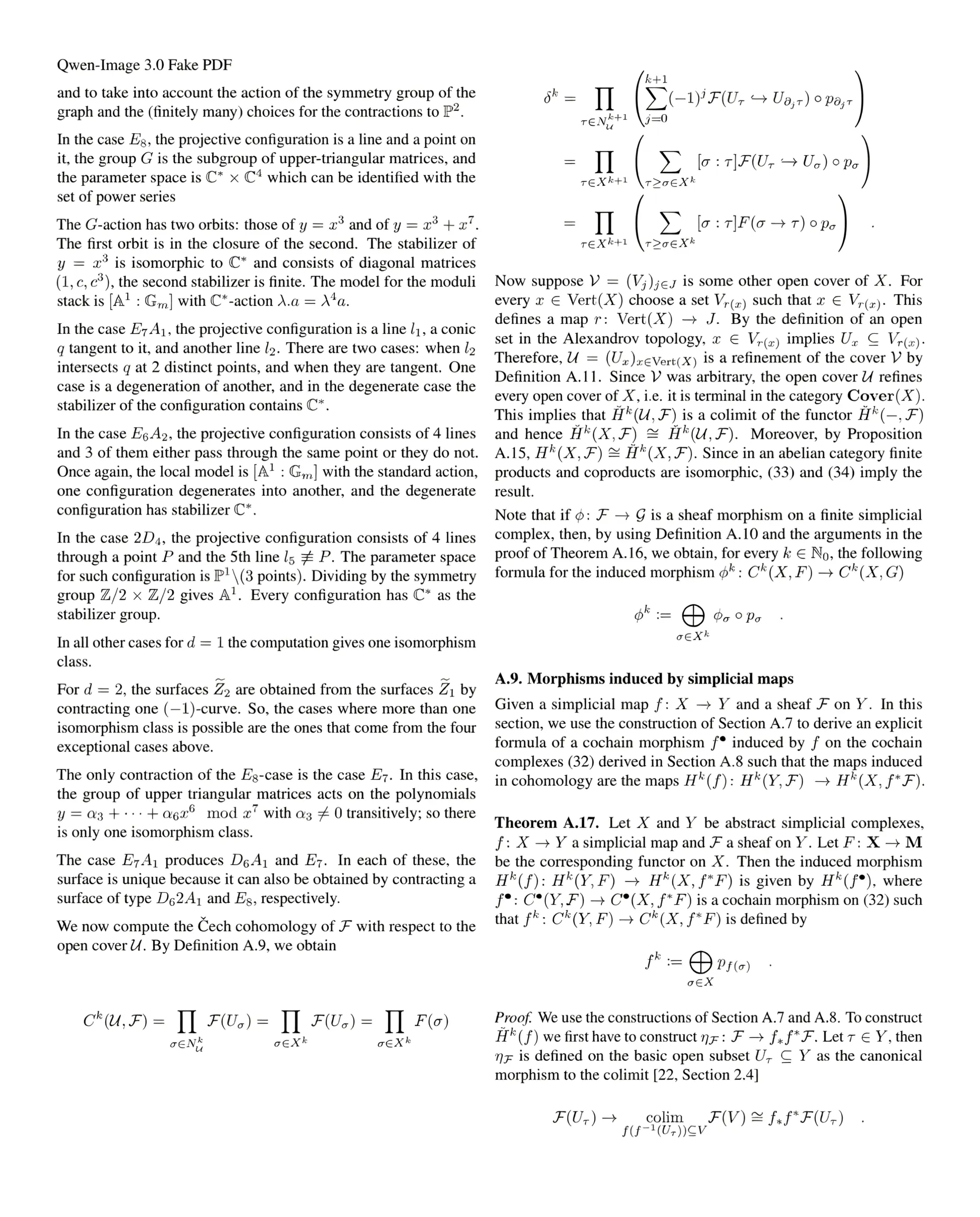
The second part is what the company calls authentic details. Per Alibaba, the model “supports precise rendering of text as small as 10px, vividly reproducing details like pores and hair strands with lifelike, micro-level depiction.” Ten pixels is fine print—the kind you’ll see on pharmaceutical disclaimers. The model also handles LaTeX—the notation system researchers use to write complex mathematical equations—accurately across full academic paper mockups.
In our usual tests we give models a few sentences and evaluate how they process them. Qwen Image 3.0 was able to generate the image below, per Alibaba’s official blog.
We tried this feature using the model’s fastest configuration. Qwen Image 3.0 was able to reproduce one full article from Decrypt. The execution was genuinely impressive, but the result was not flawless.
The third pillar of Qwen Image 3.0 is deep knowledge. Per the Qwen team, the model “supports native rendering of 12 languages, simulates mainstream interfaces such as web pages, games, and livestreams, and draws on rich world knowledge.” It also connects to the internet to fetch live data, meaning prompting for a weather forecast visual for a specific city and date returns an accurate graphic, not a guess.
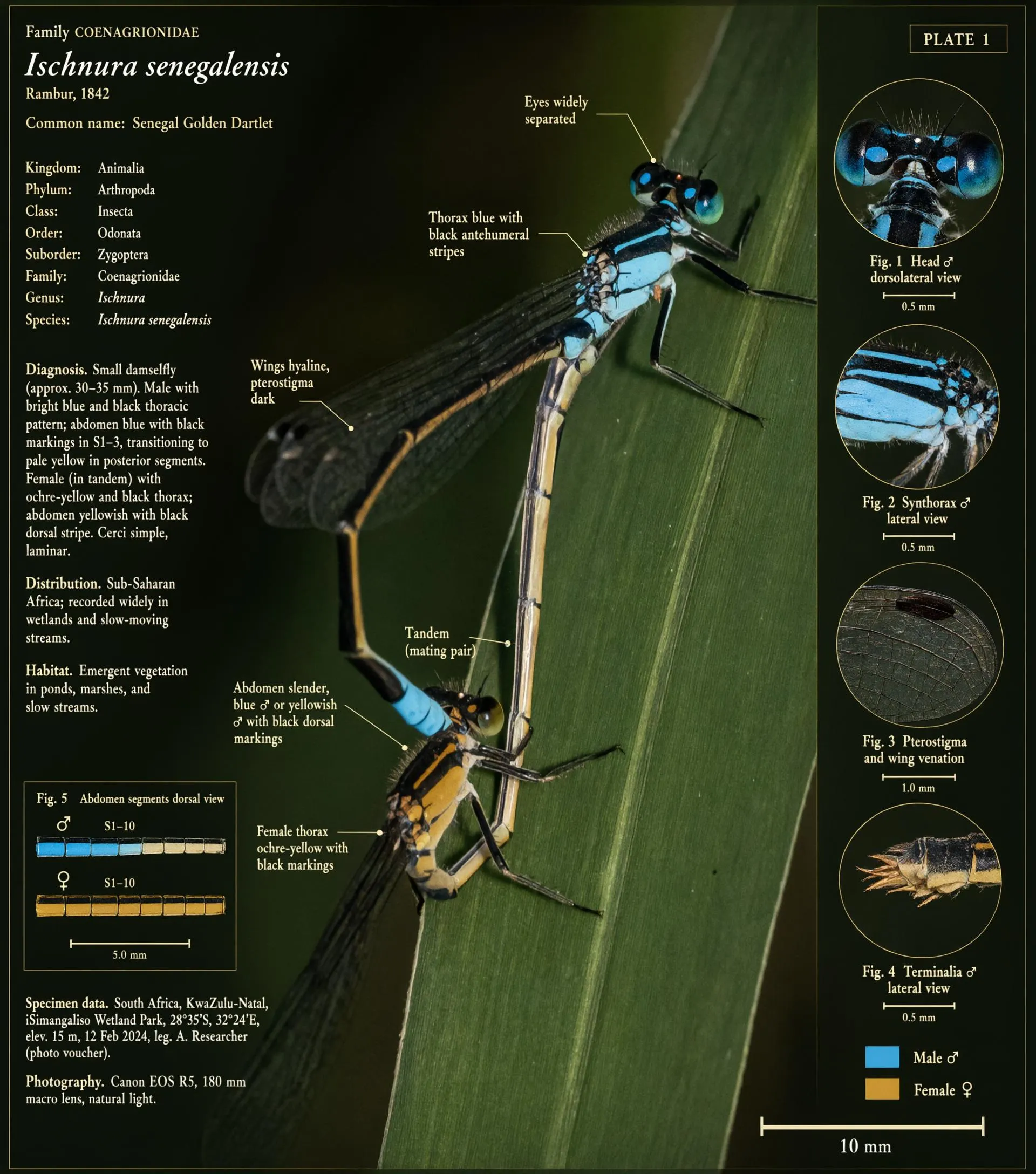
For example, Alibaba shared a photo of an insect on a leaf. The model was able to generate relevant text based on its understanding of the image.
Alibaba is pitching design studios, content teams, e-commerce operations, and educators who need production-ready visual assets in bulk.
It’s worth noting, though, that in Alibaba’s own Qwen-Image-Bench evaluation—a benchmark that scores image quality, aesthetics, and real-world fidelity across 18 models—Qwen Image 2.0 Pro, the previous flagship, placed fifth. OpenAI’s GPT Image 2 led the ranking. The new model may perform better, but the launch offers no measured way to confirm it, because it arrived without a benchmark table, downloadable weights, or technical report.
Qwen Image 1.0 launched with open weights under an Apache 2.0 license and a same-day technical report. This one didn’t. As part of Alibaba’s recent AI push, the evidence here is entirely the hand-picked example images the company chose to publish. API trials are open at chat.qwen.ai. Pricing hasn’t been announced.
Daily Debrief Newsletter
Start every day with the top news stories right now, plus original features, a podcast, videos and more.
The FSNN News Room is the voice of our in-house journalists, editors, and researchers. We deliver timely, unbiased reporting at the crossroads of finance, cryptocurrency, and global politics, providing clear, fact-driven analysis free from agendas.
We and our selected partners wish to use cookies to collect information about you for functional purposes and statistical marketing. You may not give us your consent for certain purposes by selecting an option and you can withdraw your consent at any time via the cookie icon.
Cookies are small text that can be used by websites to make the user experience more efficient. The law states that we may store cookies on your device if they are strictly necessary for the operation of this site. For all other types of cookies, we need your permission. This site uses various types of cookies. Some cookies are placed by third party services that appear on our pages.
Your permission applies to the following domains:
https://fsnn.net
Necessary
Necessary cookies help make a website usable by enabling basic functions like page navigation and access to secure areas of the website. The website cannot function properly without these cookies.
Statistic
Statistic cookies help website owners to understand how visitors interact with websites by collecting and reporting information anonymously.
Preferences
Preference cookies enable a website to remember information that changes the way the website behaves or looks, like your preferred language or the region that you are in.
Marketing
Marketing cookies are used to track visitors across websites. The intention is to display ads that are relevant and engaging for the individual user and thereby more valuable for publishers and third party advertisers.


 Freedom Index