Close Menu
FSNN | Free Speech News NetworkFSNN | Free Speech News Network
  • Home
  • News
    • Politics
    • Legal & Courts
    • Tech & Big Tech
    • Campus & Education
    • Media & Culture
    • Global Free Speech
  • Opinions
    • Debates
  • Video/Live
  • Community
  • Freedom Index
  • About
    • Mission
    • Contact
    • Support
Trending

Bibi Tearing Up the Deal

1 minute ago

Ethiopian journalist Salsawit Baynesagn detained without charge

8 minutes ago

GoMining challenges Jack Dorsey’s Square with a pure BTC payment rail

20 minutes ago
Facebook X (Twitter) Instagram
Facebook X (Twitter) Discord Telegram
FSNN | Free Speech News NetworkFSNN | Free Speech News Network
Market Data Newsletter
Friday, June 19
  • Home
  • News
    • Politics
    • Legal & Courts
    • Tech & Big Tech
    • Campus & Education
    • Media & Culture
    • Global Free Speech
  • Opinions
    • Debates
  • Video/Live
  • Community
  • Freedom Index
  • About
    • Mission
    • Contact
    • Support
FSNN | Free Speech News NetworkFSNN | Free Speech News Network
Home»News»Global Free Speech»A tiny proportion of sexual violence cases in Tigray have led to prosecution This article is written in two voices: First, Birhan Gebrekirstos Mezgbo, a researcher and advocate who lived through the Tigray war, then Veronica Blecker, director of the upcoming documentary on sexual violence in Tigray, Not Ours to Carry. Birhan: The moment everything shut down, it felt like the world had disappeared around us. No phone. No internet. No transportation. No banking. No way to know who was alive and who was not. My mother and sister were only around 120 kilometres away from me, but suddenly they felt unreachable, like they were in another universe. I couldn’t call them, I couldn’t travel to see them, and I had no way to know if they were safe. That silence was one of the hardest things I have ever lived through. Honestly, I don’t think the word “blackout” is enough to describe it. What made it worse was knowing that this darkness was not just about communication being cut. The darkness itself became dangerous. Everywhere you turned there was fear. Soldiers, killers, rapists, all operating inside this silence from which nobody could call for help or even tell the world what was happening. The blackout became part of the violence. At the time, I was meeting with survivors of conflict-related sexual and gender-based violence. I still remember walking for almost three hours to reach one survivor after being told where she was staying. When I arrived, she was gone. I walked that same route again and again, trying to find her. I never did. Veronica: The blackout was not simply the absence of communication. It was a weapon. The violence happened inside a closed circle, surrounded by guns and with no way in or out – not only from Tigray, but even within Tigray itself. Phone lines were cut, the internet was shut down, journalists were expelled, roads were blocked. The darkness was deliberate. It ensured that violence could happen unseen and unheard. Birhan: For survivors of conflict-related sexual violence, this darkness was devastating. Accessing medical care, reporting abuse, or seeking support became almost impossible. Ayder Hospital in Mekelle was one of the few facilities still functioning, sustained largely by the commitment of volunteer doctors and nurses. But reaching it could take weeks or even months. Along the way, survivors often faced even more violence. I still think about Abeba. She was raped three different times while trying to reach help in Mekelle. I often wonder whether her life would have been different if support had been available closer to where she lived. Instead, the journey to seek care exposed her to further harm. Eventually, she lost her life. For me, her story captures what the blackout did to so many survivors. The violence did not end with the assault. The darkness allowed it to continue. Veronica: Between 2020 and 2022, an estimated 600,000 people were killed in Tigray. The Commission of Inquiry on the Situation in the Tigray Region documented more than 280,000 cases of conflict-related sexual violence. A mere 25 military convictions have followed. Even if survivors could bring themselves to speak, to tell the world what was happening and what had happened to them, they are trapped inside a system of fear. In a system where armed men control every road and every community, speaking out can feel like a death sentence. I arrived after the blackout had already done its work. The violence had happened in the dark. There was physical evidence – detention sites, signs of torture, a landscape scarred by war. But there was little footage of the violence as it happened. The blackout had made sure of this. Every editorial decision – how to film testimony, how to protect identities, how to structure the narrative – was made in the knowledge that the official position was that there was nothing to document. These were the decisions that shaped Not Ours to Carry. The film captures what denial looks like in practice. One of the protagonists stands before the African Commission on Human Rights and reads survivor testimony into the official record. Later on, in the same session, the Ethiopian delegation responds on camera, rejecting in its totality what they call “baseless allegations”. The protagonist’s verdict: “Every time I go to these institutions, I feel like a clown in somebody’s circus. Going there and speaking is doing nothing but adding to their show.” Both governments were offered the right to reply. Ethiopia rejected the allegations in their totality. Eritrea did not respond. The denial is not historical. It is ongoing. What we documented is not only a record of violence. It is a record of censorship: the systematic suppression of evidence, testimony, and truth by governments that knew exactly what silence would allow. Survivors of conflict-related sexual violence carry two wounds. The first is what has been done to them. The second is being told that it didn’t happen – being told this by perpetrators, by institutions, by communities that impose shame rather than offer compassion and justice. The blackout prevented documentation. Then the world chose not to look. The silence did not end when the internet came back on. Birhan: I keep speaking because the difference between me and many of the women whose stories I carry is often nothing more than luck. I witnessed their pain and suffering, and I cannot simply move on with my life and ignore it. This is not only my voice; it carries the voices of hundreds of thousands of women and girls. From four-year-old children to grandmothers in their eighties. There can be no real accountability, and no meaningful future, if those voices continue to be ignored. That silence is not only theirs to break. It is ours too. Not Ours to Carry is premiering on 6 July at the Sevil International Women’s Documentary Film Festival, Azerbaijan’s only independent documentary film festival dedicated to women’s issues and gender equality If readers want to support survivors directly, donations go to One Stop Centres in Tigray here: https://www.notourstocarry.com/donate READ MORE
Global Free Speech

A tiny proportion of sexual violence cases in Tigray have led to prosecution This article is written in two voices: First, Birhan Gebrekirstos Mezgbo, a researcher and advocate who lived through the Tigray war, then Veronica Blecker, director of the upcoming documentary on sexual violence in Tigray, Not Ours to Carry. Birhan: The moment everything shut down, it felt like the world had disappeared around us. No phone. No internet. No transportation. No banking. No way to know who was alive and who was not. My mother and sister were only around 120 kilometres away from me, but suddenly they felt unreachable, like they were in another universe. I couldn’t call them, I couldn’t travel to see them, and I had no way to know if they were safe. That silence was one of the hardest things I have ever lived through. Honestly, I don’t think the word “blackout” is enough to describe it. What made it worse was knowing that this darkness was not just about communication being cut. The darkness itself became dangerous. Everywhere you turned there was fear. Soldiers, killers, rapists, all operating inside this silence from which nobody could call for help or even tell the world what was happening. The blackout became part of the violence. At the time, I was meeting with survivors of conflict-related sexual and gender-based violence. I still remember walking for almost three hours to reach one survivor after being told where she was staying. When I arrived, she was gone. I walked that same route again and again, trying to find her. I never did. Veronica: The blackout was not simply the absence of communication. It was a weapon. The violence happened inside a closed circle, surrounded by guns and with no way in or out – not only from Tigray, but even within Tigray itself. Phone lines were cut, the internet was shut down, journalists were expelled, roads were blocked. The darkness was deliberate. It ensured that violence could happen unseen and unheard. Birhan: For survivors of conflict-related sexual violence, this darkness was devastating. Accessing medical care, reporting abuse, or seeking support became almost impossible. Ayder Hospital in Mekelle was one of the few facilities still functioning, sustained largely by the commitment of volunteer doctors and nurses. But reaching it could take weeks or even months. Along the way, survivors often faced even more violence. I still think about Abeba. She was raped three different times while trying to reach help in Mekelle. I often wonder whether her life would have been different if support had been available closer to where she lived. Instead, the journey to seek care exposed her to further harm. Eventually, she lost her life. For me, her story captures what the blackout did to so many survivors. The violence did not end with the assault. The darkness allowed it to continue. Veronica: Between 2020 and 2022, an estimated 600,000 people were killed in Tigray. The Commission of Inquiry on the Situation in the Tigray Region documented more than 280,000 cases of conflict-related sexual violence. A mere 25 military convictions have followed. Even if survivors could bring themselves to speak, to tell the world what was happening and what had happened to them, they are trapped inside a system of fear. In a system where armed men control every road and every community, speaking out can feel like a death sentence. I arrived after the blackout had already done its work. The violence had happened in the dark. There was physical evidence – detention sites, signs of torture, a landscape scarred by war. But there was little footage of the violence as it happened. The blackout had made sure of this. Every editorial decision – how to film testimony, how to protect identities, how to structure the narrative – was made in the knowledge that the official position was that there was nothing to document. These were the decisions that shaped Not Ours to Carry. The film captures what denial looks like in practice. One of the protagonists stands before the African Commission on Human Rights and reads survivor testimony into the official record. Later on, in the same session, the Ethiopian delegation responds on camera, rejecting in its totality what they call “baseless allegations”. The protagonist’s verdict: “Every time I go to these institutions, I feel like a clown in somebody’s circus. Going there and speaking is doing nothing but adding to their show.” Both governments were offered the right to reply. Ethiopia rejected the allegations in their totality. Eritrea did not respond. The denial is not historical. It is ongoing. What we documented is not only a record of violence. It is a record of censorship: the systematic suppression of evidence, testimony, and truth by governments that knew exactly what silence would allow. Survivors of conflict-related sexual violence carry two wounds. The first is what has been done to them. The second is being told that it didn’t happen – being told this by perpetrators, by institutions, by communities that impose shame rather than offer compassion and justice. The blackout prevented documentation. Then the world chose not to look. The silence did not end when the internet came back on. Birhan: I keep speaking because the difference between me and many of the women whose stories I carry is often nothing more than luck. I witnessed their pain and suffering, and I cannot simply move on with my life and ignore it. This is not only my voice; it carries the voices of hundreds of thousands of women and girls. From four-year-old children to grandmothers in their eighties. There can be no real accountability, and no meaningful future, if those voices continue to be ignored. That silence is not only theirs to break. It is ours too. Not Ours to Carry is premiering on 6 July at the Sevil International Women’s Documentary Film Festival, Azerbaijan’s only independent documentary film festival dedicated to women’s issues and gender equality If readers want to support survivors directly, donations go to One Stop Centres in Tigray here: https://www.notourstocarry.com/donate READ MORE

News RoomBy News Room1 hour agoNo Comments6 Mins Read163 Views
Share Facebook Twitter Pinterest Copy Link LinkedIn Tumblr Email VKontakte Telegram
A tiny proportion of sexual violence cases in Tigray have led to prosecution


				This article is written in two voices: First, Birhan Gebrekirstos Mezgbo, a researcher and advocate who lived through the Tigray war, then Veronica Blecker, director of the upcoming documentary on sexual violence in Tigray, Not Ours to Carry.
Birhan: The moment everything shut down, it felt like the world had disappeared around us. No phone. No internet. No transportation. No banking. No way to know who was alive and who was not. My mother and sister were only around 120 kilometres away from me, but suddenly they felt unreachable, like they were in another universe. I couldn’t call them, I couldn’t travel to see them, and I had no way to know if they were safe. That silence was one of the hardest things I have ever lived through. Honestly, I don’t think the word “blackout” is enough to describe it.
What made it worse was knowing that this darkness was not just about communication being cut. The darkness itself became dangerous. Everywhere you turned there was fear. Soldiers, killers, rapists, all operating inside this silence from which nobody could call for help or even tell the world what was happening. The blackout became part of the violence.
At the time, I was meeting with survivors of conflict-related sexual and gender-based violence. I still remember walking for almost three hours to reach one survivor after being told where she was staying. When I arrived, she was gone. I walked that same route again and again, trying to find her.
I never did.

Veronica: The blackout was not simply the absence of communication. It was a weapon. The violence happened inside a closed circle, surrounded by guns and with no way in or out – not only from Tigray, but even within Tigray itself. Phone lines were cut, the internet was shut down, journalists were expelled, roads were blocked. The darkness was deliberate. It ensured that violence could happen unseen and unheard.
Birhan: For survivors of conflict-related sexual violence, this darkness was devastating. Accessing medical care, reporting abuse, or seeking support became almost impossible. Ayder Hospital in Mekelle was one of the few facilities still functioning, sustained largely by the commitment of volunteer doctors and nurses. But reaching it could take weeks or even months. Along the way, survivors often faced even more violence.
I still think about Abeba. She was raped three different times while trying to reach help in Mekelle. I often wonder whether her life would have been different if support had been available closer to where she lived. Instead, the journey to seek care exposed her to further harm. Eventually, she lost her life. For me, her story captures what the blackout did to so many survivors. The violence did not end with the assault. The darkness allowed it to continue.
Veronica: Between 2020 and 2022, an estimated 600,000 people were killed in Tigray. The Commission of Inquiry on the Situation in the Tigray Region documented more than 280,000 cases of conflict-related sexual violence. A mere 25 military convictions have followed.
Even if survivors could bring themselves to speak, to tell the world what was happening and what had happened to them, they are trapped inside a system of fear. In a system where armed men control every road and every community, speaking out can feel like a death sentence.
I arrived after the blackout had already done its work. The violence had happened in the dark. There was physical evidence – detention sites, signs of torture, a landscape scarred by war. But there was little footage of the violence as it happened. The blackout had made sure of this. Every editorial decision – how to film testimony, how to protect identities, how to structure the narrative – was made in the knowledge that the official position was that there was nothing to document. These were the decisions that shaped Not Ours to Carry.
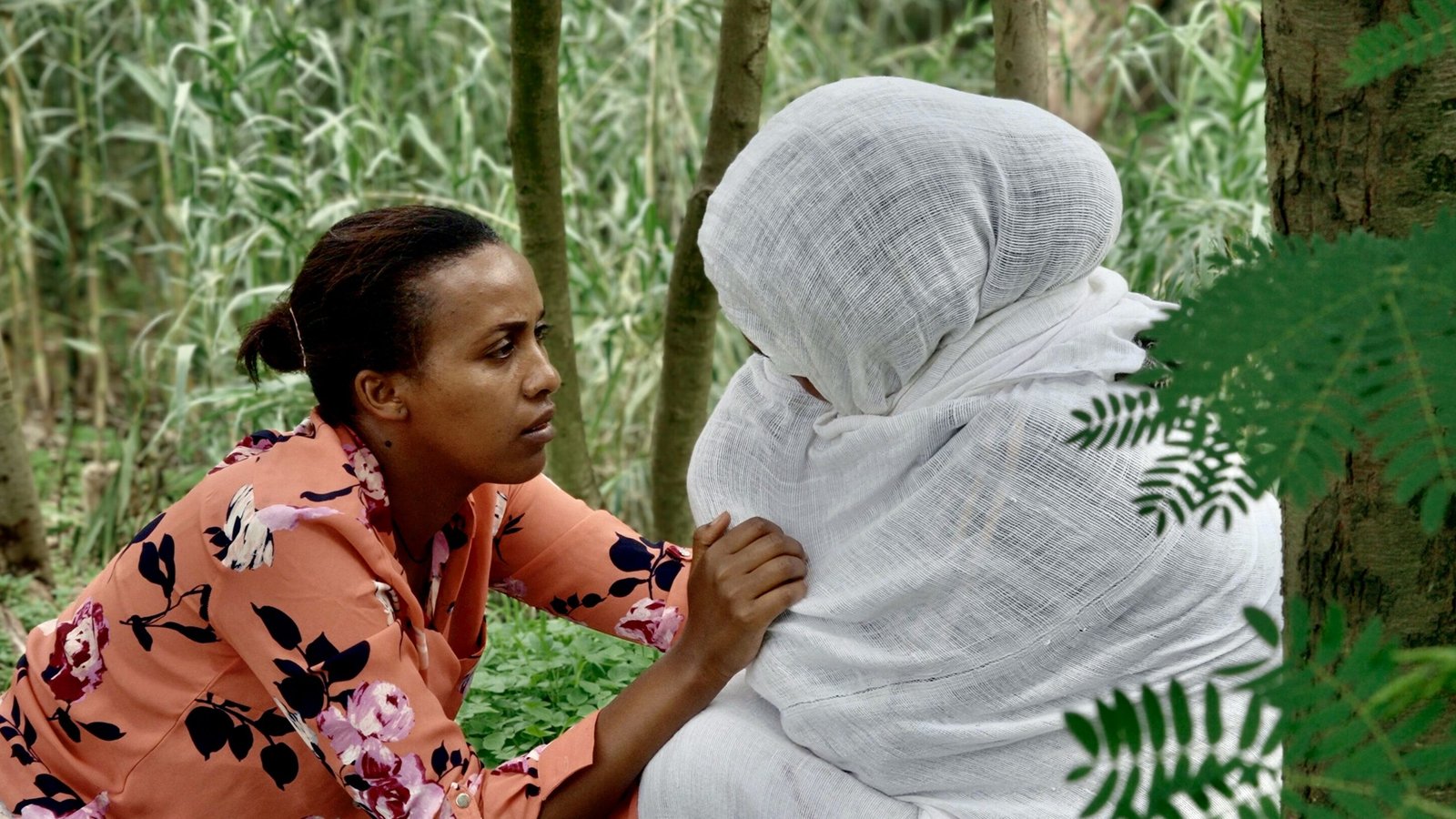
The film captures what denial looks like in practice. One of the protagonists stands before the African Commission on Human Rights and reads survivor testimony into the official record. Later on, in the same session, the Ethiopian delegation responds on camera, rejecting in its totality what they call “baseless allegations”. The protagonist’s verdict: “Every time I go to these institutions, I feel like a clown in somebody’s circus. Going there and speaking is doing nothing but adding to their show.”
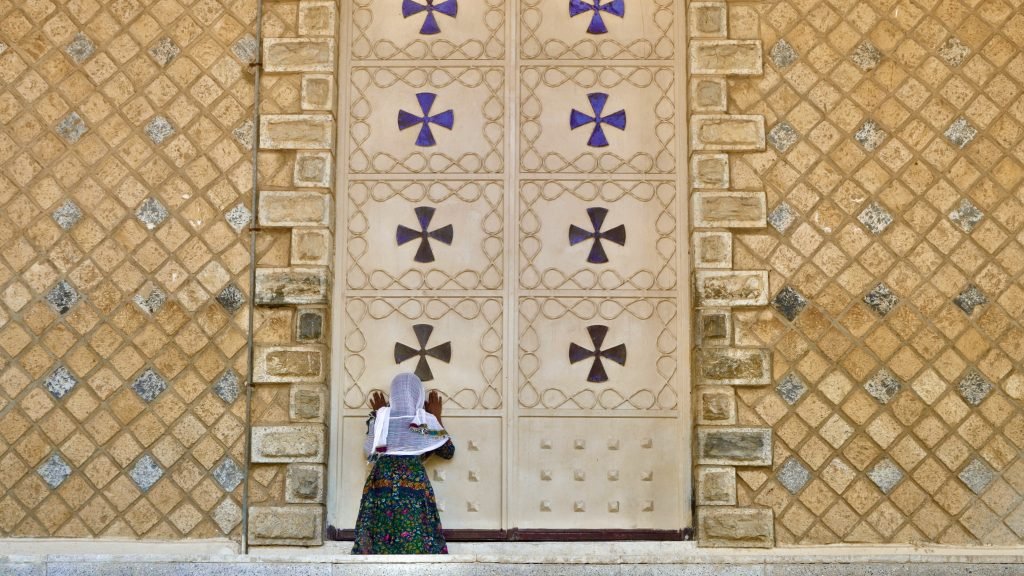
Both governments were offered the right to reply. Ethiopia rejected the allegations in their totality. Eritrea did not respond. The denial is not historical. It is ongoing. What we documented is not only a record of violence. It is a record of censorship: the systematic suppression of evidence, testimony, and truth by governments that knew exactly what silence would allow.
Survivors of conflict-related sexual violence carry two wounds. The first is what has been done to them. The second is being told that it didn’t happen – being told this by perpetrators, by institutions, by communities that impose shame rather than offer compassion and justice. The blackout prevented documentation. Then the world chose not to look. The silence did not end when the internet came back on.
Birhan: I keep speaking because the difference between me and many of the women whose stories I carry is often nothing more than luck. I witnessed their pain and suffering, and I cannot simply move on with my life and ignore it. This is not only my voice; it carries the voices of hundreds of thousands of women and girls. From four-year-old children to grandmothers in their eighties. There can be no real accountability, and no meaningful future, if those voices continue to be ignored. That silence is not only theirs to break. It is ours too.
Not Ours to Carry is premiering on 6 July at the Sevil International Women’s Documentary Film Festival, Azerbaijan’s only independent documentary film festival dedicated to women’s issues and gender equality
If readers want to support survivors directly, donations go to One Stop Centres in Tigray here: https://www.notourstocarry.com/donate


				READ MORE
Share
Facebook Twitter Pinterest Email Copy Link

Listen to the article

0:00
0:00

Key Takeaways

Playback Speed

Select a Voice

This article is written in two voices: First, Birhan Gebrekirstos Mezgbo, a researcher and advocate who lived through the Tigray war, then Veronica Blecker, director of the upcoming documentary on sexual violence in Tigray, Not Ours to Carry.

Birhan: The moment everything shut down, it felt like the world had disappeared around us. No phone. No internet. No transportation. No banking. No way to know who was alive and who was not. My mother and sister were only around 120 kilometres away from me, but suddenly they felt unreachable, like they were in another universe. I couldn’t call them, I couldn’t travel to see them, and I had no way to know if they were safe. That silence was one of the hardest things I have ever lived through. Honestly, I don’t think the word “blackout” is enough to describe it.

What made it worse was knowing that this darkness was not just about communication being cut. The darkness itself became dangerous. Everywhere you turned there was fear. Soldiers, killers, rapists, all operating inside this silence from which nobody could call for help or even tell the world what was happening. The blackout became part of the violence.

At the time, I was meeting with survivors of conflict-related sexual and gender-based violence. I still remember walking for almost three hours to reach one survivor after being told where she was staying. When I arrived, she was gone. I walked that same route again and again, trying to find her.

I never did.

Veronica: The blackout was not simply the absence of communication. It was a weapon. The violence happened inside a closed circle, surrounded by guns and with no way in or out – not only from Tigray, but even within Tigray itself. Phone lines were cut, the internet was shut down, journalists were expelled, roads were blocked. The darkness was deliberate. It ensured that violence could happen unseen and unheard.

Birhan: For survivors of conflict-related sexual violence, this darkness was devastating. Accessing medical care, reporting abuse, or seeking support became almost impossible. Ayder Hospital in Mekelle was one of the few facilities still functioning, sustained largely by the commitment of volunteer doctors and nurses. But reaching it could take weeks or even months. Along the way, survivors often faced even more violence.

I still think about Abeba. She was raped three different times while trying to reach help in Mekelle. I often wonder whether her life would have been different if support had been available closer to where she lived. Instead, the journey to seek care exposed her to further harm. Eventually, she lost her life. For me, her story captures what the blackout did to so many survivors. The violence did not end with the assault. The darkness allowed it to continue.

Veronica: Between 2020 and 2022, an estimated 600,000 people were killed in Tigray. The Commission of Inquiry on the Situation in the Tigray Region documented more than 280,000 cases of conflict-related sexual violence. A mere 25 military convictions have followed.

Even if survivors could bring themselves to speak, to tell the world what was happening and what had happened to them, they are trapped inside a system of fear. In a system where armed men control every road and every community, speaking out can feel like a death sentence.

I arrived after the blackout had already done its work. The violence had happened in the dark. There was physical evidence – detention sites, signs of torture, a landscape scarred by war. But there was little footage of the violence as it happened. The blackout had made sure of this. Every editorial decision – how to film testimony, how to protect identities, how to structure the narrative – was made in the knowledge that the official position was that there was nothing to document. These were the decisions that shaped Not Ours to Carry.

The film captures what denial looks like in practice. One of the protagonists stands before the African Commission on Human Rights and reads survivor testimony into the official record. Later on, in the same session, the Ethiopian delegation responds on camera, rejecting in its totality what they call “baseless allegations”. The protagonist’s verdict: “Every time I go to these institutions, I feel like a clown in somebody’s circus. Going there and speaking is doing nothing but adding to their show.”

Both governments were offered the right to reply. Ethiopia rejected the allegations in their totality. Eritrea did not respond. The denial is not historical. It is ongoing. What we documented is not only a record of violence. It is a record of censorship: the systematic suppression of evidence, testimony, and truth by governments that knew exactly what silence would allow.

Survivors of conflict-related sexual violence carry two wounds. The first is what has been done to them. The second is being told that it didn’t happen – being told this by perpetrators, by institutions, by communities that impose shame rather than offer compassion and justice. The blackout prevented documentation. Then the world chose not to look. The silence did not end when the internet came back on.

Birhan: I keep speaking because the difference between me and many of the women whose stories I carry is often nothing more than luck. I witnessed their pain and suffering, and I cannot simply move on with my life and ignore it. This is not only my voice; it carries the voices of hundreds of thousands of women and girls. From four-year-old children to grandmothers in their eighties. There can be no real accountability, and no meaningful future, if those voices continue to be ignored. That silence is not only theirs to break. It is ours too.

Not Ours to Carry is premiering on 6 July at the Sevil International Women’s Documentary Film Festival, Azerbaijan’s only independent documentary film festival dedicated to women’s issues and gender equality

If readers want to support survivors directly, donations go to One Stop Centres in Tigray here: https://www.notourstocarry.com/donate

Read the full article here

Fact Checker

Verify the accuracy of this article using AI-powered analysis and real-time sources.

Get Your Fact Check Report

Enter your email to receive detailed fact-checking analysis

5 free reports remaining

Continue with Full Access

You've used your 5 free reports. Sign up for unlimited access!

Already have an account? Sign in here

Share. Facebook Twitter Pinterest LinkedIn Tumblr Email Telegram Copy Link
News Room
  • Website
  • Facebook
  • X (Twitter)
  • Instagram
  • LinkedIn

The FSNN News Room is the voice of our in-house journalists, editors, and researchers. We deliver timely, unbiased reporting at the crossroads of finance, cryptocurrency, and global politics, providing clear, fact-driven analysis free from agendas.

Related Articles

Global Free Speech

Ethiopian journalist Salsawit Baynesagn detained without charge

8 minutes ago
Global Free Speech

World Refugee Day 2026: Supporting journalists in exile amid transnational repression

23 hours ago
Global Free Speech

On Tuesday 16 June, Baroness Tina Stowell introduced her anti-SLAPP Bill in the House of Lords. Photo: Parliament TV The UK Anti-SLAPP Coalition, which is co-chaired by Index on Censorship, had a significant campaign success this week when coordinated Bills were introduced in both the House of Lords and the House of Commons. On Tuesday 16 June, Baroness Tina Stowell introduced her anti-SLAPP Bill in the House of Lords. The next day, Sir John Whittingdale MP introduced a parallel bill in the Commons. Remind me: what is a SLAPP? SLAPP stands for strategic lawsuit against public participation. The term describes legal threats and actions that are used to intimidate and harass journalists, whistleblowers, campaigners, academics, and survivors of abuse (among others) by burdening them with time-consuming and costly litigation. Anyone who speaks out on an issue of public interest is at risk. Even if a defendant has every chance of succeeding at trial, the lengthy process of preparing a legal defence is so prohibitively expensive that they are forced to quietly submit to the claimant’s demands. This means they are silenced. SLAPPs threaten our right to freedom of expression and our democracy by preventing ordinary people from being able to hold power to account. They also remove information from the public domain, which means that SLAPPs have an impact on all of us. We have published case studies of a small number of the SLAPPs that have crossed our desks in the UK Anti-SLAPP Coalition. From cosmetic surgery patients to environmentalists, abuse survivors and campaigners, you can read them here. So, what would the new bills actually do? The proposal is simple: Anyone who believes that they are facing a SLAPP would be able to ask a judge to examine the case at an early stage. If the court concludes that the claim is being used to suppress public-interest speech, it could be dismissed before huge legal costs begin to accumulate. This “early dismissal” mechanism would shift the balance away from wealthy claimants who can use litigation as a pressure tactic, and towards defendants who currently face years of stress, uncertainty and expense. What these bills definitely won’t do is to protect public-interest speech across the UK. This is a devolved issue, and legislation passed in Westminster will only cover England and Wales. Separate anti-SLAPP bills will need to be passed in Scotland and Northern Ireland to ensure that everyone in the UK is protected from SLAPPs. Why now? Successive governments have acknowledged the problem of SLAPPs, but have failed to bring forward comprehensive legislation. Anti-SLAPP measures were, yet again, left out of this year’s King’s Speech despite repeated and widespread calls for their inclusion. Even after the speech, Deputy Prime Minister David Lammy confirmed that the government would bring forward legislation “as soon as time allows”. The introduction of parallel Private Members’ Bills is therefore as much a political signal as a legislative exercise: Parliament is being asked to show that the issue has not gone away. Will these Bills become law? The honest answer is that we don’t know. The second reading for Whittingdale’s bill is scheduled for late November, and no date has yet been set for Stowell’s bill. However, the impact is immediate as it keeps anti-SLAPP reform firmly on Parliament’s agenda, providing a ready-made legislative blueprint to show that legislation to stamp out SLAPPs can be done effectively and easily within the existing legal framework. In other words, the real question is not whether Stowell’s or Whittingdale’s bills become law exactly as drafted. It is whether the government will finally listen to mounting pressure to back these bills, and put their weight behind ensuring comprehensive anti-SLAPP legislation that will protect anyone who speaks out in the public interest. But I heard that anti-SLAPP legislation has already been enacted. Why then is the UK Anti-SLAPP Coalition pushing for more legislation? Because the UK’s existing anti-SLAPP protections are very limited. The Economic Crime and Corporate Transparency Act (ECCTA) introduced anti-SLAPP provisions in 2023, but they apply only to cases linked to economic crime. Many abusive cases fall outside that definition. It also depends on a subjective test, forcing the court to undertake a time-intensive process by which the intentions of the SLAPP filer have been identified. That’s why we need a broader law that can protect anyone facing a SLAPP, regardless of the subject matter. What can I do to support the UK Anti-SLAPP Coalition as they continue to call on the government to enact comprehensive anti-SLAPP legislation? You can support the work of the Coalition by writing to your MP, by posting your support for action on SLAPPs using the hashtag #StopSLAPPs, and by signing up to the newsletter of the Anti-SLAPP Coalition here. READ MORE

23 hours ago
Global Free Speech

Mozambique’s Estacio Valoi faces ‘clear intimidation’ over environmental reporting

2 days ago
Global Free Speech

News leader Maritza Félix on covering immigration in Arizona

2 days ago
Global Free Speech

These 6 foreign journalists have been denied entry by Israel 

2 days ago
Add A Comment
Leave A Reply Cancel Reply

Editors Picks

Ethiopian journalist Salsawit Baynesagn detained without charge

8 minutes ago

GoMining challenges Jack Dorsey’s Square with a pure BTC payment rail

20 minutes ago

Former Ethereum Foundation Contributor Warns of ‘Slow-Burning’ Funding Crisis

21 minutes ago

Celebrating American Freedom Means Celebrating Juneteenth

1 hour ago
Latest Posts

A tiny proportion of sexual violence cases in Tigray have led to prosecution This article is written in two voices: First, Birhan Gebrekirstos Mezgbo, a researcher and advocate who lived through the Tigray war, then Veronica Blecker, director of the upcoming documentary on sexual violence in Tigray, Not Ours to Carry. Birhan: The moment everything shut down, it felt like the world had disappeared around us. No phone. No internet. No transportation. No banking. No way to know who was alive and who was not. My mother and sister were only around 120 kilometres away from me, but suddenly they felt unreachable, like they were in another universe. I couldn’t call them, I couldn’t travel to see them, and I had no way to know if they were safe. That silence was one of the hardest things I have ever lived through. Honestly, I don’t think the word “blackout” is enough to describe it. What made it worse was knowing that this darkness was not just about communication being cut. The darkness itself became dangerous. Everywhere you turned there was fear. Soldiers, killers, rapists, all operating inside this silence from which nobody could call for help or even tell the world what was happening. The blackout became part of the violence. At the time, I was meeting with survivors of conflict-related sexual and gender-based violence. I still remember walking for almost three hours to reach one survivor after being told where she was staying. When I arrived, she was gone. I walked that same route again and again, trying to find her. I never did. Veronica: The blackout was not simply the absence of communication. It was a weapon. The violence happened inside a closed circle, surrounded by guns and with no way in or out – not only from Tigray, but even within Tigray itself. Phone lines were cut, the internet was shut down, journalists were expelled, roads were blocked. The darkness was deliberate. It ensured that violence could happen unseen and unheard. Birhan: For survivors of conflict-related sexual violence, this darkness was devastating. Accessing medical care, reporting abuse, or seeking support became almost impossible. Ayder Hospital in Mekelle was one of the few facilities still functioning, sustained largely by the commitment of volunteer doctors and nurses. But reaching it could take weeks or even months. Along the way, survivors often faced even more violence. I still think about Abeba. She was raped three different times while trying to reach help in Mekelle. I often wonder whether her life would have been different if support had been available closer to where she lived. Instead, the journey to seek care exposed her to further harm. Eventually, she lost her life. For me, her story captures what the blackout did to so many survivors. The violence did not end with the assault. The darkness allowed it to continue. Veronica: Between 2020 and 2022, an estimated 600,000 people were killed in Tigray. The Commission of Inquiry on the Situation in the Tigray Region documented more than 280,000 cases of conflict-related sexual violence. A mere 25 military convictions have followed. Even if survivors could bring themselves to speak, to tell the world what was happening and what had happened to them, they are trapped inside a system of fear. In a system where armed men control every road and every community, speaking out can feel like a death sentence. I arrived after the blackout had already done its work. The violence had happened in the dark. There was physical evidence – detention sites, signs of torture, a landscape scarred by war. But there was little footage of the violence as it happened. The blackout had made sure of this. Every editorial decision – how to film testimony, how to protect identities, how to structure the narrative – was made in the knowledge that the official position was that there was nothing to document. These were the decisions that shaped Not Ours to Carry. The film captures what denial looks like in practice. One of the protagonists stands before the African Commission on Human Rights and reads survivor testimony into the official record. Later on, in the same session, the Ethiopian delegation responds on camera, rejecting in its totality what they call “baseless allegations”. The protagonist’s verdict: “Every time I go to these institutions, I feel like a clown in somebody’s circus. Going there and speaking is doing nothing but adding to their show.” Both governments were offered the right to reply. Ethiopia rejected the allegations in their totality. Eritrea did not respond. The denial is not historical. It is ongoing. What we documented is not only a record of violence. It is a record of censorship: the systematic suppression of evidence, testimony, and truth by governments that knew exactly what silence would allow. Survivors of conflict-related sexual violence carry two wounds. The first is what has been done to them. The second is being told that it didn’t happen – being told this by perpetrators, by institutions, by communities that impose shame rather than offer compassion and justice. The blackout prevented documentation. Then the world chose not to look. The silence did not end when the internet came back on. Birhan: I keep speaking because the difference between me and many of the women whose stories I carry is often nothing more than luck. I witnessed their pain and suffering, and I cannot simply move on with my life and ignore it. This is not only my voice; it carries the voices of hundreds of thousands of women and girls. From four-year-old children to grandmothers in their eighties. There can be no real accountability, and no meaningful future, if those voices continue to be ignored. That silence is not only theirs to break. It is ours too. Not Ours to Carry is premiering on 6 July at the Sevil International Women’s Documentary Film Festival, Azerbaijan’s only independent documentary film festival dedicated to women’s issues and gender equality If readers want to support survivors directly, donations go to One Stop Centres in Tigray here: https://www.notourstocarry.com/donate READ MORE

1 hour ago

Franklin Templeton proposes new funds that turn dividends into BTC: Crypto Daily

1 hour ago

Bitcoin’s ‘Deep Value’ Discount Faces Hawkish Fed Test: Bitwise

1 hour ago

Subscribe to News

Get the latest news and updates directly to your inbox.

At FSNN – Free Speech News Network, we deliver unfiltered reporting and in-depth analysis on the stories that matter most. From breaking headlines to global perspectives, our mission is to keep you informed, empowered, and connected.

FSNN.net is owned and operated by GlobalBoost Media
, an independent media organization dedicated to advancing transparency, free expression, and factual journalism across the digital landscape.

Facebook X (Twitter) Discord Telegram
Latest News

Bibi Tearing Up the Deal

1 minute ago

Ethiopian journalist Salsawit Baynesagn detained without charge

8 minutes ago

GoMining challenges Jack Dorsey’s Square with a pure BTC payment rail

20 minutes ago

Subscribe to Updates

Get the latest news and updates directly to your inbox.

© 2026 GlobalBoost Media. All Rights Reserved.
  • Privacy Policy
  • Terms of Service
  • Our Authors
  • Contact

Type above and press Enter to search. Press Esc to cancel.

🍪

Cookies

We and our selected partners wish to use cookies to collect information about you for functional purposes and statistical marketing. You may not give us your consent for certain purposes by selecting an option and you can withdraw your consent at any time via the cookie icon.

Cookie Preferences

Manage Cookies

Cookies are small text that can be used by websites to make the user experience more efficient. The law states that we may store cookies on your device if they are strictly necessary for the operation of this site. For all other types of cookies, we need your permission. This site uses various types of cookies. Some cookies are placed by third party services that appear on our pages.

Your permission applies to the following domains:

  • https://fsnn.net
Necessary
Necessary cookies help make a website usable by enabling basic functions like page navigation and access to secure areas of the website. The website cannot function properly without these cookies.
Statistic
Statistic cookies help website owners to understand how visitors interact with websites by collecting and reporting information anonymously.
Preferences
Preference cookies enable a website to remember information that changes the way the website behaves or looks, like your preferred language or the region that you are in.
Marketing
Marketing cookies are used to track visitors across websites. The intention is to display ads that are relevant and engaging for the individual user and thereby more valuable for publishers and third party advertisers.