

 Freedom Index
Listen to the article
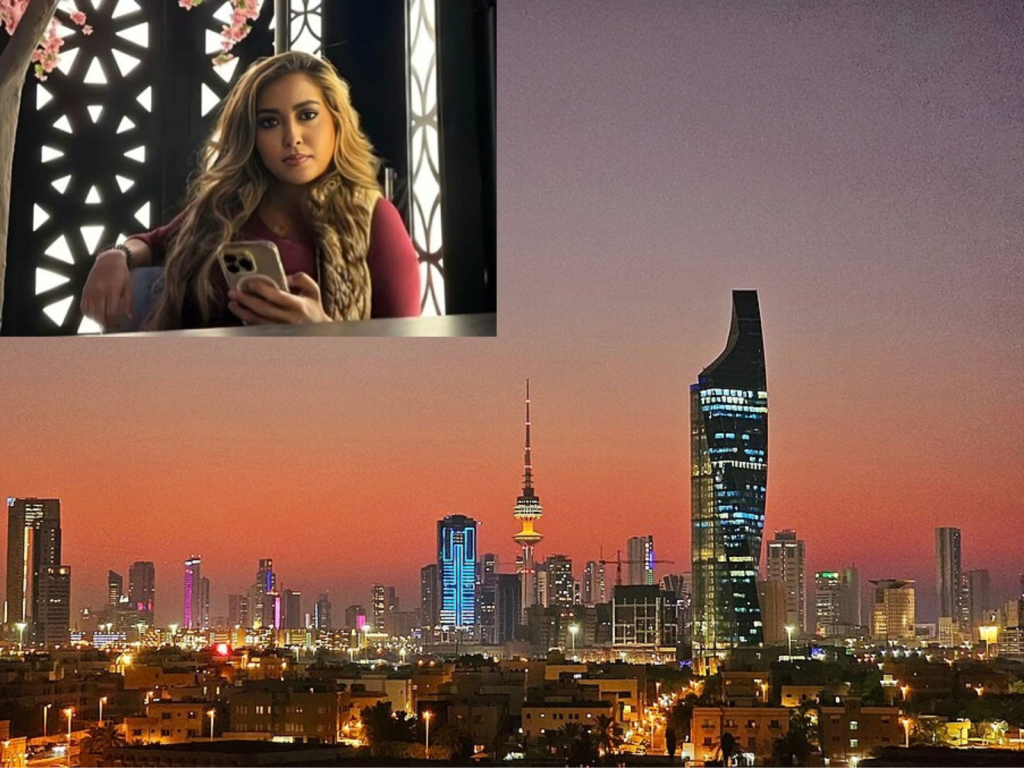
These are the poignant words of Lulwa al-Hussainan, the Kuwaiti human rights defender known for her outspoken criticism of government policies and her activism on social media. Her criticism of the Minister of Interior, Fahad Al-Yousef, put her in the crosshairs of the authorities, and after facing intimidation and trumped-up charges in connection with her activism, she was forced to flee Kuwait in December 2024. This year she also had her citizenship revoked.
Al-Hussainan told Index that she had been inspired to become an activist from an early age. “From a young age I read a great deal, and that reading taught me to stand with anyone who is wronged and to support them,” she said.
Her first experience of being targeted for standing up for what she believed in came in June 2021, when she was arrested and detained alongside her husband during a sit-in at Al-Erada Square. Speaking on social media after the event, al-Hussainan said: “They insulted and verbally abused me, and out of spite, they even insulted my deceased and wronged grandfather, the late Musafir Abdulkarim Mahshoum.”
Musafir Abdulkarim was a 38-year-old actor born and raised in Kuwait, of Iraqi descent. He was accused of treason by the Kuwaiti authorities when Iraq invaded Kuwait and was executed in 1991. The family strongly deny he was a spy and says it was a fabricated charge. Lulwa al-Hussainan’s profile on social media – where she has built a substantial following – describes herself as a “Granddaughter of a martyr who loved the homeland”, although she made clear that her biggest call to action is through moral obligation rather than family ties.
“What inspires me to stand with the oppressed is that it is the right thing to do,” she said. “In my country we used to have a measure of freedom of opinion. Now many people are in prison unjustly because of a word or a view, and they have been beaten, humiliated, and tortured.”
Despite her arrest in 2021, al-Hussainan continued to speak out. Her criticism of government policies increased with a vocal campaign against Kuwait’s campaign to revoke citizenships. Authorities in the state have used citizenship as a political weapon against dissidents and critics for years, with an estimated 70,000 Kuwaitis having had their citizenship revoked since the launch of an unprecedented government campaign in March 2024. The repressive tactic has drawn criticism from the international community, condemned as a thinly-veiled attempt to silence opposition with a disproportionate impact on women and minorities.
“What inspires me to stand with the oppressed is that it is the right thing to do”
Although she wasn’t the only one to voice concerns around the campaign, al-Hussainan’s criticisms of the policy attracted online publicity and support, and subsequently the attention of the authorities. It was this that led to her clash with Interior Minister Al-Yousef.
“I spoke about the revocation of citizenship and defended people who were wronged,” al-Hussainan explained. “They obtained citizenship in accordance with the law, they are not forgers.”
“Because of what I said and the position I took, I was summoned by State Security, and the Minister of Interior assaulted me.”
According to al-Hussainan, she was reprimanded by Al-Yousef for her posts on X and for impinging on the authority of the Emir and was subjected to beatings and solitary confinement in a freezing cell during this meeting. By the time she was released, her health had severely deteriorated. She subsequently fled the country to seek refuge in the UK.
After leaving Kuwait in December 2024, al-Hussainan was sentenced twice: in March 2025 she was sentenced to three years in prison for “insulting the Emir,” a sentence overturned three months later. In January 2026, she received a second sentence from the Kuwaiti Criminal Court, this time for five years in prison on the same charge. The verdict was widely seen to be a political decision meant to undermine her criticisms of the state rather than a legitimate case.
Posting on social media in the aftermath, al-Hussainan said: “What is happening is the height of a catastrophe. Fahad Al-Yousef is using the war as a pretext to justify his injustice and tyranny, and he is wielding his power as a sword against the people.”
In a terrible irony, the very policy al-Hussainan was targeted for opposing was used against her as she was stripped of her citizenship in 2026, along with several other Kuwaiti activists and dissidents residing abroad. While still living in exile, her brother Abdullah Nasser Al-Hussainan – himself a content creator who makes and posts comedic videos on YouTube – was arrested and charged in what Lulwa believes was retribution for her activism and an attempt to intimidate her into silence.
Posting CCTV footage of the arrest on X, she stated: “This video proves my brother was kidnapped right in front of the house. Fahad Al-Youssef is escalating his animosity and taking revenge on me by kidnapping my brother. Unfortunately, in Kuwait, people get kidnapped from their homes.”
I was summoned by State Security, and the Minister of Interior assaulted me
Al-Hussainan told Index that she misses Kuwait, but she is resigned to her fate for as long as she continues to fight for what she believes in.
“I still miss my country, my family, and my friends,” she said. “But I have no choice but to remain in exile. If I return, my fate in Kuwait will be prison.”
Despite her current predicament and the charges brought against her and her family by the state, she remains outspoken on social media and continues to demand a review of the mass citizenship revocations and to peacefully protest against the oppressive Kuwaiti regime. In this way, al-Hussainan is the perfect example of how not to be silent.
Read the full article here
Fact Checker
Verify the accuracy of this article using AI-powered analysis and real-time sources.