Close Menu
FSNN | Free Speech News NetworkFSNN | Free Speech News Network
  • Home
  • News
    • Politics
    • Legal & Courts
    • Tech & Big Tech
    • Campus & Education
    • Media & Culture
    • Global Free Speech
  • Opinions
    • Debates
  • Video/Live
  • Community
  • Freedom Index
  • About
    • Mission
    • Contact
    • Support
Trending

CPJ, partners call on Peruvian authorities to dismiss a new criminal complaint against journalist Paola Ugaz

1 second ago

Australia’s Broken Politics: Immigration, One Nation

5 minutes ago

‘Big Six’ Canadian banks join global push for commercial bank deposit tokenization

15 minutes ago
Facebook X (Twitter) Instagram
Facebook X (Twitter) Discord Telegram
FSNN | Free Speech News NetworkFSNN | Free Speech News Network
Market Data Newsletter
Wednesday, September 23
  • Home
  • News
    • Politics
    • Legal & Courts
    • Tech & Big Tech
    • Campus & Education
    • Media & Culture
    • Global Free Speech
  • Opinions
    • Debates
  • Video/Live
  • Community
  • Freedom Index
  • About
    • Mission
    • Contact
    • Support
FSNN | Free Speech News NetworkFSNN | Free Speech News Network
Home»News»Global Free Speech»Turkey under Recep Tayyip Erdoğan has already considers queer lifestyles an impediment to its goals This has been a chilling week for Turkey’s LGBTQ+ communities, perhaps the most unsettling in many years, as police raids against their members sent shockwaves among the country’s marginalised, precarious but well-connected queer groups.   Turkish police have detained multiple individuals from LGBTQ+ rights organisations across Turkey’s 15 provinces, conducting raids on queer association headquarters, confiscating documents from activists, blocking access to websites and social media accounts.  The coordinated raids surprised some, as Turkey has never legally banned homosexuality from Ottoman times onward, but operations, conducted under the government-branded “My Family is Safe” initiative, began on 12 September. An Istanbul court blocked access to numerous websites and social media accounts belonging to LGBTQ+ organisations and activists.  Over five days, courts launched investigations against at least 116 individuals, nine associations, and thirteen businesses. At least 82 were formally arrested as a result of the raids, 25 of whom are LGBTQ+ activists or have formal connections to queer associations. In January 2025, the Turkish government announced 2025 would be “the year of the family”.  Throughout 2025, there were widely shared fears among Turkey’s LGBTQ+ communities of an operation against queer associations and activists. Yet Ankara didn’t take action, despite heightened government rhetoric against “degenerates” and the “LGBT imposition” and “desexualisation policies of globalists”. Then, in May 2025, the government announced an extension of the project, branding 2026-2035 as the “decade of family and population”.  Ankara considers queer lifestyles an impediment to population growth and promised to establish a “digital family shield” to identify, assess, and prevent “harmful elements” that pose a threat to “the health of the Turkish family”.  Instead of passing a law that legally banned queer relationships, the government launched a wave of police operations, branding the effort “My Family is Safe”. “This operation is taking place now because the optimal conditions for carrying it out have been cultivated over the years,” Seçil Epik, founder of Turkish queer publisher Umami, told Index. “For us activists, this comes as no surprise.” Ankara considers queer lifestyles an impediment to population growth Over the past week, the government blocked the website of Kaos GL, Turkey’s first legal LGBTQ+ association, founded in 1994 and granted legal status in 2005. Editors quickly changed its web address to circumvent the ban.   “We don’t have any clear picture of why the operation has begun this week,” Yıldız Tar, editor of Kaos GL, told Index. “It was more like an escalated process that started in 2015 with the attack on pride marches. Now they’re directly targeting LGBTQI organisations, activists and ordinary LGBTQ+ individuals only because they are queer.” Tar was taken into custody on June 23 and sent to Sincan Prison two days later on allegations of “membership in a terrorist organisation” in the days leading up to the Nato Summit in Ankara.  After a month in detention, authorities released him alongside several other individuals, including academics.  Tar had been previously detained on similar allegations in February 2025 and released in May 2025.  “They tried to criminalise homosexuality by passing a law in parliament, but they couldn’t, due to our efforts. Now they are trying to act as if that law passed,” says Tar. Ankara also banned access to ÜniKuir’s news site, the Pink Life (Pembe Hayat) Association, the Youth LGBTI+ Association, Lambdaistanbul, the Muamma LGBTI+ Association, and other queer publications. The ban extended to the social media accounts of actor and trans rights activist Seyhan Arman, and theatre actor and LGBTQ+ activist Zeynep Esmeray Özadikti. On September 13, a day after the internet bans, police in Ankara raided Kaos GL’s office in the Turkish capital, as well as the apartments of Kaos GL members who served on the association’s supervisory boards. “They are trying to act as if that law passed” Kaos GL reported that more than ten LGBTQ+ activists were detained as part of this investigation, led by the Ankara Chief Public Prosecutor’s Office’s Cybercrimes Bureau.  The Kaos GL raid was based on allegations of “obscenity”, an offence defined under Article 226 of the Turkish Penal Code (TCK), alongside alleged violations of the Law on Associations.  The Ankara Chief Public Prosecutor’s Office alleged that “posts containing obscenity” were shared on Kaos GL’s social media accounts in a “manner accessible to children.”  Turkish police and gendarmerie also carried out operations at numerous addresses in Istanbul, targeting queer spaces, like nightclubs and bathhouses, in Beyoğlu and Şişli districts. On 16 September, eight people, five of whom are trans women, were formally arrested, including several Kaos GL board members and the investigative journalist Tuğba Tekerek.  While in custody, Tekerek sent a message to the public: “The ‘lottery’ hit me this time. In 2024, I had traveled to Georgia before the elections and produced various news reports for several outlets. Among them, I had also filed a commissioned story for the Kaos GL news site.”  Tekerek said she was charged with “administering Kaos GL’s Instagram account”, which she said had “absolutely no basis in fact. I simply produced a news report as part of my journalism work. The truth will come out sooner or later.”  Authorities also organised raids in Mersin. The Mersin Chief Public Prosecutor’s Office ordered the detention of individuals who allegedly produced and disseminated “obscene content on social media”. “This sweeping crackdown, in which scores of people have been arrested, has nothing to do with protecting families” As part of the investigation, a Mersin court moved to shut down the “Muamma LGBT Association” and the “Mersin 7 Colors LGBT Association,” both operating in central Mersin. The latest raids drew a strong international reaction. The European Commission said stigmatisation and discrimination run counter to EU values. Council of Europe Human Rights Commissioner Michael O’Flaherty emphasised that explanations based on “family values” and the “protection of children” couldn’t justify restricting human rights.  International rights organisations, led by Ilga-Europe, characterised the operations as a “coordinated attack”. “This sweeping crackdown, in which scores of people have been arrested, has nothing to do with protecting families and everything to do with further harming and stigmatising a community that has battled decades of discrimination and intimidation,” said Amnesty International’s Esther Major, calling for the release of those detained.  Amidst the backlash, a Turkish court blocked access to social media accounts of Amnesty’s Turkish branch, alongside the leftist daily Evrensel, Media and Law Studies Association (MLSA), and Academics for Peace, among others.  At the time of writing, an Amnesty International spokesperson said they had not received any official notification regarding the decision. Still, they noted that as of September 14, their X account could not be accessed from within Turkey. Local reaction was similarly vocal. MPs from opposition parties condemned the operations.  Several queer and feminist groups prepared to deliver a statement about the raids outside Istanbul’s Çağlayan Courthouse on 15 September.  But when the crowd gathered in front of the courthouse around noon, the police told them to disperse before detaining 106 individuals.  Among those detained were Birgün newspaper reporter Sarya Toprak and Şener Azak, who works for Germany’s ARD network.  “We have reached this point as a result of the state’s years-long campaign to target and criminalise LGBTI+ individuals using all available media channels,” said Epik, the publisher. “LGBTI+ people in Turkey are anxious and fearful, and their very existence is on the verge of being outlawed, yet—as always—they continue to resist.”  READ MORE
Global Free Speech

Turkey under Recep Tayyip Erdoğan has already considers queer lifestyles an impediment to its goals This has been a chilling week for Turkey’s LGBTQ+ communities, perhaps the most unsettling in many years, as police raids against their members sent shockwaves among the country’s marginalised, precarious but well-connected queer groups.   Turkish police have detained multiple individuals from LGBTQ+ rights organisations across Turkey’s 15 provinces, conducting raids on queer association headquarters, confiscating documents from activists, blocking access to websites and social media accounts.  The coordinated raids surprised some, as Turkey has never legally banned homosexuality from Ottoman times onward, but operations, conducted under the government-branded “My Family is Safe” initiative, began on 12 September. An Istanbul court blocked access to numerous websites and social media accounts belonging to LGBTQ+ organisations and activists.  Over five days, courts launched investigations against at least 116 individuals, nine associations, and thirteen businesses. At least 82 were formally arrested as a result of the raids, 25 of whom are LGBTQ+ activists or have formal connections to queer associations. In January 2025, the Turkish government announced 2025 would be “the year of the family”.  Throughout 2025, there were widely shared fears among Turkey’s LGBTQ+ communities of an operation against queer associations and activists. Yet Ankara didn’t take action, despite heightened government rhetoric against “degenerates” and the “LGBT imposition” and “desexualisation policies of globalists”. Then, in May 2025, the government announced an extension of the project, branding 2026-2035 as the “decade of family and population”.  Ankara considers queer lifestyles an impediment to population growth and promised to establish a “digital family shield” to identify, assess, and prevent “harmful elements” that pose a threat to “the health of the Turkish family”.  Instead of passing a law that legally banned queer relationships, the government launched a wave of police operations, branding the effort “My Family is Safe”. “This operation is taking place now because the optimal conditions for carrying it out have been cultivated over the years,” Seçil Epik, founder of Turkish queer publisher Umami, told Index. “For us activists, this comes as no surprise.” Ankara considers queer lifestyles an impediment to population growth Over the past week, the government blocked the website of Kaos GL, Turkey’s first legal LGBTQ+ association, founded in 1994 and granted legal status in 2005. Editors quickly changed its web address to circumvent the ban.   “We don’t have any clear picture of why the operation has begun this week,” Yıldız Tar, editor of Kaos GL, told Index. “It was more like an escalated process that started in 2015 with the attack on pride marches. Now they’re directly targeting LGBTQI organisations, activists and ordinary LGBTQ+ individuals only because they are queer.” Tar was taken into custody on June 23 and sent to Sincan Prison two days later on allegations of “membership in a terrorist organisation” in the days leading up to the Nato Summit in Ankara.  After a month in detention, authorities released him alongside several other individuals, including academics.  Tar had been previously detained on similar allegations in February 2025 and released in May 2025.  “They tried to criminalise homosexuality by passing a law in parliament, but they couldn’t, due to our efforts. Now they are trying to act as if that law passed,” says Tar. Ankara also banned access to ÜniKuir’s news site, the Pink Life (Pembe Hayat) Association, the Youth LGBTI+ Association, Lambdaistanbul, the Muamma LGBTI+ Association, and other queer publications. The ban extended to the social media accounts of actor and trans rights activist Seyhan Arman, and theatre actor and LGBTQ+ activist Zeynep Esmeray Özadikti. On September 13, a day after the internet bans, police in Ankara raided Kaos GL’s office in the Turkish capital, as well as the apartments of Kaos GL members who served on the association’s supervisory boards. “They are trying to act as if that law passed” Kaos GL reported that more than ten LGBTQ+ activists were detained as part of this investigation, led by the Ankara Chief Public Prosecutor’s Office’s Cybercrimes Bureau.  The Kaos GL raid was based on allegations of “obscenity”, an offence defined under Article 226 of the Turkish Penal Code (TCK), alongside alleged violations of the Law on Associations.  The Ankara Chief Public Prosecutor’s Office alleged that “posts containing obscenity” were shared on Kaos GL’s social media accounts in a “manner accessible to children.”  Turkish police and gendarmerie also carried out operations at numerous addresses in Istanbul, targeting queer spaces, like nightclubs and bathhouses, in Beyoğlu and Şişli districts. On 16 September, eight people, five of whom are trans women, were formally arrested, including several Kaos GL board members and the investigative journalist Tuğba Tekerek.  While in custody, Tekerek sent a message to the public: “The ‘lottery’ hit me this time. In 2024, I had traveled to Georgia before the elections and produced various news reports for several outlets. Among them, I had also filed a commissioned story for the Kaos GL news site.”  Tekerek said she was charged with “administering Kaos GL’s Instagram account”, which she said had “absolutely no basis in fact. I simply produced a news report as part of my journalism work. The truth will come out sooner or later.”  Authorities also organised raids in Mersin. The Mersin Chief Public Prosecutor’s Office ordered the detention of individuals who allegedly produced and disseminated “obscene content on social media”. “This sweeping crackdown, in which scores of people have been arrested, has nothing to do with protecting families” As part of the investigation, a Mersin court moved to shut down the “Muamma LGBT Association” and the “Mersin 7 Colors LGBT Association,” both operating in central Mersin. The latest raids drew a strong international reaction. The European Commission said stigmatisation and discrimination run counter to EU values. Council of Europe Human Rights Commissioner Michael O’Flaherty emphasised that explanations based on “family values” and the “protection of children” couldn’t justify restricting human rights.  International rights organisations, led by Ilga-Europe, characterised the operations as a “coordinated attack”. “This sweeping crackdown, in which scores of people have been arrested, has nothing to do with protecting families and everything to do with further harming and stigmatising a community that has battled decades of discrimination and intimidation,” said Amnesty International’s Esther Major, calling for the release of those detained.  Amidst the backlash, a Turkish court blocked access to social media accounts of Amnesty’s Turkish branch, alongside the leftist daily Evrensel, Media and Law Studies Association (MLSA), and Academics for Peace, among others.  At the time of writing, an Amnesty International spokesperson said they had not received any official notification regarding the decision. Still, they noted that as of September 14, their X account could not be accessed from within Turkey. Local reaction was similarly vocal. MPs from opposition parties condemned the operations.  Several queer and feminist groups prepared to deliver a statement about the raids outside Istanbul’s Çağlayan Courthouse on 15 September.  But when the crowd gathered in front of the courthouse around noon, the police told them to disperse before detaining 106 individuals.  Among those detained were Birgün newspaper reporter Sarya Toprak and Şener Azak, who works for Germany’s ARD network.  “We have reached this point as a result of the state’s years-long campaign to target and criminalise LGBTI+ individuals using all available media channels,” said Epik, the publisher. “LGBTI+ people in Turkey are anxious and fearful, and their very existence is on the verge of being outlawed, yet—as always—they continue to resist.”  READ MORE

News RoomBy News Room2 hours agoNo Comments4 Mins Read1 Views
Share Facebook Twitter Pinterest Copy Link LinkedIn Tumblr Email VKontakte Telegram
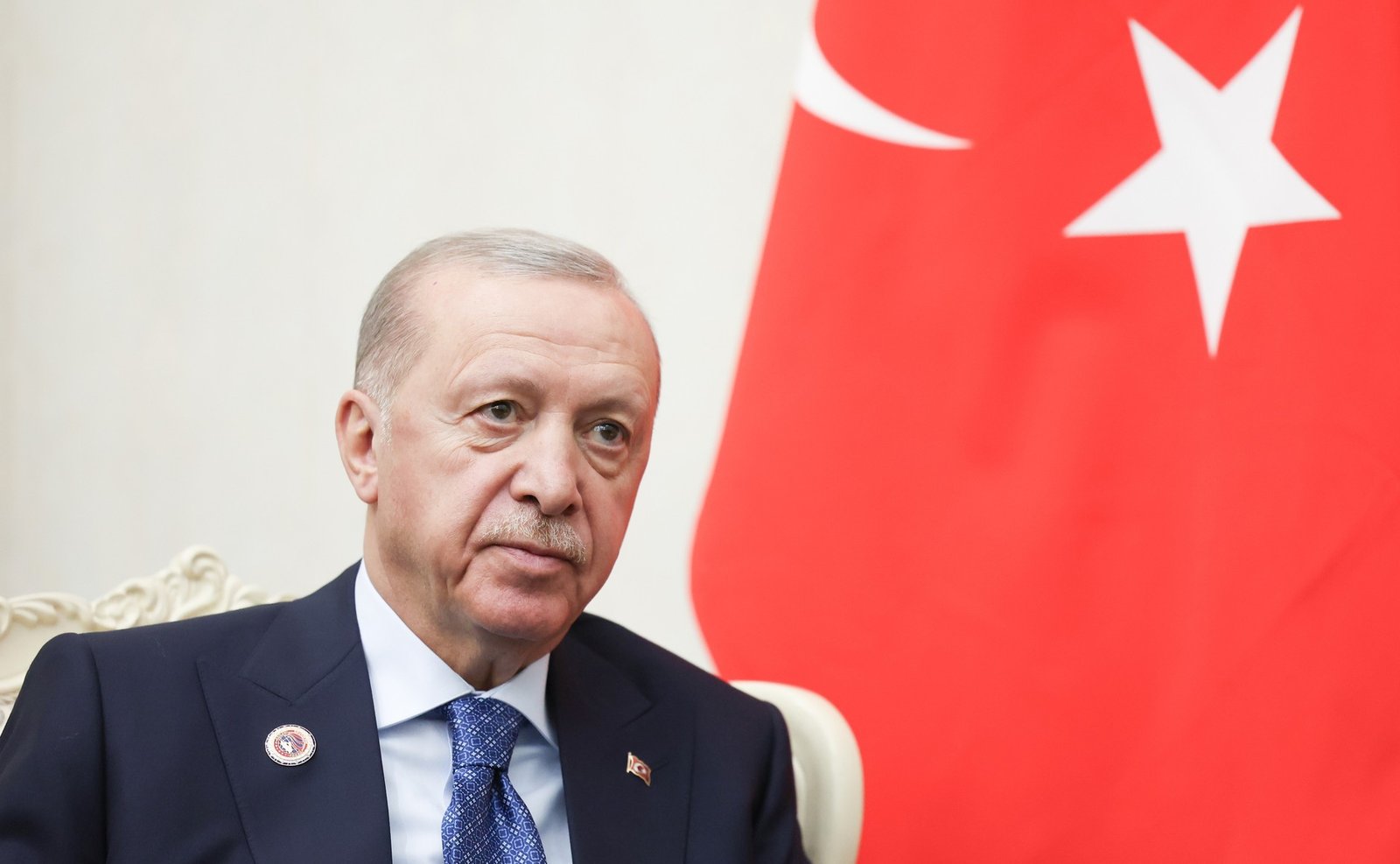
Turkey under Recep Tayyip Erdoğan has already considers queer lifestyles an impediment to its goals


				This has been a chilling week for Turkey’s LGBTQ+ communities, perhaps the most unsettling in many years, as police raids against their members sent shockwaves among the country’s marginalised, precarious but well-connected queer groups.  
Turkish police have detained multiple individuals from LGBTQ+ rights organisations across Turkey’s 15 provinces, conducting raids on queer association headquarters, confiscating documents from activists, blocking access to websites and social media accounts. 
The coordinated raids surprised some, as Turkey has never legally banned homosexuality from Ottoman times onward, but operations, conducted under the government-branded “My Family is Safe” initiative, began on 12 September. An Istanbul court blocked access to numerous websites and social media accounts belonging to LGBTQ+ organisations and activists. 
Over five days, courts launched investigations against at least 116 individuals, nine associations, and thirteen businesses. At least 82 were formally arrested as a result of the raids, 25 of whom are LGBTQ+ activists or have formal connections to queer associations.
In January 2025, the Turkish government announced 2025 would be “the year of the family”. 
Throughout 2025, there were widely shared fears among Turkey’s LGBTQ+ communities of an operation against queer associations and activists. Yet Ankara didn’t take action, despite heightened government rhetoric against “degenerates” and the “LGBT imposition” and “desexualisation policies of globalists”.
Then, in May 2025, the government announced an extension of the project, branding 2026-2035 as the “decade of family and population”. 
Ankara considers queer lifestyles an impediment to population growth and promised to establish a “digital family shield” to identify, assess, and prevent “harmful elements” that pose a threat to “the health of the Turkish family”. 
Instead of passing a law that legally banned queer relationships, the government launched a wave of police operations, branding the effort “My Family is Safe”.
“This operation is taking place now because the optimal conditions for carrying it out have been cultivated over the years,” Seçil Epik, founder of Turkish queer publisher Umami, told Index. “For us activists, this comes as no surprise.”

Ankara considers queer lifestyles an impediment to population growth

Over the past week, the government blocked the website of Kaos GL, Turkey’s first legal LGBTQ+ association, founded in 1994 and granted legal status in 2005. Editors quickly changed its web address to circumvent the ban.  
“We don’t have any clear picture of why the operation has begun this week,” Yıldız Tar, editor of Kaos GL, told Index. “It was more like an escalated process that started in 2015 with the attack on pride marches. Now they’re directly targeting LGBTQI organisations, activists and ordinary LGBTQ+ individuals only because they are queer.”
Tar was taken into custody on June 23 and sent to Sincan Prison two days later on allegations of “membership in a terrorist organisation” in the days leading up to the Nato Summit in Ankara. 
After a month in detention, authorities released him alongside several other individuals, including academics. 
Tar had been previously detained on similar allegations in February 2025 and released in May 2025. 
“They tried to criminalise homosexuality by passing a law in parliament, but they couldn’t, due to our efforts. Now they are trying to act as if that law passed,” says Tar.
Ankara also banned access to ÜniKuir’s news site, the Pink Life (Pembe Hayat) Association, the Youth LGBTI+ Association, Lambdaistanbul, the Muamma LGBTI+ Association, and other queer publications.
The ban extended to the social media accounts of actor and trans rights activist Seyhan Arman, and theatre actor and LGBTQ+ activist Zeynep Esmeray Özadikti.
On September 13, a day after the internet bans, police in Ankara raided Kaos GL’s office in the Turkish capital, as well as the apartments of Kaos GL members who served on the association’s supervisory boards.

“They are trying to act as if that law passed”


				Kaos GL reported that more than ten LGBTQ+ activists were detained as part of this investigation, led by the Ankara Chief Public Prosecutor’s Office’s Cybercrimes Bureau. 
The Kaos GL raid was based on allegations of “obscenity”, an offence defined under Article 226 of the Turkish Penal Code (TCK), alongside alleged violations of the Law on Associations. 
The Ankara Chief Public Prosecutor’s Office alleged that “posts containing obscenity” were shared on Kaos GL’s social media accounts in a “manner accessible to children.” 
Turkish police and gendarmerie also carried out operations at numerous addresses in Istanbul, targeting queer spaces, like nightclubs and bathhouses, in Beyoğlu and Şişli districts.
On 16 September, eight people, five of whom are trans women, were formally arrested, including several Kaos GL board members and the investigative journalist Tuğba Tekerek. 
While in custody, Tekerek sent a message to the public: “The ‘lottery’ hit me this time. In 2024, I had traveled to Georgia before the elections and produced various news reports for several outlets. Among them, I had also filed a commissioned story for the Kaos GL news site.” 
Tekerek said she was charged with “administering Kaos GL’s Instagram account”, which she said had “absolutely no basis in fact. I simply produced a news report as part of my journalism work. The truth will come out sooner or later.” 
Authorities also organised raids in Mersin. The Mersin Chief Public Prosecutor’s Office ordered the detention of individuals who allegedly produced and disseminated “obscene content on social media”.

“This sweeping crackdown, in which scores of people have been arrested, has nothing to do with protecting families”

As part of the investigation, a Mersin court moved to shut down the “Muamma LGBT Association” and the “Mersin 7 Colors LGBT Association,” both operating in central Mersin.
The latest raids drew a strong international reaction. The European Commission said stigmatisation and discrimination run counter to EU values. Council of Europe Human Rights Commissioner Michael O’Flaherty emphasised that explanations based on “family values” and the “protection of children” couldn’t justify restricting human rights. 
International rights organisations, led by Ilga-Europe, characterised the operations as a “coordinated attack”.
“This sweeping crackdown, in which scores of people have been arrested, has nothing to do with protecting families and everything to do with further harming and stigmatising a community that has battled decades of discrimination and intimidation,” said Amnesty International’s Esther Major, calling for the release of those detained. 
Amidst the backlash, a Turkish court blocked access to social media accounts of Amnesty’s Turkish branch, alongside the leftist daily Evrensel, Media and Law Studies Association (MLSA), and Academics for Peace, among others. 
At the time of writing, an Amnesty International spokesperson said they had not received any official notification regarding the decision. Still, they noted that as of September 14, their X account could not be accessed from within Turkey.
Local reaction was similarly vocal. MPs from opposition parties condemned the operations. 
Several queer and feminist groups prepared to deliver a statement about the raids outside Istanbul’s Çağlayan Courthouse on 15 September. 
But when the crowd gathered in front of the courthouse around noon, the police told them to disperse before detaining 106 individuals. 
Among those detained were Birgün newspaper reporter Sarya Toprak and Şener Azak, who works for Germany’s ARD network. 
“We have reached this point as a result of the state’s years-long campaign to target and criminalise LGBTI+ individuals using all available media channels,” said Epik, the publisher. “LGBTI+ people in Turkey are anxious and fearful, and their very existence is on the verge of being outlawed, yet—as always—they continue to resist.” 


				READ MORE
Share
Facebook Twitter Pinterest Email Copy Link

Listen to the article

0:00
0:00

Key Takeaways

Playback Speed

Select a Voice

This has been a chilling week for Turkey’s LGBTQ+ communities, perhaps the most unsettling in many years, as police raids against their members sent shockwaves among the country’s marginalised, precarious but well-connected queer groups.  

Turkish police have detained multiple individuals from LGBTQ+ rights organisations across Turkey’s 15 provinces, conducting raids on queer association headquarters, confiscating documents from activists, blocking access to websites and social media accounts. 

The coordinated raids surprised some, as Turkey has never legally banned homosexuality from Ottoman times onward, but operations, conducted under the government-branded “My Family is Safe” initiative, began on 12 September. An Istanbul court blocked access to numerous websites and social media accounts belonging to LGBTQ+ organisations and activists. 

Over five days, courts launched investigations against at least 116 individuals, nine associations, and thirteen businesses. At least 82 were formally arrested as a result of the raids, 25 of whom are LGBTQ+ activists or have formal connections to queer associations.

In January 2025, the Turkish government announced 2025 would be “the year of the family”. 

Throughout 2025, there were widely shared fears among Turkey’s LGBTQ+ communities of an operation against queer associations and activists. Yet Ankara didn’t take action, despite heightened government rhetoric against “degenerates” and the “LGBT imposition” and “desexualisation policies of globalists”.

Then, in May 2025, the government announced an extension of the project, branding 2026-2035 as the “decade of family and population”. 

Ankara considers queer lifestyles an impediment to population growth and promised to establish a “digital family shield” to identify, assess, and prevent “harmful elements” that pose a threat to “the health of the Turkish family”. 

Instead of passing a law that legally banned queer relationships, the government launched a wave of police operations, branding the effort “My Family is Safe”.

“This operation is taking place now because the optimal conditions for carrying it out have been cultivated over the years,” Seçil Epik, founder of Turkish queer publisher Umami, told Index. “For us activists, this comes as no surprise.”

Ankara considers queer lifestyles an impediment to population growth

Over the past week, the government blocked the website of Kaos GL, Turkey’s first legal LGBTQ+ association, founded in 1994 and granted legal status in 2005. Editors quickly changed its web address to circumvent the ban.  

“We don’t have any clear picture of why the operation has begun this week,” Yıldız Tar, editor of Kaos GL, told Index. “It was more like an escalated process that started in 2015 with the attack on pride marches. Now they’re directly targeting LGBTQI organisations, activists and ordinary LGBTQ+ individuals only because they are queer.”

Tar was taken into custody on June 23 and sent to Sincan Prison two days later on allegations of “membership in a terrorist organisation” in the days leading up to the Nato Summit in Ankara. 

After a month in detention, authorities released him alongside several other individuals, including academics. 

Tar had been previously detained on similar allegations in February 2025 and released in May 2025. 

“They tried to criminalise homosexuality by passing a law in parliament, but they couldn’t, due to our efforts. Now they are trying to act as if that law passed,” says Tar.

Ankara also banned access to ÜniKuir’s news site, the Pink Life (Pembe Hayat) Association, the Youth LGBTI+ Association, Lambdaistanbul, the Muamma LGBTI+ Association, and other queer publications.

The ban extended to the social media accounts of actor and trans rights activist Seyhan Arman, and theatre actor and LGBTQ+ activist Zeynep Esmeray Özadikti.

On September 13, a day after the internet bans, police in Ankara raided Kaos GL’s office in the Turkish capital, as well as the apartments of Kaos GL members who served on the association’s supervisory boards.

“They are trying to act as if that law passed”

Read the full article here

Fact Checker

Verify the accuracy of this article using AI-powered analysis and real-time sources.

Get Your Fact Check Report

Enter your email to receive detailed fact-checking analysis

5 free reports remaining

Continue with Full Access

You've used your 5 free reports. Sign up for unlimited access!

Already have an account? Sign in here

Share. Facebook Twitter Pinterest LinkedIn Tumblr Email Telegram Copy Link
News Room
  • Website
  • Facebook
  • X (Twitter)
  • Instagram
  • LinkedIn

The FSNN News Room is the voice of our in-house journalists, editors, and researchers. We deliver timely, unbiased reporting at the crossroads of finance, cryptocurrency, and global politics, providing clear, fact-driven analysis free from agendas.

Related Articles

Global Free Speech

CPJ, partners call on Peruvian authorities to dismiss a new criminal complaint against journalist Paola Ugaz

1 second ago
Global Free Speech

Journalists attacked while covering violent farmers’ protest in Romania

1 hour ago
Global Free Speech

Republic Square, Belgrade (lmeao/WikiCommons) The Media Freedom Rapid Response (MFRR), press freedom and free expression partners express our firm support for our colleague Massimo Moratti, the Senior Research Affiliate for the Osservatorio Balcani Caucaso Transeuropa (OBCT), as he faces expulsion from Serbia in apparent connection with his human rights work. We urge Serbian authorities to immediately withdraw the expulsion order and allow our colleague to remain in the country with his family and continue his work. On 4 September, Serbian authorities denied Moratti’s request for temporary residence on grounds of “unacceptable security risks for the country”, ordering him to leave the country within 15 days and imposing an entry ban of one year. Serbian authorities did not provide any additional information regarding the grounds for the decision.  An Italian citizen, Moratti is an experienced human rights advocate who has spent more than 20 years in the region and has been living in Serbia continuously since 2022, when he moved to Belgrade following his partner’s assignment in the country.  Moratti has served as a correspondent for the OBCT media outlet in Sarajevo and later in Belgrade since 2005. From 2011 to 2018, he worked in Serbia on multiple EU projects assisting displaced persons and refugees, as well as potential asylum seekers, while later moving to London to serve as Deputy Director of Amnesty International’s European Regional Office. After relocating back to Belgrade with his family, he joined the MFRR team, playing a crucial role in shaping the consortium’s media freedom advocacy efforts in the Western Balkans. In late January, Moratti and his family submitted a request for temporary residence to Serbian authorities. In May his partner was granted temporary residence. In June, a formal meeting was scheduled with the Serbian State Security and Information Agency, which questioned him about his current and past professional activities in the country. On 3 September, his partner received a call from the police that notified that the following day Moratti was expected at the premises of the foreign citizens’ department, where he was eventually handed the expulsion order.  With the assistance of his lawyer, Moratti filed an appeal against the Office’s decision on 10 September, and subsequently requested an interim measure from the Administrative Court to suspend the enforcement proceedings, asking the Court to take into account the forced family separation that his expulsion would entail.  While there has been no specific explanation given for the justification of this decision by Serbian authorities, there are grounds to suspect that the removal order is connected to his different roles as a human rights and media freedom advocate, for his reporting for OBCT on the social and political tensions that have been rising in Serbia over the past few years, or for his work within the MFRR consortium.  In the last few years, the MFRR and OBCT have documented the deepening slide into what we and others have called a media freedom crisis in Serbia, including escalating physical violence against journalists and the attempt by Serbian authorities to censor or silence independent journalism and critical voices. In this context, the MFRR together with the Council of Europe’s Safety of Journalists Platform conducted its last visit in the country in March 2026, an advocacy mission which was joined by Moratti on behalf of OBCT, and published the mission’s final report in July 2026. This timeline overlaps with the administrative backlash of which Moratti has been the target.  Our organisations consider his permit of stay denial and the expulsion order that was subsequently issued to be a form of administrative harassment intended to intimidate him in retaliation for his work, and for supporting journalists in the country and the broader region. This permit rejection measure follows a worrying trend. Over the past two years, there have been multiple documented cases in which foreign civil society activists, journalists and human rights advocates in Serbia have had their residence permits refused, revoked, or were expelled and banned from re‑entry, or denied entry in the first instance, often on similarly vague “security risk” grounds. This trend has been documented in the European Commission’s 2025 Rule of Law Country chapter. The undersigned organisations stand firm in solidarity with our colleague and urge the Serbian authorities to immediately revoke the expulsion order targeting him and to refrain from further forms of administrative harassment, allowing Moratti to live with his family and continue his work in support of media freedom. As this is a crucial case involving a human rights advocate standing up for media freedom in the country amid a dramatic deterioration in press freedom, the undersigned MFRR partners and free expression organisations will closely monitor the proceedings. Signed: Osservatorio Balcani Caucaso Transeuropa (OBCT) European Federation of Journalists (EFJ) European Centre for Press and Media Freedom (ECPMF) Free Press Unlimited (FPU) ARTICLE 19 Europe International Press Institute (IPI) Index on Censorship Reporters Without Borders (RSF) Balkan Free Media Initiative (BFMI) International Federation of Journalists (IFJ) READ MORE

1 hour ago
Global Free Speech

Leading news outlets issue statement in defense of a US free press

2 hours ago
Global Free Speech

Assaulted and threatened: risks surge for journalists ahead of Serbia elections

3 hours ago
Global Free Speech

Amid Vučić’s crackdowns on dissent, is it time for the EU to rethink its Serbia strategy?

3 hours ago
Add A Comment
Leave A Reply Cancel Reply

Editors Picks

Australia’s Broken Politics: Immigration, One Nation

5 minutes ago

‘Big Six’ Canadian banks join global push for commercial bank deposit tokenization

15 minutes ago

Canadian Banking Giants Explore Tokenized Deposits

18 minutes ago

Inside Coinbase’s $250 Billion Playbook for Post-Quantum Bitcoin Custody

19 minutes ago
Latest Posts

FIRE statement on Trump banning news outlets from the White House

39 minutes ago

FIRE statement on Trump banning news outlets from the White House

39 minutes ago

How to Limit What Apple’s New Siri AI Can Access in iOS 27

45 minutes ago

Subscribe to News

Get the latest news and updates directly to your inbox.

At FSNN – Free Speech News Network, we deliver unfiltered reporting and in-depth analysis on the stories that matter most. From breaking headlines to global perspectives, our mission is to keep you informed, empowered, and connected.

FSNN.net is owned and operated by GlobalBoost Media
, an independent media organization dedicated to advancing transparency, free expression, and factual journalism across the digital landscape.

Facebook X (Twitter) Discord Telegram
Latest News

CPJ, partners call on Peruvian authorities to dismiss a new criminal complaint against journalist Paola Ugaz

1 second ago

Australia’s Broken Politics: Immigration, One Nation

5 minutes ago

‘Big Six’ Canadian banks join global push for commercial bank deposit tokenization

15 minutes ago

Subscribe to Updates

Get the latest news and updates directly to your inbox.

© 2026 GlobalBoost Media. All Rights Reserved.
  • Privacy Policy
  • Terms of Service
  • Our Authors
  • Contact

Type above and press Enter to search. Press Esc to cancel.

🍪

Cookies

We and our selected partners wish to use cookies to collect information about you for functional purposes and statistical marketing. You may not give us your consent for certain purposes by selecting an option and you can withdraw your consent at any time via the cookie icon.

Cookie Preferences

Manage Cookies

Cookies are small text that can be used by websites to make the user experience more efficient. The law states that we may store cookies on your device if they are strictly necessary for the operation of this site. For all other types of cookies, we need your permission. This site uses various types of cookies. Some cookies are placed by third party services that appear on our pages.

Your permission applies to the following domains:

  • https://fsnn.net
Necessary
Necessary cookies help make a website usable by enabling basic functions like page navigation and access to secure areas of the website. The website cannot function properly without these cookies.
Statistic
Statistic cookies help website owners to understand how visitors interact with websites by collecting and reporting information anonymously.
Preferences
Preference cookies enable a website to remember information that changes the way the website behaves or looks, like your preferred language or the region that you are in.
Marketing
Marketing cookies are used to track visitors across websites. The intention is to display ads that are relevant and engaging for the individual user and thereby more valuable for publishers and third party advertisers.