

 Freedom Index
Listen to the article
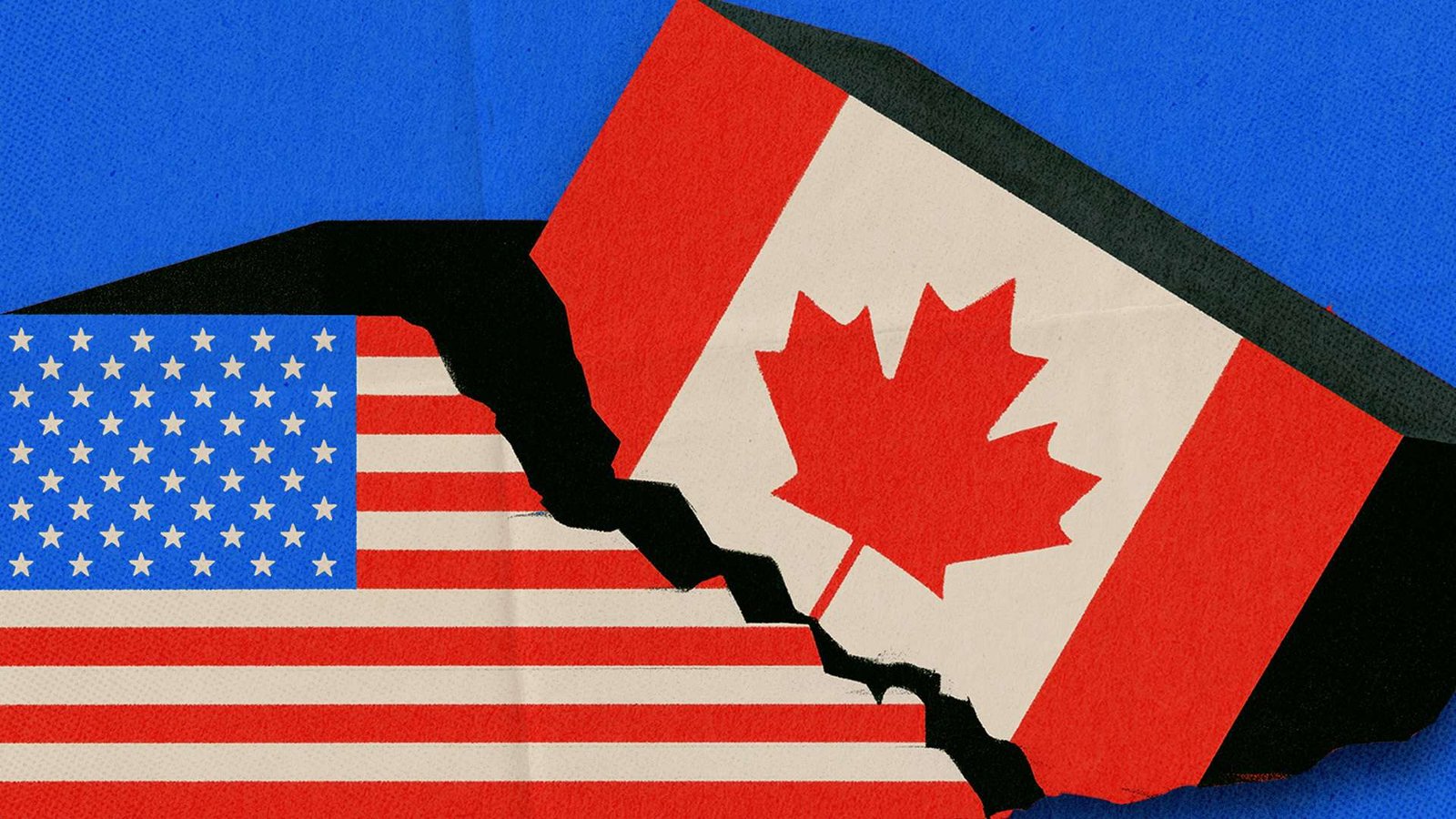
Over the weekend, President Donald Trump’s latest round of tariffs against Canada went into effect as talks between the two countries collapsed after weeks of negotiations.
As always, Trump’s protectionism is shortsighted and self-defeating. This particular round risks alienating one of our closest allies and trading partners with little to show for it in return.
Last month, Trump announced 50 percent tariffs on a number of Canadian goods, some of which were already subject to tariffs.
The order was only expected to affect about $20 billion in total goods, totaling just under 5 percent of all U.S. imports from Canada. But it targeted a confusing jumble of products: The largest targets included lumber, alcohol, dairy, and textiles, but they also encompassed flags, Christmas ornaments, hockey sticks, dog leashes, and wigs.
In a Truth Social post Monday, Trump said he had added “all Cars, Trucks, both large and small, Automotive Parts, and Steel” to the list.
In February, the U.S. Supreme Court struck down Trump’s previous attempt to impose tariffs on the rest of the world. Other statutes—like Section 338 of the Smoot-Hawley Tariff Act of 1930—also would have allowed Trump to implement tariffs, though with more restrictions.
Trump’s new tariffs cite Section 338, which has not been invoked in over 75 years. It’s almost certain to face further judicial scrutiny: “This part of Smoot-Hawley was superseded long ago” and “has never been used to impose a tariff,” Philip Zelikow, senior fellow at Stanford University’s Hoover Institution, wrote last year.
“Even by the standards of Trump’s second term,” added Reason‘s Eric Boehm, “this latest move against Canada seems economically illiterate and legally dubious.”
Canada and Mexico have been targets of Trump’s ire since his first term, when he scrapped the quarter-century-old North American Free Trade Agreement (NAFTA) and replaced it with the U.S.–Mexico-Canada Agreement (USMCA), a nearly identical treaty that he called “the best agreement we’ve ever made.” Then last month, the administration announced it would not renew the agreement, and Trump imposed new tariffs just a couple of weeks later.
Trump has offered different reasons, many of them simply ridiculous, from combating the flow of fentanyl across the northern border to insisting that Canada must become the 51st U.S. state. (After talks fell apart last week, Trump said Canada wanted “the benefits of being a State, without being one.”)
Even if Trump’s new tariffs do result in additional revenue—which of course will come from American consumers—it’s hard to imagine it’s worth the damage being done to the U.S.’s relationship with one of its largest trading partners.
“The United States and Canada enjoy the world’s most comprehensive trading relationship, which supports millions of jobs in each country,” totaling “nearly $2.6 billion a day in goods and services,” according to a 2022 fact sheet from the U.S. State Department. “Canada and the United States are each other’s largest export markets, and Canada is the number one export market for more than 30 U.S. states.”
“Canada has consistently been one of the top two trading partners for the United States,” adds the Office of the U.S. Trade Representative. “Most recently, in 2024, Canada was the top destination for U.S. exports and the third-largest source of U.S. imports. Canada exported over three-quarters of its goods to the United States and imported almost half of its goods from the United States.” Trade between the two countries totaled “an estimated $872.3 billion in 2025.”
Yet Trump is willing to risk that entire relationship over…what, exactly?
In various proclamations, Trump cited actions Canada had taken against certain American products, like dairy and alcohol. But “these policies originated as retaliation for earlier, unjustified American tariffs on Canadian products,” writes Cato Institute trade policy analyst Alfredo Carrillo Obregon. “The Trump administration is weaponizing Section 338 in response to policies engendered by its own weaponization of other executive trade authorities.”
In turn, he is alienating one of our closest allies.
“We have recognised from the beginning that America has changed, and that we will not return to our old relationship,” Prime Minister Mark Carney said in a statement. “Our government understood, before many, that America is altering all its trade relationships. Putting tariffs on its closest allies and charging for access to its vast market.”
When the U.S.’ tariffs go into effect, Carney said he would “match those tariffs dollar for dollar.”
Carney is not the only Canadian official to recognize Trump’s unreliability. “Everybody knows the American president by now, he’s erratic, he’s irresponsible, and he’s not to be trusted,” Wab Kinew, Premier of Manitoba, said last week. “And this is the person that we were supposed to make a deal with, and we’re going to make additional concessions for it. That’s why I say you can’t make a good deal with a bad person, because who’s to say it’s not going to be undone?”
“He underestimates Canada. We’re all in,” added Ontario Premier Doug Ford, who said Trump had “declared war, economic war against his closest friend and ally.” Ford later added, “He can kiss my ass.”
Hopefully, whenever Trump exits the White House, whoever replaces him has some appreciation for free trade. In the meantime, there’s no telling how many of our international agreements he’ll blow up, with little or nothing in return.
Read the full article here
Fact Checker
Verify the accuracy of this article using AI-powered analysis and real-time sources.