

 Freedom Index
Listen to the article
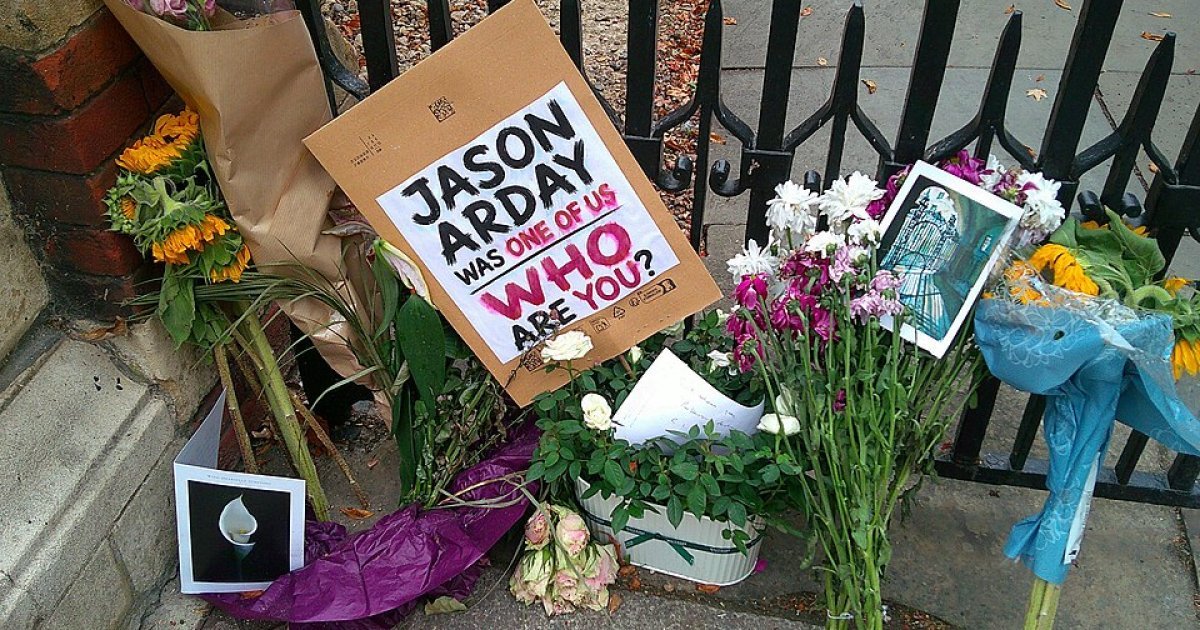
The conversations that are blooming around the death of Jason Arday are, in their broadest sense, not particularly new. Death is shocking, morality is messy, and we do what little we can to make sense of it when confronted with the two. Go back to any era of human history and you can likely find calls for censorship in the wake of death and disaster. But the same is true today as it was a year ago, a decade ago, or a century ago: Despite the current calls to the contrary, censorship is not a remedy for tragedy.
Following a spike in reporting and public scrutiny into plagiarism allegations and his personal history, Jason Arday died, presumably by suicide, last week after resigning from his professorial position at Cambridge. His memoir about his story also hit bookshelves this month. And, as I explained in a piece earlier last week, Arday also apparently engaged in censorship tactics — reporting a journalist to the police, contracting with a libel law firm — to try to stop coverage of the plagiarism allegations from surfacing last summer.
Understandably, many people, from supporters of Arday to those who questioned his scholarship or wrote about his life story, are now seeking to make sense of the chain of events that led to Arday’s death. Much of the public conversation now centers on the role played by the press, whether Arday was treated harshly because of his race, and to what extent media outlets and the people who engaged with their reporting are responsible for his tragic death.
People are free to criticize journalists, outlets, and the reporting they produce if they believe the coverage is insensitive, incorrect, or disproportionate. Maybe it is, maybe it isn’t, though we are unlikely to reach any social consensus on where those moral boundaries lie. I remember growing up as a pre-teen in the early 2000s, baffled as I watched celebrities grace tabloid covers alongside senseless mockery about how fat a musician’s thighs were, or how disgusting a star’s body looked as she stepped out of a car. I understand anger at perceived cruelty and bullying from the media.
Pete Hegseth wants the Pentagon press corps on a leash
The Pentagon cannot turn press credentials into a weapon against reporters who ask questions and protect sources.
Read More
No one can reasonably deny that photographers, writers, and the media can treat their subjects with shocking venom — or that the market to buy, read, and share that material exists. Too often we ignore that second piece of the puzzle, perhaps out of our discomfort at grappling with why so many of us are drawn to those stories.
Critics are also free to call for censorship and limits on the press to restrict the kind of reporting that flourished in recent weeks about Arday. They have that right, just as Arday’s critics do. And that is, indeed, exactly what some are doing — including politicians.
UK nonprofit the Good Law Project is pushing an open letter, currently with over 122,000 signatures, calling for Prime Minister Andy Burnham “to commission an immediate public inquiry into how to ensure a responsible press given its contribution to Dr Arday’s tragic death.” Several members of Parliament signed on. “Self-regulation of the press has comprehensively failed,” the letter adds. So the government must then regulate it.
Another petition calls for Arday’s Law, “legislative action to impose limitations on the number of news articles published about a single individual within a defined time frame” to “work towards creating a framework that balances the public’s right to information with an individual’s right to privacy and mental well-being.” Activist groups housed under Amnesty UK also issued a statement supporting the creation of Arday’s Law and for the media to “be held accountable for failing to honour” his family’s wishes for privacy.
How would this prior restraint work? The more time one spends thinking about it, the more rapidly the concept falls apart. What number of articles reaches the tipping point from reasonable to “hounding”? From how many authors and outlets? Are lengthy articles treated the same as short blurbs? Do bigger outlets with more authors get more articles? Would outlets be incentivized to produce shoddier journalism as they race to beat some kind of government-imposed limitation? Are some targets of inquiry exempt from such limits or would even the worst abusers, criminals, and offenders be able to benefit from this muzzle placed upon the press? What about the people who aren’t working for official media outlets, but just expressing themselves online, and their impact on a target’s mental health?
An undeniable truth about censorship that few of its adherents are willing to address is that it is not a precision tool, it cannot carefully cut and extract. It’s a buzzsaw.
The short answer is: You cannot come up with a principled way to mete out who is permitted to speak about a matter of public concern, and how much they can say. One of the greatest strengths of the First Amendment that we enjoy in the United States is that it understands, and accounts for, the inherent danger of giving anyone that kind of authority over speech or press. What looks like a simple fix may very well be the lid to Pandora’s box.
It would be one thing just for commentators or members of the public to demand this. But it’s a whole different issue when politicians pick up the mantle. In addition to the group of MPs petitioning for a government investigation into the press, London Assembly Member and Green Party leader Zack Polanski is demanding further action. (I wrote about Polanski earlier this summer when the UK’s Reform Party absurdly called for his arrest over an Instagram repost.)
Foreign journalists to face social media vetting for U.S. visas
Foreign journalists face new U.S. social media vetting as France’s top court blocks a sweeping teen social media ban on free-speech grounds.
Read More
Over the weekend, Polanski said: “It’s time we sorted out the press. Constant misinformation to protect their donors and fossil fuels is destroying lives and our planet. The Government must step up and stop being cowardly.” Eighty-nine members of the Green Party also backed a motion, “Justice for Jason Arday: Stopping Racist Smear Campaigns and Reforming Media Power,” ahead of their fall conference. Their motion calls for much vaster state regulation of media outlets to police their printing of alleged racism and ableism, as well as broader powers for media regulator Ofcom to compel the removal of online material deemed hateful or discriminatory. The motion also pushes for a statutory right of reply for individuals or communities subjected to “allegedly defamatory, misleading, racially motivated, or otherwise discriminatory publication” with a response broadcast at similar prominence. The UK has not magically solved social ills with its ever-growing efforts to police and regulate speech online and off. It is baffling, at this point, to imagine that yet more limits on speech would finally do the trick.
An undeniable truth about censorship that few of its adherents are willing to address is that it is not a precision tool, it cannot carefully cut and extract. It’s a buzzsaw, and you cannot confidently predict who will be operating the blade, and what damage will be left in the wreckage.
So, criticize reporting you find unfair. Challenge commentators you think are cruel or wrong, whether about Arday or anything else. But Arday’s Law, or similar restrictions on press freedom, will not end cruelty or public speculation. They might, though, just give the powerful yet another tool to shut down much-needed inquiry into their conduct or even their crimes.
Read the full article here
Fact Checker
Verify the accuracy of this article using AI-powered analysis and real-time sources.