

 Freedom Index
Listen to the article
Max Friedman studies at the University of Memphis Cecil C. Humphreys School of Law, where he has served as editor-in-chief of the University of Memphis Law Review.
This is the third entry in a series on antisemitism and speech-restrictive policies. See also parts one and two.
Students continue to shout down controversial speakers on college campuses across the country. And as Americans’ views on Israel have soured amid ongoing conflict in the region, this unfortunate aspect of campus culture has ensnared numerous pro-Israel speakers. FIRE takes no position on the Israeli-Palestinian conflict. But FIRE has a long track record of fighting back when hecklers interrupt events and silence invited speakers — no matter the speaker’s viewpoint.
One notorious accusation of “mob censorship” involving debate over Israel came from the City University of New York (CUNY) in the fall of 2023. Hunter College’s president invited Rabbi Andy Bachman to offer a pro-Israel perspective during a panel discussion following a screening of the film Israelism, alongside the filmmakers. The film follows two American Jews as they question their commitment to Israel, and it had itself been previously subject to cancellation. Bachman claimed that students repeatedly interrupted the panel, preventing him from asking his prepared questions. A lawsuit filed by Professor Leah Garrett against CUNY even alleged that a student “grabbed the microphone from the rabbi’s hand.” (Other professors attending the event attributed some of the blame to Bachman’s adversarial questioning of the filmmakers and purported refusal to ask questions students had submitted.)
Censoring with a vengeance: Indecent speech in the Yiddish theater
A 1923 obscenity trial over a Yiddish play shows how censorship justified as protection can silence provocative, transformative Jewish art itself.
Read More
Similar instances have occurred on other campuses across the country. Earlier this year, pro-Palestinian students at Sarah Lawrence College disrupted an event featuring New York Times journalist Ezra Klein. At Princeton University in 2025, students shouted down former Israeli Prime Minister Naftali Bennett (and allegedly pulled a fire alarm to end the event prematurely). At UC Berkeley in 2024, demonstrators shut down a lecture by an Israeli attorney invited to discuss international law as it pertains to the Israeli-Palestinian conflict.
These incidents are deeply concerning for free expression on campus. There is no First Amendment privilege to prevent someone else from speaking in reserved spaces. Blocking others from expressing viewpoints that may be uncommon or unpopular on campus frustrates the marketplace of ideas: It interferes with others’ right to listen and leaves the campus community with an incomplete understanding of the debate. This principle applies equally to all speakers, including those expressing pro-Israel viewpoints.
Universities have the tools they need to respond to these incidents. For example, they can prohibit students from intentionally, materially, and substantially disrupting others’ expressive activities in reserved spaces, and they can discipline students who violate that prohibition. They can also set expectations by educating incoming students on these and similar policies. Unfortunately, many institutions have failed to take these basic steps.
What these institutions — and the state — should not do is respond to illiberal actions by proposing illiberal remedies, such as incorporating the vague and viewpoint-discriminatory IHRA Working Definition of Antisemitism into campus harassment policies. It defines antisemitism as “a certain perception of Jews,” a formulation so indeterminate that speakers and institutions cannot reasonably know what expression is permitted and what is prohibited. It also singles out particular political viewpoints — for example, “applying double standards” to Israel — as indicative of antisemitism, thereby burdening one side of the discourse. And even its carveout language, exempting criticism of Israel “similar to” criticism of other democratic nations, manages to discriminate by controlling the tone of this contentious public debate.
Make no mistake: Using the IHRA definition in campus harassment policies creates confusion and unnecessarily politicizes the worthy goal of protecting Jewish students’ civil rights on campus. Indeed, arguments extolling the IHRA definition’s ability to prevent mob censorship are seriously flawed.
Some have justified this use of IHRA or similarly viewpoint-discriminatory frameworks in part by arguing that pro-Israel students are so marginalized and denigrated that they are unable to engage in effective counterspeech. And certainly, self-censorship on the Israeli-Palestinian conflict is a real problem. (53% of students in our 2026 College Free Speech Rankings survey called it a difficult topic to “have an open and honest conversation about on campus”).
Universities’ double failure on antisemitism and free speech
Title VI requires colleges to confront antisemitic harassment — not censor political speech
Read More
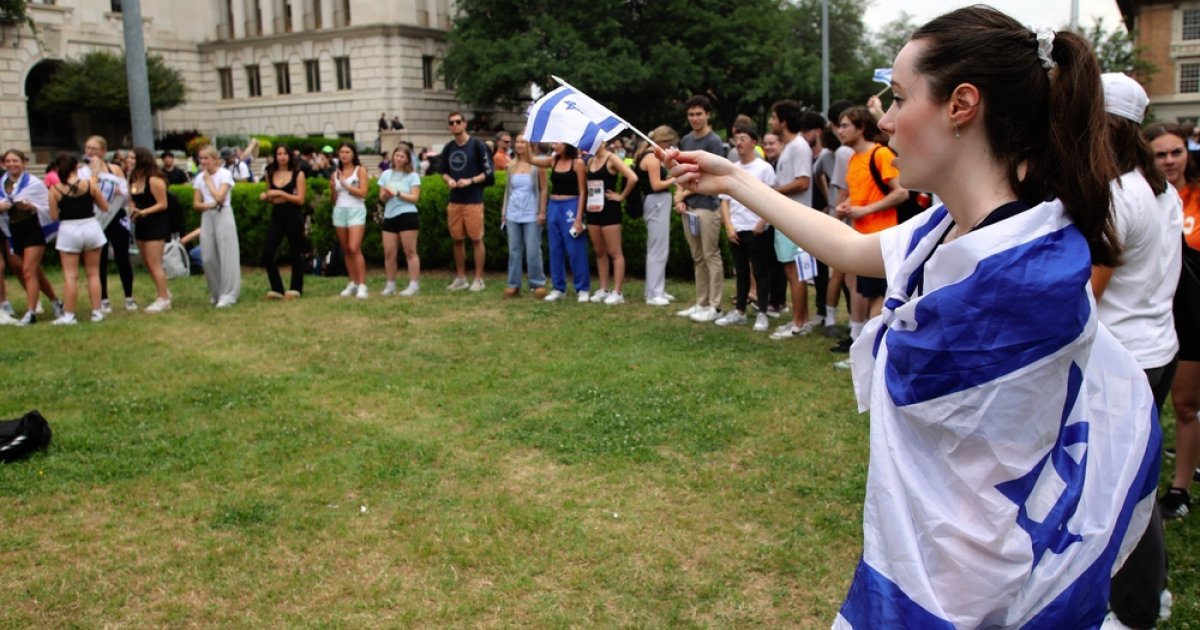
But this argument not only prescribes an illiberal disease as a cure, it underestimates the agency that pro-Israel speakers already possess. In the Princeton example discussed above, former Prime Minister Bennett and members of the audience demonstrated the power of collectively responding to the disruption: The crowd spontaneously sang Hebrew songs and the Israeli national anthem. Powerful collective responses like this may empower speakers and listeners who would otherwise have been left isolated or suppressed. Colleges and universities can further embolden pro-Israel speakers by being proactive and decisive in addressing shout downs and by normalizing disagreement through speech-protective policies and orientation programs.
Debates over Israel and antisemitism must not be controlled through censorship by administrators, governments, or mobs. Even if certain perspectives are uncomfortable or offensive to some, the First Amendment prescribes more speech as a remedy, not less. This approach allows all of us to gain a more robust understanding of contentious issues, even if we don’t ultimately change our minds. As Justice Louis Brandeis famously wrote in Whitney v. California, “Those who won our independence by revolution were not cowards. They did not fear political change. They did not exalt order at the cost of liberty.”
And neither should we.
Consider again Naftali Bennett and his audience’s response to the Princeton incident. Even if one vehemently opposes their perspectives on the Israeli-Palestinian conflict, it is hard to deny how powerfully their counterspeech communicated the value of standing up for what you believe. Rather than responding to illiberalism with more illiberalism, universities and state actors should adopt policies that empower and protect the right to boldly speak back.
Read the full article here
Fact Checker
Verify the accuracy of this article using AI-powered analysis and real-time sources.