

 Freedom Index
Listen to the article
“This fight against Soviet totalitarianism, and now this fight against Russian influences in this country: This is my life,” says Georgian opposition leader Zurab Japaridze.
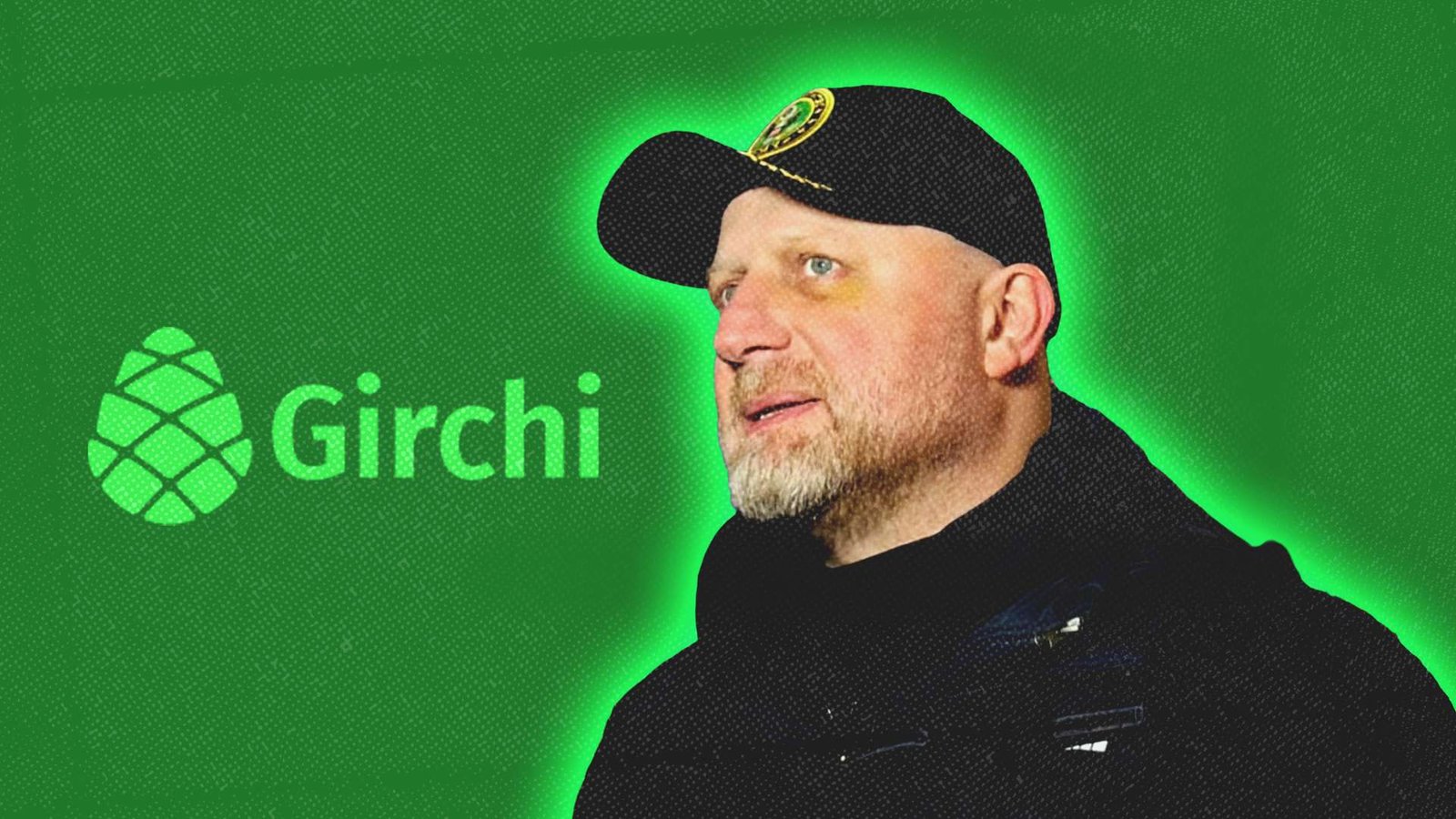
Japaridze is the founder of one of the few explicitly libertarian political parties in a post-Soviet state, — ‘Girchi’ (which means ‘pine cone’) — ‘More Freedom.’
And in June 2025, he was sentenced to 7 months in Rustavi prison for defying a parliamentary commission run by the ruling party, Georgian Dream. Japaridze was not a part of the United National Movement (UNM) government ostensibly being investigated by the commission, yet he still landed in pretrial detention. He refused on principle to mount a defense.
In a Facebook post, former President Salome Zourabichvili said that Japaridze’s “detention is shameful. It has no connection whatsoever with justice. This is a purely political case.” She then accused the commission of existing solely “to create a means to arrest exactly those political leaders they want to see in prison.”
Georgians across the country have now spent well over 500 consecutive days protesting the ruling party since elections were last held on October 26, 2024. Those elections raised eyebrows both in Tbilisi and across the western world.
A prominent global NGO, the OSCE Office for Democratic Institutions and Human Rights, has alleged “serious procedural inconsistencies” in the election. The International Society for Fair Elections and Democracy, a Georgian NGO specializing in election monitoring, produced a report chronicling “numerous problematic incidents and violations” observed countrywide, including instances of multiple voting, ballot stuffing, voter bribery, physical violence, and threats.
In the wake of the controversy, authorities connected to the Georgian Dream party arrested peaceful protesters and independent journalists, froze bank accounts of several civil society groups, and—according to evidence gathered in a 2025 BBC investigation—allegedly deployed a World War I–era chemical weapon to quell protests.
Georgia’s recent authoritarian drift began when parliament authored the Law on Transparency of Foreign Influence, a bill similar to the legislation passed after Russian dictator Vladimir Putin’s 2012 return to presidential power. Since dubbed the “Russian law,” it mandates that NGOs and media outlets receiving more than 20 percent of their funding from abroad must register with the Georgian Ministry of Justice as “organizations serving the interests of a foreign power.”
A draft of the law was first submitted in 2023, then abandoned when it prompted mass protest. But in 2024, Georgian Dream reintroduced the “foreign agents bill,” as it became more commonly known, and pushed it through. In 2025, Georgian Dream extended the scope of that law to apply to individuals with the Foreign Agents Registration Act.
The law’s supporters claim it injects more transparency into the system. Both the European Court of Human Rights and Human Rights Watch maintain that laws structured this way are intended to stifle dissent.
“They killed all these kinds of international organizations in Georgia, and basically killed civil society,” says Japaridze, likening some of these affected organizations as “islands of freedom within this country.”
All this sits starkly at odds with Georgia’s fairly recent past.
It’s been less than two decades since the Cato Institute was hosting President Mikheil Saakashvili and praising Georgia as a rapid “post-socialist success story” of economic liberalization—a “modern-day capitalist utopia in Europe‟s highest mountains,” according to a 2008 report from the European Stability Initiative, a non-profit research and policy institute focused on South East Europe.
The praise wasn’t undeserved. During the country’s peak reform years following Saakashvili’s Rose Revolution, Georgia’s economy grew an average of 7.6 percent per year. Saakashvili’s minister of economy, Kakha Bendukidze, spearheaded this sudden economic liberalization.
Bendukidze watched the Soviet system collapse while working in Russia, where he got rich running manufacturing and heavy industry businesses—and found himself at odds with Putin. So he returned to Georgia, joined Saakashvili’s government, and pushed through reforms: simplifying the tax code, slashing business licenses and permits, and going on a mass privatization spree, joking that he was ready to “sell everything but Georgia’s conscience.”
Japaridze speaks of Bendukidze fondly.
“When he came to Georgia, basically, whatever I read in books and whatever I believed in, this guy just was doing it,” he says.
Georgia’s GDP doubled in the first four years and tripled in the first eight of Bendukidze’s tax changes. The country jumped from 137th to 11th on the World Bank’s Ease of Doing Business scale (ahead of France and Germany), and it became a magnet for global investment.
It was Bendukidze who nudged Japaridze into politics. Japaridze had been writing a column for the online magazine Tabula and debating economics on TV. His first encounter with free market ideas came in a PDF: a file of F.A. Hayek’s The Fatal Conceit: The Errors of Socialism. But it was time spent working in a government state agency that opened his eyes to the rot and corruption within.
“I was young, and I watched it, and I was just going crazy,” Japaridze says. “[A] country cannot work like this.” Every state standardization or permit had become an instrument primarily for collecting bribes.
Bendukidze died in 2014. In the following year, Japaridze broke from UNM to form Girchi. To advance its message, the party embraced political stunts.
“By doing crazy stuff, we got lots of attention,” Japaridze says. “We spent lots of time explaining why we are doing it.“
To push back against military conscription, for example, Girchi started a church. Suddenly, Georgia found itself flush with young, pious “priests.”
To protest laws against cannabis, Girchi planted seeds inside party headquarters and televised the stunt on New Year’s Eve 2016. The plants were confiscated, but the work did bear fruit: In 2018, Georgia became one of the first countries to legalize marijuana for recreational use, establishing a constitutional protection for cannabis consumption. This right has faced setbacks, however, and Georgian Dream recently criminalized the possession of over 5 grams of dried marijuana.
To protest crackdowns on sex work, Girchi opened a brothel in its headquarters, complete with a bed and condoms.
“Our bodies belong to us, and we can do whatever we want with our bodies,” Japaridze says. He adds that “whenever the government has problems with economy, or problems with crime…the tradition is they go against prostitutes.”
Such civil disobedience feels untenable today, he says. As Georgian Dream consolidated power, the regime “basically created an atmosphere of terror,” including office raids, beatings, and harsh arrests. In March, Elene Khoshtaria of the Droa (“It’s Time!”) party was arrested and sentenced to a year and six months in jail just for scrawling “Russian Dream” on a campaign poster for Tbilisi mayor Kakha Kaladze last fall.
The Fraser Institute’s economic freedom index ranks Georgia in the top quartile (25th globally) for the last year data is available (2023), topping every country in its neighborhood. But that’s cold comfort in a climate of daily protests, frozen accounts, and a simmering sense that the country is sitting in the shadow of a paw-swinging bear. Human rights and civil society groups estimate that 50–60 political prisoners are currently behind bars.
Japaridze was released in December, but he already faces fresh prosecution—alongside eight other opposition leaders, including Saakashvili—for various “crimes committed against the state,” such as “sabotage” and “assistance to a foreign state in hostile activities.” This time, a guilty verdict against Japaridze could be punishable by up to 7–15 years in prison.
Japaridze doesn’t flinch.
“You ask yourself, ‘OK, 7 months, maybe it’s worth it. But what if it’s about 7 years? What if it’s about 10 years or 15 years?'” he says. “I realized that for me, it doesn’t matter. I’m basically ready to spend the rest of my life there.”
Read the full article here
Fact Checker
Verify the accuracy of this article using AI-powered analysis and real-time sources.