Close Menu
FSNN | Free Speech News NetworkFSNN | Free Speech News Network
  • Home
  • News
    • Politics
    • Legal & Courts
    • Tech & Big Tech
    • Campus & Education
    • Media & Culture
    • Global Free Speech
  • Opinions
    • Debates
  • Video/Live
  • Community
  • Freedom Index
  • About
    • Mission
    • Contact
    • Support
Trending

What LLMs Can and Cannot Do

2 minutes ago

France orders country’s internet service providers to block Polymarket

1 hour ago

Trump’s Pernicious Threat to Impose Tariffs on Canada in Response to Wildfires

2 hours ago
Facebook X (Twitter) Instagram
Facebook X (Twitter) Discord Telegram
FSNN | Free Speech News NetworkFSNN | Free Speech News Network
Market Data Newsletter
Saturday, July 18
  • Home
  • News
    • Politics
    • Legal & Courts
    • Tech & Big Tech
    • Campus & Education
    • Media & Culture
    • Global Free Speech
  • Opinions
    • Debates
  • Video/Live
  • Community
  • Freedom Index
  • About
    • Mission
    • Contact
    • Support
FSNN | Free Speech News NetworkFSNN | Free Speech News Network
Home»Opinions»Debates»What LLMs Can and Cannot Do
Debates

What LLMs Can and Cannot Do

News RoomBy News Room2 minutes agoNo Comments5 Mins Read1,679 Views
Share Facebook Twitter Pinterest Copy Link LinkedIn Tumblr Email VKontakte Telegram
What LLMs Can and Cannot Do
Share
Facebook Twitter Pinterest Email Copy Link

Listen to the article

0:00
0:00

Key Takeaways

Playback Speed

Select a Voice

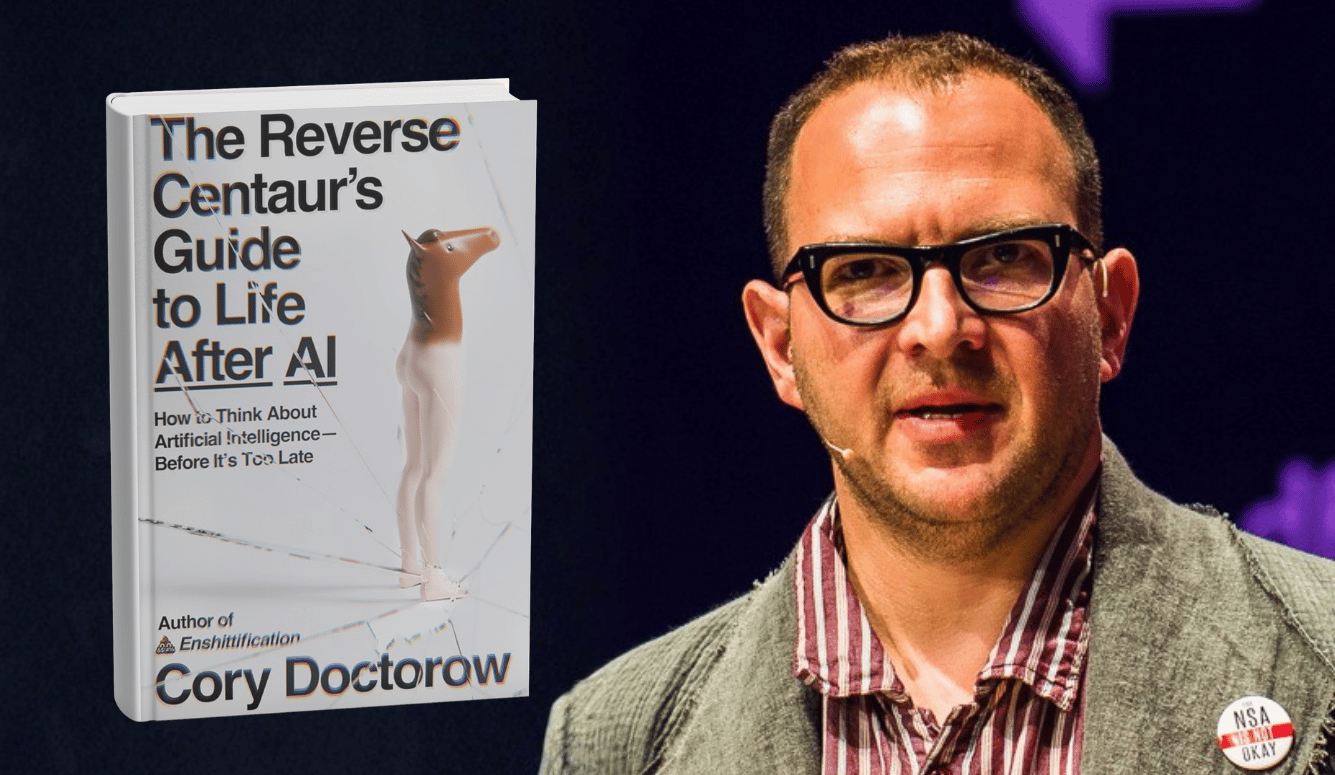
A review of The Reverse Centaur’s Guide to Life after AI by Cory Doctorow; 240 pages; Verso (June 2026)

In late August 2010, I was a senior Obama-appointed official in the office of the Secretary of Veterans Affairs, and I received a message informing me that the secretary wanted to see me right away. These encounters never start well and usually end with someone’s head on a pike. The nerve centre of a 400,000-person agency, that office works on dozens of projects at the same time, and I had no idea which one had just blown up.

VA used to be a non-political and mostly bipartisan place. There were very few things we did, or could do, that had a “D” or an “R” attached to it. There is no better mission in government than providing health services and earned benefits to people who volunteered—and sometimes risked their lives—to serve in uniform. When I beamed myself into the secretarial suite, he was already with another official whose job I can best describe as “don’t let stupid things happen.” Both looked grim. I started doing mortgage recalculations in my head.

A couple of weeks before the secretarial summons, the president had announced that VA was going to make veterans’ health records available to them at “the push of a button.” If a veteran wanted their longitudinal health record—including all prescriptions, lab results, allergies, diagnostic images, and clinical notes—we were going to provide it, in an easy-to-read computer file. No special tools, applications, or extra permissions would be required. This was the genesis of the Blue Button program, which Craig Newmark described as “VA’s gift to the country.”

Today, most people in the United States, and anyone who gets federally provided clinical services, have access to their health records, including members of the armed forces and their families, as well as Medicaid and Medicare beneficiaries. VA was a pioneer in making all this possible. But on that day, in the secretary’s office, the concern was about how this new technology might embarrass the president and cost him votes in the next election.

The core problem was that the assistant secretary for error avoidance was convinced that “nobody thinks this is a good idea.” They had taken an informal poll of stakeholders—without the benefit of a good explanation—and all (uh, six) of the respondents had said they saw no need or purpose for access to their data, so why risk the leak of medical information? I said, “I could go to the park across the street and find six people who think trees are a bad idea. That doesn’t mean we don’t need trees.”

The secretary, of course, was in a bind. The program was about to go live, and all the announcements and press releases and promotions were locked, loaded, fuelled, and ready to launch. Together we hit upon an idea. What if we launched without fanfare? The president had already announced it, of course, but who would remember? Who would care? How would anybody find out? I lunged for the compromise. I knew that our primary stakeholders, the veteran-service organisations like American Legion and Veterans of Foreign Wars, scoured the website every day for changes anyway, and I was confident that someone would find it, whether we promoted it or not. Everybody agreed to move forward.

Within a few days, people were chattering about how they could get their records, bring them to their doctor, or pharmacist, or caregiver, and see things about themselves that they had never seen before. The scheme was a resounding success. The product-release strategy—a kind of manual “screen scrape”—worked like a charm.

In his wonderful new book The Reverse Centaur’s Guide to Life After AI, Cory Doctorow tells us that the most important fact about a technology isn’t what it does, it’s who it does it for, and who it does it to. For veterans, and later for the country, Blue Button was a blow-out win; it helps millions of people manage their care, and it harms nobody. 

Today, of course, screen scrapes that mimic human reading are fully automated, and the robots hoovering up the information are not surveilling for new digital services. They’re indiscriminately looking for any kind of text, regardless of source, quality, veracity, or intent. Indeed, the entire internet is the training ground and the raw material for a new kind of application: large language models or LLMs. 

Doctorow’s evaluation of LLMs has a harsh outcome. Unlike veterans, service-members, and Medicare and Medicaid enrollees, the main beneficiaries of LLMs are a very concentrated group of investors, inventors, and insiders; most of society will suffer dilatory consequences. More distressing, according to Doctorow, are the hapless employees whose jobs, their bosses think, will be replaced by the chatbots. 

Many technologies have an indisputably positive impact. Wireless communications, satellite navigation, and advances in life science, transportation, fixed nitrogen, electric power, and semiconductor devices come to mind. Each of these inevitably carries its own set of liabilities too—from economic displacement to environmental degradation—but only flat-earthers would want to return to an era where we didn’t have GPS, vaccines, air travel, abundant food, and ubiquitous light switches and sockets.

LLMs, on the other hand, suffer three enormous deficits. The first is the perverse disincentive of human employment. The second is that LLMs cannot do what their hucksters say they can do. Consequently, the target customers—businesses that run call centres, for example—think they’re buying expert automation, which is a ChatGPT-class hallucination. Some businesses have already rehired the workers they fired. 


Read the full article here

Fact Checker

Verify the accuracy of this article using AI-powered analysis and real-time sources.

Get Your Fact Check Report

Enter your email to receive detailed fact-checking analysis

5 free reports remaining

Continue with Full Access

You've used your 5 free reports. Sign up for unlimited access!

Already have an account? Sign in here

Share. Facebook Twitter Pinterest LinkedIn Tumblr Email Telegram Copy Link
News Room
  • Website
  • Facebook
  • X (Twitter)
  • Instagram
  • LinkedIn

The FSNN News Room is the voice of our in-house journalists, editors, and researchers. We deliver timely, unbiased reporting at the crossroads of finance, cryptocurrency, and global politics, providing clear, fact-driven analysis free from agendas.

Related Articles

Media & Culture

Trump’s Pernicious Threat to Impose Tariffs on Canada in Response to Wildfires

2 hours ago
Media & Culture

This Week In Techdirt History: July 12th – 18th

4 hours ago
Cryptocurrency & Free Speech Finance

GPT-5.6 vs Fable 5 Review: Which One You Pick Depends on These Factors

8 hours ago
Media & Culture

Today in Supreme Court History: July 17, 1862

9 hours ago
Media & Culture

Europe Requires Cameras in Cars To Monitor Drivers

10 hours ago
Media & Culture

The Hidden Problem With Democrats’ $25 Minimum Wage Bill

11 hours ago
Add A Comment
Leave A Reply Cancel Reply

Editors Picks

France orders country’s internet service providers to block Polymarket

1 hour ago

Trump’s Pernicious Threat to Impose Tariffs on Canada in Response to Wildfires

2 hours ago

This Week In Techdirt History: July 12th – 18th

4 hours ago

The traditional bank account is facing an existential threat from digital wallets

4 hours ago
Latest Posts

DeFi users are missing out on $150 million a year. Here’s why

5 hours ago

DOG Mode explains Bitcoin’s next governance fight

6 hours ago

Trump targets Brazil’s payments system while dollar stablecoins are quietly overtaking country’s payments

7 hours ago

Subscribe to News

Get the latest news and updates directly to your inbox.

At FSNN – Free Speech News Network, we deliver unfiltered reporting and in-depth analysis on the stories that matter most. From breaking headlines to global perspectives, our mission is to keep you informed, empowered, and connected.

FSNN.net is owned and operated by GlobalBoost Media
, an independent media organization dedicated to advancing transparency, free expression, and factual journalism across the digital landscape.

Facebook X (Twitter) Discord Telegram
Latest News

What LLMs Can and Cannot Do

2 minutes ago

France orders country’s internet service providers to block Polymarket

1 hour ago

Trump’s Pernicious Threat to Impose Tariffs on Canada in Response to Wildfires

2 hours ago

Subscribe to Updates

Get the latest news and updates directly to your inbox.

© 2026 GlobalBoost Media. All Rights Reserved.
  • Privacy Policy
  • Terms of Service
  • Our Authors
  • Contact

Type above and press Enter to search. Press Esc to cancel.

🍪

Cookies

We and our selected partners wish to use cookies to collect information about you for functional purposes and statistical marketing. You may not give us your consent for certain purposes by selecting an option and you can withdraw your consent at any time via the cookie icon.

Cookie Preferences

Manage Cookies

Cookies are small text that can be used by websites to make the user experience more efficient. The law states that we may store cookies on your device if they are strictly necessary for the operation of this site. For all other types of cookies, we need your permission. This site uses various types of cookies. Some cookies are placed by third party services that appear on our pages.

Your permission applies to the following domains:

  • https://fsnn.net
Necessary
Necessary cookies help make a website usable by enabling basic functions like page navigation and access to secure areas of the website. The website cannot function properly without these cookies.
Statistic
Statistic cookies help website owners to understand how visitors interact with websites by collecting and reporting information anonymously.
Preferences
Preference cookies enable a website to remember information that changes the way the website behaves or looks, like your preferred language or the region that you are in.
Marketing
Marketing cookies are used to track visitors across websites. The intention is to display ads that are relevant and engaging for the individual user and thereby more valuable for publishers and third party advertisers.