

 Freedom Index
Listen to the article
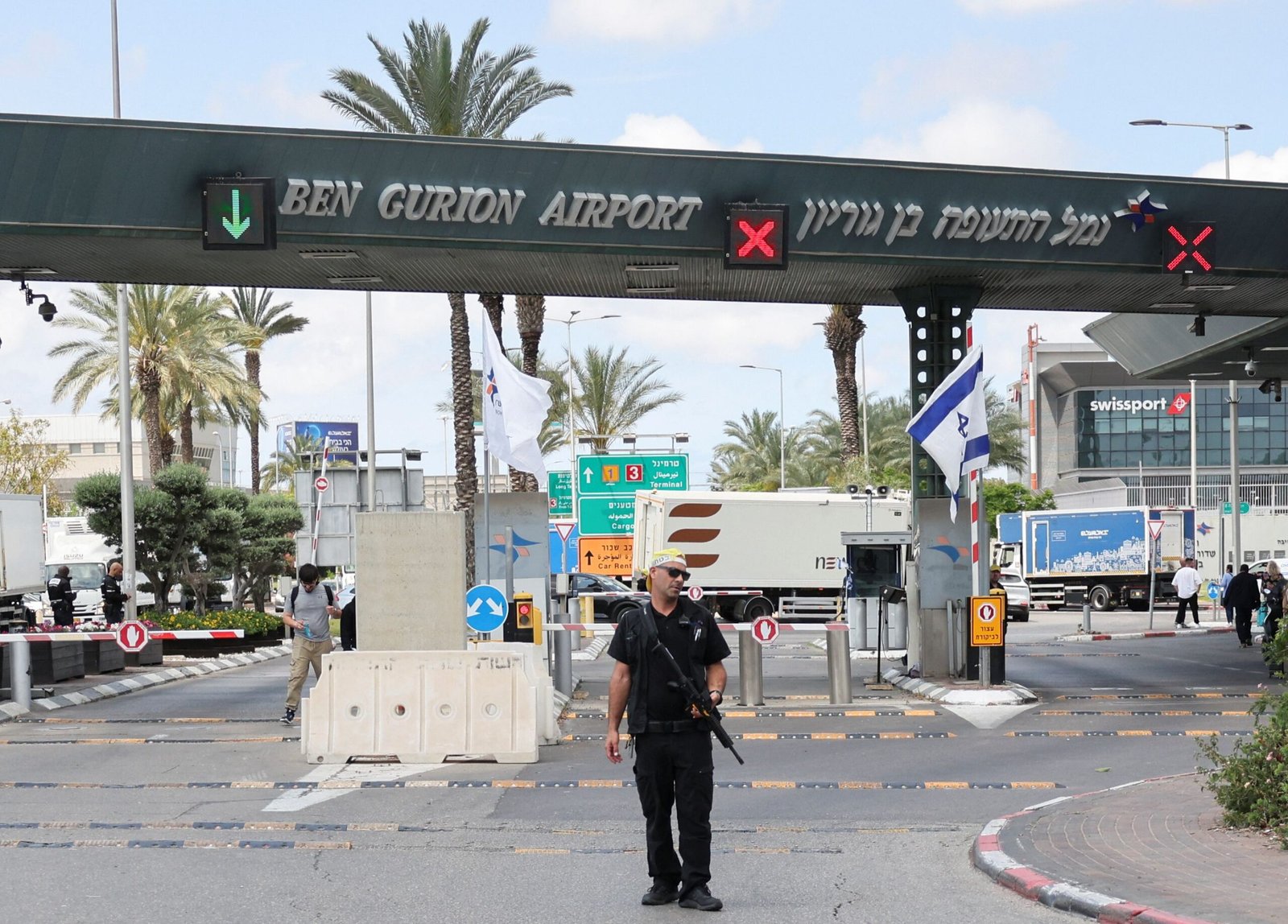
When French journalist Alice Froussard landed at Tel Aviv’s Ben Gurion Airport a week ago, she arrived with a valid travel authorization and plans to report from the occupied West Bank, where she had worked for years. By the next morning, Israeli authorities placed her on a flight back to Paris, denying her entry.
She is among at least six foreign members of the press the Committee to Protect Journalists has documented being barred from entering Israel and the Palestinian territory over the past year, raising concerns about the growing clampdown on journalists whose reporting is critical of the Israeli government.
For two-thirds of the journalists, officials directly cited their reporting or public statements as grounds for the decisions, including their use of terms such as “apartheid” or “genocide” to describe Israeli policies, according to documents seen by CPJ and news reports. The others said they were given little or no explanation but suspect their reporting played a role.
This comes as Israel continues to block foreign journalists from entering Gaza, except on highly controlled embeds with the Israeli military, leaving Palestinian reporters inside the territory to bear the burden of on-the-ground reporting on the war.
On October 5, 2025, CPJ filed an amicus brief in support of the Foreign Press Association (FPA) to Israel’s Supreme Court for unrestricted journalist access to Gaza. Following months of delay on behalf of the court, CPJ, alongside FPA, the Union of Journalists in Israel (UJI), and Reporters Without Borders (RSF), filed an emergency motion on April 13, 2026, asking the Israeli justices to expedite their decision. On June 3, 2026, the state informed the court that it would maintain its ban on unaccompanied entry for foreign and local journalists, citing ongoing security concerns.
“Not only does Israel continue to prevent foreign journalists from independently entering Gaza, it is now openly denying them entry to Israel and the West Bank based on their past reporting, public statements and opinions,” said CPJ Regional Director Sara Qudah. “Citing a journalist’s coverage or commentary as grounds for exclusion raises serious concerns and threatens the fundamental principle of press freedom.”
In the absence of public data, it remains unclear how many foreign journalists Israel has prevented from entering, or deported, and whether the latest cases signal an increase in such actions. However, the following first hand accounts of journalists reveal a worrying truth: journalists’ reporting has become a central focus of border screenings and visa reviews in Israel.
‘Outrageous’ accusations
Froussard’s deportation on June 11 received widespread attention after it was publicly announced by Israeli officials. In a post on X, Israel’s Minister for Diaspora Affairs and Combating Antisemitism Amichai Chikli celebrated the move, accusing Froussard, without evidence, of supporting Hamas and legitimizing the Palestinian militant group’s October 7, 2023 deadly attack on southern Israel.
The Times of Israel and i24News later reported that the decision was based on Froussard’s reported references to the Israeli military’s operations in Gaza as a “massacre” and her accusation that Israel practices apartheid, an allegation that has been made by rights groups including Amnesty International and Human Rights Watch.
According to a statement from Radio France International, the public radio network she worked for, the journalist had the required Electronic Travel Authorization (ETA-IL) – a pre-check document for travelers from visa-exempt countries – and had applied for a press card to report from the Israeli-occupied West Bank.
The FPA slammed the decision to bar Froussard in a statement, describing the accusations against her as “outrageous.”
“This is not the first case in which the Israeli government decides that the journalistic coverage is ‘one-sided’,” the FPA added.
Other journalists describe experiences that closely mirror Froussard’s.
‘One-sided reporting’
Frédérique Le Brun, a French photojournalist, arrived at Ben Gurion Airport in October 2025 intending to spend three weeks reporting on Palestinian farmers’ access to land and water resources in the Jordan Valley. She told CPJ she had obtained an ETA-IL authorisation identifying her as a journalist, and planned to work in Jerusalem and Jericho.
Instead, she said, she was pulled aside for questioning and interrogated for hours about her reporting plans, social media activity, and views on the war in Gaza.
According to Le Brun, officials referred to posts she had shared on X concerning journalists killed in Gaza and media reports alleging genocide in the territory.
“The officers continued aggressively, asking me how I would characterize October 7, 2023, what I thought of the Israeli army, why I was talking about genocide, and so on,” she told CPJ.
They also demanded access to her phone and social media accounts. After several hours, she said, she was informed that she would not be allowed to enter Israel and was deported on the next available flight.
For Alessandro Stefanelli, an Italian freelance journalist and photographer who has been on repeated reporting trips to the West Bank in recent years, the denial of entry began before he even reached Israel, when he received an email in July 2025 from the Israeli Population and Immigration Authority (PIBA) stating that his ETA-IL, which had been valid until January 2027, had been revoked.
Believing he might still be able to enter through the Allenby Bridge crossing from Jordan, he travelled there instead of Tel Aviv. He said Israeli officials interrogated him for approximately five hours before refusing him entry and turning him back.
Later, through an Israeli lawyer, Stefanelli obtained a written explanation from PIBA. The document stated that the decision was based on what authorities described as “one-sided reporting,” specifically referencing his use of the term “apartheid” in articles about the West Bank.
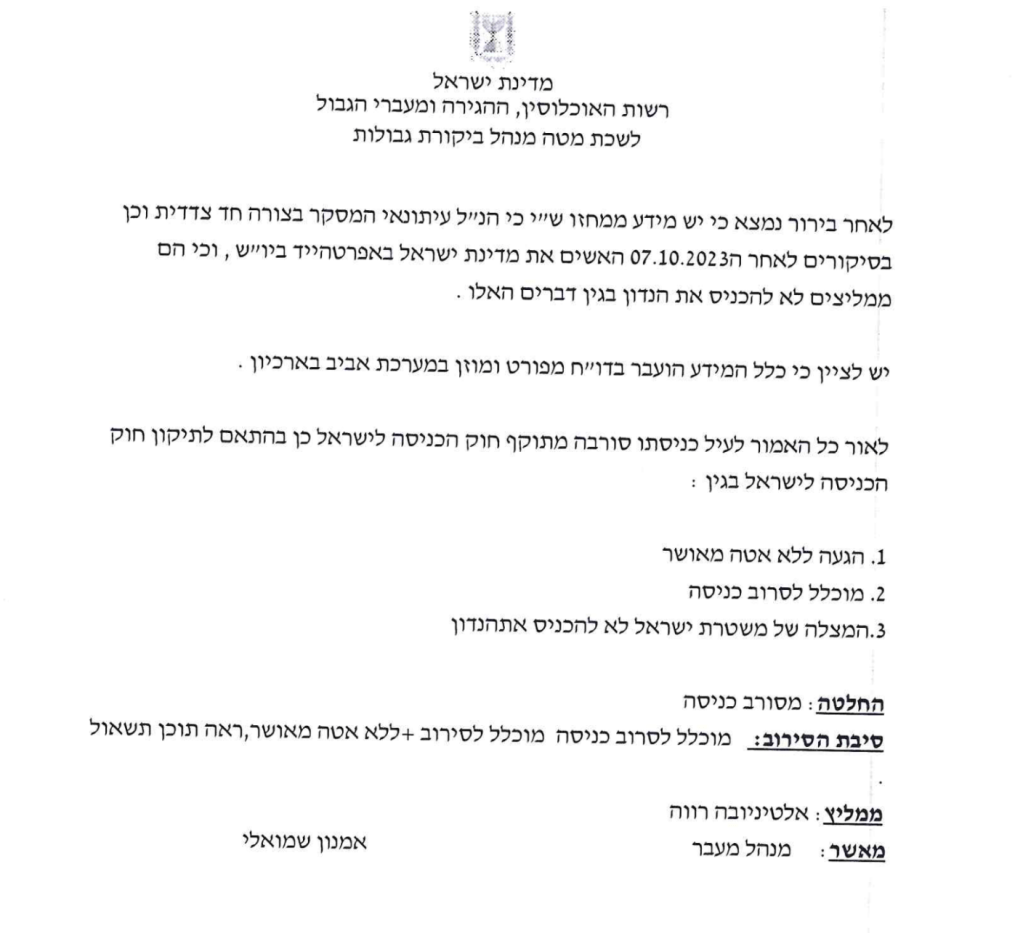
According to Haaretz, a police unit compiled dozens of Stefanelli’s articles, photographs, and social media posts before recommending that he be denied entry.
“I invested two years documenting the West Bank from a human perspective,” Stefanelli said. “People shared their stories with me, and suddenly I disappeared!”
A similar rationale appeared in the case of Queralt Castillo Cerezuela, a Spanish journalist who has reported for El Salto, La Marea, and Condé Nast and whose request for press accreditation was denied in April.
Israeli media reported that her application for press credentials was rejected and that she was barred from entering the country after the Ministry for Diaspora Affairs and Combating Antisemitism alleged that she supported a boycott of Israel and had accused the country of committing genocide.
“I learned that the Ministry of Diaspora Affairs and Combating Antisemitism had circulated a statement on a WhatsApp group for foreign journalists, in which it said that I had been banned,” Castillo Cerezuela told CPJ. “The ministry’s statement accused me of antisemitism, supporting the BDS (Boycott, Divestment, and Sanctions) movement, and using terms such as ‘genocide’ and ‘massacre’ in my reports and comments regarding Gaza.”
‘A change in circumstances’
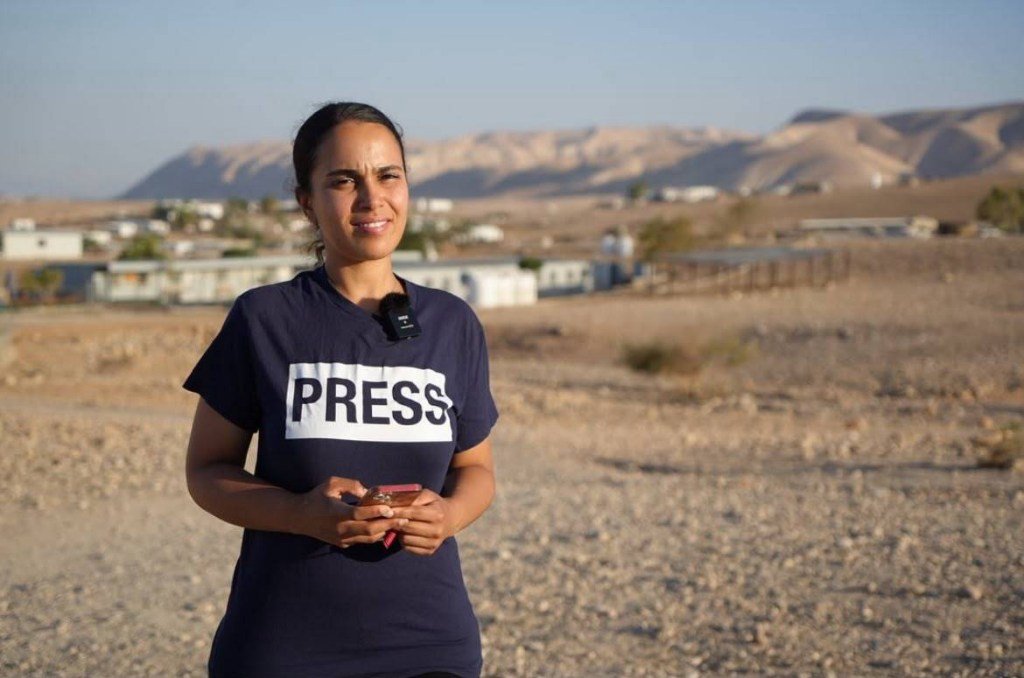
Others say they were never given an explanation at all.
Khadija Toufik, a French freelance reporter whose work has appeared in publications including Libération, Marianne, BLAST and L’Orient XXI, said her ETA-IL authorisation was revoked in January 2026. Like several other journalists interviewed by CPJ, she received only a brief notice citing “a change in circumstances.”
The decision surprised her. Only months earlier, she had held a B2 visa and Government Press Office accreditation allowing her to report from Israel and the occupied Palestinian territories between June and September 2025.
Despite repeated efforts by Toufik and representatives of the International Federation of Journalists to obtain clarification from Israeli authorities, she said they never received a response.
“Working in Israel and Palestine was my main source of freelance work and income,” Toufik told CPJ. “It is almost impossible to report from a distance on these matters.”
Another French journalist, who spoke on condition of anonymity for fear of further repercussions, said she discovered in March 2026 that her ETA-IL authorisation had been revoked after nearly two decades of reporting in the region. The notice cited only “a change in circumstances.”
She suspects the decision may have been linked either to her support for a French collective advocating for journalists in Gaza or to her reporting from the West Bank, though authorities never provided a reason.
The journalist said the revocation effectively severed her access to a region central to her work and a significant source of income.
In response to CPJ’s inquiries, the PIBA said via messaging app: “There is no policy of ‘refusing journalists,’ and there never has been. There is the Entry into Israel Law, according to which we operate, and each case is handled on its own merits.”
PIBA added that cases involving journalists are treated with particular sensitivity but said that “when there is an unequivocal recommendation regarding a particular traveler, even if the person is a journalist, it will be taken into account when they seek to enter Israel.”
CPJ also contacted the Government Press Office (GPO), which said it could not comment on individual cases but that there have been “no changes” to Israel’s visa policy. The GPO added that Israel has the right to deny entry to whomever it chooses, stating: “Sometimes no means no.”
Read the full article here
Fact Checker
Verify the accuracy of this article using AI-powered analysis and real-time sources.