

 Freedom Index
Listen to the article
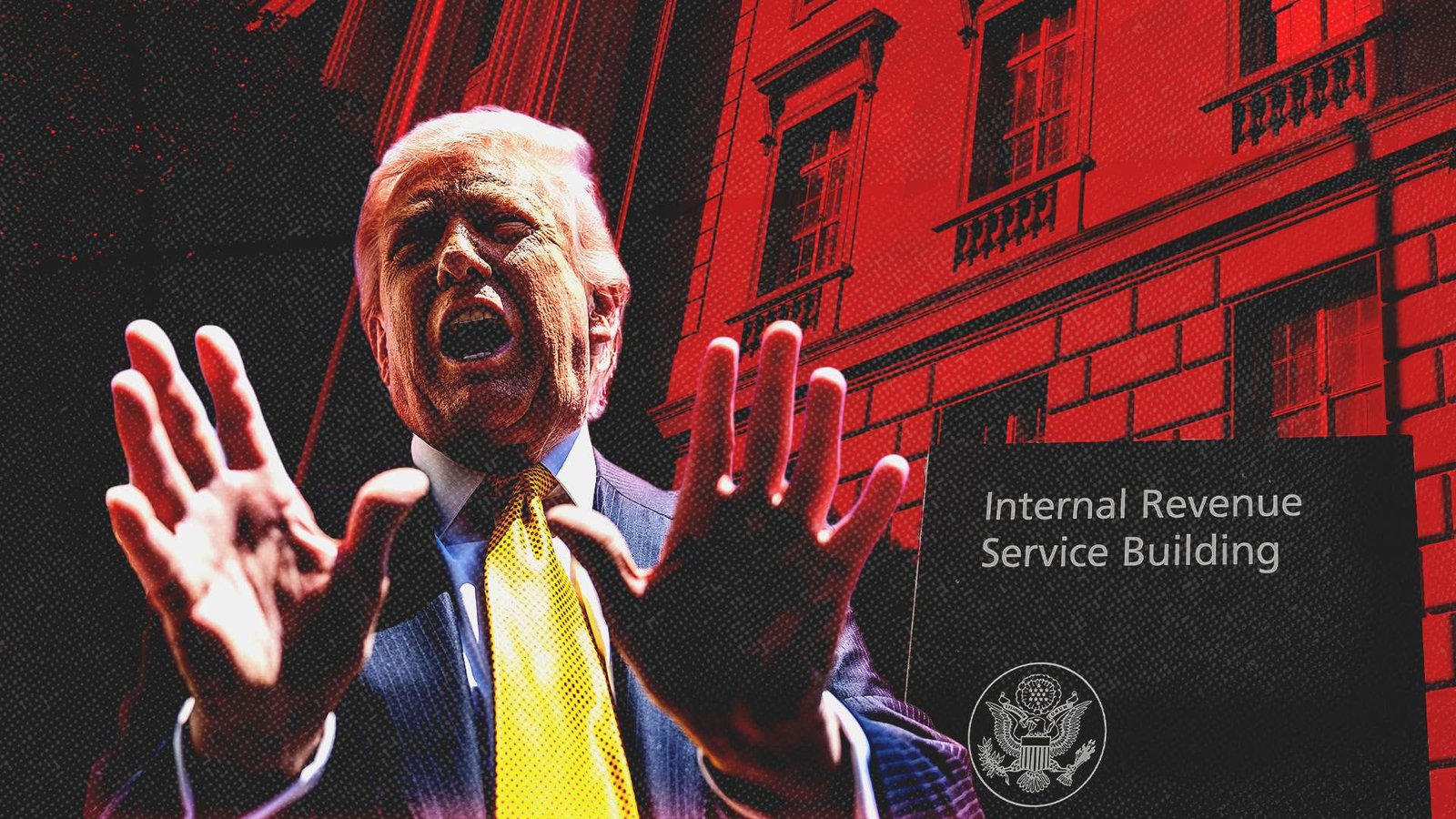
This week, President Donald Trump agreed to drop his lawsuit against the IRS, and in exchange the government would set up a fund for victims of overly aggressive federal law enforcement actions. But the entire affair reeks of corruption, and the money is most likely to become a slush fund for Trump and his cronies.
“The U.S. Department of Justice today announced that as a part of the settlement agreement in President Donald J. Trump v. Internal Revenue Service, the Attorney General established ‘The Anti-Weaponization Fund’ to provide a systematic process to hear and redress claims of others who suffered weaponization and lawfare,” according to a DOJ press release. It would receive $1.776 billion from the Judgment Fund, an intragovernmental account funded by taxpayer money that pays out claims against the government.
“The machinery of government should never be weaponized against any American, and it is this Department’s intention to make right the wrongs that were previously done while ensuring this never happens again,” said Acting Attorney General Todd Blanche. “As part of this settlement, we are setting up a lawful process for victims of lawfare and weaponization to be heard and seek redress.”
The case originated in January, when Trump sued the IRS and the Department of the Treasury. In 2020, The New York Times reported on the contents of Trump’s tax returns, which the authors said “reveal the hollowness, but also the wizardry, behind the self-made-billionaire image.”
According to a 2023 Department of Justice indictment, the Times‘ source was IRS contractor Charles Littlejohn, whom a federal judge later sentenced to five years in prison.
In his lawsuit, Trump sought $10 billion in damages, claiming the IRS “had a duty to safeguard and protect [his] confidential tax returns” and “failed to take…mandatory precautions.”
But this was an awkward ask: As the sitting president, Trump was effectively negotiating on both sides of the table.
“For a lawsuit to be valid, the two parties must actually be on opposite sides; otherwise, the judge can throw out the case,” The New York Times reported last week.
The presiding judge in the case had the same concern. “Although President Trump avers that he is bringing this lawsuit in his personal capacity, he is the sitting president and his named adversaries are entities whose decisions are subject to his direction,” Judge Kathleen Williams of the U.S. District Court for the District of Florida wrote in an order last month. “Accordingly, it is unclear to this Court whether the Parties are sufficiently adverse to each other.”
Williams appointed six attorneys, unrelated to the case, to weigh in. The resulting memo, filed last week, did not make a definitive determination, but its tone was decidedly skeptical.
The attorneys noted that all the principal players involved—the secretary of the Treasury, the attorney general, and the commissioner of the IRS—are appointed by the president, who may fire them at any time. They also noted objections to any sitting president suing his own government, much less one who demands such fealty from his subordinates.
“Since taking office, President Trump has significantly expanded the President’s oversight and control over the Attorney General and DOJ, including in ways that blur the line between fidelity to the President’s policy priorities and fidelity to the President himself,” they wrote. “There is also reason to believe that the President is, in fact, exercising his control over the Defendants in this litigation. President Trump’s own statements suggest that he believes he has control over the Defendants and the DOJ lawyers charged with defending this case.”
As to the merits of the case itself, the attorneys noted that the government had already asserted multiple “substantial defenses” in related litigation. Last year, for example, the government successfully argued that under the doctrine of sovereign immunity, it was not liable for Littlejohn’s actions. In addition, “DOJ has also successfully argued in a related case” that Trump “did not sufficiently plead damages traceable” to a criminal act. Further, Trump’s claims “are based on conduct that occurred more than two years ago” and therefore may be outside the statute of limitations.
Other than the fact that Trump sat on both sides of the negotiating table, there was no reason at all for the government to take the lawsuit seriously, much less settle for nearly $2 billion of taxpayer money.
It seems clear that the settlement was timed to avoid judicial oversight. In her April order, Williams ordered attorneys for both Trump and the government to explain if there was “adverseness” sufficient to justify the court hearing the case. She set a deadline of May 20; the parties announced the settlement just two days before. And in the motion withdrawing his lawsuit, Trump said it “is self-executing, terminates the action upon filing, and divests the district court of jurisdiction,” and further “does not require judicial action.”
The Anti-Weaponization Fund’s most likely beneficiaries are the rioters who stormed the U.S. Capitol on January 6, 2021. Over the following four years, over 1,500 were arrested, and 1,270 were convicted, for attempting to prevent Congress from certifying the election Trump lost. Of the total arrests, 38 percent were charged with assaulting or impeding law enforcement.
Trump vowed that if reelected, he would grant the rioters “full pardons with an apology.” He pardoned the rioters on his first day back in office, wiping away their federal criminal convictions. And this week, the IRS settlement agreement granted the Anti-Weaponization Fund the power to not only “issue monetary relief owed to claimants as a result of their legal rights” but also “to issue formal apologies.”
But it’s also possible that Trump could avail himself of some of that cash. The settlement agreement notes that Trump is still pursuing two other claims against the government, relating to the 2022 raid on his Florida home “and the Russia-collusion hoax throughout his first term as President, and beyond.” If Trump also decides to settle with himself in one of those other cases, there’s no guarantee he won’t seek a portion of the money—which, again, would come from taxpayers.
According to the DOJ, the fund would be administered by five members, with a three-person quorum required for any settlements. But it’s not clear what oversight function this is supposed to serve: The attorney general appoints each member, and the president can remove any of them at any time without cause.
In fact, while it could be beneficial to have a dedicated form of recourse for anyone subjected to selective or vindictive prosecution by the federal government, it’s clear Trump is only interested in rewarding his allies and correcting the perceived wrongs of the Biden administration: The settlement agreement notes that all claims must be received by December 2028, and all funds must be disbursed by January 1, 2029—Trump’s final month in office.
But it’s not as if weaponization is entirely a thing of the past. Right now, Trump’s DOJ is vindictively prosecuting former FBI Director James Comey. After news broke of the Anti-Weaponization Fund, Comey facetiously asked, “Do I get to apply?…If it’s for people who have been targeted for reasons other than the normal standards of the Department of Justice, I’m ready to get in line.”
“I say without hyperbole that this is the most brazenly corrupt action in US Presidential history,” wrote Harvard University government professor Ryan Enos. “That it does not immediately lead to impeachment is a dangerous sign of how far the rule of law has declined.”
It appears that even members of the administration see the potential for abuse: Just hours after the fund was announced, Treasury Department general counsel Brian Morrissey resigned.
Read the full article here
Fact Checker
Verify the accuracy of this article using AI-powered analysis and real-time sources.