

 Freedom Index
Listen to the article
Hello and welcome to another edition of Free Agent! Take a seat and crack open a beer, because summer is here (where I live, anyway).
It’s Sports Week on Capitol Hill, apparently. Typically we try to discuss news happening all across the country or world, but this week all the expected collisions of sports and politics are happening on a small bump of land in Washington, D.C. We’ve got to cover college sports, sports betting, and youth sports, so let’s get to it.
Don’t miss sports coverage from Jason Russell and Reason.
The NCAA has been asking Congress to regulate college sports for over six years now, and was hoping this week would mark a major milestone. The SCORE Act was supposed to come up for a vote in the House of Representatives this week—but just as in December, it was pulled from the floor due to lackluster support.
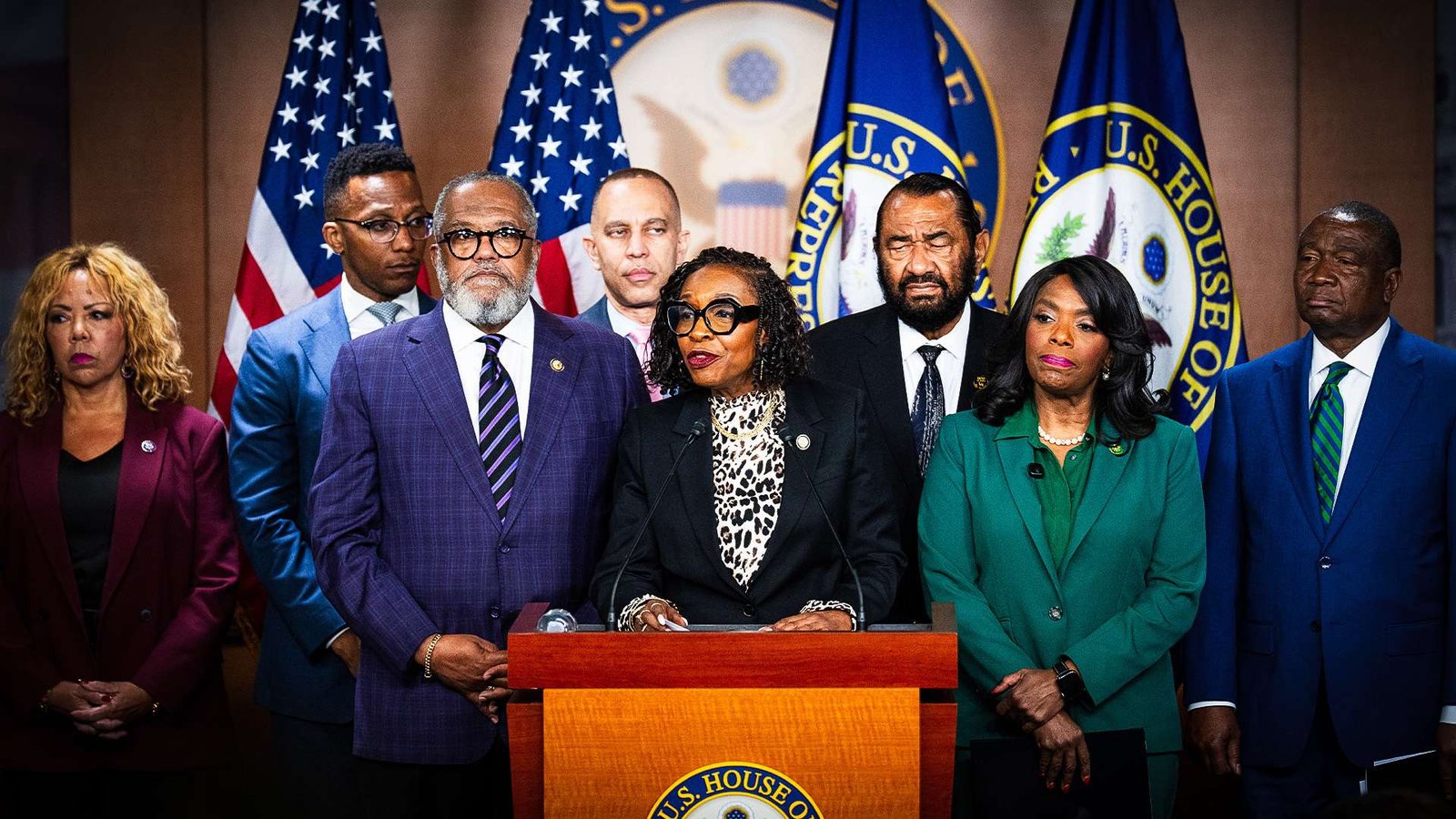
Just a few hours before the vote was postponed indefinitely, the bill apparently hit a major roadblock when the Congressional Black Caucus and its 54 voting members in the House announced unanimous opposition to the SCORE Act—because the SEC, ACC, and NCAA aren’t talking enough about gerrymandering and redistricting. Yes, really.
“The Congressional Black Caucus cannot support legislation benefiting major athletic institutions that continue to remain silent while Black voting rights and Black political power are being systematically dismantled across the South,” their statement said. “The Congressional Black Caucus has transmitted formal letters to SEC Commissioner Greg Sankey, ACC Commissioner James J. Phillips, Ph.D., and NCAA President Charlie Baker demanding immediate engagement and a public response regarding the ongoing assault on Black political representation throughout the South and across the nation.”
To be fair, I am no fan of the tit-for-tat gerrymandering that both sides of the aisle have been doing for the past year. But that wouldn’t affect my opinion on a completely unrelated bill to reform college sports.
The SCORE Act would not upend college sports as we know them—your alma mater’s teams would still stink, sorry. Some of the status quo would be solidified, especially on rules governing name, image, and likeness (NIL) payments. Athletes would not be classified as employees, and thus not eligible for collective bargaining. Transfers would be modestly restricted, but not by much: Athletes would have to spend an entire academic year at their school before transferring. Eligibility rules would be tightened: Anyone who’s ever gone pro would be unable to return to Division I sports (perhaps former G-Leaguer R.J. Luis will sneak in), and general eligibility would be capped at five years, based on age (the age aspect could upend college hockey as an NHL pipeline).
The NCAA is hoping this legislation will pass because various court decisions over the last decade basically told them the old ways the NCAA wanted to run college sports were illegal. Transfer restrictions? Illegal. Eligibility rules? Illegal. Even if Congress thinks the SCORE Act would settle these questions once and for all, it’s just going to lead to more lawsuits (billable hours remain undefeated). What’s awkward is that the NCAA has spent the last few weeks making decisions that are unpopular with their fans—namely, playoff expansion in basketball and football. But maybe that’s part of the point: The more broken the NCAA looks, the more people might clamor for legislation that will, supposedly, fix it.
For the time being, though, the SCORE Act isn’t going anywhere. The good news for the NCAA is that there’s a bipartisan bill rumored to be in the works by Sens. Ted Cruz (R–Texas) and Maria Cantwell (D–Wash.). The contents of that rumored Senate bill are unclear, but according to CBS Sports, it will try to implement a stricter cap on NIL payments per school. That would be at least the fourth bill in the Senate that attempts to fix the NCAA, including one earlier, more narrow bipartisan effort involving Cantwell.
Anything is possible, even on Capitol Hill, and there’s plenty of energy behind a just do something! attitude on college sports. But things move slowly in Congress, and come January 1, bills expire and new members come into town with their own ideas of how things should go. The NCAA is running out of time for congressional help, and, of all things, its deafening “silence” on gerrymandering appears to be a new obstacle.
Meanwhile, the Senate Subcommittee on Consumer Protection, Technology, and Data Privacy is holding a hearing on Wednesday morning, entitled “No Sure Bets: Protecting Sports Integrity in America.” (You can watch here, but this is not going to be the real game of the week.) Based on its name, it seems safe to assume just do something! will be the prevailing mood of the hearing.
The hearing is inspired by the recent game-fixing scandals in American sports—most notably the scandals involving NBA player Terry Rozier and MLB pitcher Emmanuel Clase, which were detected and resulted in federal charges. The witnesses include the head of the American Gaming Association (pro–sports betting, anti–prediction markets), a former GOP congressman who’s now a “senior advisor” to The Coalition for Prediction Markets, a gambling counselor who says there’s a gambling “public health crisis,” the head of Tennessee’s sports betting regulator, and the co-CEO of Integrity Compliance 360 (a company that flags suspicious bets for possible match-fixing or insider trading).
The hearing might not result in any kind of legislation—it may just be yet another chance for politicians to get on camera and get a soundbite in on whatever their opinion may be.
Admittedly, I have not been personally exposed to the alleged evils of private equity in youth sports, although I’ve seen stories about changes that have made me think “I would probably not want to give that organization my money anymore.” Sen. Chris Murphy (D–Conn.) and Rep. Chris Deluzio (D–Pa.) have a new bill to make sure no one can give any money to private equity in youth sports, because the bill would ban private equity firms from getting involved in youth sports in almost any way: leagues, facilities, tournaments, and player platforms (which leaves equipment and uniforms, I guess). Private equity would have two years to get out of youth sports.
The private equity firms, naturally, say they’re saving leagues and venues from closing altogether, while parents say they’re getting hit with higher costs and more restrictive rules. “We are growing youth hockey at four times the national rate, providing free and low-cost programs and letting more kids play by saving and revitalizing ice rinks,” a spokesperson for Black Bear, a private firm that runs youth hockey leagues and tournaments, told USA Today. Murphy’s son plays in a Black Bear-run league, which sounds awkward for everyone involved.
Private equity makes for an easy bogeyman, especially in a sacred space like youth sports. But parents who are perturbed by what my friend Timothy P. Carney calls the “travel team trap” are always free to exit instead. Kids should play sports as long as they’re having fun, and as long as their parents are having fun instead of thinking about the cost. Parenting is hard—kids and parents are never going to get everything they want. A ban on private equity in youth sports isn’t going to solve all the problems.
The only guarantees in life are death, taxes, and the New York Yankees fumbling away 5–10 important games a year because of bad fielding.
METS WALK OFF THE YANKEES TO TAKE THE SERIES pic.twitter.com/XLHEsks7TH
— Talkin’ Baseball (@TalkinBaseball_) May 17, 2026
That’s all for this week. Enjoy watching the real event of the weekend, the Enhanced Games (streaming all evening long on Sunday, with the main events starting at 9 p.m. Eastern).
Read the full article here
Fact Checker
Verify the accuracy of this article using AI-powered analysis and real-time sources.