Close Menu
FSNN | Free Speech News NetworkFSNN | Free Speech News Network
  • Home
  • News
    • Politics
    • Legal & Courts
    • Tech & Big Tech
    • Campus & Education
    • Media & Culture
    • Global Free Speech
  • Opinions
    • Debates
  • Video/Live
  • Community
  • Freedom Index
  • About
    • Mission
    • Contact
    • Support
Trending

Fidelity Defends Bitcoin’s Long-Term Security Model

2 hours ago

Federalist Society Courthouse Steps Podcast on Pung v. Isabella County Takings Case

2 hours ago

50K BTC Flow Adds Pressure To Bitcoin Price: Will The Sell-off Deepen?

3 hours ago
Facebook X (Twitter) Instagram
Facebook X (Twitter) Discord Telegram
FSNN | Free Speech News NetworkFSNN | Free Speech News Network
Market Data Newsletter
Saturday, June 27
  • Home
  • News
    • Politics
    • Legal & Courts
    • Tech & Big Tech
    • Campus & Education
    • Media & Culture
    • Global Free Speech
  • Opinions
    • Debates
  • Video/Live
  • Community
  • Freedom Index
  • About
    • Mission
    • Contact
    • Support
FSNN | Free Speech News NetworkFSNN | Free Speech News Network
Home»News»Global Free Speech»Senegal rebel leader rejects prosecution claims against journalist René Capain Bassène
Global Free Speech

Senegal rebel leader rejects prosecution claims against journalist René Capain Bassène

News RoomBy News Room2 months agoNo Comments8 Mins Read1,925 Views
Share Facebook Twitter Pinterest Copy Link LinkedIn Tumblr Email VKontakte Telegram
Senegal rebel leader rejects prosecution claims against journalist René Capain Bassène
Share
Facebook Twitter Pinterest Email Copy Link

Listen to the article

0:00
0:00

Key Takeaways

Playback Speed

Select a Voice

A key Senegalese rebel leader, César Atoute Badiate, has broken his silence on jailed journalist René Capain Bassène, refuting the prosecution’s claim that Bassène was a militant fighting for independence of the Casamance region who incited him to murder 14 illegal loggers in 2018. 

“René Capain Bassène is neither an MFDC representative nor a leader to give me orders [to kill],” said Badiate, who heads one of the main factions of the separatist Movement of Democratic Forces of Casamance (MFDC), in his first public statement about the case.

“He was neither a member nor a spokesman for the MFDC. I knew him as a journalist and writer,” he wrote to CPJ in March, from exile in neighboring Guinea-Bissau where he is negotiating a peace deal with Senegalese authorities.  

A former U.S. envoy to the Casamance, Mark Boulware, also expressed shock that “a real journalist” with deep knowledge about one of Africa’s longest running armed conflicts was handed down a life sentence, while a respected local academic, Paul Diédhiou, told CPJ that Bassène had been a “victim of demonization” in the media, even though his balanced reporting was crucial in documenting Senegal’s history.

One of Senegal’s worst miscarriages of justice

René Capain Bassène’s wife, Odette Victorine Coly, holds a banner requesting a presidential pardon for the journalist during President Bassirou Diomaye Diakhar Faye’s visit to Ziguinchor in December 2025. The banner reads, “Presidential pardon for René Capain Bassène.” (Photo: Courtesy of René Capain Bassène’s family)

CPJ regards Bassène’s prosecution as one of Senegal’s worst miscarriages of justice, where a journalist and author, who has devoted his life to understanding and ending the conflict, is in jail for a crime he could never have committed. 

On June 13, 2022, a Casamance court found Bassène guilty of complicity in murder, attempted murder, and criminal association for the execution of 14 men illegally collecting wood in the protected Bayottes forest, near Ziguinchor, Casamance’s largest town.

CPJ’s podcast presents extensive new evidence about Bassène’s conviction, including interviews with several former co-defendants — all acquitted in 2022 — who said they were forced, through beatings and electric shocks, to falsely implicate Bassène. It raises serious questions about the integrity of a case that has become one of West Africa’s most emblematic press freedom concerns. 

Listen to the podcast René Capain Bassène, wrongly convicted, which examines the journalist’s life, career, and trial, through the voices of those involved. 

CPJ’s 2025 investigation also revealed significant flaws in the trial, with some witnesses who didn’t even know Bassène signing transcripts of interviews that had been altered to include inaccurate information, doubts about emails allegedly sent from the journalist’s account, and the geolocation of his phone at the time of the murders remains disputed. 

Four people told CPJ they saw Bassène in Ziguinchor on the afternoon of the killings, one of whom said they watched a football match together. Bassène also told CPJ that he was stripped naked, beaten until he lost hearing in one ear, and electrocuted on the genitals during questioning. 

Despite this, the Supreme Court upheld Bassène’s life sentence.

“Enough is enough,” said Bassène’s wife, Odette Victorine Coly, who has raised their four children alone since 2018. “His children need their father’s love … His unjust detention has gone on for far too long.”

Sign CPJ’s petition calling on Senegal’s President Bassirou Diomaye Diakhar Faye to right a monumental miscarriage of justice by releasing Bassène here.

A leading expert in Casamance conflict
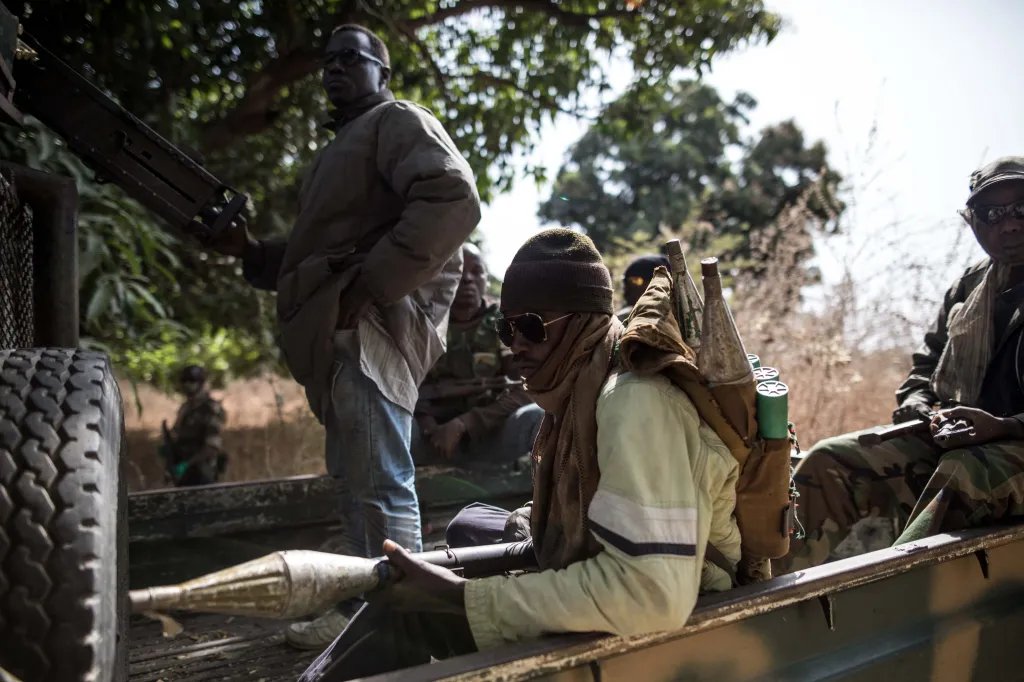
Separatists belonging to the Movement of Democratic Forces of Casamance (MFDC) arrive ahead of the release of seven captured Senegalese soldiers at an abandoned settlement, Baipal in Gambia on February 14, 2022. Separatist rebels from Senegal's southern Casamance region on Monday handed over seven Senegalese soldiers whom they had captured three weeks ago, AFP reporters saw, demanding nothing in return.
MFDC rebels arrive in Gambia in 2022 to hand over seven Senegalese soldiers whom they had captured three weeks earlier. (Photo: AFP/ Muhamadou Bittaye)

Bassène is a leading expert in the Casamance conflict, which began in 1982 amid longstanding grievances over marginalization. Bassène’s interest in the uprising was personal: his family was displaced from their village on the frontline.

Through hundreds of interviews with separatists and soldiers alike, and across three books, Bassène shed light on the roots and drivers of the conflict.

In his message to CPJ, Badiate recalled that Bassène had interviewed him for a radio show, “Carrefour de la paix” (Crossroads of peace), on local Zig FM, which focuses on resolving the conflict — one of many encounters between the two men.
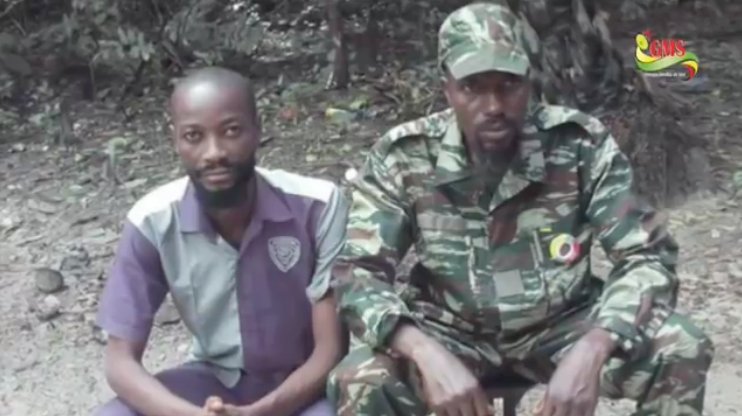
MFDC leader César Atoute Badiate (right) is seen in an undated photo.
MFDC leader César Atoute Badiate (right) is seen in an undated photo. (Screenshot: Groupe Médias du Sud/YouTube)

While Bassène has spent the last eight years behind bars, Badiate has met freely with Senegalese authorities. Despite an international arrest warrant for his 2022 conviction in absentia on the same charges, Badiate met government officials to sign a peace agreement in August 2022 and a follow-up seven-point plan in February 2025.

“His absence, facilitated by Senegal’s unwillingness to bring him to trial, deprived me of a unique opportunity to prove my innocence,” Bassène told CPJ from his prison in Senegal’s capital, Dakar.

The MFDC has denied involvement in the massacre — one of the most violent incidents since the signing of peace deals in 2004 and 2014 — for which no group has claimed responsibility.

MFDC members Louis Tendeng and Samba Goudiaby, who introduced Bassène to Badiate, also told CPJ that the journalist never belonged to the movement. Instead, he sought their help in interviewing MFDC members as part of his research.

Boulware: ‘I never felt him taking sides’

Ambassador Boulware, a career diplomat appointed in 2014 by the Obama administration as a special representative for Casamance, described Bassène as an “invaluable resource” in his work to bolster the peace process.
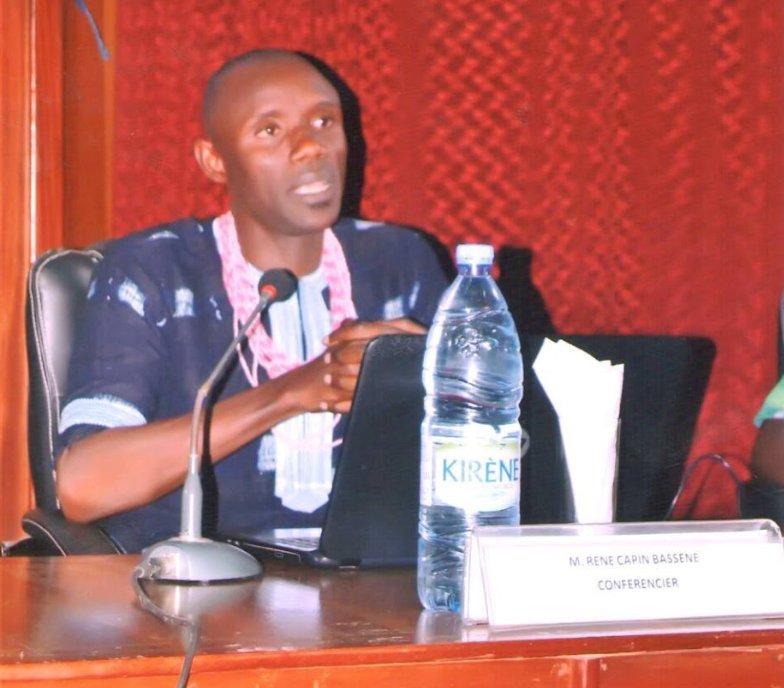
René Capain Bassène speaks at a conference in this undated photo.
René Capain Bassène speaks at a conference in this undated photo. (Photo: Courtesy of René Capain Bassène’s family)

“René was completely independent, a real journalist who wanted to describe what he saw and inform the public about the stakes of the conflict. I never felt him taking sides,” he told CPJ. “He was among the most informed about the conflict, with a perfect mastery of the actors and the different issues … The accusation of being the mastermind of such an operation seemed laughable to me. It didn’t make sense.”

Similarly, Diédhiou, a professor of sociology at the University of Ziguinchor, told CPJ that the smearing of Bassène’s reputation after his arrest was completely unjustified.   

“It is regrettable because he was the victim of demonization in the media. He was highly objective; when you read his work, it is impossible to say that he favors one side over another,” said Diédhiou. “René’s work — and I hope he is continuing to write from where he is — is part of Senegal’s history, which will disappear if these testimonies are not preserved.”

Bassène’s 2013 book profiled the rebellion’s late founder Augustin Diamacoune Senghor, while his second included testimonies from over 200 local people, from fighters to civilians. His third book, “Casamance: When will there be peace?,” published in 2017, highlighted the intransigence of both government and rebel negotiating positions. 

“His works helped me a lot because I had sketched in my work the rarely studied problem of the individual motivations of the rebels. This is a blind spot in academic research that René has tried to highlight,” said Diédhiou.

Bassène: ‘My life is under greater threat than ever’
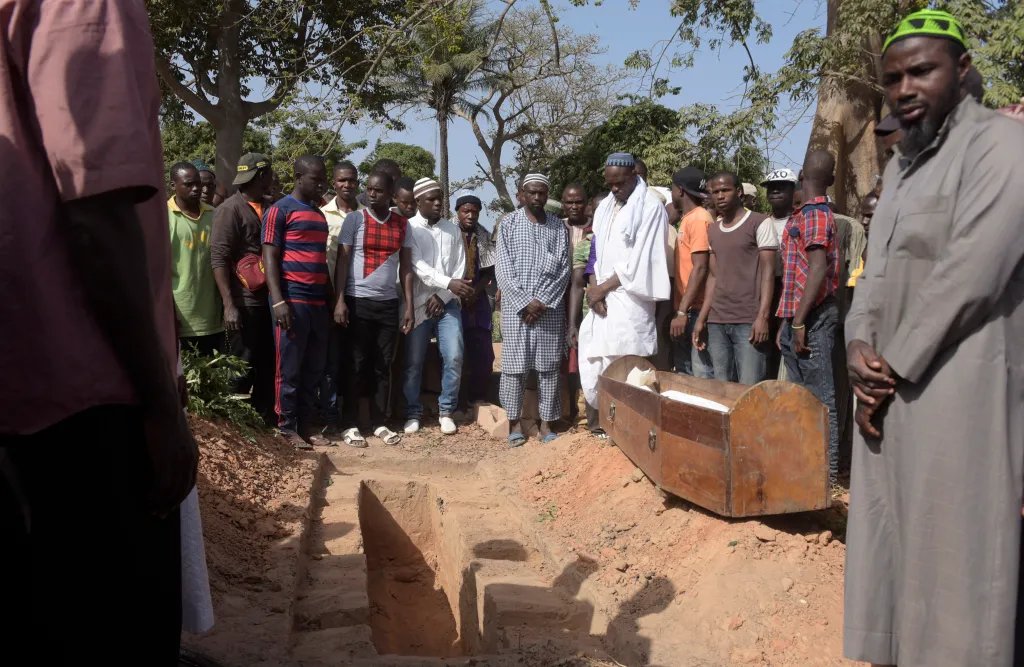
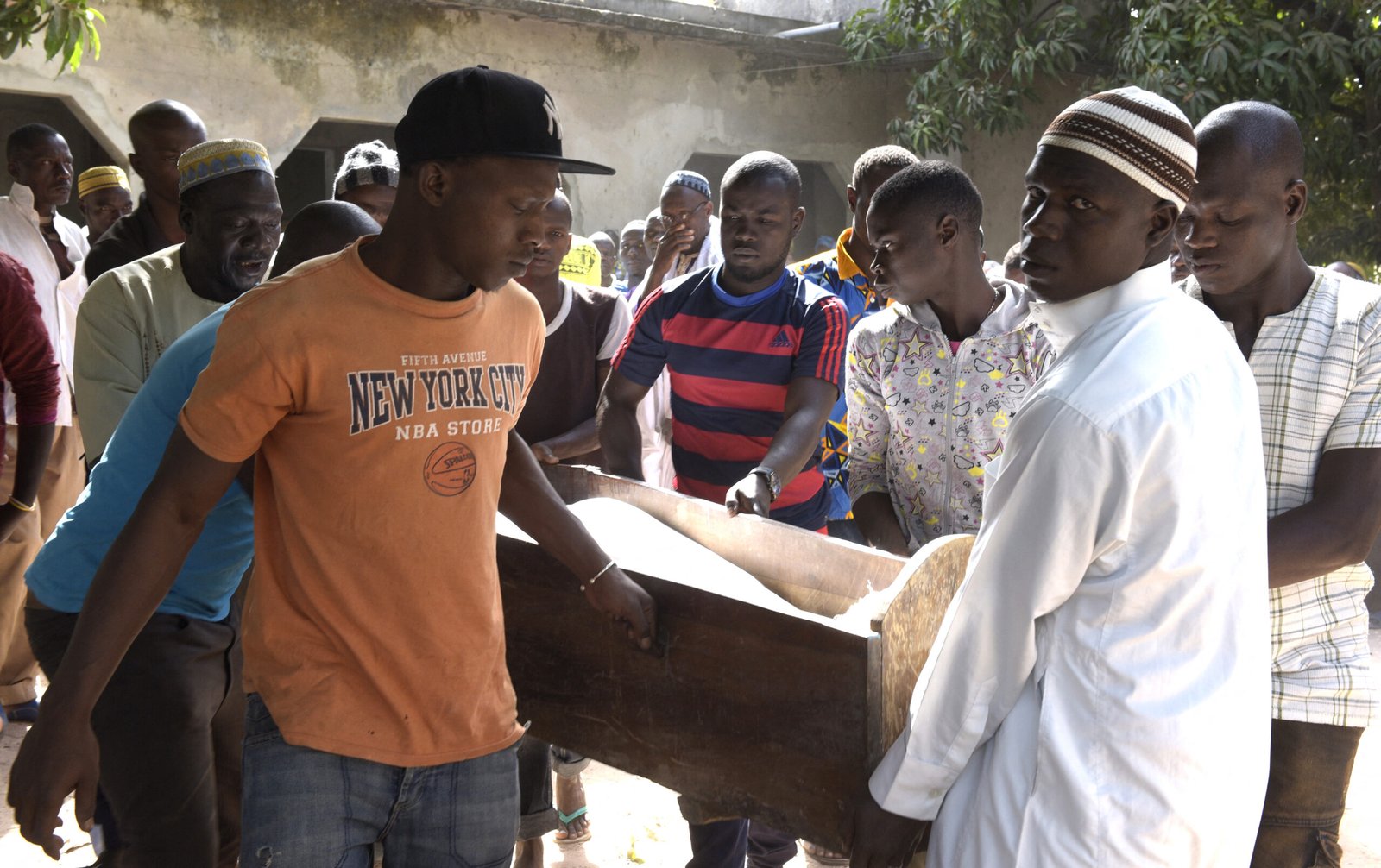
Men pray next to a coffin during a burial in a cemetery in the regional capital Ziguinchor, southern Senegal on January 7, 2018 following an attack by armed men in the Bayotte forest. A ministerial fact-finding mission was headed to Casamance in southern Senegal on January 7, after 13 youths were killed in the first upsurge in violence in the isolated region in years. The youths were collecting wood in the Bayotte forest, 20 kilometres (12 miles) from the regional capital Ziguinchor, "when they were attacked by an armed band of 15 people", army spokesman Abdou Ndiaye told AFP. A source in Ziguinchor said that 13 were killed and two were able to escape, with Ndiaye adding that seven others were injured in the attack. (Photo by SEYLLOU / AFP)
Men pray next to a coffin in Ziguinchor on January 7, 2018, following the forest attack that Bassène was accused of masterminding. (Photo: AFP/ Seyllou)

In the introduction to his 2017 book, Bassène revealed that he was facing intensifying threats. 

“Since 2004, I have hesitated to include, in my various writings and statements, certain facts related to the war,” he wrote. “But now that my life is under greater threat than ever from all sides, I have no choice but to publish certain accounts,” he said, referring to a section of the book detailing violent abuses against civilians.

Such reputational attacks are common to local war reporters whose work challenges official narratives. 

Ibrahima Gassama, presenter of the Zig FM show where Bassène once interviewed Badiate, has also been harassed for trying to report the story fairly from all sides. He was one of six journalists working for Sud FM who were detained in 2005 after broadcasting an interview with an MFDC leader.

“Covering the conflict is like being between a rock and a hard place, especially for us who are on the ground in Ziguinchor, watched as much by the army as by the MFDC,” said Gassama, who regularly invited Bassène on the show and said they carried out “journalistic missions together” to the field. 

CPJ’s letters requesting comment from the gendarmerie and Defense Minister Birame Diop’s offices in mid-April, as well as text messages and phone calls to presidential spokesperson, Ousseynou Ly, and government spokesperson, Marie Rose Khady Fatou Faye, did not receive any replies.

Read the full article here

Fact Checker

Verify the accuracy of this article using AI-powered analysis and real-time sources.

Get Your Fact Check Report

Enter your email to receive detailed fact-checking analysis

5 free reports remaining

Continue with Full Access

You've used your 5 free reports. Sign up for unlimited access!

Already have an account? Sign in here

Share. Facebook Twitter Pinterest LinkedIn Tumblr Email Telegram Copy Link
News Room
  • Website
  • Facebook
  • X (Twitter)
  • Instagram
  • LinkedIn

The FSNN News Room is the voice of our in-house journalists, editors, and researchers. We deliver timely, unbiased reporting at the crossroads of finance, cryptocurrency, and global politics, providing clear, fact-driven analysis free from agendas.

Related Articles

Global Free Speech

Belarus jails journalist Kyril Pazniak for 3.5 years 

1 day ago
Global Free Speech

CPJ, partners express urgent concern to NATO over press accreditation denial for Turkey summit in July

1 day ago
Global Free Speech

The high price journalists paid for LGBTQ+ reporting, and how to protect yourself now

1 day ago
Global Free Speech

Al-Arabiya correspondent killed by car bomb in Yemen

1 day ago
Global Free Speech

CPJ, partners call on EU to review approach toward Tunisia amid critical human rights decline

1 day ago
Global Free Speech

Photo by: Stephen Barnes/Medical/Alamy UK news this week is dominated by a damning report led by senior midwife Donna Ockenden that reveals how more than 500 mothers and babies were harmed or died at maternity units in Nottingham. This isn’t the first scandal Ockenden has investigated. A few years back terrible failings were revealed in Shropshire hospitals run by the Shrewsbury and Telford NHS Trust where 201 babies and nine mothers died.  We spoke to Ockenden for the magazine and she repeated this: “women aren’t listened to”. Another common thread was cover-up. Secrecy is not a one-off, it’s a pattern, wrote Martin Bright when he reported on the Shropshire scandal for Index. As Bright said, “this is not a historical story; it is an ongoing crisis”. Maternity scandals happen not only in Britain but all over the world. Last year’s protests in Morocco were ignited after eight women died in a maternity ward in Agadir because of severe medical neglect. In Egypt last week Omnia Sweidan, a former resident physician in obstetrics and gynaecology at Alexandria’s El-Shatby University Hospital, wrote a Facebook post detailing a series of abusive incidents faced by women at Alexandria’s Al-Shatby Hospital. It was read and shared by tens of thousands. Within 24 hours of posting, instead of the government declaring an investigation, security forces arrested Sweidan. While she was apparently later released, she’s been accused of spreading false news and misusing social media. She could end up in jail. Meanwhile, Afghanistan has one of the highest maternal mortality rates in the world – the figures of deaths and injuries are rising, but to what no one really knows. The Taliban won’t publish the data, probably to cover-up the true numbers. I’ve navigated maternity services myself in the UK. I’ve generally had good experiences and I’m very grateful to the NHS. But my experiences have not been uncomplicated – my daughter very nearly died. What saved her, I’ve been told, were a few factors – my race (white), my class (middle), where I live (London) and the fact that I relentlessly badgered those at my local hospital for weeks on end saying things didn’t feel right. Let me be clear here though: one shouldn’t have to be a dogged white Londoner to get good medical care. And a recent health committee report revealed terrible inequalities faced by people who are members of ethnic minorities, stating that “[B]abies that are Black or Black British Asian or Asian British have a more than 50% higher risk of perinatal mortality”. At Index we typically work on stories where dissidents take on the powerful: leaders, oligarchs and tech bros. The victims of maternity care scandals might not appear the same. But there is much that unites them. At the end of the day if the response you get from a doctor or nurse to a basic medical request is a shrug or a sneer, your free speech is being violated. If the systems view calls for accountability as dissent that must be silenced, then they are censoring. We grew up being told we’re lucky, that childbirth was one of the leading causes of death before the advent of modern medicine. For many of us that’s true. Just not all of us. That’s a travesty demanding urgent attention – in Nottingham and beyond. READ MORE

1 day ago
Add A Comment

Comments are closed.

Editors Picks

Federalist Society Courthouse Steps Podcast on Pung v. Isabella County Takings Case

2 hours ago

50K BTC Flow Adds Pressure To Bitcoin Price: Will The Sell-off Deepen?

3 hours ago

This Week In Techdirt History: June 21st – 27th

3 hours ago

Why a selloff in gold and silver is dragging bitcoin down

4 hours ago
Latest Posts

Yuma Launches Bittensor AI Fund for Institutional Investors

4 hours ago

Coinbase and OKX try to lure in Binance’s users after it failed to secure a MiCA license

5 hours ago

The Stablecoin Founder Map Doesn’t Match the Stablecoin Volume Map

5 hours ago

Subscribe to News

Get the latest news and updates directly to your inbox.

At FSNN – Free Speech News Network, we deliver unfiltered reporting and in-depth analysis on the stories that matter most. From breaking headlines to global perspectives, our mission is to keep you informed, empowered, and connected.

FSNN.net is owned and operated by GlobalBoost Media
, an independent media organization dedicated to advancing transparency, free expression, and factual journalism across the digital landscape.

Facebook X (Twitter) Discord Telegram
Latest News

Fidelity Defends Bitcoin’s Long-Term Security Model

2 hours ago

Federalist Society Courthouse Steps Podcast on Pung v. Isabella County Takings Case

2 hours ago

50K BTC Flow Adds Pressure To Bitcoin Price: Will The Sell-off Deepen?

3 hours ago

Subscribe to Updates

Get the latest news and updates directly to your inbox.

© 2026 GlobalBoost Media. All Rights Reserved.
  • Privacy Policy
  • Terms of Service
  • Our Authors
  • Contact

Type above and press Enter to search. Press Esc to cancel.

🍪

Cookies

We and our selected partners wish to use cookies to collect information about you for functional purposes and statistical marketing. You may not give us your consent for certain purposes by selecting an option and you can withdraw your consent at any time via the cookie icon.

Cookie Preferences

Manage Cookies

Cookies are small text that can be used by websites to make the user experience more efficient. The law states that we may store cookies on your device if they are strictly necessary for the operation of this site. For all other types of cookies, we need your permission. This site uses various types of cookies. Some cookies are placed by third party services that appear on our pages.

Your permission applies to the following domains:

  • https://fsnn.net
Necessary
Necessary cookies help make a website usable by enabling basic functions like page navigation and access to secure areas of the website. The website cannot function properly without these cookies.
Statistic
Statistic cookies help website owners to understand how visitors interact with websites by collecting and reporting information anonymously.
Preferences
Preference cookies enable a website to remember information that changes the way the website behaves or looks, like your preferred language or the region that you are in.
Marketing
Marketing cookies are used to track visitors across websites. The intention is to display ads that are relevant and engaging for the individual user and thereby more valuable for publishers and third party advertisers.