Close Menu
FSNN | Free Speech News NetworkFSNN | Free Speech News Network
  • Home
  • News
    • Politics
    • Legal & Courts
    • Tech & Big Tech
    • Campus & Education
    • Media & Culture
    • Global Free Speech
  • Opinions
    • Debates
  • Video/Live
  • Community
  • Freedom Index
  • About
    • Mission
    • Contact
    • Support
Trending

Iran Crypto Exchange Nobitex Tied to Kharrazi Family, Reuters Finds

1 minute ago

Today in Supreme Court History: May 3, 1802

37 minutes ago

Civilians Across the Middle East React to the Iran War: ‘A Fear That Settles in Your Heart’

2 hours ago
Facebook X (Twitter) Instagram
Facebook X (Twitter) Discord Telegram
FSNN | Free Speech News NetworkFSNN | Free Speech News Network
Market Data Newsletter
Sunday, May 3
  • Home
  • News
    • Politics
    • Legal & Courts
    • Tech & Big Tech
    • Campus & Education
    • Media & Culture
    • Global Free Speech
  • Opinions
    • Debates
  • Video/Live
  • Community
  • Freedom Index
  • About
    • Mission
    • Contact
    • Support
FSNN | Free Speech News NetworkFSNN | Free Speech News Network
Home»News»Global Free Speech»Human rights defenders Rahima Mahmut, Zahra Joya and Olga Borisova spoke to UK parliamentarians on why end-to-end encryption is essential for safe, private communication To mark World Privacy Day this year (28 January 2026), Index on Censorship invited extraordinary human rights activists to share their experiences of the importance of encrypted apps at an event sponsored by former cabinet minister Louise Haigh MP. A number of members of parliament took part in the discussion. Among the speakers were Uyghur activist Rahima Mahmut and ex-Pussy Riot member Olga Borisova. They both told us why encryption is not a nice-to-have. It is essential to their lives and work. End-to-end encryption has been designated a risk factor by Ofcom as part of their role in implementing the Online Safety Act. This means pressure could seriously mount to create a “backdoor” to the apps that have encryption as their central feature. This would be a disaster for our privacy and one we won’t stand for. We’ve written about the many reasons this is a terrible path to walk here. And so long as the future of encryption remains precarious in the UK, we will continue to make noise. As these women told us powerfully at the event, there is so much at stake if end-to-end encryption is broken. Below we share the speeches delivered by Mahmut and Borisova. Both act as powerful reminders of the extreme costs incurred when privacy is laid to waste. Rahima Mahmut, Uyghur human rights activist and director of Stop Uyghur Genocide As a Uyghur, when I hear the words “online safety” I do not hear reassurance. I hear a warning. I come from a community where the language of “safety” was used to justify one of the most extensive systems of digital surveillance the world has ever seen. In China, the government claimed it was keeping people safe, while it monitored every message, every contact, every digital footprint of Uyghur lives. People disappeared not because they committed crimes, but because of what they searched, shared or said online. That is why I am deeply concerned by the Online Safety Act. I understand its intention. Protecting children and preventing harm matters. But intention is not enough. We must look at how power operates once it is written into law. When governments pressure platforms to remove vaguely defined “harmful” content, the result is not safety – it is pre-emptive censorship. Platforms will always choose caution over justice. They will silence first and ask questions later. For Uyghurs in exile, digital platforms are not a luxury. They are our lifeline. They are how we document atrocities, speak to journalists, warn the world and preserve our culture. When content is removed, when accounts are suspended, when voices are quietly buried by algorithms, the cost is not abstract. It is human. I have seen where this road leads. In China, online control did not stop at content moderation. It led to mass surveillance, collective punishment and genocide. The UK must not – even unintentionally – normalise the logic that safety requires less freedom, less privacy and more state control. True online safety does not come from expanding surveillance powers. It comes from protecting rights, enforcing transparency and defending the most vulnerable voices – not silencing them. As someone who has lived the consequences of digital authoritarianism, I urge you: do not build a system that future governments could abuse. Do not trade freedom for a false sense of security. Because once lost, our voices are very hard to recover. Olga Borisova, former member of Pussy Riot and Russian human rights activist For people like me, online safety is not an abstract concept. It is directly connected to physical safety and survival. I now live in the UK, but my work and many of the people I communicate with are still connected to Russia and Belarus – countries where surveillance is routine and political repression is part of everyday life. I have been sentenced in absentia to eight years in prison in Russia for my anti-war stance and support for Ukraine. I am on a federal wanted list and cannot travel to half of the countries in the world. Because of this, I have no choice but to think carefully about the security of my communications every single day. For activists, journalists and human rights defenders, encrypted communication is not about hiding, it is about preventing state surveillance. It is about making sure that conversations cannot be intercepted, taken out of context or used as evidence. One of the tools I rely on in my work is Signal. I use it precisely because neither the company nor any government can read the messages. That is the whole point of the technology. Signal helps Russian human rights workers and other people to flee persecution in Russia and avoid being sent to the war. Russia already banned calls in WhatsApp and Telegram. And sending information from Russia abroad can be considered a high treason. Signal is just an example, but it is considered the most secure way to communicate. In fact, encryption helps save lives. Encryption helps provide the truth. If the Online Safety Act forces companies to scan private messages or weaken encryption, services like Signal may simply stop operating in the UK. If that happens, the impact will be very real. Human rights defenders based here will lose one of the few secure ways they have to communicate with people living under authoritarian surveillance. The UK is home to many exiled activists and journalists like me. If secure tools disappear here, the UK becomes a less safe place to do human rights work, not by intention, but by technical design. There is also a security issue. Russia actively uses cyber operations and state-linked hackers as part of hybrid warfare, and the UK itself has been a target. Weakening encryption does not make societies safer, it creates vulnerabilities that hostile actors know how to exploit. I recognise that serious crimes, including child sexual exploitation, do take place in private and encrypted messaging spaces. But the evidence also shows that these crimes are addressed through targeted investigations, intelligence-led operations and lawful hacking, not through blanket access to everyone’s private communications. That is why I believe the Online Safety Act should be amended to draw a clear and explicit line: end-to-end encrypted private messaging must not be subject to scanning requirements or technical backdoors. Instead, the focus should remain on proportionate, targeted enforcement against suspects, while preserving strong encryption as a core part of public safety, digital resilience and democratic infrastructure. This approach protects children and the public without exposing journalists, activists, victims of abuse and people targeted by hostile states to new and irreversible risks. READ MORE
Global Free Speech

Human rights defenders Rahima Mahmut, Zahra Joya and Olga Borisova spoke to UK parliamentarians on why end-to-end encryption is essential for safe, private communication To mark World Privacy Day this year (28 January 2026), Index on Censorship invited extraordinary human rights activists to share their experiences of the importance of encrypted apps at an event sponsored by former cabinet minister Louise Haigh MP. A number of members of parliament took part in the discussion. Among the speakers were Uyghur activist Rahima Mahmut and ex-Pussy Riot member Olga Borisova. They both told us why encryption is not a nice-to-have. It is essential to their lives and work. End-to-end encryption has been designated a risk factor by Ofcom as part of their role in implementing the Online Safety Act. This means pressure could seriously mount to create a “backdoor” to the apps that have encryption as their central feature. This would be a disaster for our privacy and one we won’t stand for. We’ve written about the many reasons this is a terrible path to walk here. And so long as the future of encryption remains precarious in the UK, we will continue to make noise. As these women told us powerfully at the event, there is so much at stake if end-to-end encryption is broken. Below we share the speeches delivered by Mahmut and Borisova. Both act as powerful reminders of the extreme costs incurred when privacy is laid to waste. Rahima Mahmut, Uyghur human rights activist and director of Stop Uyghur Genocide As a Uyghur, when I hear the words “online safety” I do not hear reassurance. I hear a warning. I come from a community where the language of “safety” was used to justify one of the most extensive systems of digital surveillance the world has ever seen. In China, the government claimed it was keeping people safe, while it monitored every message, every contact, every digital footprint of Uyghur lives. People disappeared not because they committed crimes, but because of what they searched, shared or said online. That is why I am deeply concerned by the Online Safety Act. I understand its intention. Protecting children and preventing harm matters. But intention is not enough. We must look at how power operates once it is written into law. When governments pressure platforms to remove vaguely defined “harmful” content, the result is not safety – it is pre-emptive censorship. Platforms will always choose caution over justice. They will silence first and ask questions later. For Uyghurs in exile, digital platforms are not a luxury. They are our lifeline. They are how we document atrocities, speak to journalists, warn the world and preserve our culture. When content is removed, when accounts are suspended, when voices are quietly buried by algorithms, the cost is not abstract. It is human. I have seen where this road leads. In China, online control did not stop at content moderation. It led to mass surveillance, collective punishment and genocide. The UK must not – even unintentionally – normalise the logic that safety requires less freedom, less privacy and more state control. True online safety does not come from expanding surveillance powers. It comes from protecting rights, enforcing transparency and defending the most vulnerable voices – not silencing them. As someone who has lived the consequences of digital authoritarianism, I urge you: do not build a system that future governments could abuse. Do not trade freedom for a false sense of security. Because once lost, our voices are very hard to recover. Olga Borisova, former member of Pussy Riot and Russian human rights activist For people like me, online safety is not an abstract concept. It is directly connected to physical safety and survival. I now live in the UK, but my work and many of the people I communicate with are still connected to Russia and Belarus – countries where surveillance is routine and political repression is part of everyday life. I have been sentenced in absentia to eight years in prison in Russia for my anti-war stance and support for Ukraine. I am on a federal wanted list and cannot travel to half of the countries in the world. Because of this, I have no choice but to think carefully about the security of my communications every single day. For activists, journalists and human rights defenders, encrypted communication is not about hiding, it is about preventing state surveillance. It is about making sure that conversations cannot be intercepted, taken out of context or used as evidence. One of the tools I rely on in my work is Signal. I use it precisely because neither the company nor any government can read the messages. That is the whole point of the technology. Signal helps Russian human rights workers and other people to flee persecution in Russia and avoid being sent to the war. Russia already banned calls in WhatsApp and Telegram. And sending information from Russia abroad can be considered a high treason. Signal is just an example, but it is considered the most secure way to communicate. In fact, encryption helps save lives. Encryption helps provide the truth. If the Online Safety Act forces companies to scan private messages or weaken encryption, services like Signal may simply stop operating in the UK. If that happens, the impact will be very real. Human rights defenders based here will lose one of the few secure ways they have to communicate with people living under authoritarian surveillance. The UK is home to many exiled activists and journalists like me. If secure tools disappear here, the UK becomes a less safe place to do human rights work, not by intention, but by technical design. There is also a security issue. Russia actively uses cyber operations and state-linked hackers as part of hybrid warfare, and the UK itself has been a target. Weakening encryption does not make societies safer, it creates vulnerabilities that hostile actors know how to exploit. I recognise that serious crimes, including child sexual exploitation, do take place in private and encrypted messaging spaces. But the evidence also shows that these crimes are addressed through targeted investigations, intelligence-led operations and lawful hacking, not through blanket access to everyone’s private communications. That is why I believe the Online Safety Act should be amended to draw a clear and explicit line: end-to-end encrypted private messaging must not be subject to scanning requirements or technical backdoors. Instead, the focus should remain on proportionate, targeted enforcement against suspects, while preserving strong encryption as a core part of public safety, digital resilience and democratic infrastructure. This approach protects children and the public without exposing journalists, activists, victims of abuse and people targeted by hostile states to new and irreversible risks. READ MORE

News RoomBy News Room3 months agoNo Comments6 Mins Read1,861 Views
Share Facebook Twitter Pinterest Copy Link LinkedIn Tumblr Email VKontakte Telegram
Human rights defenders Rahima Mahmut, Zahra Joya and Olga Borisova spoke to UK parliamentarians on why end-to-end encryption is essential for safe, private communication


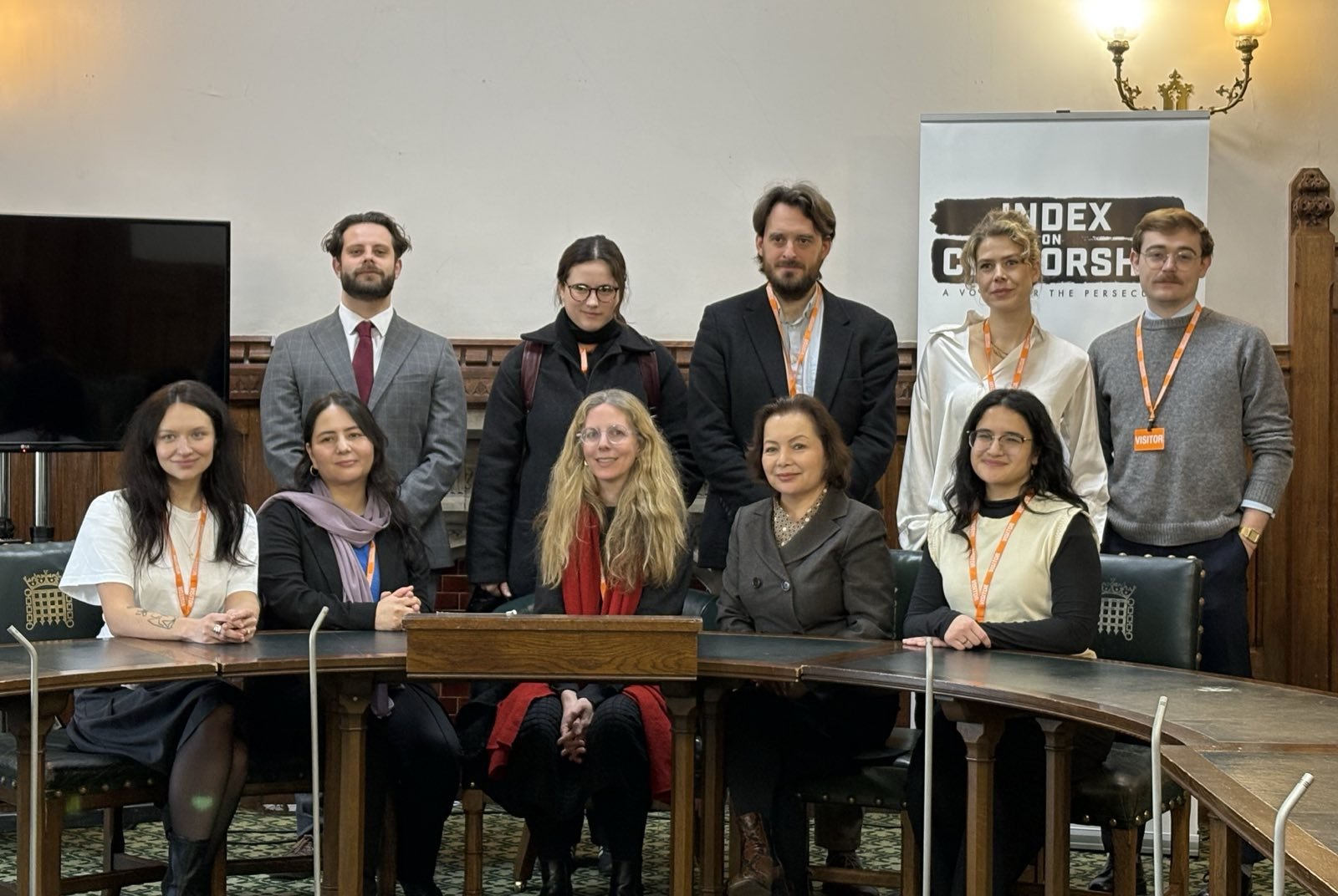
				To mark World Privacy Day this year (28 January 2026), Index on Censorship invited extraordinary human rights activists to share their experiences of the importance of encrypted apps at an event sponsored by former cabinet minister Louise Haigh MP. A number of members of parliament took part in the discussion. Among the speakers were Uyghur activist Rahima Mahmut and ex-Pussy Riot member Olga Borisova. They both told us why encryption is not a nice-to-have. It is essential to their lives and work.
End-to-end encryption has been designated a risk factor by Ofcom as part of their role in implementing the Online Safety Act. This means pressure could seriously mount to create a “backdoor” to the apps that have encryption as their central feature. This would be a disaster for our privacy and one we won’t stand for. We’ve written about the many reasons this is a terrible path to walk here. And so long as the future of encryption remains precarious in the UK, we will continue to make noise. As these women told us powerfully at the event, there is so much at stake if end-to-end encryption is broken.
Below we share the speeches delivered by Mahmut and Borisova. Both act as powerful reminders of the extreme costs incurred when privacy is laid to waste.
Rahima Mahmut, Uyghur human rights activist and director of Stop Uyghur Genocide
As a Uyghur, when I hear the words “online safety” I do not hear reassurance.
I hear a warning.
I come from a community where the language of “safety” was used to justify one of the most extensive systems of digital surveillance the world has ever seen. In China, the government claimed it was keeping people safe, while it monitored every message, every contact, every digital footprint of Uyghur lives. People disappeared not because they committed crimes, but because of what they searched, shared or said online.
That is why I am deeply concerned by the Online Safety Act.
I understand its intention. Protecting children and preventing harm matters. But intention is not enough. We must look at how power operates once it is written into law.
When governments pressure platforms to remove vaguely defined “harmful” content, the result is not safety – it is pre-emptive censorship. Platforms will always choose caution over justice. They will silence first and ask questions later.
For Uyghurs in exile, digital platforms are not a luxury. They are our lifeline.
They are how we document atrocities, speak to journalists, warn the world and preserve our culture.
When content is removed, when accounts are suspended, when voices are quietly buried by algorithms, the cost is not abstract. It is human.
I have seen where this road leads. In China, online control did not stop at content moderation. It led to mass surveillance, collective punishment and genocide.
The UK must not – even unintentionally – normalise the logic that safety requires less freedom, less privacy and more state control.
True online safety does not come from expanding surveillance powers. It comes from protecting rights, enforcing transparency and defending the most vulnerable voices – not silencing them.
As someone who has lived the consequences of digital authoritarianism, I urge you: do not build a system that future governments could abuse. Do not trade freedom for a false sense of security. Because once lost, our voices are very hard to recover.
Olga Borisova, former member of Pussy Riot and Russian human rights activist
For people like me, online safety is not an abstract concept. It is directly connected to physical safety and survival.
I now live in the UK, but my work and many of the people I communicate with are still connected to Russia and Belarus – countries where surveillance is routine and political repression is part of everyday life.
I have been sentenced in absentia to eight years in prison in Russia for my anti-war stance and support for Ukraine. I am on a federal wanted list and cannot travel to half of the countries in the world. Because of this, I have no choice but to think carefully about the security of my communications every single day.
For activists, journalists and human rights defenders, encrypted communication is not about hiding, it is about preventing state surveillance. It is about making sure that conversations cannot be intercepted, taken out of context or used as evidence.
One of the tools I rely on in my work is Signal. I use it precisely because neither the company nor any government can read the messages. That is the whole point of the technology.
Signal helps Russian human rights workers and other people to flee persecution in Russia and avoid being sent to the war.
Russia already banned calls in WhatsApp and Telegram. And sending information from Russia abroad can be considered a high treason.
Signal is just an example, but it is considered the most secure way to communicate.
In fact, encryption helps save lives. Encryption helps provide the truth.
If the Online Safety Act forces companies to scan private messages or weaken encryption, services like Signal may simply stop operating in the UK. If that happens, the impact will be very real. Human rights defenders based here will lose one of the few secure ways they have to communicate with people living under authoritarian surveillance.
The UK is home to many exiled activists and journalists like me. If secure tools disappear here, the UK becomes a less safe place to do human rights work, not by intention, but by technical design.
There is also a security issue. Russia actively uses cyber operations and state-linked hackers as part of hybrid warfare, and the UK itself has been a target. Weakening encryption does not make societies safer, it creates vulnerabilities that hostile actors know how to exploit.
I recognise that serious crimes, including child sexual exploitation, do take place in private and encrypted messaging spaces. But the evidence also shows that these crimes are addressed through targeted investigations, intelligence-led operations and lawful hacking, not through blanket access to everyone’s private communications.
That is why I believe the Online Safety Act should be amended to draw a clear and explicit line: end-to-end encrypted private messaging must not be subject to scanning requirements or technical backdoors. Instead, the focus should remain on proportionate, targeted enforcement against suspects, while preserving strong encryption as a core part of public safety, digital resilience and democratic infrastructure.
This approach protects children and the public without exposing journalists, activists, victims of abuse and people targeted by hostile states to new and irreversible risks.


				READ MORE
Share
Facebook Twitter Pinterest Email Copy Link

Listen to the article

0:00
0:00

Key Takeaways

Playback Speed

Select a Voice

To mark World Privacy Day this year (28 January 2026), Index on Censorship invited extraordinary human rights activists to share their experiences of the importance of encrypted apps at an event sponsored by former cabinet minister Louise Haigh MP. A number of members of parliament took part in the discussion. Among the speakers were Uyghur activist Rahima Mahmut and ex-Pussy Riot member Olga Borisova. They both told us why encryption is not a nice-to-have. It is essential to their lives and work.

End-to-end encryption has been designated a risk factor by Ofcom as part of their role in implementing the Online Safety Act. This means pressure could seriously mount to create a “backdoor” to the apps that have encryption as their central feature. This would be a disaster for our privacy and one we won’t stand for. We’ve written about the many reasons this is a terrible path to walk here. And so long as the future of encryption remains precarious in the UK, we will continue to make noise. As these women told us powerfully at the event, there is so much at stake if end-to-end encryption is broken.

Below we share the speeches delivered by Mahmut and Borisova. Both act as powerful reminders of the extreme costs incurred when privacy is laid to waste.

Rahima Mahmut, Uyghur human rights activist and director of Stop Uyghur Genocide

As a Uyghur, when I hear the words “online safety” I do not hear reassurance.

I hear a warning.

I come from a community where the language of “safety” was used to justify one of the most extensive systems of digital surveillance the world has ever seen. In China, the government claimed it was keeping people safe, while it monitored every message, every contact, every digital footprint of Uyghur lives. People disappeared not because they committed crimes, but because of what they searched, shared or said online.

That is why I am deeply concerned by the Online Safety Act.

I understand its intention. Protecting children and preventing harm matters. But intention is not enough. We must look at how power operates once it is written into law.

When governments pressure platforms to remove vaguely defined “harmful” content, the result is not safety – it is pre-emptive censorship. Platforms will always choose caution over justice. They will silence first and ask questions later.

For Uyghurs in exile, digital platforms are not a luxury. They are our lifeline.

They are how we document atrocities, speak to journalists, warn the world and preserve our culture.

When content is removed, when accounts are suspended, when voices are quietly buried by algorithms, the cost is not abstract. It is human.

I have seen where this road leads. In China, online control did not stop at content moderation. It led to mass surveillance, collective punishment and genocide.

The UK must not – even unintentionally – normalise the logic that safety requires less freedom, less privacy and more state control.

True online safety does not come from expanding surveillance powers. It comes from protecting rights, enforcing transparency and defending the most vulnerable voices – not silencing them.

As someone who has lived the consequences of digital authoritarianism, I urge you: do not build a system that future governments could abuse. Do not trade freedom for a false sense of security. Because once lost, our voices are very hard to recover.

Olga Borisova, former member of Pussy Riot and Russian human rights activist

For people like me, online safety is not an abstract concept. It is directly connected to physical safety and survival.

I now live in the UK, but my work and many of the people I communicate with are still connected to Russia and Belarus – countries where surveillance is routine and political repression is part of everyday life.

I have been sentenced in absentia to eight years in prison in Russia for my anti-war stance and support for Ukraine. I am on a federal wanted list and cannot travel to half of the countries in the world. Because of this, I have no choice but to think carefully about the security of my communications every single day.

For activists, journalists and human rights defenders, encrypted communication is not about hiding, it is about preventing state surveillance. It is about making sure that conversations cannot be intercepted, taken out of context or used as evidence.

One of the tools I rely on in my work is Signal. I use it precisely because neither the company nor any government can read the messages. That is the whole point of the technology.

Signal helps Russian human rights workers and other people to flee persecution in Russia and avoid being sent to the war.

Russia already banned calls in WhatsApp and Telegram. And sending information from Russia abroad can be considered a high treason.

Signal is just an example, but it is considered the most secure way to communicate.

In fact, encryption helps save lives. Encryption helps provide the truth.

If the Online Safety Act forces companies to scan private messages or weaken encryption, services like Signal may simply stop operating in the UK. If that happens, the impact will be very real. Human rights defenders based here will lose one of the few secure ways they have to communicate with people living under authoritarian surveillance.

The UK is home to many exiled activists and journalists like me. If secure tools disappear here, the UK becomes a less safe place to do human rights work, not by intention, but by technical design.

There is also a security issue. Russia actively uses cyber operations and state-linked hackers as part of hybrid warfare, and the UK itself has been a target. Weakening encryption does not make societies safer, it creates vulnerabilities that hostile actors know how to exploit.

I recognise that serious crimes, including child sexual exploitation, do take place in private and encrypted messaging spaces. But the evidence also shows that these crimes are addressed through targeted investigations, intelligence-led operations and lawful hacking, not through blanket access to everyone’s private communications.

That is why I believe the Online Safety Act should be amended to draw a clear and explicit line: end-to-end encrypted private messaging must not be subject to scanning requirements or technical backdoors. Instead, the focus should remain on proportionate, targeted enforcement against suspects, while preserving strong encryption as a core part of public safety, digital resilience and democratic infrastructure.

This approach protects children and the public without exposing journalists, activists, victims of abuse and people targeted by hostile states to new and irreversible risks.

Read the full article here

Fact Checker

Verify the accuracy of this article using AI-powered analysis and real-time sources.

Get Your Fact Check Report

Enter your email to receive detailed fact-checking analysis

5 free reports remaining

Continue with Full Access

You've used your 5 free reports. Sign up for unlimited access!

Already have an account? Sign in here

Share. Facebook Twitter Pinterest LinkedIn Tumblr Email Telegram Copy Link
News Room
  • Website
  • Facebook
  • X (Twitter)
  • Instagram
  • LinkedIn

The FSNN News Room is the voice of our in-house journalists, editors, and researchers. We deliver timely, unbiased reporting at the crossroads of finance, cryptocurrency, and global politics, providing clear, fact-driven analysis free from agendas.

Related Articles

Global Free Speech

People attend the funeral of Lebanese journalist Amal Khalil in Baissariyeh, Lebanon, April 23, 2026. Photo: AAli Hashisho/Xinhua/Alamy This Sunday is World Press Freedom Day. Like International Women’s Day, every day should really be World Press Freedom Day. Journalists are powerful watchdogs and protecting them should be a baseline requirement for a free society. But given how woeful the state of media freedom is right now – the number of murdered journalists being at a record high – a day of focus is clearly much needed. So too is a monument. The UK will have its first one dedicated to journalists killed in conflict zones next year, the design of which has just been revealed. Former Index trustee Sarah Sands spoke to us about it. Meanwhile, the Committee to Protect Journalists (CPJ), run by Jodie Ginsberg who used to to work at Index, is calling for an independent global body to support investigations into attacks on the media. Veteran foreign correspondent Christina Lamb echoed these calls, speaking days after Lebanese journalist Amal Khalil was killed in an Israeli airstrike. That there are many people working hard to address the dire situation is welcome. At Index these threats impact us on several levels. They feed into our campaigning programmes, while the editorial team work with people very much at the coal face. I joined the organisation in 2017 and one of the first articles I edited featured an interview with a Mexican journalist called Javier Valdez. A few months later Valdez was dead, shot 12 times by an unidentified gunman in broad daylight. That same year, and for several years after, I was in regular email correspondence with Andrei Aleksandrau, a former Index colleague and journalist from Belarus. In 2021 he was arrested in Minsk. A year later, another one of our contributors, Larysa Shchyrakova, was arrested. Fortunately Shchyrakova is out of jail and you can read about her experiences here. Aleksandrau is still being held. We also published Victoria Roschyna from Ukraine who was killed in 2024. I could list many similar examples, suffice to say the Index archive is a treasure trove, but it’s also a space where the words of the murdered and the wrongfully detained stand still, ossified, a sad and damning testament to the perils of simply observing. As I said, World Press Freedom Day should be every day and we work on media freedom issues 24/7. Still, we have commissioned a trilogy of pieces this week with the date in mind: Oren Persico writes from Israel on the media ecosystem there; Nedim Turfent, a former political prisoner in Turkey, talks about the threats directed at exiled media in Europe; and Dahlia Kholaif speaks to people on the ground in the Gulf about how the Iran war has amplified the ugly authoritarian reality of these states. Are journalists the canary in the coalmine, the first to be attacked during a democratic backslide? Perhaps, though I’ve heard artists and minority groups claim the same. What’s true is that journalists are the much needed fourth estate. They are a vital check on governments and the powerful. Journalists risk their lives to inform ordinary citizens about what is happening – and they’re now under unprecedented attack around the world. That fact should shame us all. READ MORE

20 hours ago
Global Free Speech

There have been calls for pro-Palestine protests to be banned following attacks on Jewish communities. Photo: orlando britain/Alamy Since the shocking attacks on members of the Jewish community in Golders Green, north London on Wednesday, there have been calls to ban future marches in support of Palestinians, including from Jonathan Hall KC, the independent reviewer on terrorism legislation. It sounds like a reasonable demand. There have been expressions of antisemitism on these marches and political slogans are often chanted that many believe to be antisemitic, such as “From the river to the sea, Palestine will be free” as well as the phrase “Globalise the intifada”, which has led to arrests for stirring up racial hatred and which the prime minister described as “extreme racism”  following the attacks. However, this proposal is unwise for a number of reasons. The Jewish community needs protection, but so does the right to protest. It was significantly eroded by the last Conservative administration and Keir Starmer’s Labour government has already displayed an authoritarian zeal to limit free speech, including new powers that will allow police to put conditions on repeat protests, which became law in April. While this demand for a ban may appear to be targeting hate speech, and in this case specifically antisemitism, it would prevent legitimate and necessary protest. More than 70,000 Palestinians have been killed in Gaza since 7 October 2023 and settler attacks in the West Bank have resulted in multiple deaths and thousands of Palestinians being displaced from their homes. Protest is an essential means of demonstrating public outrage at these events and solidarity with Palestinians. Nor will banning marches diminish the alarming growth in antisemitism, which has become normalised since 7 October. I have myself witnessed a new licence in disparaging Jews and Judaism in public life to a degree that I have never previously observed. It is as if a taboo has been broken. No distinction is made between the actions of Israel and a diaspora minority – not only by the individuals who commit these acts of violence, but even by apparently peace-loving people who would consider themselves to be opposed to racism. This attitude towards Jews has a long history. The belief that the Jewish people are intrinsically evil and out to undermine society dates back to medieval times in England, when they were the most visible minority in the country. That connection between Jews and wrongdoing is so deeply ingrained in our culture (from Chaucer through to Shakespeare, Dickens and Roald Dahl) that anti-Jewish feeling is easily triggered. So, when the Jewish state commits war crimes, it’s the ancient, irrational charges that surface once again: Jews as bloodthirsty child killers seeking to control the world. That’s why the distinction between Jews and Israel is so readily blurred. You don’t stamp out that deep cultural antipathy by banning a march. Instead, you marginalise Palestinians, who are in essential need of international support. You undermine a fundamental democratic right and you fail to address the root causes of antisemitism. You also deny the possibility for a nuanced discussion. I have sympathy with fellow Jews who feel that the chants on marches are hostile and racist. But “Globalise the intifada” and “From the river to the sea, Palestine will be free” are political slogans open to interpretation. The Arabic word intifada, or shaking off, is an expression of rebellion against Israeli occupation that dates back nearly 40 years. After nearly 60 years of oppression, supporters of Palestinians have every right to call for it in solidarity. Likewise, “From the river to the sea” could be interpreted as a legitimate call for self-determination or for a one-state solution, which an increasing number of Jews are now calling for too since there is no possibility of a two-state solution in sight. We need to have the courage and vision to support the Jewish community without destroying a fundamental and necessary right. It is Jews who will ultimately be harmed too, as members of the UK population, if the right to protest is further eroded. READ MORE

2 days ago
Global Free Speech

Zambian President Hakainde Hichilemamet Chinese President Xi Jinping in Beijing in 2024. Photo: Yin Bogu/Xinhua/Alamy Live News Also read our CEO Jemimah Steinfeld’s view on the reasons for RightsCon’s cancellation The cancellation of RightsCon, due to be held this weekend in Lusaka, Zambia has come as a shock. The global conference would have brought together thousands of advocates, technologists, academics, policymakers and others concerned with issues at the intersection of human rights and technology. However, for those Zambians who are abreast of the political direction their country is taking, it is not very surprising. Daniel Sikazwe, the secretary general of Zambian PEN, had feared that it could happen given the fact that the conference was to happen just three months before the general elections on 13 August 2026. “The conference was going to show the world the state of human rights violations in Zambia at a time when the regime in power does not want this information known by the electorate,” he said, adding that since President Hakainde Hichilema assumed office in 2021, the human rights situation in the country has deteriorated. Hichilema’s government has enacted laws like the Cyber Security Act (2025) and the Cyber Crimes Act (2025) which human rights experts consider hostile to perceived dissent, criticism and political opposition. In fact, the Law Association of Zambia has petitioned the high court to declare provisions of the Cyber Crimes Act unconstitutional since it infringes on freedom of expression, speech, conscience, and association. The Ministry of Information’s press release stating that the conference’s postponement was “necessitated by the need for a comprehensive disclosure of the critical information relating to key thematic issues proposed for discussion” suggests that the government was apprehensive about the direction that some of the conference sessions would take. Charles Mafa, managing partner and editor at the Center of Investigative Journalism in Lusaka, Zambia attributed the postponement to China’s influence in the mining sector in Zambia. “On 18 February 2025, there was a major environmental disaster in Zambia: a tailings dam owned by a Chinese state-owned enterprise collapsed, releasing close to 50 million litres of highly toxic waste into the Kafue River ecosystem. This disaster and how investigations into it have been frustrated by the government was bound to be one of the big talking points at the conference to the discomfort of the ruling party,” he said. David Ngwenyama, a well-known Zambian ecologist, reiterates Mafa’s point. “This is the same government that has done public relations work for the Chinese mining company, claiming that pollution has been neutralised and the conditions are back to normal,” he said, adding, “I would not be surprised if the postponement of the conference is yet another performance of Chinese power in Zambia.” The fact that the venue where the conference was to be held – the Mulungushi International Conference Center – was partly built with Chinese funds has also made people wonder if China could have had a hand in the postponement of the event. There were also representatives from Taiwan due to speak at the conference. If all this is true, it raises serious questions about Zambia’s sovereignty. For an African journalist like me, having RightsCon in southern Africa would have been a megaphone for human rights defenders and journalists to showcase the deterioration of human rights observance on the African continent and to put this on record. It was also an opportunity for human rights defenders and journalists to come together as a family that shares the same values and dilemmas. There is immense power in this kind of gathering because it sends the powerful message: you are not alone in this work you are doing – everywhere in the world, there are people who are fighting for human rights observance  as you are, and paying the price as you are, sometimes the ultimate price. Finally, in the past, before the world changed in the Donald Trump direction where business and financial deals matter more than human life and human rights, resolutions made at these conferences had serious consequences for the nations labelled human rights violators, particularly in terms of isolating them as pariah nations (think of Iran, North Korea, Russia, after the invasion of Ukraine and the killing of Alexei Navalny –  and the killing of more than 50,000 people in the Gaza war. These days, unfortunately, none of this seems to matter: Mighty nations can attack weaker nations at will, assassinate the entire cabinet, and turn this into a joke on social media. Bombing “for fun”. Sad. READ MORE

2 days ago
Global Free Speech

CPJ, partners condemn Ecuador court’s order to remove press freedom NGO’s content

3 days ago
Global Free Speech

CPJ welcomes Brazilian Supreme Court ruling in favor of journalist blinded by rubber bullet

3 days ago
Global Free Speech

CPJ documentation of Israeli harm against Palestinian journalists, media workers

3 days ago
Add A Comment

Comments are closed.

Editors Picks

Today in Supreme Court History: May 3, 1802

37 minutes ago

Civilians Across the Middle East React to the Iran War: ‘A Fear That Settles in Your Heart’

2 hours ago

NY Forces Uphold to Pay $5M Over Fraudulent Crypto Product

2 hours ago

Crypto Industry Will Be ‘Just Fine’ If CLARITY Act Doesn’t Pass: Chris Perkins

5 hours ago
Latest Posts

How European Libertarians Differ From American Ones

8 hours ago

Bitcoin Posts Strongest Monthly Gain In 12 months In April

8 hours ago

Payward Closes Bitnomial Acquisition, Eyes Regulated US Crypto Derivatives

10 hours ago

Subscribe to News

Get the latest news and updates directly to your inbox.

At FSNN – Free Speech News Network, we deliver unfiltered reporting and in-depth analysis on the stories that matter most. From breaking headlines to global perspectives, our mission is to keep you informed, empowered, and connected.

FSNN.net is owned and operated by GlobalBoost Media
, an independent media organization dedicated to advancing transparency, free expression, and factual journalism across the digital landscape.

Facebook X (Twitter) Discord Telegram
Latest News

Iran Crypto Exchange Nobitex Tied to Kharrazi Family, Reuters Finds

1 minute ago

Today in Supreme Court History: May 3, 1802

37 minutes ago

Civilians Across the Middle East React to the Iran War: ‘A Fear That Settles in Your Heart’

2 hours ago

Subscribe to Updates

Get the latest news and updates directly to your inbox.

© 2026 GlobalBoost Media. All Rights Reserved.
  • Privacy Policy
  • Terms of Service
  • Our Authors
  • Contact

Type above and press Enter to search. Press Esc to cancel.

🍪

Cookies

We and our selected partners wish to use cookies to collect information about you for functional purposes and statistical marketing. You may not give us your consent for certain purposes by selecting an option and you can withdraw your consent at any time via the cookie icon.

Cookie Preferences

Manage Cookies

Cookies are small text that can be used by websites to make the user experience more efficient. The law states that we may store cookies on your device if they are strictly necessary for the operation of this site. For all other types of cookies, we need your permission. This site uses various types of cookies. Some cookies are placed by third party services that appear on our pages.

Your permission applies to the following domains:

  • https://fsnn.net
Necessary
Necessary cookies help make a website usable by enabling basic functions like page navigation and access to secure areas of the website. The website cannot function properly without these cookies.
Statistic
Statistic cookies help website owners to understand how visitors interact with websites by collecting and reporting information anonymously.
Preferences
Preference cookies enable a website to remember information that changes the way the website behaves or looks, like your preferred language or the region that you are in.
Marketing
Marketing cookies are used to track visitors across websites. The intention is to display ads that are relevant and engaging for the individual user and thereby more valuable for publishers and third party advertisers.