Close Menu
FSNN | Free Speech News NetworkFSNN | Free Speech News Network
  • Home
  • News
    • Politics
    • Legal & Courts
    • Tech & Big Tech
    • Campus & Education
    • Media & Culture
    • Global Free Speech
  • Opinions
    • Debates
  • Video/Live
  • Community
  • Freedom Index
  • About
    • Mission
    • Contact
    • Support
Trending

That $17B Meta settlement comes with a catch: Your online speech rights

10 minutes ago

Daily Deal: Raspberry Pi Pico With Ultimate Starter Kit

16 minutes ago

A Tale of Two Tech Panics

18 minutes ago
Facebook X (Twitter) Instagram
Facebook X (Twitter) Discord Telegram
FSNN | Free Speech News NetworkFSNN | Free Speech News Network
Market Data Newsletter
Friday, August 28
  • Home
  • News
    • Politics
    • Legal & Courts
    • Tech & Big Tech
    • Campus & Education
    • Media & Culture
    • Global Free Speech
  • Opinions
    • Debates
  • Video/Live
  • Community
  • Freedom Index
  • About
    • Mission
    • Contact
    • Support
FSNN | Free Speech News NetworkFSNN | Free Speech News Network
Home»News»Media & Culture»Bureau of Land Management Says Bison Are Not Livestock, Obstructing Plans for a Huge Private Prairie Reserve
Media & Culture

Bureau of Land Management Says Bison Are Not Livestock, Obstructing Plans for a Huge Private Prairie Reserve

News RoomBy News Room7 months agoNo Comments5 Mins Read1 Views
Share Facebook Twitter Pinterest Copy Link LinkedIn Tumblr Email VKontakte Telegram
Bureau of Land Management Says Bison Are Not Livestock, Obstructing Plans for a Huge Private Prairie Reserve
Share
Facebook Twitter Pinterest Email Copy Link

Listen to the article

0:00
0:00

Key Takeaways

Playback Speed

Select a Voice

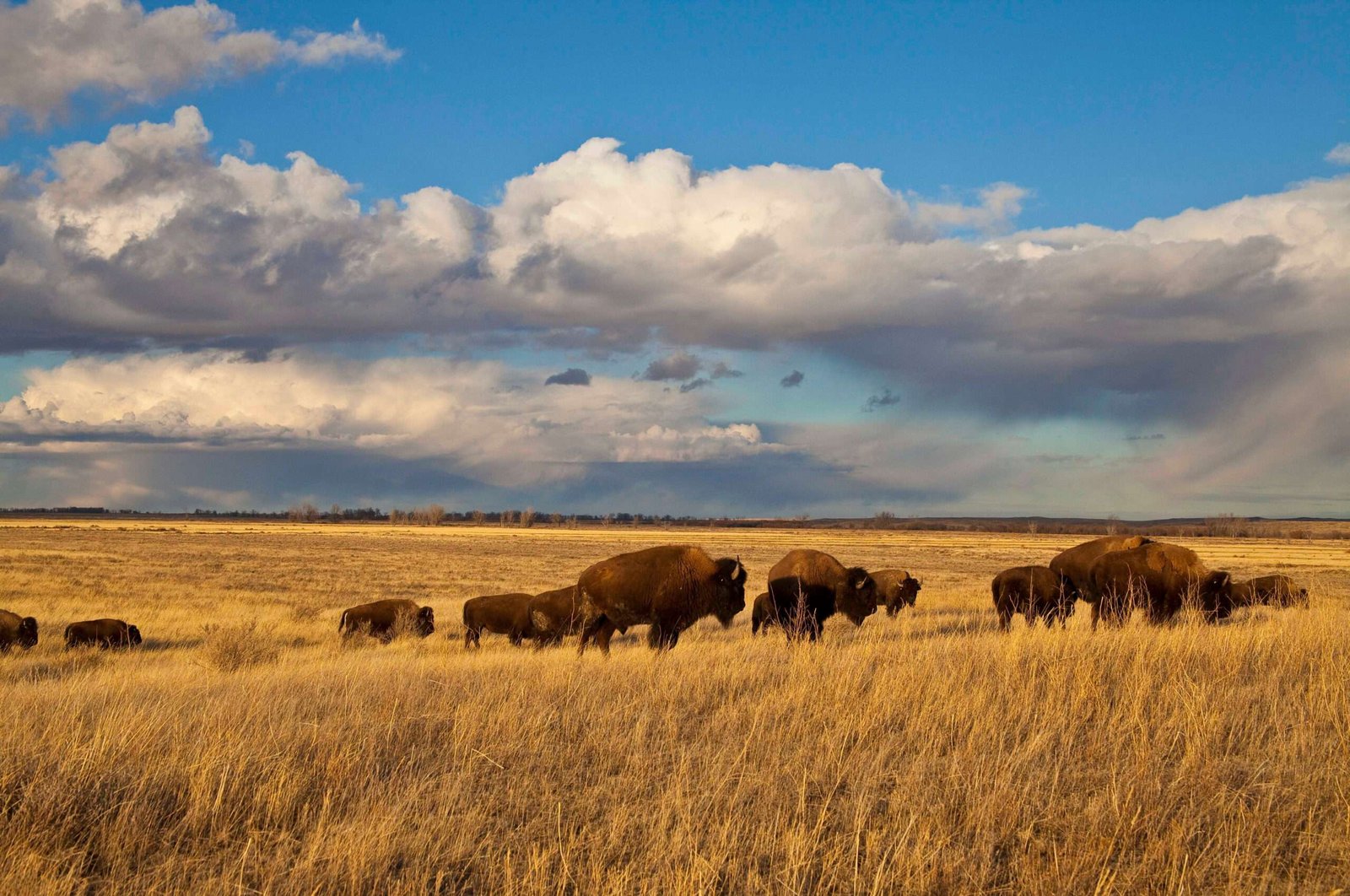
An ambitious and privately funded project to create a 5,000-square-mile prairie reserve where buffalo may roam and antelope play in eastern Montana is being stymied by an obtuse new ruling by the Bureau of Land Management (BLM). The goal of the American Prairie nonprofit is to re-create a prairie ecosystem one-and-a-half times the size of Yellowstone National Park that can eventually support a free-ranging herd of 5,000 bison. Such a reserve would also greatly benefit other prairie species, including elk, pronghorn antelope, sage grouse, prairie dogs, and perhaps one day, predators like mountain lions and bears.

Reason reported on this remarkable private conservation project 10 years ago.

American Prairie uses a variety of techniques to assemble the land needed to create an ecologically self-sustaining reserve. For example, the nonprofit forms voluntary partnerships with local ranchers, making direct payments to them as an incentive to adopt wildlife-friendly management practices on their private lands. In addition, the group also connects the landscape by purchasing private land.

Like much of the western United States, the federal government owns huge swathes of land in Montana with the BLM owning and managing over 8 million acres in the state. The BLM leases out a lot of the range to private operators such as cattle ranchers. In fact, Montana has the most BLM grazing permits of any state. The BLM authorizes 1.1 million animal unit months (AUM) of grazing across the land it manages in Montana and the Dakotas. Those AUMs would support about 90,000 cows and their calves for a year.
American Prairie

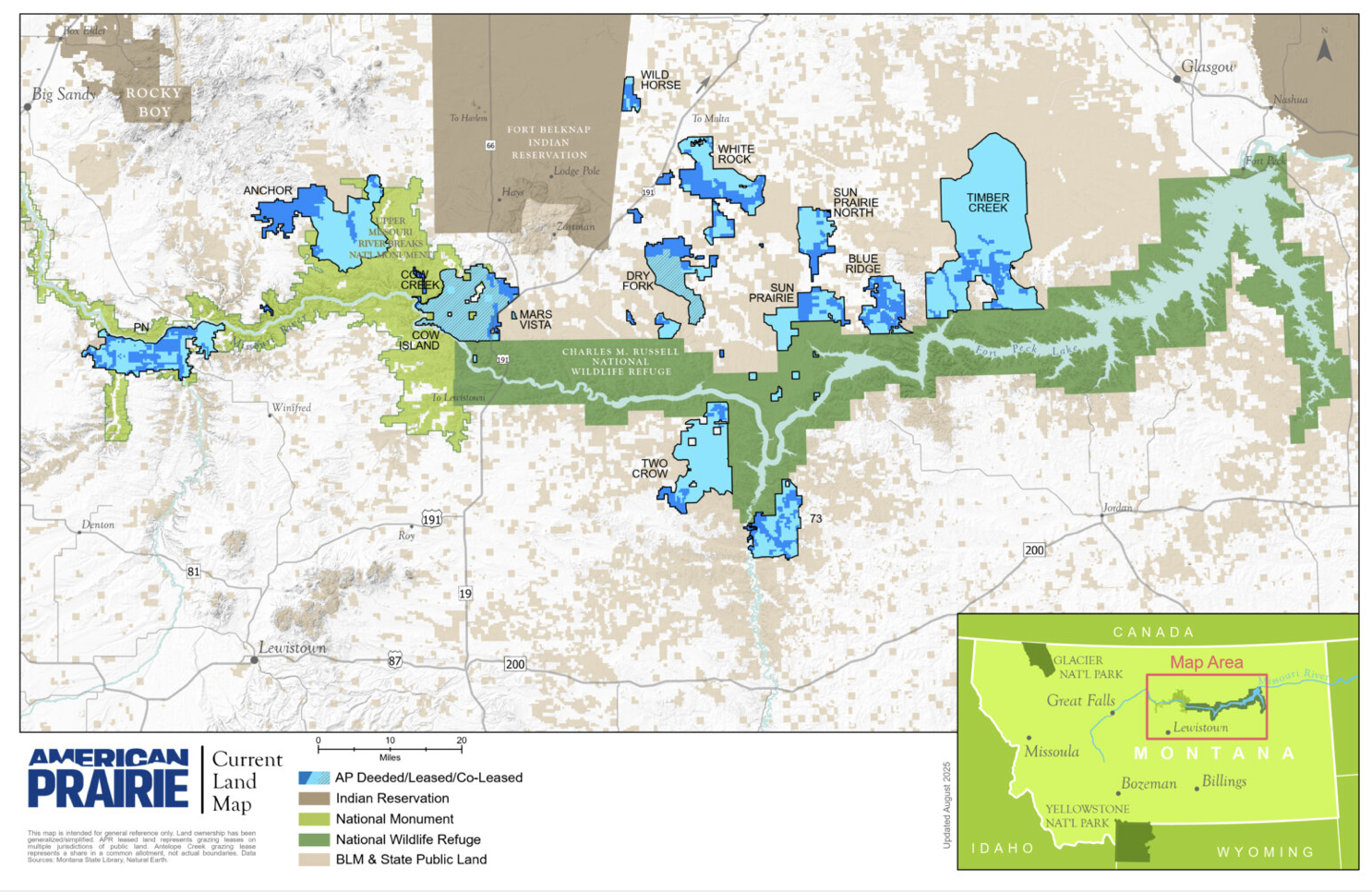
Often, private ranches have preferences to lease adjacent BLM lands to graze their livestock. American Prairie assumes those BLM lease allotment preferences from the ranches it purchases. Since 2004, American Prairie has assembled its current habitat base by combining the purchase of 167,070 acres with 436,587 acres of leased public lands for a total of 603,657 acres.

Since bison, like cows, are ruminants, it shouldn’t matter whether one or the other species is grazing on the landscape. In fact, this was the conclusion that the BLM reached back in 2022 when it approved American Prairie’s proposal to “manage their base properties and associated grazing allotments to allow for a change in class of livestock from cattle to domestic indigenous livestock (bison).” The 2022 BLM decision also noted that “no scientifically and/or resource management-based reason was identified for why bison should not be permitted to graze BLM land as long as the owner of the animals qualifies as an applicant under the requirements of the grazing regulations.”

The BLM’s decision to treat grazing bison like grazing cows has, however, been opposed by the Montana Stockgrowers Association, with the organization arguing that bison are not livestock under the relevant federal regulations. This view has long been supported by Montana Gov. Greg Gianforte and Attorney General Austin Knudsen, both Republicans.

The new Secretary of the Interior Doug Burgum ordered in December 2025 that the BLM  reconsider its 2022 decision that bison may graze on BLM allotments. The new BLM decision issued last week now finds that bison are not cows, sheep, horses, burros, or goats and therefore are not domestic livestock according to federal regulations. In its new decision, the BLM may only “issue permits where the animals to be grazed will be used for production-oriented purposes. That would include their being used for their meat, milk, fiber, or other animal products.”

Amusingly the Congressional Research Service has just issued a new report on federal grazing regulations that cites a 1976 Department of the Interior’s Office of Hearings and Appeals holding “that bison may be considered ‘livestock’ under the TGA [Taylor Grazing Act], where the bison are treated in substantial respects as livestock and have characteristics in common with livestock.” As it happens, American Prairie arguably meets the “production-oriented purposes” requirement since it actively manages its bison and authorizes annual harvests from its herd.

In a statement hailing the new BLM ruling against American Prairie’s grazing permits, Knudsen says, “I’m pleased to see this proposed decision from the Trump Administration’s Bureau of Land Management today. Canceling the American Prairie Reserve’s bison grazing permit will help to protect the livestock industry and ranching communities in Northeastern Montana from the elitists trying to push them out.”

Since American Prairie’s private agreements and purchases are entirely voluntary, it is hard to see how its project is pushing out ranchers and rural residents. In an emailed statement, American Prairie CEO Alison Fox noted, “We’ve had permission to graze bison on some of these allotments for 20 years and have followed the law, complied with every requirement, and prioritized transparency at every step.” She added, “This creates uncertainty for livestock owners across Montana who depend on public lands for grazing.” Indeed it does.

It would, of course, be better if the BLM would just sell its land to private owners like American Prairie. In the meantime, the 2021 public comment by policy director Hannah Downey at the free market environmental policy think tank, the Property Environment Research Center, remains apt:

“Montana’s ranchers and agricultural producers are important conservationists, and I appreciate their concerns over the future of their industry. People can disagree with the goals of APR [American Prairie], but there is no reason for believers in individual liberty, property rights, and free markets to abandon those values when a conversation group’s rights are at stake. Allowing APR to graze privately-owned bison on its federal allotments respects APR’s rights and, ultimately, honors all landowners’ rights to exercise their grazing privileges while promoting the health of federal lands.”

The BLM should get out of the way and let buffalo roam and antelope play once again across the American prairies.

Read the full article here

Fact Checker

Verify the accuracy of this article using AI-powered analysis and real-time sources.

Get Your Fact Check Report

Enter your email to receive detailed fact-checking analysis

5 free reports remaining

Continue with Full Access

You've used your 5 free reports. Sign up for unlimited access!

Already have an account? Sign in here

#FreePress #InformationWar #OpenDebate #PublicDiscourse #PublicOpinion
Share. Facebook Twitter Pinterest LinkedIn Tumblr Email Telegram Copy Link
News Room
  • Website
  • Facebook
  • X (Twitter)
  • Instagram
  • LinkedIn

The FSNN News Room is the voice of our in-house journalists, editors, and researchers. We deliver timely, unbiased reporting at the crossroads of finance, cryptocurrency, and global politics, providing clear, fact-driven analysis free from agendas.

Related Articles

Media & Culture

Daily Deal: Raspberry Pi Pico With Ultimate Starter Kit

16 minutes ago
Media & Culture

A Tale of Two Tech Panics

18 minutes ago
Cryptocurrency & Free Speech Finance

Fed Chair Warsh Calls AI a ‘Hinge Point in History’—4 Key Things He Said

43 minutes ago
Media & Culture

Pete Hegseth And His Department Of Unconstitutional Revenge Lose Again In California

1 hour ago
Media & Culture

“This Case Begins with a Viral Video” (and Goes on to Involve “the Anti-Doxing League”)

1 hour ago
Cryptocurrency & Free Speech Finance

Solana Will Now Print Less SOL as Disinflation Vote Passes in Dramatic Fashion

2 hours ago
Add A Comment

Comments are closed.

Editors Picks

Daily Deal: Raspberry Pi Pico With Ultimate Starter Kit

16 minutes ago

A Tale of Two Tech Panics

18 minutes ago

London’s Africa Centre faces closure Earlier this month, I was saddened to learn that The Africa Centre in London may once again be shutting its doors. It won’t be the first time the centre has had to close – but it may be the last time, although the chief executive is still hopeful he can raise the millions of pounds needed to save it. There’s no point dwelling on the reasons, speculative or factual, behind its current crisis. I did though, looking through a list of its recent events, feel a pang of guilt. I could have done more to support The Africa Centre – turning up, talking to people about it, taking cognisance of the real value it has added over the years to London’s political and social life. When the Africa Centre was founded in 1961, its primary objective was to “educate about, connect to and [advocate] for Africa and its diaspora through arts, innovation, culture, thought leadership and education”. In 1964 it found a home in London’s Covent Garden – the Catholic church purchased an old tomato warehouse on King Street and gifted it “to the people of Africa in perpetuity”. When my parents emigrated to the United Kingdom in the mid-1960s, The Africa Centre was one of the very few places where people like them could find space to negotiate the cultural and social differences between them and the unfamiliar wider world. This process of cultural pollination process worked both ways, mind. Intellectuals, activists and dissidents from across the continent spoke at King Street about the political challenges faced by post-colonial African countries, educating curious audiences who wanted to learn more about a part of the world that for many was at best a construct of the imagination, if even that. For two days last June, the London Archives presented to the public a cross-section of documents, photographs and ephemera from its Africa Centre Collection. The archives were a revealing and at times startling record of political and social openness and curiosity. On one table, a poster from 1968 announced a talk about The Future of the Portuguese Territories – long before Angola and Mozambique became proxy battlegrounds for the Cold War between the Soviets and the West. From 1970, an invitation to a talk by Mrs Lydia Osiyemi, “sociology student and mother”, about The African mother and child in Britain. Judging from the poster (left), I fancy that Mrs Osiyemi’s talk was proposing African solutions to a dilemma that remains very real today – to London’s new arrivals and veterans alike. And then, from the early 1990s, in the centre’s guest book (below right), a tribute from a vanguard of democracy. “I pay tribute to those who founded this institution, and those who run it,” the scrawly script read. “This is …  a major cultural shop-window for Africa of which every African should be proud.” The author: “M.K.O. Abiola of Africa.” The Nigeria I grew up in the 1980s and 1990s, after my parents moved back there for a while, was defined by the ever-present cloud of military dictatorship. I can say that now, in hindsight; it’s strange how one normalises the abnormal when we have nothing to compare it against. When Abiola, a business magnate and politician, ran for president in Nigeria in 1993 for a short while it seemed that the country would escape its history of ethnic strife. But then the military snatched victory from him and imprisoned him, extending their malign grip on the country for another half decade. The BAFTA-winning My Father’s Son is set against the backdrop of that very period. A generation before this, the Africa at the Pictures film festival curated by the centre had offered London similar context to political and social concerns across the continent. Abiola’s entry reminded me that it was in the London, on King Street, that I first began to think more clearly about the right to free expression and what happens when this is curtailed. When Chinua Achebe’s Anthills of the Savannah, an acerbic observation on life under military dictatorship in a fictional west African country, was shortlisted for the Booker in 1987 it couldn’t be bought in Nigeria. I got hold of my copy in London – in the Africa Centre’s cramped and musty bookshop, stuffed with books on and from the continent. It wasn’t all high-minded intellectualism on King Street. The Africa Centre was home to one of the few restaurants in London featuring cuisine from here and there across the continent – Mauritian lamb curry, Algerian couscous, fried plantain and boiled yam. Cost? Dishes were, according to a caption, “between 20p and £3”. Happy days. (An early menu is shown below left). In 2012, the Africa Centre left Covent Garden. Maintaining the Grade II-listed building proved too expensive, some said. Perhaps more to the point, it was no longer a good fit for the commercialised ambience that had sprung up around Covent Garden. The historic building on King Street was sold, and with the support of the Mayor of London and the Arts Council, the Centre relocated itself across the river in 2022, to new premises in Southwark. The last time I was there, in the summer of 2023, was to see a fascinating multi-floor exhibition about Nigeria’s Fuji music. Once again, I was surprised and delighted to learn in the Africa Centre something new about my childhood home, so very far away from it. London of the 1980s and 1990s was nothing like the crucible of cultures that it is today. While migrant communities were not quite silenced, they certainly did not have the right to a voice in the public sphere such as they do today. We complain, correctly, about febrile attempts to exclude inconvenient minority voices from the general discourse today. But we don’t, unfortunately, acknowledge enough the real contribution that physical community spaces, big and small, have made over the years to give London the cultural texture and viscera that makes the challenging and contradictory but still very charming city that it is. I’m going to miss the Africa Centre when it’s gone, and places like it, that helped shaped a city where the right to free expression is still, on the whole, seen to be a good thing. READ MORE

30 minutes ago

Circle's USDC takes over Chelsea's jersey in Premier League first sponsorship deal

38 minutes ago
Latest Posts

Polish Olympic chief charged in Zondacrypto probe, justice minister says

39 minutes ago

Fed Chair Warsh Calls AI a ‘Hinge Point in History’—4 Key Things He Said

43 minutes ago

Pete Hegseth And His Department Of Unconstitutional Revenge Lose Again In California

1 hour ago

Subscribe to News

Get the latest news and updates directly to your inbox.

At FSNN – Free Speech News Network, we deliver unfiltered reporting and in-depth analysis on the stories that matter most. From breaking headlines to global perspectives, our mission is to keep you informed, empowered, and connected.

FSNN.net is owned and operated by GlobalBoost Media
, an independent media organization dedicated to advancing transparency, free expression, and factual journalism across the digital landscape.

Facebook X (Twitter) Discord Telegram
Latest News

That $17B Meta settlement comes with a catch: Your online speech rights

10 minutes ago

Daily Deal: Raspberry Pi Pico With Ultimate Starter Kit

16 minutes ago

A Tale of Two Tech Panics

18 minutes ago

Subscribe to Updates

Get the latest news and updates directly to your inbox.

© 2026 GlobalBoost Media. All Rights Reserved.
  • Privacy Policy
  • Terms of Service
  • Our Authors
  • Contact

Type above and press Enter to search. Press Esc to cancel.

🍪

Cookies

We and our selected partners wish to use cookies to collect information about you for functional purposes and statistical marketing. You may not give us your consent for certain purposes by selecting an option and you can withdraw your consent at any time via the cookie icon.

Cookie Preferences

Manage Cookies

Cookies are small text that can be used by websites to make the user experience more efficient. The law states that we may store cookies on your device if they are strictly necessary for the operation of this site. For all other types of cookies, we need your permission. This site uses various types of cookies. Some cookies are placed by third party services that appear on our pages.

Your permission applies to the following domains:

  • https://fsnn.net
Necessary
Necessary cookies help make a website usable by enabling basic functions like page navigation and access to secure areas of the website. The website cannot function properly without these cookies.
Statistic
Statistic cookies help website owners to understand how visitors interact with websites by collecting and reporting information anonymously.
Preferences
Preference cookies enable a website to remember information that changes the way the website behaves or looks, like your preferred language or the region that you are in.
Marketing
Marketing cookies are used to track visitors across websites. The intention is to display ads that are relevant and engaging for the individual user and thereby more valuable for publishers and third party advertisers.