

 Freedom Index
Listen to the article
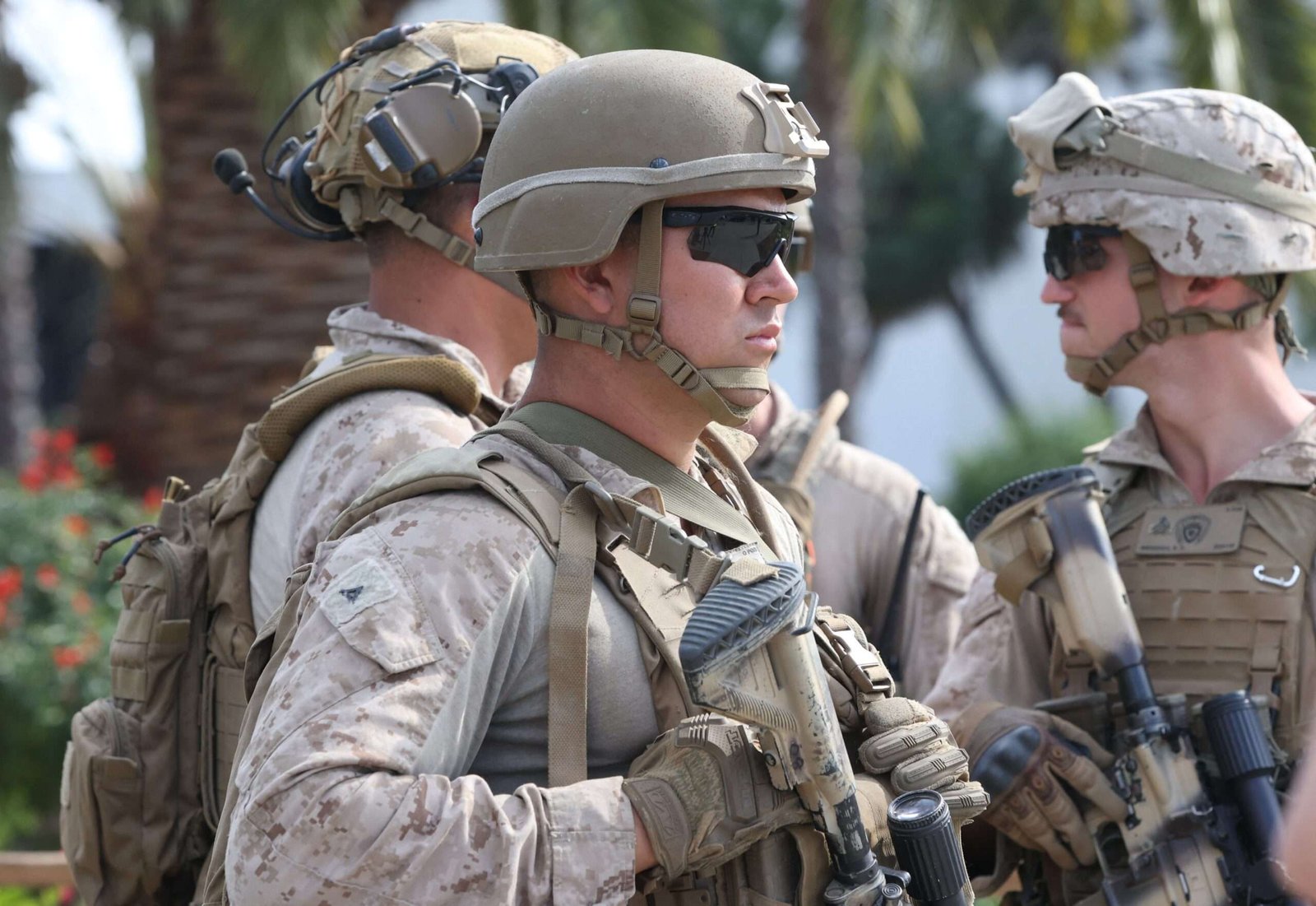
Yesterday, the US Court of Appeals for the Seventh Circuit refused to stay a district court ruling barring President Trump from using the National Guard in Illinois, ostensibly to counter violent protests against ICE deportation efforts. The court ruled that Trump was unlikely to prevail in this litigation, because the kind of emergency situations that legally permit federalization of the National Guard don’t exist. Notably, the three judges were unanimous, and they include a George W. Bush appointee (Judge Ilana Diamond Rovner), an Obama appointee (Judge Hamilton), and a Trump appointee (Judge St. Eve). Thus, the ruling can’t easily be depicted as a purely left-wing one.
This decision follows similar rulings by Illinois District Judge April Perry (which this decision refused to stay), Oregon District Judge Karin Immergut (a conservative Trump appointee), and California District Judge Charles Breyer (brother of former Supreme Court Justice Stephen Breyer). The three district court rulings lay out the issues in greater detail than the relatively brief Seventh Circuit decision, and all three are impressive and compelling, in my view.
Judge Breyer’s decision was stayed by the Ninth Circuit appellate court, primarily on the grounds that he did not give enough deference to the president. I criticized that decision here. Significantly, the three more recent rulings against Trump on this issue have held there is no legal justification for his actions even under the Ninth Circuit’s highly deferential approach. In a recent Dispatch article, I explain in detail why courts should not defer to executive determinations of whether an exigency justifying the use of extraordinary emergency powers exists. Otherwise, the executive could invoke such sweeping and dangerous powers anytime he wants, seriously threatening civil liberties and the structure of constitutional government. I also explain there why the executive’s supposedly superior expertise is not a good reason for deference in such cases. A genuine massive emergency is readily apparent, and does not generally require specialized expertise to detect.
The statute Trump relied on, 10 U.S.C. Section 12406, can only be used to federalize state National Guard forces and use them for law enforcement in one of the following situations:
1) the United States, or any of the Commonwealths or possessions, is invaded or is in danger of invasion by a foreign nation;
(2) there is a rebellion or danger of a rebellion against the authority of the Government of the United States; or
(3) the President is unable with the regular forces to execute the laws of the United States
The Seventh Circuit explained why there is no “rebellion” going on in Illinois:
[W]e emphasize that the critical analysis of a “rebellion” centers on the nature of the resistance to governmental authority. Political opposition is not rebellion. A protest does not become a rebellion merely because the protestors advocate for myriad legal or
policy changes, are well organized, call for significant changes to the structure of the U.S. government, use civil disobedience as a form of protest, or exercise their Second Amendment right to carry firearms as the law currently allows. Nor does a protest become a rebellion merely because of sporadic and isolated incidents of unlawful activity or even violence committed by rogue participants in the protest. Such conduct exceeds the scope of the First Amendment, of course, and law enforcement has apprehended the perpetrators accordingly. But because rebellions at least use deliberate, organized violence to resist governmental authority, the problematic incidents in this record clearly fall within the considerable daylight between protected speech and rebellion.Applying our tentative understanding of “rebellion” to the district court’s factual findings, and even after affording great deference to the President’s evaluation of the circumstances, we see insufficient evidence of a rebellion or danger of rebellion in Illinois. The spirited, sustained, and occasionally violent actions of demonstrators in protest of the federal government’s immigration policies and actions, without more, does not give rise to a danger of rebellion against the government’s authority. The administration thus has not demonstrated that it is likely to succeed on this issue.
The court also explained why there is no inability to execute the laws with regular forces:
We turn next to the meaning of § 12406(3)—”unable with the regular forces to execute the laws of the United States.” The administration exhorts us to accept the Ninth Circuit’s reading of this subsection. In Newsom, the Ninth Circuit interpreted “unable” to mean that the federal government was “significantly impeded,” and “regular forces” to mean “federal officers.” 141 F.4th at 1052. The district court in this case, by contrast, concluded that the definition of “unable” is “not having sufficient power or ability; being incapable.” And it determined that “regular forces” means the soldiers and officers serving in the regular armed forces.
We need not fully resolve these thorny and complex issues of statutory interpretation now, because we conclude that the administration has not met its burden under either standard. Even applying great deference to the administration’s view of the facts, under the facts as found by the district court, there is insufficient evidence that protest activity in Illinois has significantly impeded the ability of federal officers to execute federal immigration laws. Federal facilities, including the processing facility in Broadview, have remained open despite regular demonstrations against the administration’s immigration policies. And though federal officers have encountered sporadic disruptions, they have been quickly contained by local, state, and federal authorities. At the same time, immigration arrests and deportations have proceeded apace in Illinois over the past year, and the administration has been proclaiming the success of its current efforts to enforce immigration laws in the Chicago area. The administration accordingly is also unlikely to succeed on this argument.
Understood in context, I think inability to execute the laws with “regular forces” requires a massive breakdown of civil order, not simply a failure to apprehend all violators of federal law, or a situation where enforcement is “significantly impeded.” The latter circumstances exists in almost every community in the nation, at virtually all times. Almost every community has large numbers of people who get away with violating one federal law or another, and whom law enforcement is unable to detect and prosecute.
For example, over 50% of adult Americans admit to having used marijuana at some point in their lives, and the true rate of usage is likely even higher; marijuana possession is a federal crime. Large percentages have also violated other federal laws and regulations without getting caught. As Judge Perry points out in the district court ruling in the Illinois case, “Defense counsel confirmed during oral argument that [the administration’s position] would allow the federalization of the National Guard if there was any repeated or ongoing violation of federal law in a community.” That state of affairs exists virtually everywhere at virtually all times.
There are various technical legal issues in these cases, and it is important that courts address them correctly. But it is even more important to recognize the big-picture issue well described in the three district court rulings: If the Trump Administration prevails, the president could federalize the National Guard against the will of state governments, and use it against Americans pretty much whenever he wants. Such domestic use of the military was, as Judge Perry recounts, one of the British abuses that led to the American Revolution, and we should not allow the President to act like King George III and Lord North. Courts can help ensure that domestic use of the military remains limited to extraordinary emergency circumstances, not become a normal practice that the president can invoke whenever he wants.
Read the full article here
Fact Checker
Verify the accuracy of this article using AI-powered analysis and real-time sources.