

 Freedom Index
Listen to the article
It all started with a fight. Dominique Jenkins-Millage, 29, saw the person who killed his cousin while they were both serving time at Oregon State Penitentiary. He started punching the killer, which escalated into a brawl between multiple inmates.
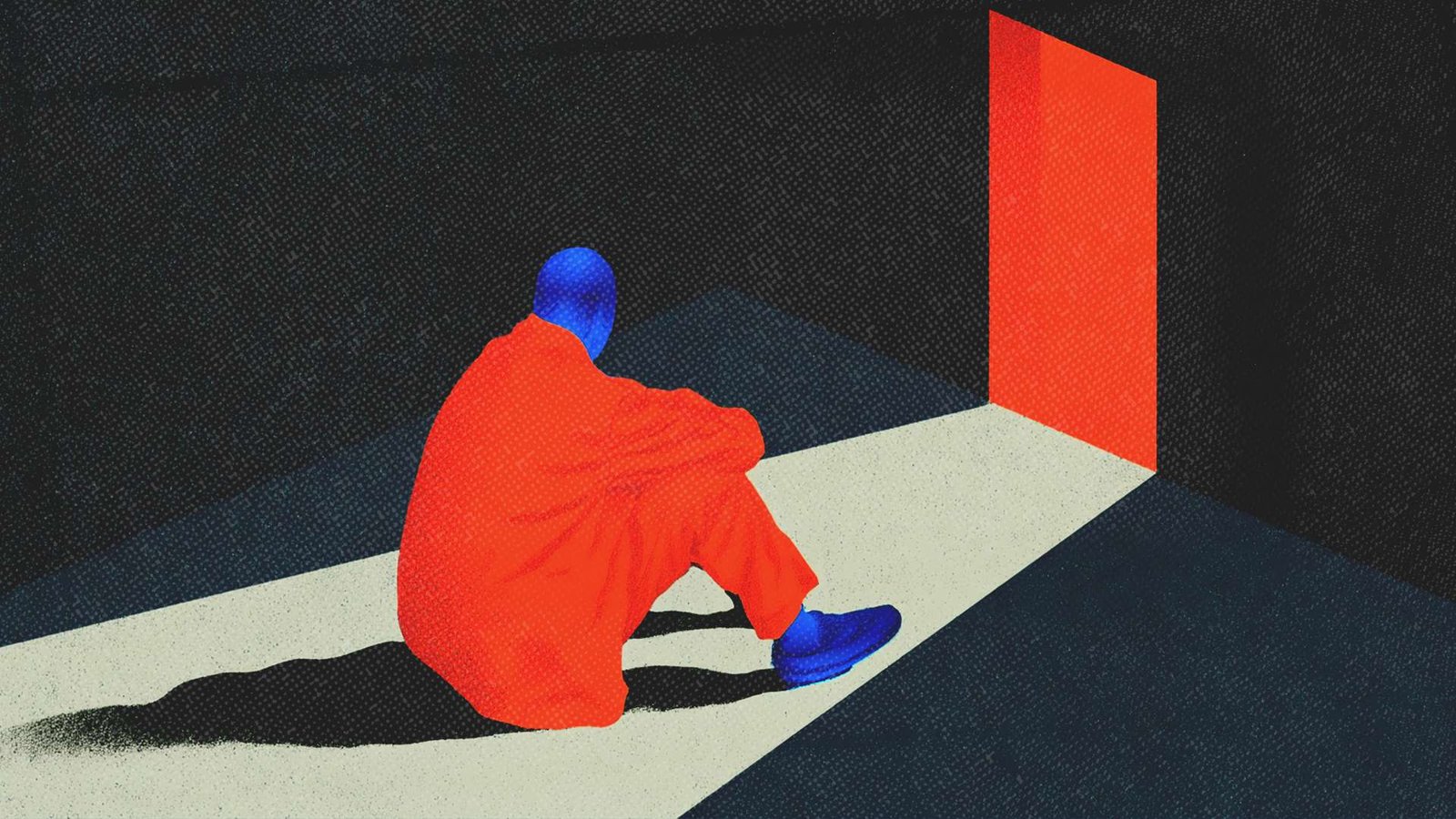
That fight landed Jenkins-Millage in solitary confinement, where he spends at least 23 hours a day locked in a cell about the size of a parking space. His interactions are limited to prison guards and medical staff. He describes the conditions as torturous, worse than being homeless or being shot. He expects to be released from solitary sometime this month, but could be held longer.
“I would not wish this on anyone,” said Jenkins-Millage.
Jenkins-Millage is one of a handful of prisoners in Oregon who filed a proposed class action lawsuit in mid-June challenging the Oregon Department of Corrections’ (ODOC) solitary confinement practices. It alleges that the ODOC is violating the state constitution’s “Unnecessary Rigor Clause,” which goes above and beyond the Constitution’s Eighth Amendment protections against cruel and unusual punishment. States like Indiana, Tennessee, Utah, and Wyoming also have similar protections in their constitutions.
The plaintiffs seek a declaration that the ODOC’s practices are unconstitutional and an injunction prohibiting the department from continuing the practices in the future. They also want to establish a monitoring regime so that the ODOC does not fall back into its old habits.
“It’s ironic that in a state that is pushing back against the Trump administration and is a progressive leader in so many ways is at the same time subjecting people to these degrading, cruel and inhumane issues,” said George Mills, a staff attorney at the Prison Law Office, a nonprofit public interest law firm representing some of the plaintiffs.
A spokesperson for the Oregon Department of Corrections told Reason that the agency can’t comment on the specifics of the lawsuit but remains committed to maintaining “safe, secure, and humane operations for adults in custody, staff, and the communities we serve.” That includes, but is not limited to, increasing out-of-cell time for people in solitary confinement, building peer mentorship programs, and enhancing violence prevention tools.
“DOC remains committed to this long‑term cultural transformation and to ensuring our practices continue to evolve in alignment with research, safety needs, and constitutional standards,” the spokesperson wrote in an email.
Solitary confinement—also known as restrictive housing or administrative segregation—has a long and sordid history in the U.S. The Eastern State Penitentiary in Philadelphia is widely considered the birthplace of solitary confinement. As early as 1829, some prisoners were kept in tiny cells only containing a worktable, a toilet, a skylight, and a Bible. Historian William Kashatus argued in a 1999 article for Pennsylvania Heritage Magazine that the cells were designed in such a way to “remind the inmate that penitence would only be achieved through the light from heaven, the word of God, and honest work.”
In 1890, the Supreme Court recognized that the assumption underpinning solitary confinement is inhumane and counterproductive in a case known as In re Medley. The case concerned a convicted murderer named James J. Medley who was held in solitary confinement for 45 days in Colorado before his execution. Chief Justice Samuel Miller, after going through a lengthy historical analysis of the practice, found that prisoners subjected to solitary confinement often “did not recover sufficient mental activity to be any subsequent service to the community.”
Keeping prisoners in solitary confinement is also inherently dangerous. Studies have shown that extended time in solitary can permanently damage an individual’s brain by shrinking the hippocampus, the part of the brain responsible for memory and sociability. That is one reason why many prisoners who are sent to solitary return with symptoms of “depression, paranoia, lack of concentration or memory, anger, and hallucinations,” according to a 2018 study. Solitary confinement can also cause muscular degeneration, cardiovascular issues, and dermatological conditions because of the lack of regular exercise and restricted hygiene habits.
Jenkins-Millage claimed in the lawsuit that he has experienced similar symptoms since he was sent to solitary confinement. For instance, he said he developed symptoms of depression or bipolar disorder, including suicidal ideation, while he was in solitary. He attributed these symptoms to a lack of meaningful human contact, recreation, and mental stimulation.
Even so, reforming solitary confinement practices has been slow and arduous work. According to 2023 estimates, more than 122,000 people are held in solitary confinement across the U.S., representing just under 7 percent of the nation’s total prison population. While many assume that the worst of the worst criminals live in solitary confinement, multiple studies have found that prisons routinely use solitary confinement as punishment for nonviolent offenses like tobacco use and talking back to a prison guard. Solitary confinement is also often considered the “de facto mental health unit” in many prisons, according to the Vera Institute of Justice.
“When we made the decision to do whatever put us in prison,” Jenkins-Millage told Oregon Public Broadcasting in June. “We didn’t stop being humans.”
The lawsuit claims directors at the ODOC are aware that their practices may run afoul of best practices. In the 91-page complaint, lawyers point to memos sent by senior ODOC leaders outlining the need to “reduce the use of segregation” and acknowledging that the practice is “detrimental to an individual’s health.” Another superintendent at Oregon’s Coffee Creek Correctional Facility claimed that “segregation isn’t an effective tool to change behavior.”
Still, the ODOC has been slow to address its issues. For instance, a 2015 study by Disability Rights Oregon found that prisoners in solitary confinement had no access to mental health treatment. A 2016 study conducted by the Vera Institute found that segregated prisoners in the ODOC lived in conditions marked by “isolation, idleness, and sensory deprivation” that created or exacerbated serious mental health issues.
“They know that this is wrong, and they know that they need to make progress on this,” Mills said.
The lawsuit was filed at a time when solitary confinement is under strict scrutiny across the globe. In 2015, the United Nations General Assembly revised what are known as its Nelson Mandela Rules, which seek to create an international standard for the treatment of prisoners, to state that solitary confinement should be used only as a “last resort” and should not last longer than 15 days. That led to prison reforms in European countries such as Germany, Ireland, Scotland, Denmark, and the Netherlands, as well as in South Africa.
Several U.S. states are creating more humane approaches to solitary confinement. Nevada reduced the amount of time prisoners can spend in solitary confinement to 15 days in 2023. A bill passed in Virginia adding new restrictions on when a prisoner can be sent to solitary confinement. Other states like Louisiana passed a law to increase access to educational materials for people in solitary confinement, and Tennessee now prohibits pregnant women from being sent to solitary.
To Mills, these initiatives come back to one of America’s original principles: “You can’t torture people, and that’s a foundational principle of our country.”
Read the full article here
Fact Checker
Verify the accuracy of this article using AI-powered analysis and real-time sources.