

 Freedom Index
Listen to the article
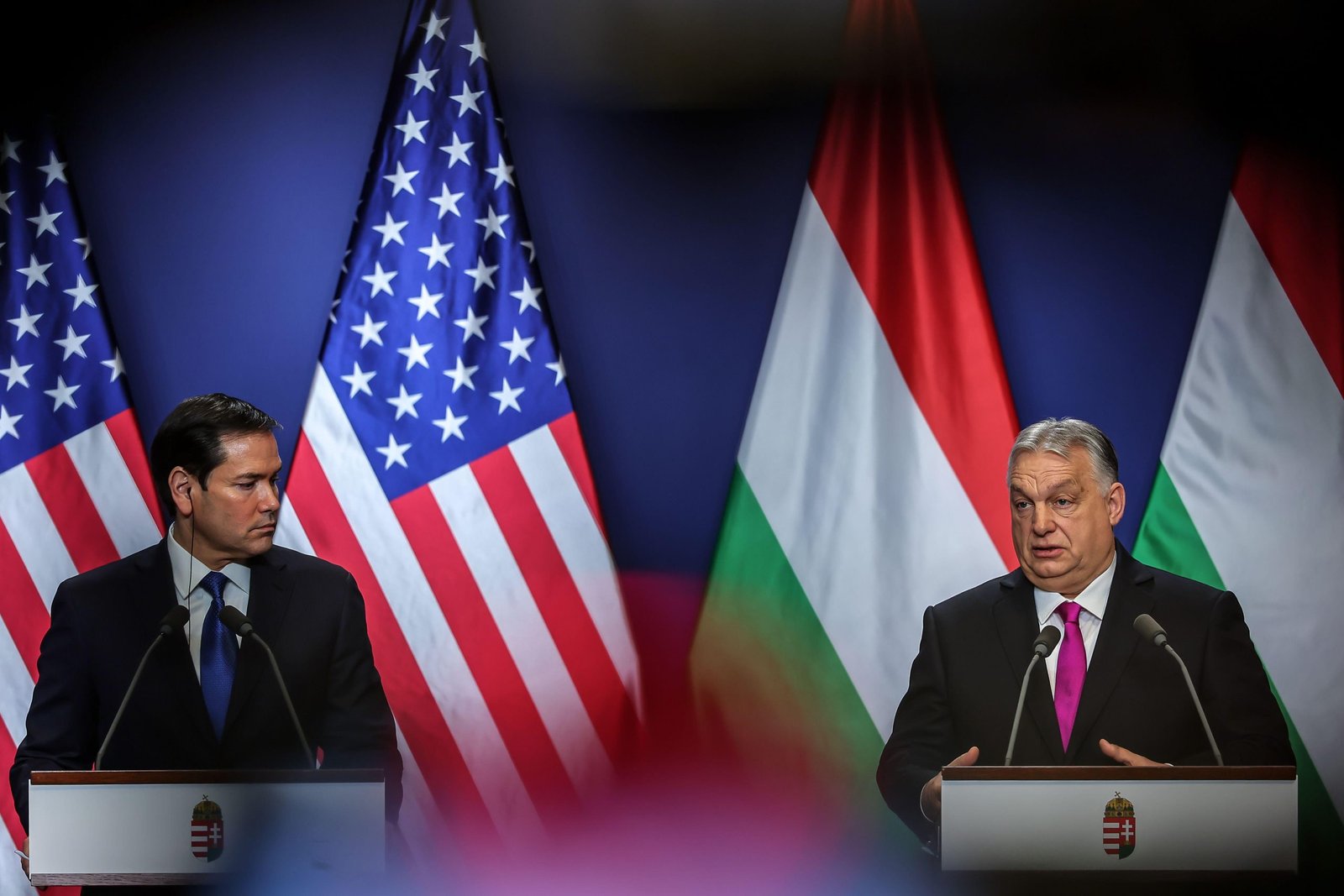
When I left Hungary on Sunday, the US secretary of state Marco Rubio had just arrived in Budapest for talks with the prime minister Viktor Orbán to give him the USA’s full-throttled support. Hungary has been somewhat of a touchstone for the MAGA movement and Rubio told Orbán that US Hungarian relations were entering “a golden age” and that if Orbán needed anything, the US would consider providing it. There are elections in Hungary just after Easter and it looks likely, if the polls are to be believed, that the more pro-EU opposition leader Péter Magyar will win. There is restrained optimism among many liberals in Budapest although nothing in this part of the world is a done deal. The week I was there, Magyar was going big on the theme that he had been lured into a honey trap and some Kompromat video Russian-style was going to be released. Only a grainy black and white still of a double-bed captured by a ceiling camera ever emerged. Even with a Magyar win, it will be difficult to unravel the total capture of institutions (universities, the media and the cultural centres) by billionaires and those loyal to Orbán’s Fidesz. I heard some 30-something American men in black bomber jackets in Budapest’s Jewish quarter loudly complaining in English that the “young people” in Hungary wanted to tax those billionaires, but they simply didn’t understand how the country relied on them. We are examining the implications on freedom of expression of all these Hungarian developments in the next magazine.
This part of Europe, which was once the Habsburg Empire, feels in flux. People, and particularly young people, are fighting back to claim their rights to be heard. Liberal forces in Slovakia are mobilising, even while the far-right leader Robert Fico is attempting to “normalise” the cultural sector, taking money away from any arts institution considered to be too “activist”. Meanwhile in Vienna, the situation to the east is waved away in the coffee houses as being unimportant, or at least an issue which will resolve itself. A famous saying about the city is: “When the world comes to an end, move to Vienna because everything happens there 20 years later.” There are fears here about an over-dependence on an increasingly unfriendly USA, particularly when it comes to digital platforms and servers – the USA could turn them all off with a flick of a switch if Europe doesn’t toe the line – and a frustration that France and Germany are not working as one to build European solidarity against hostile forces in China and Russia. And then there is a question of the rise of the far-right parties in Europe, including in Austria itself. From the end of World War Two, it was the USA which acted as a liberal guarantor for free expression in western and then eastern Europe. The old order is breaking up, the EU is weakened and ordinary people are having to decide whether those rights are still worth fighting for.
Read the full article here
Fact Checker
Verify the accuracy of this article using AI-powered analysis and real-time sources.