

 Freedom Index

Listen to the article
In the February/March 2026 issue of Reason, we explore Mayor-elect Zohran Mamdani’s policy goals and what they mean for New York City. Click here to read the other entries.
When I first took a road trip to New York as a young teen, I was astonished by the industrial landscape as we neared the city on the New Jersey Turnpike. “Why would they put all this dirty stuff so close to the city?” I asked my parents. As a D.C. kid, it had never occurred to me to think about what cities were actually for. In Washington, we mostly make rules and big marble monuments.
That trip was the first time I saw a city driven by commerce and art rather than political power. In the mid-1990s, New York was well past its industrial and shipping heyday, but the signs were still all around. The city was grittier than it would soon be—we were right on the cusp of the major decline in crime that would sweep through nearly all American cities. It was so gritty, in fact, that my parents forbade me from applying to college in New York. They thought the city was too pricey and dangerous, even though they loved it.
Today, the city is much richer and fussier than it was. Parents are still fretting about its dangers and expense. Mayors come and go—remember when Rudy Giuliani was “America’s mayor”?—and New York remains fundamentally itself.
Zohran Mamdani won the 2025 mayoral election on a platform that included fare-free buses, city-owned grocery stores, and a rent freeze for rent-stabilized units, plus equity-centered education policy and an oddly status-quo policing plan for a one-time defunder/abolitionist. As this issue of Reason unpacks, there are many reasons to fear such policies will be ineffective at best and deeply counterproductive at worst. And as my parents’ diktat shows, when governance and policy get bad enough, that can scare off potential residents and visitors alike.
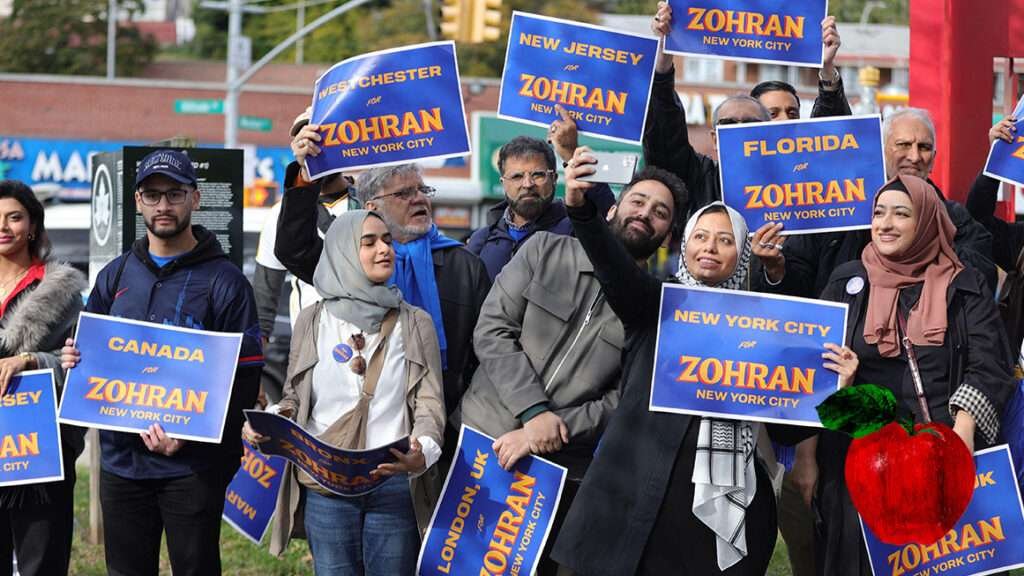
But a single mayor can’t ruin New York City, because New York City is not reducible to policy choices.
New York’s incredible power derives in large part from the fact that it’s home to a really big pile of money. Big piles of money, especially when they are in private hands, drive innovation and hustle. Big piles of money also throw off charity and patronage of the arts. A mayor can posture, he can regulate, and he can pressure firms in press conferences. He can even scare off investors and entrepreneurs at the margins. But the New York Stock Exchange is headquartered in Lower Manhattan and will be for the foreseeable future, where it remains a giant battery powering the city.
Then there’s the city’s appealingly unglamorous commercial underbelly. The New York City Economic Development Corporation reports that there are about 183,000 small businesses in the city. Yes, it’s annoying that New Yorkers won’t shut up about their beloved bodegas—it’s just a corner store!—but the insane number and subtle market differentiation of those corner stores are a joy for any night owl, early bird, or regular commuter pigeon.
Black and gray markets thrive in ways made possible by the sheer density and diversity of humanity in the city. The worse governance gets, the more commercial activity will get pushed into these markets, with all that entails. New Yorkers are famous for their workarounds of an utterly bonkers real estate market, for example. It’s also part of a vanishing breed of cities where transactions still happen in cash. A Federal Reserve Bank of New York report explains one mechanism by which density raises productivity: Proximity lowers the costs of exchanging information and generating new ideas. The paper estimates that doubling density increases productivity by about 2 percent to 4 percent.
Which brings us to the humans: New York makes visible the consequences of the free movement of people. The sophisticated, slightly impatient people who are born there are a different breed (my husband among them). The Americans who come from all over to try their luck in the big city keep the fire burning (my sister among them). And of course, New York is home to more than 3 million immigrants—about 38 percent of the city population, according to the Mayor’s Office of Immigrant Affairs.
***
I visited the city over Thanksgiving this year, blitzing up the turnpike with a family of my own. Now immune to the sights and smells of industrial New Jersey, I marveled at a different apparition: trash cans. Outgoing Mayor Eric Adams’ trash containerization push was on display in the streets, and fewer of the city’s famous trash bag mountains were visible. The Mayor’s Office reports declines in rat sightings in connection with the new rules.
I took the presence of trash cans as a reminder that improvements in governance are possible and worth fighting for. But they were literally and metaphorically dwarfed by the buzz of buying and selling, creating and destroying, visible all around them. New York City has a long history of correcting course after political disasters and absorbing bad leadership, and it will again.
Around the same time as that teenaged trip to New York, I read The Fountainhead (and then everything else Ayn Rand wrote, in rather short order). While it didn’t strike me at the time, I’ve since returned to her words about the city many times—especially after 9/11—for the way she captures the place’s powerful self-sufficiency and its terrible vulnerability: “I would give the greatest sunset in the world for one sight of New York’s skyline,” Rand wrote. “Particularly when one can’t see the details. Just the shapes. The shapes and the thought that made them. The sky over New York and the will of man made visible….When I see the city from my window—no, I don’t feel how small I am—but I feel that if a war came to threaten this, I would throw myself into space, over the city, and protect these buildings with my body.”
In the February/Mach 2026 issue of Reason, we explore Mayor-elect Zohran Mamdani’s policy goals and what they mean for New York City. Read the other entries here:
This article originally appeared in print under the headline “Mamdani Can’t Ruin New York.”
Read the full article here
Fact Checker
Verify the accuracy of this article using AI-powered analysis and real-time sources.