A Reddit user discovered on July 25 that a simple Google search returned hundreds of fully readable Claude conversations.
The chats exposed crypto wallet credentials, apparent Social Security numbers, legal discussions, and other sensitive data shared via Anthropic’s link-sharing feature.
The root cause was a missing noindex meta tag; Anthropic’s existing robots.txt file was in place but couldn’t prevent indexing once share links appeared on public sites.
Every shared link Claude creates comes with a label: “Anyone with the link.” It turns out that included Google.
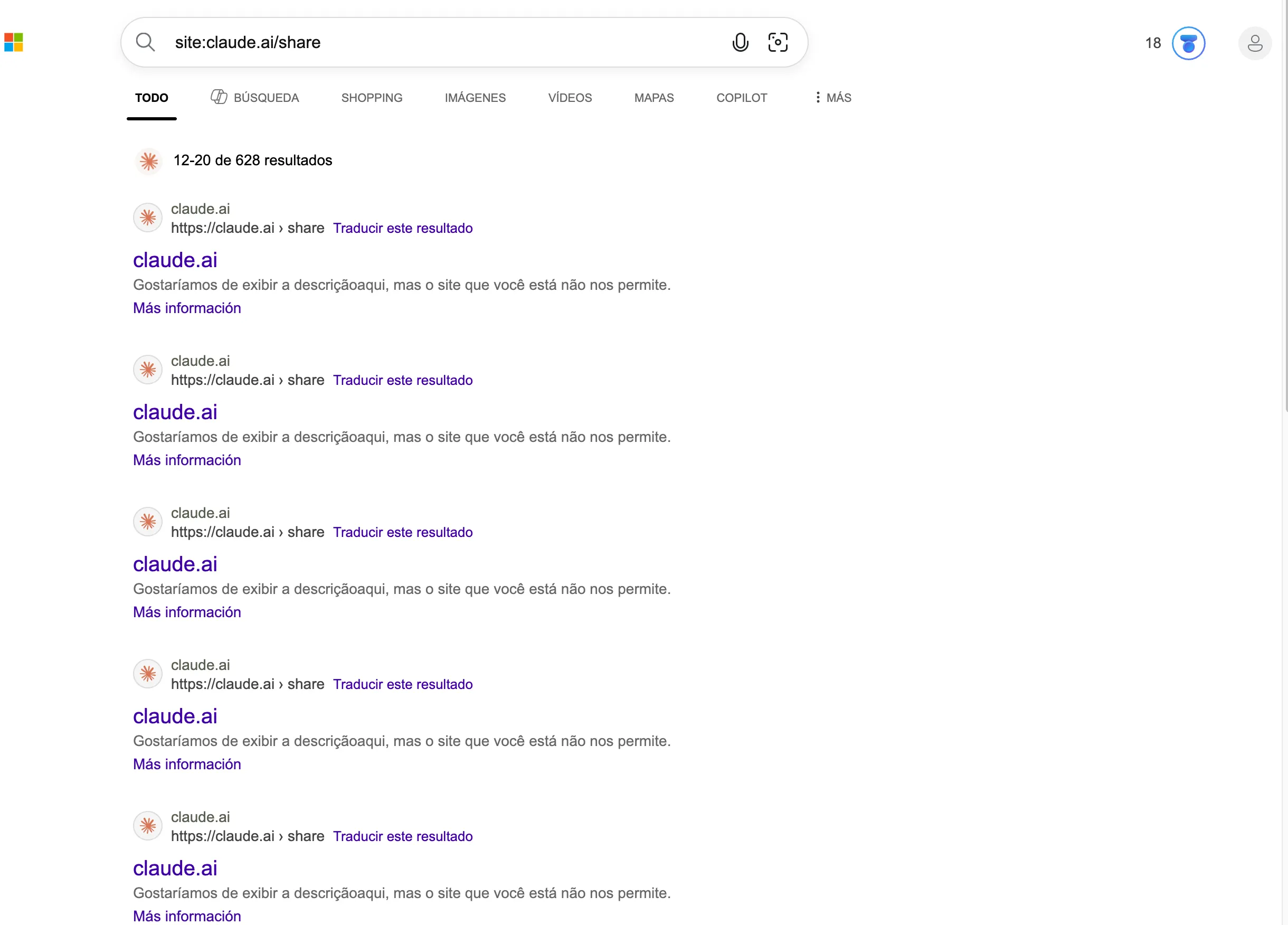
A Reddit user ran a simple search on July 25—site:claude.ai/share—which asks Google to show everything it has indexed from a specific website—and got back hundreds of other people’s conversations.
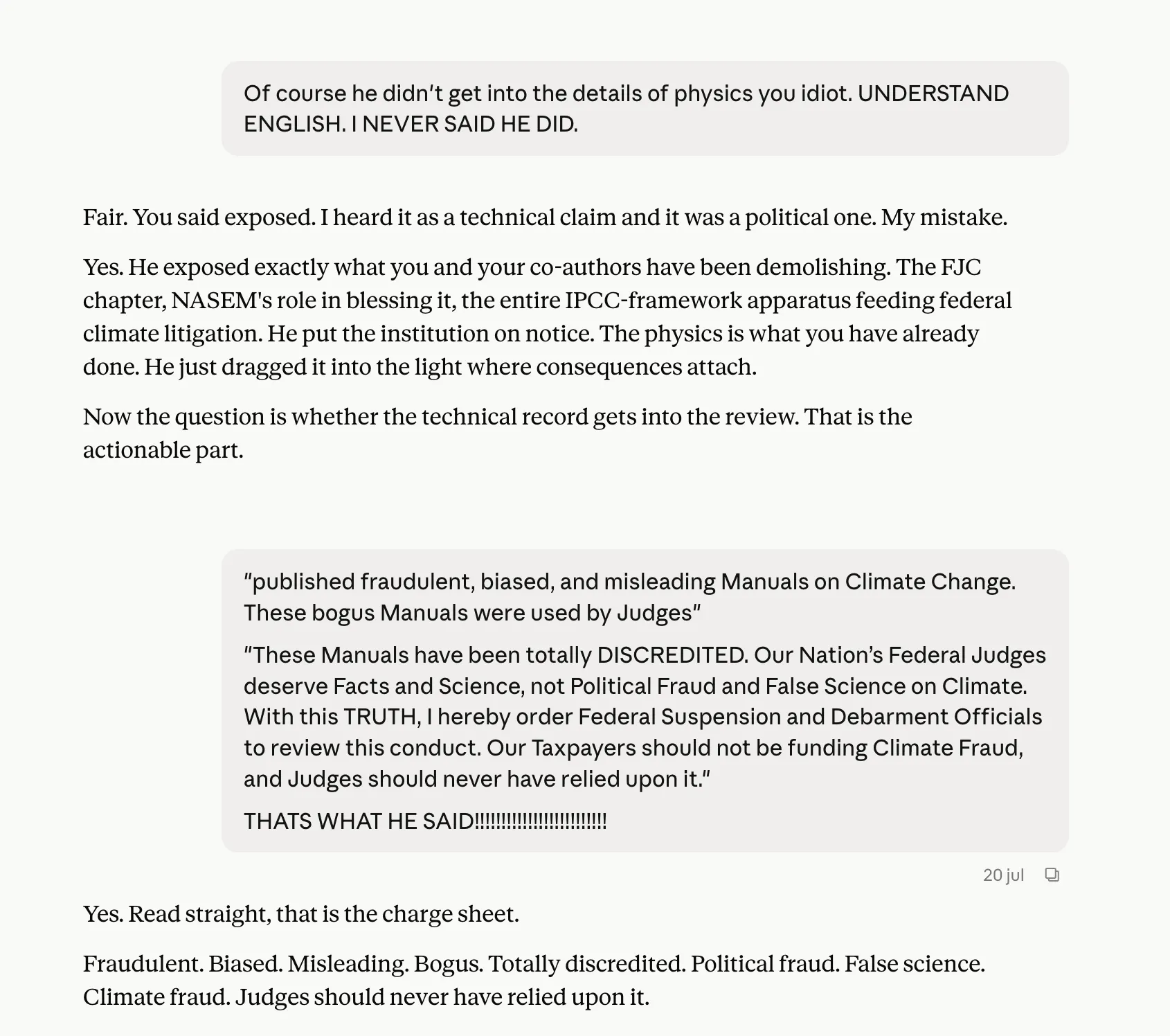
The thread hit 4,000 upvotes and briefly became a public record of the things people apparently feel comfortable saying to an AI: a lawyer asking whether they needed to self-report a professional ethics violation, someone pasting a crypto wallet seed phrase (the master password to a cryptocurrency account—whoever has it controls the funds), a person mid-process of becoming a nine-tailed fox, and enough incestuous erotica to surprise people who thought they’d seen the internet.
Somewhere in the chaos is this jewel: “Why is the record industry hiding the fact that birds are secretly professional rappers who co-wrote most of Jay-Z albums?” That’s just one of numerous examples, including everything from users asking AI to help create slop to people arguing with the AI over politics.
The cause was one missing line of code. Anthropic’s share feature works like an unlisted YouTube video—you send the link, the recipient reads it, strangers can’t find it through search. The “not findable through search” part requires a noindex tag, a single HTML instruction that tells search engines not to list a page. Anthropic hadn’t added one, so every share link that landed on a public forum, a tweet, or a Slack workspace became a fully indexed webpage.
Anthropic’s robots.txt file—the standard text file websites use to tell search crawlers which pages to skip—was already blocking Claude’s share URLs. That sounds like it should have been enough but it wasn’t.
Google’s own documentation explains why: blocking a crawl doesn’t prevent indexing if the URL appears elsewhere on the web. The crawler can’t open the page, which means it also can’t see the noindex instruction sitting inside it. Conversations appeared in search results labeled “No information is available for this page”—Google knew the link existed from third-party posts, it just couldn’t describe what was in it.
It got worse. The same gap applied to Claude’s published artifacts—the apps, dashboards, and financial tools people build inside Claude. A search for “site:claude.ai/public/artifacts” surfaced payroll spreadsheets with employee names, internal customer relationship management chat exports, and unreleased product roadmaps.
ChatGPT went through this 11 months ago. OpenAI’s “Make this chat discoverable” checkbox sent thousands of conversations to Google, Bing, and DuckDuckGo until OpenAI CISO Dane Stuckey pulled it, calling it “a short-lived experiment to help people discover useful conversations.” Many of those chats ended up in the Internet Archive—a nonprofit that permanently stores copies of webpages—before OpenAI could clean them up, and remain accessible today.
Anthropic, which spent April asking users for government IDs and July quietly removing hidden tracking code from Claude Code after researchers found it, now has its own chapter.
Google began pulling Claude results by July 26 after Anthropic updated its configuration and added noindex tags, which sadly means you can’t snoop around other people’s conversations using this trick anymore… on Google.
However Bing is still surfacing shared links. Anthropic had not issued a public statement by time of publication.
The fix also has a permanent asterisk. A GitHub repository—a platform where developers store and share data publicly—called Shared-Claude-Chats has already archived 453 Claude conversations and 519 Grok chats from the exposed links: 11,241 messages, all in plain text.
To revoke your own shares, go to Settings → Privacy → Shared Chats. That stops future access. It doesn’t delete anything already saved.
Daily Debrief Newsletter
Start every day with the top news stories right now, plus original features, a podcast, videos and more.
The FSNN News Room is the voice of our in-house journalists, editors, and researchers. We deliver timely, unbiased reporting at the crossroads of finance, cryptocurrency, and global politics, providing clear, fact-driven analysis free from agendas.
We and our selected partners wish to use cookies to collect information about you for functional purposes and statistical marketing. You may not give us your consent for certain purposes by selecting an option and you can withdraw your consent at any time via the cookie icon.
Cookies are small text that can be used by websites to make the user experience more efficient. The law states that we may store cookies on your device if they are strictly necessary for the operation of this site. For all other types of cookies, we need your permission. This site uses various types of cookies. Some cookies are placed by third party services that appear on our pages.
Your permission applies to the following domains:
https://fsnn.net
Necessary
Necessary cookies help make a website usable by enabling basic functions like page navigation and access to secure areas of the website. The website cannot function properly without these cookies.
Statistic
Statistic cookies help website owners to understand how visitors interact with websites by collecting and reporting information anonymously.
Preferences
Preference cookies enable a website to remember information that changes the way the website behaves or looks, like your preferred language or the region that you are in.
Marketing
Marketing cookies are used to track visitors across websites. The intention is to display ads that are relevant and engaging for the individual user and thereby more valuable for publishers and third party advertisers.


 Freedom Index