Close Menu
FSNN | Free Speech News NetworkFSNN | Free Speech News Network
  • Home
  • News
    • Politics
    • Legal & Courts
    • Tech & Big Tech
    • Campus & Education
    • Media & Culture
    • Global Free Speech
  • Opinions
    • Debates
  • Video/Live
  • Community
  • Freedom Index
  • About
    • Mission
    • Contact
    • Support
Trending

Judge Rules Trump Administration Illegally Retaliated Against Anthropic Over AI Red Lines

3 minutes ago

Israeli-American Emory Professor’s Defamation Case Against CAIR Georgia and Emory Student Can Go Forward (in Part)

38 minutes ago

Kraken users briefly locked out after a flood of sanctioned crypto transactions

56 minutes ago
Facebook X (Twitter) Instagram
Facebook X (Twitter) Discord Telegram
FSNN | Free Speech News NetworkFSNN | Free Speech News Network
Market Data Newsletter
Friday, August 28
  • Home
  • News
    • Politics
    • Legal & Courts
    • Tech & Big Tech
    • Campus & Education
    • Media & Culture
    • Global Free Speech
  • Opinions
    • Debates
  • Video/Live
  • Community
  • Freedom Index
  • About
    • Mission
    • Contact
    • Support
FSNN | Free Speech News NetworkFSNN | Free Speech News Network
Home»Cryptocurrency & Free Speech Finance»Why tokenization is an ETF-style market structure revolution
Cryptocurrency & Free Speech Finance

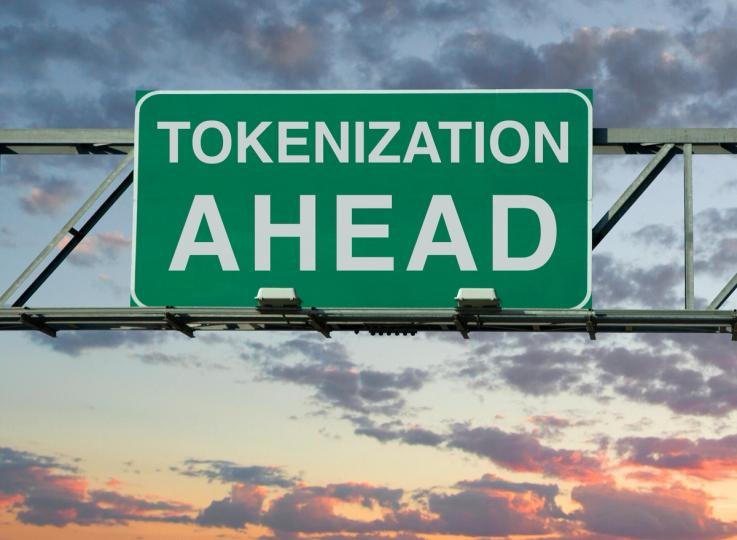
Why tokenization is an ETF-style market structure revolution

News RoomBy News Room3 months agoNo Comments5 Mins Read6 Views
Share Facebook Twitter Pinterest Copy Link LinkedIn Tumblr Email VKontakte Telegram
Why tokenization is an ETF-style market structure revolution
Share
Facebook Twitter Pinterest Email Copy Link

Listen to the article

0:00
0:00

Key Takeaways

Playback Speed

Select a Voice

In the 1990s, exchange-traded funds (ETFs) were a novel idea. Many saw them simply as a new wrapper for traditional assets – a convenient repackaging of mutual funds. In reality, ETFs triggered a market structure revolution. By introducing creation/redemption mechanisms and arbitrage-driven liquidity, ETFs fundamentally changed how markets functioned and how investors accessed assets. ETFs blurred the line between primary and secondary markets and turned arbitrage into the mechanism for holding the system together.

How does tokenization mirror the ETFs market structure revolution? In almost every key aspect.

A robust tokenized asset isn’t simply “issued” once like a stock or bond – it typically can be minted or burned on demand against some pool of underlying assets or rights. For example, when a token represents shares of a fund or stock, authorized participants (or smart contracts acting as such) should be able to deposit the underlying and mint new tokens or redeem tokens for the underlying assets.

If the token trades above the value of its underlying holdings, arbitrageurs will mint new tokens (injecting supply) until prices realign; if it trades below, they will redeem tokens (reducing supply) until the discount closes. The economic principle is identical to ETFs. The token is a wrapper on the same assets, and arbitrage keeps its price honest.

With respect to both ETFs and tokenization, the wrapper is simply a liquid representation of a basket of economic exposures. An ETF share is not the underlying securities themselves, but a standardized claim on a basket that trades efficiently because creation and redemption keep it aligned with the underlying assets. Tokenization follows the same logic. The token becomes the liquid instrument, while the underlying assets remain the economic anchor. What matters is not the form of the wrapper, but the strength of the arbitrage link between wrapper and basket.

ETFs already represented a major leap in transparency by making baskets of assets trade continuously on-exchange, with visible prices, intraday liquidity, and alignment with underlying value through arbitrage. Tokenization builds on this foundation. Where blockchains can go further is in making issuance, transfers and outstanding supply observable in near real time, potentially widening visibility into how the wrapper evolves relative to the underlying basket.

One of the most important features of tokenized markets is their ability to trade continuously, even when underlying markets are closed. For anyone who has traded ETFs globally, this is not new but a familiar and highly valuable market‑structure capability. Continuous trading outside local market hours allows prices to incorporate new information as it emerges, rather than waiting for the next open, and enables investors across time zones to transfer risk when they actually need to. These prices reflect informed expectations — built using correlated instruments, futures, FX, and broader market signals — in the same way international and cross‑timezone ETFs have operated for decades.

U.S.-listed ETFs that hold European or Asian equities already demonstrate how credible pricing can exist when the underlying cash market is closed. Those ETFs continue to trade during the U.S. session even after Europe or Asia has shut, and their market price naturally reflects updated expectations — based on futures, FX, ADRs, macro news and other correlated signals — rather than stale closing prints. In practice, authorized participants and market makers continuously estimate an “intrinsic fair value” for the ETF, including an expected next-open price for holdings in closed markets, and quote around that to keep the ETF’s market price anchored to that fair value.

The same concept can be applied to tokenized Apple stock, for example, which can trade on Saturday based on the evaluation of Apple’s likely next trading price come Monday. If big news broke on Saturday, you’d see the token react immediately. Liquidity providers would quote a price that factors in that news, likely hedging with any related instruments, such as Nasdaq futures, if available. By Monday’s open, Apple’s real stock price would likely catch up to wherever the token traded over the weekend. In effect, the token becomes a leading indicator for the underlying stock.

Market participants (especially across different time zones) don’t all operate on U.S. Eastern Time. A European investor holding a tokenized U.S. bond fund might love the ability to adjust positions at 8 p.m. CET on a Friday, rather than waiting until Monday. While providing liquidity 24/7 raises the “cost of carry” or the risk of holding a position when underlying markets are closed. In practice, this just means spreads might be a bit wider during purely off-hour trading, as they are, say, in currency markets on a holiday – but the key difference is that the digital asset market stays open. And as more participants join and risk management tools improve, these costs diminish. In the long run, a 24/7 market should become as natural as the 24/5 FX market is today.

The current tokenization dialogue closely resembles the early days of ETFs: initial skepticism, early traction in niche segments and increasing institutional involvement. That same pattern ultimately transformed ETFs into a $10+ trillion market.

I firmly believe tokenization is on the same path, because the structural forces pushing it forward are the same ones that made ETFs successful. The relevant test is not technological novelty, but whether it improves efficiency, access and system-level robustness. Where those conditions are met, tokenization is not merely comparable to the ETF evolution — it represents its logical continuation.

Read the full article here

Fact Checker

Verify the accuracy of this article using AI-powered analysis and real-time sources.

Get Your Fact Check Report

Enter your email to receive detailed fact-checking analysis

5 free reports remaining

Continue with Full Access

You've used your 5 free reports. Sign up for unlimited access!

Already have an account? Sign in here

Share. Facebook Twitter Pinterest LinkedIn Tumblr Email Telegram Copy Link
News Room
  • Website
  • Facebook
  • X (Twitter)
  • Instagram
  • LinkedIn

The FSNN News Room is the voice of our in-house journalists, editors, and researchers. We deliver timely, unbiased reporting at the crossroads of finance, cryptocurrency, and global politics, providing clear, fact-driven analysis free from agendas.

Related Articles

Cryptocurrency & Free Speech Finance

Judge Rules Trump Administration Illegally Retaliated Against Anthropic Over AI Red Lines

3 minutes ago
Cryptocurrency & Free Speech Finance

Kraken users briefly locked out after a flood of sanctioned crypto transactions

56 minutes ago
Cryptocurrency & Free Speech Finance

ENA Rises 10% after Ethena Foundation Reveals Token Buyback Proposal

1 hour ago
Cryptocurrency & Free Speech Finance

An XRP treasury company backed by Ripple is a shareholder vote away from Nasdaq

2 hours ago
Cryptocurrency & Free Speech Finance

OneKey reproduces transaction replacement attack on outdated Ledger Ethereum app

2 hours ago
Cryptocurrency & Free Speech Finance

Solana’s faster disinflation plan leads vote as $800K burn proposal trails

3 hours ago
Add A Comment

Comments are closed.

Editors Picks

Israeli-American Emory Professor’s Defamation Case Against CAIR Georgia and Emory Student Can Go Forward (in Part)

38 minutes ago

Kraken users briefly locked out after a flood of sanctioned crypto transactions

56 minutes ago

ENA Rises 10% after Ethena Foundation Reveals Token Buyback Proposal

1 hour ago

A Connecticut Couple Is Fighting for the Right To Let People Hike on Their Land

2 hours ago
Latest Posts

Photo: Sergio Kian/UnSplash There are many things to adore about China. The high-speed rail networks are great. Zooming from Shanghai international airport into the city at 431 km per hour is an extraordinary experience. The food is varied and delicious. While the country has a problem with sexual and domestic abuse within relationships, the streets are very safe. I miss being able to walk home at any hour down a dark lane without clutching keys in my hands. I could go on and many in fact do. A current trend – Chinamaxxing – sees young people from the West in thrall to China and taking to social media to say as such. One choice phrase is: “You met me at a very Chinese time in my life.” Chinamaxxers often overlook or downplay the negative parts of the country. The retort will typically be: “our countries aren’t perfect”. And they’re right. Europe, the UK and the USA do have problems, ones we often point out at Index. Still, some perspective is needed. We’re not talking about sporadic violations; we’re talking about systematic abuse at scale. I was bemused by an article in The New World this week interviewing a Chinamaxxer who had to change his VPN three times just to do the interview and muffle his voice when speaking about Tibet and Tiananmen Square. In the UK, a VPN is still very much a choice, not a requirement, and speaking quietly is usually done out of respect to neighbours and noise pollution, rather than from a fear you’re being spied on and could receive a knock at the door. I wonder too what the Chinamaxxers make of the fact that Gao Zhen, a prominent Chinese-American artist known for provocative sculptures of Mao Zedong, was sentenced Tuesday to three years in prison for slandering China’s “heroes and martyrs”? I wonder what they’d make of Guo Degang, lauded for his comedy on the national stage, now being investigated for allegedly improvising parts of a patriotic song? How would they respond to a new report from the International Campaign for Tibet, which showed how Beijing is tightening its grip on the region further, the recently passed and euphemistically labelled Promoting Ethnic Unity and Progress Law helping here? In Hong Kong, activist Chow Hang-tung was convicted simply for organising Tiananmen vigils. A letter from her published by us spoke of the subtle torture of handcuffs designed to constrict and contort the body. Thoughts on this? And what about the woman who was arrested outside the same courtroom for wearing a t-shirt with Japanese characters, which were apparently deemed seditious? These are just some examples from the last week. This isn’t a case of whataboutery. I’m not asking Chinamaxxers to comment on the rights record of Venezuela or Belarus. I’m not even asking them to remark on all these individual cases. But for those who call themselves spiritually Chinese, to bypass the bad and the ugly in favour of just the good is either wilful ignorance, self-censorship or both. READ MORE

2 hours ago

An XRP treasury company backed by Ripple is a shareholder vote away from Nasdaq

2 hours ago

OneKey reproduces transaction replacement attack on outdated Ledger Ethereum app

2 hours ago

Subscribe to News

Get the latest news and updates directly to your inbox.

At FSNN – Free Speech News Network, we deliver unfiltered reporting and in-depth analysis on the stories that matter most. From breaking headlines to global perspectives, our mission is to keep you informed, empowered, and connected.

FSNN.net is owned and operated by GlobalBoost Media
, an independent media organization dedicated to advancing transparency, free expression, and factual journalism across the digital landscape.

Facebook X (Twitter) Discord Telegram
Latest News

Judge Rules Trump Administration Illegally Retaliated Against Anthropic Over AI Red Lines

3 minutes ago

Israeli-American Emory Professor’s Defamation Case Against CAIR Georgia and Emory Student Can Go Forward (in Part)

38 minutes ago

Kraken users briefly locked out after a flood of sanctioned crypto transactions

56 minutes ago

Subscribe to Updates

Get the latest news and updates directly to your inbox.

© 2026 GlobalBoost Media. All Rights Reserved.
  • Privacy Policy
  • Terms of Service
  • Our Authors
  • Contact

Type above and press Enter to search. Press Esc to cancel.

🍪

Cookies

We and our selected partners wish to use cookies to collect information about you for functional purposes and statistical marketing. You may not give us your consent for certain purposes by selecting an option and you can withdraw your consent at any time via the cookie icon.

Cookie Preferences

Manage Cookies

Cookies are small text that can be used by websites to make the user experience more efficient. The law states that we may store cookies on your device if they are strictly necessary for the operation of this site. For all other types of cookies, we need your permission. This site uses various types of cookies. Some cookies are placed by third party services that appear on our pages.

Your permission applies to the following domains:

  • https://fsnn.net
Necessary
Necessary cookies help make a website usable by enabling basic functions like page navigation and access to secure areas of the website. The website cannot function properly without these cookies.
Statistic
Statistic cookies help website owners to understand how visitors interact with websites by collecting and reporting information anonymously.
Preferences
Preference cookies enable a website to remember information that changes the way the website behaves or looks, like your preferred language or the region that you are in.
Marketing
Marketing cookies are used to track visitors across websites. The intention is to display ads that are relevant and engaging for the individual user and thereby more valuable for publishers and third party advertisers.