

 Freedom Index
Listen to the article
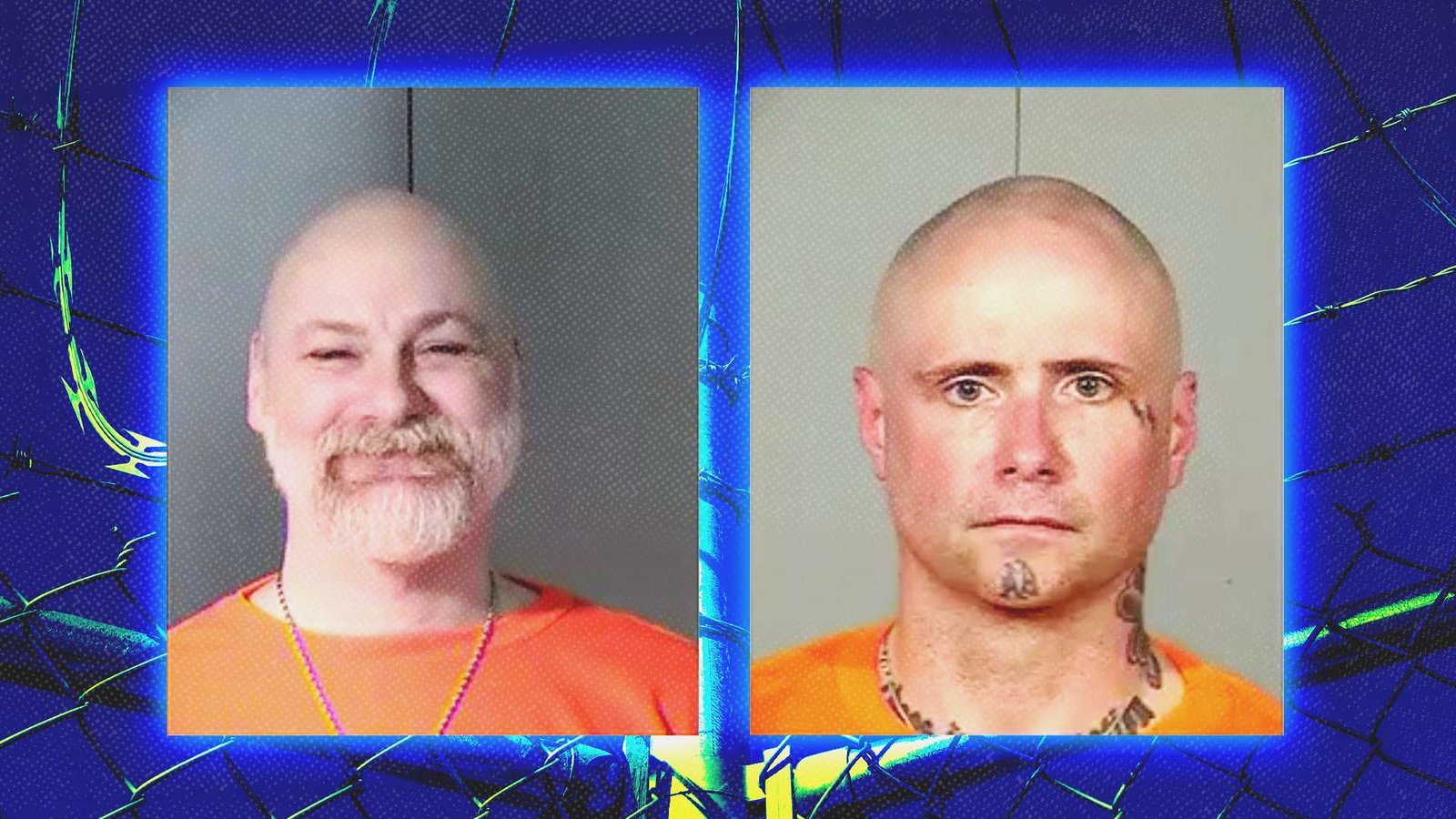
Amidst arguments over the morality of the death penalty and mistakes made in deciding who deserves punishment, some situations remind us why capital punishment retains support. Case in point: murder charges against Pete Van Winkle and Tracy Hampton for killing fellow prison inmate Kenneth Thompson, all three of whom were already on death row, in Pinal County, Arizona. Despite repeated revelations of mistaken convictions of the innocent and other perversions of justice, capital punishment remains popular because people want such psychopaths to never again pose a threat to life and safety.
You are reading The Rattler from J.D. Tuccille and Reason. Get more of J.D.’s commentary on government overreach and threats to everyday liberty.
According to news reports, Van Winkle originally landed on death row because in 2008 he beat and strangled a fellow inmate in the Maricopa County jail. “After the attack, Van Winkle was seen dragging Cotton’s body out of the cell and attempting to throw it over a second-floor railing,” writes Mitchell Koch of WREG. “Hampton was serving a death sentence for the May 17, 2001, murders of Charles Findley and Tanya Ramsdell, as well as Ramsdell’s unborn child.” Hampton supposedly killed Findley because he told the police “where Hampton could be found to serve a traffic ticket,” while Ramsdell was killed because she might have been pregnant with a mixed-race child. The inmate they recently allegedly killed, Thompson, was in prison for the 2012 hatchet murder of his sister-in-law and her boyfriend.
Better examples would be hard to find, of people you’d want permanently removed from circulation.
Against the examples of such human predators are counterexamples like that of Carmen Mejia, who was exonerated in May after spending 22 years in prison for the death of a 10-month-old boy scalded by bathwater. “Applicant has established by clear and convincing evidence that she is actually innocent of all three counts,” according to the Texas Court of Criminal Appeals. Likewise, Jesse Lee Johnson walked free after 25 years in an Oregon prison when prosecutors dropped the case in the face of new evidence, as did Lamar Johnson in Missouri after almost 30 years behind bars when a judge conceded “convincing and reliable evidence of ‘actual innocence’ to overturn the conviction,” in the words of ABC News.
The Innocence Project is the organization most often credited with efforts to overturn false convictions and return innocent people to free lives. According to the Death Penalty Information Center, “since 1973, at least 202 people who were wrongly convicted and sentenced to death in the U.S. have been exonerated.” Unfortunately, those who have been executed are beyond help.
Yet fear of the Van Winkles and Hamptons of the world largely prevails over sympathy for the likes of Mejia and the Johnsons. Except for brief periods during the 1950s and 1960s, support for the death penalty has been a majority preference among Americans since Gallup began polling in the 1930s.
“When Gallup initiated this measure in 1936, 59% of U.S. adults favored the death penalty for convicted murderers,” the pollster noted in 2022, “and majorities have supported it since then, with the exception of several readings taken between 1957 and March 1972, including the record-low 42% in 1966.”
Pew Research agrees, noting last week that at 66 percent, “support for the death penalty is 6 percentage points higher than it was five years ago, in April 2021—though it is roughly equal to where it was in August of 2020 (65%).”
Interestingly, Pew adds that 68 percent consider the death penalty morally justified for murder, but 59 percent say the death penalty is not a crime deterrent and 73 percent say there is some risk an innocent person could be put to death.
This suggests that many Americans are willing to risk the dangers of occasional miscarriages of justice to punish serious criminals and remove the threat they pose to the public. That flies against the legal insight of legal commentator William Blackstone that “it is better that ten guilty persons escape than that one innocent suffer.” But it’s a representation of public sentiment that legal reformers need to consider if they hope to improve the criminal justice system.
People are afraid of crime and of human predators. This point was driven home in recent years by the pandemic-era surge in both violent and property crime which has thankfully returned to its pre-Covid decline. For most people, the danger posed by criminals on the street is more pressing than the largely theoretical (unless they or their families are affected) perils of criminal justice system errors. And government legitimacy is largely based on its ability to keep the peace.
This position was well summarized in a landmark court case in South Africa, a country familiar with violent crime and government ineffectiveness. The 1995 South African Constitutional Court decision in S v. Makwanyane ultimately ended the death penalty in that country. But in a concurring opinion, Justice Laurie Ackermann wrote: “In a constitutional state individuals agree (in principle at least) to abandon their right to self-help in the protection of their rights only because the state, in the constitutional state compact, assumes the obligation to protect these rights. If the state fails to discharge this duty adequately, there is a danger that individuals might feel justified in using self-help to protect their rights.”
Protecting life, liberty, and property are core functions of government. If they’re not fulfilled, people will act on their own to punish criminals, real and imagined. That’s probably where long-term support for the death penalty originates, since people fear the reality of the world’s Van Winkled and Hamptons.
The proper counterargument is Blackstone’s ratio about letting some guilty go free is to avoid wrongfully penalizing the innocent, but not just in the high-minded way it’s often presented which can seem abstract to people fearful of crime. Blackstone’s insight reminds us that a criminal justice system unable to effectively distinguish between guilt and innocence is just a horrible lottery. If innocent people are likely to suffer punishment, it makes sense for everybody to forcefully resist arrest or government attention of any sort, whether or not they’ve committed a crime.
“When innocence itself, is brought to the bar and condemned, especially to die, the subject will exclaim, it is immaterial to me, whether I behave well or ill; for virtue itself, is no security. And if such a sentiment as this, should take place in the mind of the subject, there would be an end to all security what so ever,” argued then-attorney John Adams in 1770, decades before he became the second U.S. president.
Americans support the death penalty because they want to combat violence and chaos. But a criminal justice system incapable of assuring the public that it won’t kill the innocent threatens the most chaotic violence of all. Those of us who want a better criminal justice system need to respect public fears of crime and better present our message about the dangers of an overly punitive state.
Read the full article here
Fact Checker
Verify the accuracy of this article using AI-powered analysis and real-time sources.