

 Freedom Index
Listen to the article
The questions were put to me without malice: Are you Jewish? And is that why you have written about antisemitism and antizionism from so far outside the immediate theatre of war? I understand these questions. They were asked in good faith, and I will answer them seriously in return.
Antisemitism is unequivocally a Jewish wound, a Jewish danger, and a Jewish historical burden. Jews are its direct targets, and nothing in this essay seeks to diminish that fact. But it is also my belief that antisemitism is more than a problem of Jewish identity, memory, and self-defence. It reveals, above all, the inhumanity of those who hate, and of those who excuse and reward hatred. It discloses the hater’s appetite, the witness’s permission, and the institution’s evasions.
On 7 October 2023, Hamas and its accomplices carried out the largest massacre of Jews since the Holocaust: a cross-border invasion, ambush, and slaughter, maliciously directed at civilian life. These murders were qualitatively different to lives lost during a battlefield exchange or to collateral damage during a military operation. The victims were men, women, children, the elderly and disabled, foreign workers, festival-goers, and whole communities who were executed without discrimination or mercy. Sexual violence was not incidental to the massacre; it was part of the premeditated method of terror, cruelty, and humiliation. Homes were invaded, families were shattered, bodies were defiled, and the ordinary trust of civilian life was destroyed. They were raped and murdered where they slept, danced, and sought refuge.
Nothing that has happened since can retrospectively convert those atrocities into an ordinary military encounter. Chronology matters. Before the arguments over Gaza, before casualty comparisons, before the machinery of equivocation began to grind, there was the original crime: the deliberate destruction and violation of civilians because of who they were, enacted under an explicitly annihilationist policy.
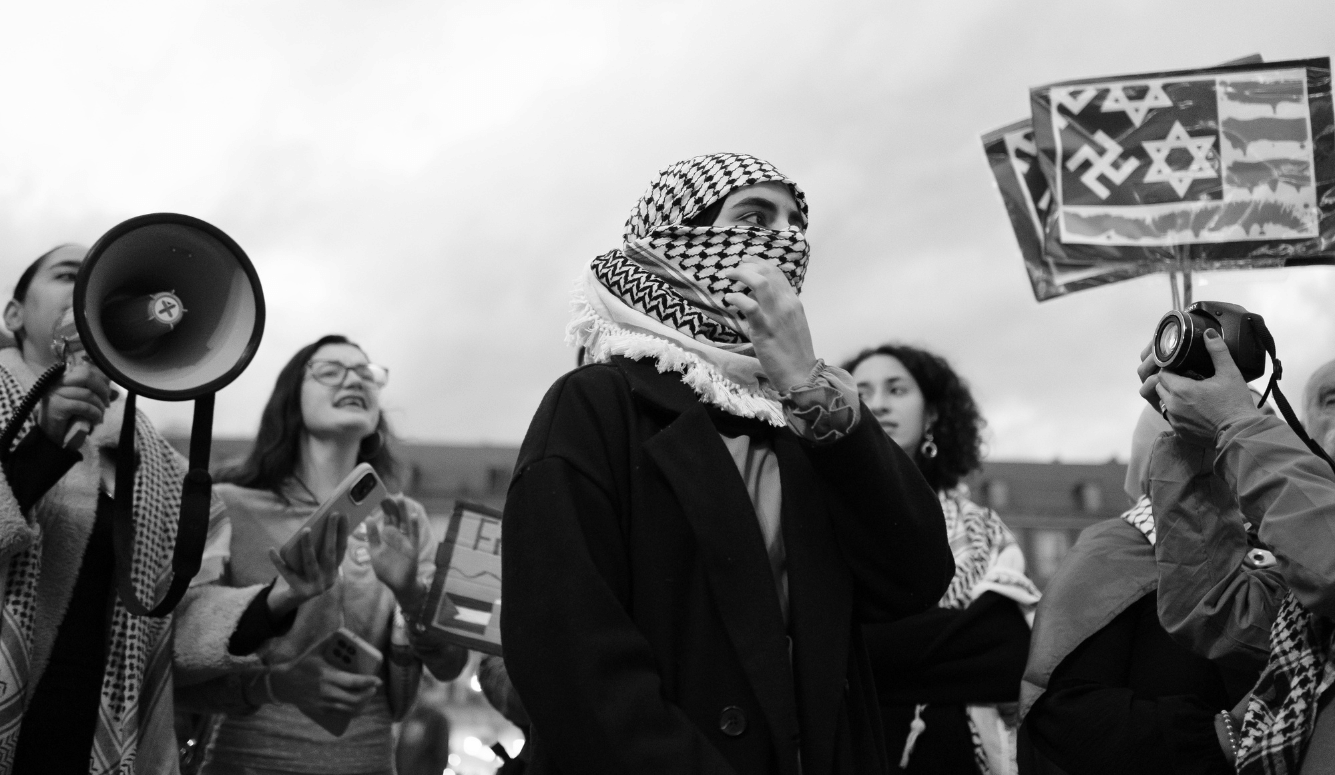
The dishonour that followed from those predisposed to sympathise with the Palestinian cause did not hide itself well. It appeared under the names of antizionism, decolonisation, liberation, and nuance. Criticism of Israeli policy is not antisemitism, we were reminded, and that is true as far as it goes—no state should be beyond judgment. Yet after the massacre, the antizionist rhetoric that spread across universities, activist networks, international organisations, and polite liberal society abandoned the grammar of ordinary political criticism almost immediately.
That rhetoric recast Israel as a uniquely monstrous polity, the existence of which requires permanent moral justification. It allowed people to avoid saying “Jew” as they directed their appetite for accusation and contempt towards the only collective expression of Jewish nationhood and survival. A decent response to the atrocities of 7 October required no ideological sorting. Instead, much of the modern world paused before it contextualised, inverted, and excused.
Antisemitism and antizionism after 7 October marked a moral crossroads at which good people were asked to choose between betrayal and humanity. Too many right-thinking people chose the former, and they did so with righteousness. That is why I write about this topic, irrespective of my identity credentials. For what remains of a person, an institution, or a civilisation that behaves this dishonourably whenever Jews and Israel are the targets of hatred and violence?
I. Sartre’s Threshold
In Réflexions sur la Question Juive, written in the aftermath of the Second World War, Sartre argued that Jew-hatred is not the product of a rational grievance. The antisemite chooses the Jew as an object on to which resentment, bad faith, and contempt for complexity can be projected. The Jew is useful because he can be made to explain everything. He is imagined as both weak and powerful, rootless and controlling, foreign and intimate, verminous and demonic. This contradiction is not a defect in antisemitic thought. It is part of its architecture.
Antisemitism is not chiefly an error of information. It is a moral and psychological arrangement. The antisemite wants a world in which responsibility can be transferred outward. Someone else has corrupted the nation, rigged the economy, polluted the culture, orchestrated the war, manipulated the media, poisoned the young. The Jew is assigned the role of metaphysical culprit. Once that role has been accepted, facts become secondary. Evidence is not weighed; it is conscripted.
But Sartre takes us only as far as the threshold. He helps us to see what antisemitism reveals about the hater. The aftermath of 7 October requires a further question: what does antisemitism reveal about those who do not think of themselves as haters? What does it reveal about the witness who hesitates, the university that equivocates, the newspaper that launders suspicion, the government that rewards violence with diplomatic recognition, and the humanitarian class that discovers nuance only when Jews have been murdered?
The problem after 7 October was never confined to the open antisemite, who is easy to recognise. The more disturbing spectacle was the behaviour of people and institutions that speak fluently about human dignity, trauma, minorities, safety, and historical injury, but then become evasive or excited when Jewish suffering enters the room. Those who demanded impossible proof before they would acknowledge that Israeli women and men had been sexually violated. Who tore down posters of hostages. Who described the massacre in southern Israel as legitimate resistance. Who converted grief into geopolitical argument before the bodies were cold. Some—but by no means all—of these voices refrained from celebration; instead, they lowered their gaze and their voices and waited for the topic of conversation to become less inconvenient.
This was not just a matter of psychology, it was also a test of conduct: could people mourn without qualification, tell the truth when it endangered their tribal affiliations or prior political commitments, protect Jewish students and colleagues with the urgency they would have shown toward other threatened minorities, reject slogans of erasure, distinguish criticism of Israeli policy from the fantasy of eradicating the only Jewish state? Could they speak up when silence had become a form of permission?
Many found they could not. And their conduct matters because antisemitism is not just a problem of fanaticism. It survives through the respectable coward, the procedural evader, the institution that waits for Jews to become less embarrassing, and the citizen who knows that something indecent has happened but prefers not to quarrel with the room. Antizionism now supplies much of the respectable language for this evasion. It allows many who would indignantly deny antisemitism to preserve their idea of themselves while behaving dishonourably toward Jews.
That is why modern humanitarian language is often too compromised to name the failure. We need an older and stricter term.
Read the full article here
Fact Checker
Verify the accuracy of this article using AI-powered analysis and real-time sources.