

 Freedom Index

Listen to the article
-
How AI agents could connect AI and DeFi
For years, AI has largely stayed outside direct economic activity. AI systems could answer queries, summarize documents, create images and support coding. However, they could not take part directly in financial transactions. Humans remained responsible for the key actions: accessing accounts, confirming choices and approving transfers.
That boundary is now starting to fade.
A new wave of “agentic” AI systems is taking shape. Unlike traditional chatbots that only respond to inputs, these agents can set goals, use tools, gather data and carry out tasks. Developers are increasingly exploring ways for these agents to connect with crypto wallets.
The impact could go well beyond asking an AI assistant about Bitcoin price movements. An AI system could monitor a decentralized finance (DeFi) portfolio, organize transactions, settle payments for digital services, identify yield opportunities or follow financial instructions overnight.
The technology is still at an early stage, but the supporting infrastructure is already being built.
-
From chatbots to financial actors
Traditional AI systems are good at handling information. They can review large datasets, detect trends and generate human-like responses. However, they usually stop at giving suggestions.
Agentic AI goes further.
These systems combine reasoning, memory and the ability to interact with outside tools. Instead of simply advising, “You should rebalance your portfolio,” an agent could collect market data, assess options and prepare the relevant transactions.
Crypto infrastructure makes this shift important.
Compared with traditional banking systems, blockchain networks run without interruption, remain open worldwide and allow anyone with a wallet to take part. They are also programmable by design. This makes them a strong fit for software agents that need to interact with financial systems without being limited by operating hours, location or intermediaries.
Did you know? The first widespread use of crypto by AI may not involve trading at all. Agents could simply pay for APIs, cloud computing and datasets, creating an economy where software buys services from other software.
-
What AI agents can do with crypto wallets
Despite the enthusiasm around autonomous agents, current capabilities are still limited. Most AI systems that interact with wallets continue to work with human oversight. Instead of having full control over assets, they usually act as assistants that help users with more complex tasks.
One especially useful function is access to blockchain information.
AI agents can track wallet balances across different networks, review DeFi holdings, follow non-fungible token (NFT) collections, monitor governance proposals and detect unusual activity. Users could ask an agent to explain their overall exposure and possible risks. This would reduce the need to check several interfaces manually.
Agents can also prepare transactions.
For example, an AI assistant might create the transaction needed to swap one token for another, calculate gas costs, suggest the best time to execute it or explain staking steps. The user would then review the details before confirming.
This “human-in-the-loop” approach is gaining favor because it combines efficiency with proper oversight.
Some systems are moving beyond advice.
Within set limits, agents might independently handle recurring purchases, adjust treasury allocations, collect rewards or manage subscription fees. They operate within limits set by users rather than making independent financial judgments.
Greater independence may come later, but the current focus remains on controlled delegation rather than unlimited control.
-
Why crypto may work better than traditional finance for AI agents
Traditional financial systems were built with human involvement in mind. They were not designed for autonomous software.
Opening accounts requires identity checks. Transactions often need intermediaries. Settlements can take days. Many services work only during business hours and within specific regulatory regions.
Crypto works differently.
Wallets depend on cryptographic approval instead of direct ties to institutions. Settlements can happen in minutes or even seconds, depending on the network. Transactions run continuously and are not tied to location.
For AI agents, this difference matters.
A software program does not have identity documents or the ability to visit a physical bank. However, it can interact with a blockchain using cryptographic keys and coded instructions.
As a result, blockchain networks offer a financial system that fits machine participation more naturally.
This does not mean traditional finance will disappear. Instead, crypto could serve as a base layer that helps software agents carry out transactions more efficiently.
Did you know? Future agent wallets may work much like parental controls. Instead of unlimited access, users could set daily spending caps, approved vendors and emergency stop buttons for their AI helpers.
-
The rise of agent wallets
As developers test autonomous systems, a new type of infrastructure is being built: agent wallets.
These are not standard crypto wallets simply handed to an AI model without safeguards. Instead, they are designed with clear limits for delegated control.
Agent wallets might include spending caps that limit how much money an AI can transfer within a set period. They could also add time-based rules that restrict activity to approved hours.
Such wallets may use transaction whitelists, allowing agents to interact only with pre-approved protocols or counterparties. Some designs enforce asset limits, preventing agents from holding certain assets entirely. Others use multisignature setups that require human approval before major transactions.
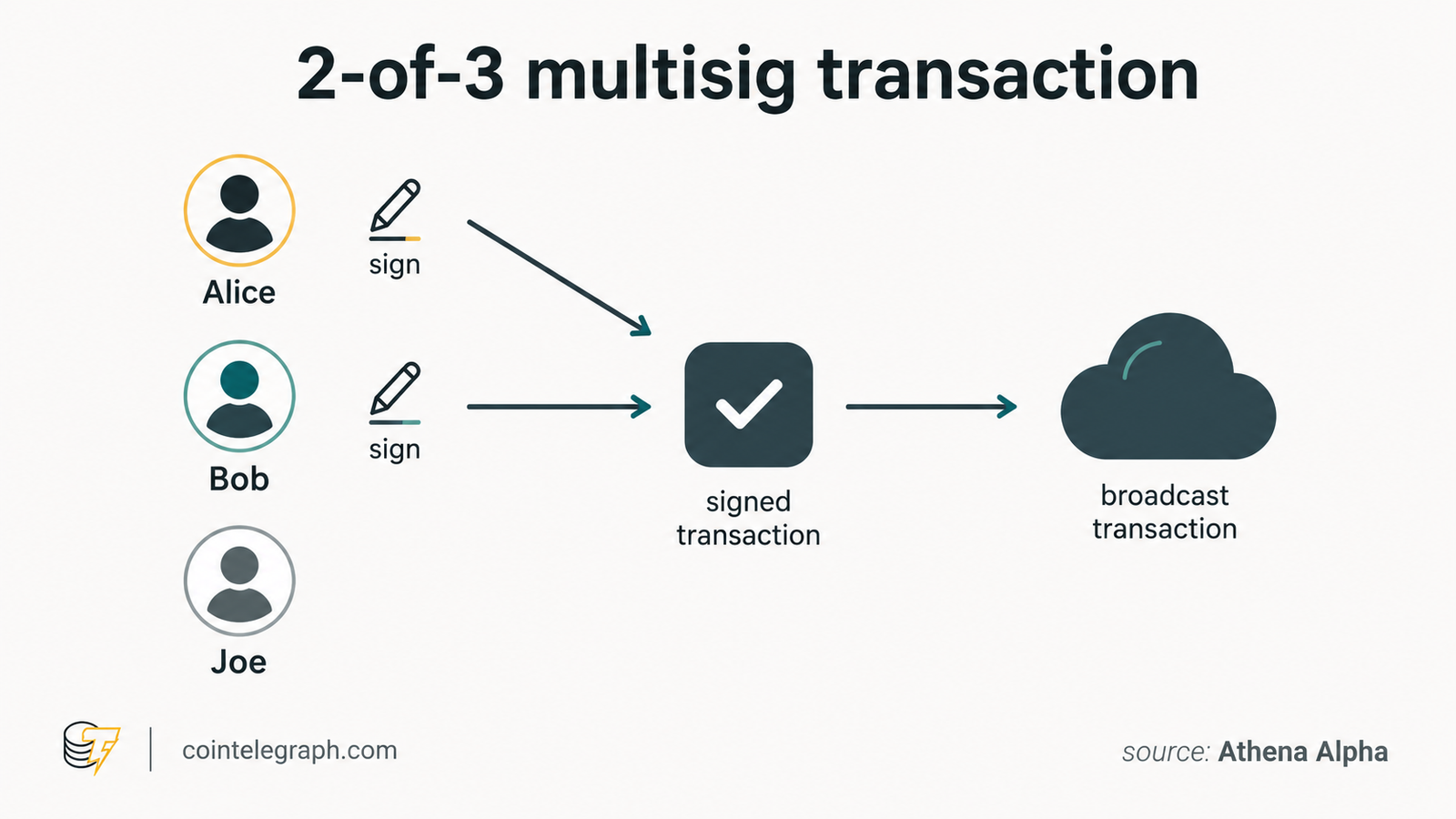
These safeguards recognize a key point: unchecked autonomy creates avoidable risks.
The goal is not to remove human oversight. It is to reduce day-to-day complexity while keeping users in control.
-
The trust issue: Verifying AI actions
One of the biggest challenges for agent-driven systems is trust. How can users confirm that an AI carried out the steps it reported? Did it follow the instructions exactly? Did it change the outcome? Could outside factors have affected its reasoning?
This is where blockchain-based verification tools may become important. A collaboration focused on building a blockchain-supported verification system for AI agents could help address this problem.
Instead of asking users to trust an agent’s claims, platforms could create cryptographic records showing the actions taken, the conditions involved and the results.
These records would create a verifiable log of machine behavior. In major financial settings, such proof could become as important as the transaction itself.
An AI agent saying, “I completed the transaction,” may not be enough.
Users and organizations may increasingly require records showing that the transaction happened exactly as instructed.
-
New risks when AI gets spending power
Giving software control over financial tasks creates new risks. Even small mistakes can have real financial consequences.
One concern is transaction errors. An AI agent could misunderstand user instructions, choose the wrong contract address or make poor decisions based on limited data. Prompt injection attacks pose another risk.
Malicious commands hidden in websites, files or programs could push an agent in unexpected directions. A tool meant to help users could be redirected into creating harmful transactions.
The wallet infrastructure itself also becomes a target. Attackers could try to steal the credentials that control agent operations, especially if those agents manage large assets or organizational treasuries.
Risks also extend into DeFi. Agents might interact with malicious protocols, grant risky permissions or fall victim to advanced scams that exploit automated decision-making.
A major risk is psychological rather than purely technical. As AI systems appear more capable, users may rely on them too much and approve suggestions without proper review.
Automation can improve efficiency, but it can also create complacency.
Did you know? While Bitcoin is often called digital gold, stablecoins could become the preferred currency for AI agents because predictable prices make budgeting and automated payments much easier.
-
The future may involve bounded autonomy
A future where fully autonomous AI controls unlimited funds is less likely. Instead, the next phase will likely center on bounded autonomy.
Humans define goals, set clear boundaries and decide spending limits. They choose approved counterparties and set up emergency stop mechanisms.
Agents then handle routine tasks within those limits. They watch market movements, improve workflows, prepare reports and manage recurring financial operations.
This is similar to the role of a junior financial assistant. Tasks are handed over, but full freedom is never granted.
As reliability improves and safeguards become stronger, those tasks could expand. Still, meaningful oversight is likely to remain a central part of the system.
-
Could AI agents eventually trade with one another?
The possibilities become more interesting when machines trade directly with one another. An AI agent might buy specialized data streams from another provider, pay for computing power or subscribe to advanced APIs without human involvement.
Agents could also hire other agents for specific tasks. One system might discuss terms, assign analysis work and complete payments on its own through stablecoins or other digital assets.
In this setting, wallets become more than stores of value. They act as machine identities that can take part in digital marketplaces. Still, major questions remain.
Who is responsible when independent systems agree to poor terms? How should disputes be handled? What legal status should machine participants receive?
Technology can move quickly, while institutions often change more slowly.
Read the full article here
Fact Checker
Verify the accuracy of this article using AI-powered analysis and real-time sources.