Close Menu
FSNN | Free Speech News NetworkFSNN | Free Speech News Network
  • Home
  • News
    • Politics
    • Legal & Courts
    • Tech & Big Tech
    • Campus & Education
    • Media & Culture
    • Global Free Speech
  • Opinions
    • Debates
  • Video/Live
  • Community
  • Freedom Index
  • About
    • Mission
    • Contact
    • Support
Trending

XXI higher by 8% on merger plans with Strike and bitcoin miner Elektron Energy

3 minutes ago

RealOpen and TRON verify $9.4M in USDT for crypto-enabled real estate purchases

4 minutes ago

Labor Department Launches AI Apprenticeship Portal as Trump Admin Continues AI Policy Push

9 minutes ago
Facebook X (Twitter) Instagram
Facebook X (Twitter) Discord Telegram
FSNN | Free Speech News NetworkFSNN | Free Speech News Network
Market Data Newsletter
Wednesday, April 29
  • Home
  • News
    • Politics
    • Legal & Courts
    • Tech & Big Tech
    • Campus & Education
    • Media & Culture
    • Global Free Speech
  • Opinions
    • Debates
  • Video/Live
  • Community
  • Freedom Index
  • About
    • Mission
    • Contact
    • Support
FSNN | Free Speech News NetworkFSNN | Free Speech News Network
Home»News»Global Free Speech»Vietnam sentences journalist Huynh Ngoc Tuan to 8½ years for anti-state propaganda
Global Free Speech

Vietnam sentences journalist Huynh Ngoc Tuan to 8½ years for anti-state propaganda

News RoomBy News Room4 weeks agoNo Comments2 Mins Read117 Views
Share Facebook Twitter Pinterest Copy Link LinkedIn Tumblr Email VKontakte Telegram
Vietnam sentences journalist Huynh Ngoc Tuan to 8½ years for anti-state propaganda
Share
Facebook Twitter Pinterest Email Copy Link

Listen to the article

0:00
0:00

Key Takeaways

Playback Speed

Select a Voice

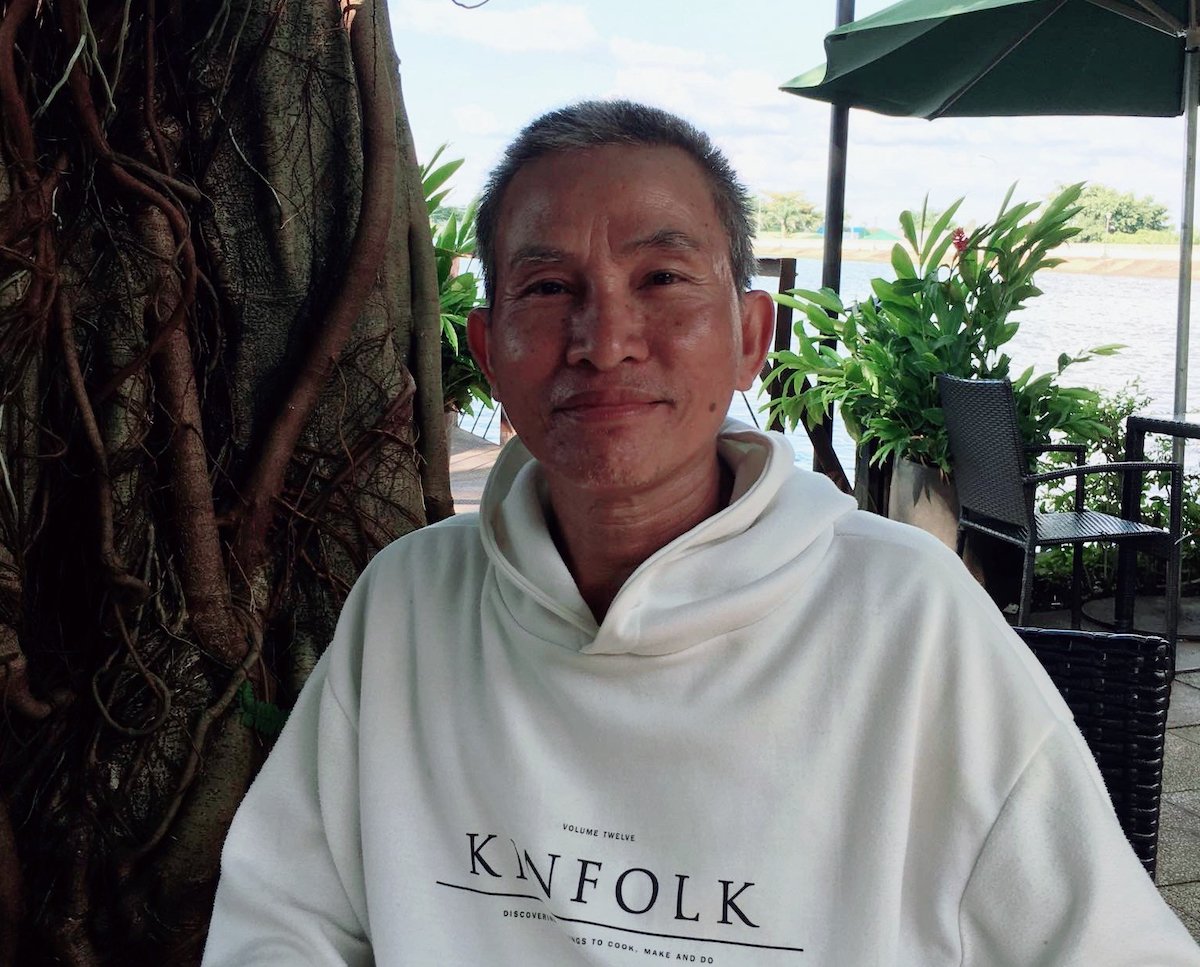
Bangkok, April 2, 2026—The Committee to Protect Journalists condemns Thursday’s sentencing of Vietnamese journalist Huynh Ngoc Tuan to eight years and six months in prison under a criminal provision that bars “propagandizing against the state.”

The People’s Court of Dak Lak Province ruled that 11 of Tuan’s live videos and 21 Facebook posts were defamatory, spread false information, and undermined trust in the ruling Communist party and state, the journalist’s daughter, Huynh Thuc Vy, told CPJ and state media reported.

Tuan, who regularly posts commentary on Vietnamese politics, human rights, and international affairs, was convicted under Article 117 of the penal code.

“Vietnamese authorities have once again weaponized vague propaganda laws to silence a reporter whose only offense is speaking truth to power,” said Shawn Crispin, CPJ’s senior Southeast Asia representative. “Huynh Ngoc Tuan should be released immediately and unconditionally, and Vietnam must stop using anti-state laws to criminalize journalism.”

Tuan was arrested on October 7, 2025, at his home in Buon Ho town, in central Dak Lak province, and held incommunicado without access to lawyers or outside visitors until April 2’s closed one-day trial, which his family was not informed about in advance, according to Vy. It was not immediately clear whether Tuan intends to appeal the ruling, which includes five years of probation, Vy said.

Tuan and his family have long been targeted for harassment, including home raids, surveillance, confiscation of computers and documents, and travel restrictions, according to Vy, who recently completed two years and nine months in prison for blogging that included a post in which she defaced a Vietnamese flag.

Tuan, who previously served 10 years in prison for his critical writings, has severe diabetes and requires daily insulin shots, Vy told CPJ. He is being held at the Dak Lak Provincial Police Detention Center, she said.

Vietnam’s Ministry of Public Security did not immediately reply to CPJ’s emailed request for comment. 

Vietnam is among the world’s worst jailers of journalists, with 17 currently behind bars, according to CPJ data.

Read the full article here

Fact Checker

Verify the accuracy of this article using AI-powered analysis and real-time sources.

Get Your Fact Check Report

Enter your email to receive detailed fact-checking analysis

5 free reports remaining

Continue with Full Access

You've used your 5 free reports. Sign up for unlimited access!

Already have an account? Sign in here

Share. Facebook Twitter Pinterest LinkedIn Tumblr Email Telegram Copy Link
News Room
  • Website
  • Facebook
  • X (Twitter)
  • Instagram
  • LinkedIn

The FSNN News Room is the voice of our in-house journalists, editors, and researchers. We deliver timely, unbiased reporting at the crossroads of finance, cryptocurrency, and global politics, providing clear, fact-driven analysis free from agendas.

Related Articles

Global Free Speech

Ahmed Shihab-Eldin, subjected to ‘grave violations’ of fundamental rights, has Kuwaiti citizenship revoked

6 hours ago
Global Free Speech

Bahrain sentences photographer Sayed Baqer Al-Kamel to 10 years in prison

9 hours ago
Global Free Speech

“I have been expelled from my country. Stripped of my home, my ability to return, to see loved ones, to visit my mother’s grave. I have nothing but what I carry” – Shchyrakova on her release in 2025 “I am staying in Belarus. I will not run. I am ready to spend time in prison for the chance to live in my homeland.” That was the firm—though now I’m no longer sure it was the right—decision I made after the 2020 presidential election in Belarus, as the machinery of repression began accelerating against journalists, civil society, and, more broadly, anyone unwilling to accept dictatorship, violence, and systemic human rights abuses. For the next two years, I lived in a constant, suffocating anticipation of arrest. Fear became a permanent companion: that at any moment, they would come for me. I listened to every sound outside, watched every movement, wondering if this was it. At home, I kept a “go bag” packed with essentials for prison. Paradoxically, this anticipation sharpened my sense of life. Every day of freedom felt like a gift. Conversations with my son, meetings with friends, walks with my dog—all carried the weight of possible finality. It was a kind of anxious happiness. At the beginning of 2022, for safety reasons, I left journalism and began pursuing long-postponed ambitions: studying psychology and working on ethnographic photography projects. These gave meaning to my days and dulled the fear—but never fully. So when they finally came, on a grey, freezing December morning, I felt something unexpected: relief. The waiting was over. I was charged with “discrediting the Republic of Belarus”—for expressing critical views about Alyaksandr Lukashenka, the government, and security forces during an interview. Later, another equally absurd criminal charge was added. During the investigation, I was held in a pre-trial detention center in my hometown of Homel. Cells held six to eight women—cramped spaces with barred windows offering only a sliver of sky. We were allowed outside for one hour a day, into a small concrete yard enclosed by bars overhead. Books became a lifeline. From the prison library and bookshop, I managed to access literature that helped me endure. One book in particular—Viktor Frankl’s Man’s Search for Meaning—became essential. A survivor of Nazi concentration camps, Frankl argued that survival depends on finding meaning even in suffering. I found mine in self-education: psychology, foreign languages, the prison system, and the social realities revealed in conversations with fellow inmates. Seven months later, my trial began. But calling it a trial is misleading—it was a performance of justice, not justice itself. The outcome was predetermined. There was no point in proving innocence or invoking constitutional rights to free expression. The sentence: three and a half years in prison. I chose not to appeal. I had no faith in the system and no desire to prolong my imprisonment. Life in the penal colony Penal colony no. 4 in Homel where Larysya was detained The first week in the colony felt almost euphoric. I could walk without escort, hands at my sides, see the open sky without bars, notice trees, flowers, grass. Then reality set in. Daily life became monotonous and harsh: strict regime, discrimination against political prisoners, constant uncertainty, forced labour six days a week in a sewing factory for negligible pay, and toxic interpersonal dynamics. One of the hardest aspects was the lack of personal space—living among 90 other women under constant psychological strain. There were mandatory screenings of propaganda films, including graphic World War II footage—violence, suffering, mass death—that was mentally overwhelming. The rules were often arbitrary and absurd. I resisted where I could. Sharing food or belongings with others was forbidden—I did it anyway, risking punishment. Studying foreign languages or psychology was effectively banned—the relevant books removed from the library—but I found ways to continue learning. Communication between political prisoners from different units was prohibited—I maintained contact, exchanged information, even smuggled notes hidden in clothing. I never stopped being a journalist. I spoke with inmates and staff—essentially conducting interviews—gathering and analysing stories, discussing them with others. The only thing I lacked was the ability to publish. Behind each prisoner’s story were broader social issues: addiction, domestic violence, lack of parental care, poor communication skills, low stress resilience. I observed firsthand how the penitentiary system functioned—archaic, punitive, and ineffective in rehabilitation. One of the few opportunities for expression came through cultural events, especially group discussions of films. War films became an opportunity to indirectly criticise Russia’s war against Ukraine. I spoke openly: war is not heroic—it is violence, suffering, death. These were, unmistakably, pacifist statements about the present. During a discussion about Alexander Pushkin, I recited poetry about freedom, dignity, and resistance to tyranny—words that resonated deeply with fellow political prisoners. Not all such moments went unnoticed. During a discussion titled “healthy family,” I spoke out against discrimination toward LGBTQ+ people, arguing for equality and the right to marriage. I was stopped mid-speech—but the consequences followed: a month of cleaning toilets and corridors, and transfer to another unit. Political prisoners were forced to work six days a week in a sewing factory for negligible pay Pardon and exile My release through a presidential pardon was not entirely unexpected. Even before my arrest, I believed I would not serve the full term. The regime has a history of using political prisoners as bargaining chips. In summer 2025 there were negotiations involving US envoy John Coale and Alyaksandr Lukashenka. As a result, in exchange for sanctions relief 14 people were pardoned. On 10 September 2025, I was summoned and asked to write a pardon request. That evening, I was told to pack my belongings. The next morning, masked KGB officers transported us (four women from the colony) in a minibus. No explanations, no consent. Like cargo. Five hours later, we reached the Lithuanian border. John Coale welcomed us (52 political prisoners from different colonies), expressing sympathy and acknowledging our suffering. For the first time in nearly three years, we were treated with dignity. In Vilnius, a crowd gathered—activists, journalists, strangers who cared. I stood there in prison clothes, exhausted, disoriented, thinking: “I have been expelled from my country. Stripped of my home, my ability to return, to see loved ones, to visit my mother’s grave. I have nothing but what I carry.” And yet— I will return. I will return to a free Belarus. Until then, I live in Poland. I plan to return to journalism and continue my work in ethnographic photography. Life goes on. And the suffering—mine and that of many others—was not in vain. Freedom never comes without a price. READ MORE

12 hours ago
Global Free Speech

Indian police invoke anti-terror law to unmask anonymous news handle TeluguScribe

18 hours ago
Global Free Speech

CPJ joins call for Turkey to repeal disinformation law for its use against journalists

1 day ago
Global Free Speech

Belarus frees journalist Andrzej Poczobut 

1 day ago
Add A Comment

Comments are closed.

Editors Picks

RealOpen and TRON verify $9.4M in USDT for crypto-enabled real estate purchases

4 minutes ago

Labor Department Launches AI Apprenticeship Portal as Trump Admin Continues AI Policy Push

9 minutes ago

EFF Submission to UN Report on the Role of Media in the Context of Israel’s Policies Toward Palestinians

29 minutes ago

Is Reason’s Video on Climate Change Alarmism a ‘Masterclass in Manipulation’?

43 minutes ago
Latest Posts

Tech giants double down on AI as earnings reveal growth gains and rising costs

1 hour ago

Stable Sea Adds WisdomTree Tokenized Treasury Fund for Corporate Cash

1 hour ago

Mayo Clinic Says AI Can Detect Pancreatic Cancer Years Before Human Doctors

1 hour ago

Subscribe to News

Get the latest news and updates directly to your inbox.

At FSNN – Free Speech News Network, we deliver unfiltered reporting and in-depth analysis on the stories that matter most. From breaking headlines to global perspectives, our mission is to keep you informed, empowered, and connected.

FSNN.net is owned and operated by GlobalBoost Media
, an independent media organization dedicated to advancing transparency, free expression, and factual journalism across the digital landscape.

Facebook X (Twitter) Discord Telegram
Latest News

XXI higher by 8% on merger plans with Strike and bitcoin miner Elektron Energy

3 minutes ago

RealOpen and TRON verify $9.4M in USDT for crypto-enabled real estate purchases

4 minutes ago

Labor Department Launches AI Apprenticeship Portal as Trump Admin Continues AI Policy Push

9 minutes ago

Subscribe to Updates

Get the latest news and updates directly to your inbox.

© 2026 GlobalBoost Media. All Rights Reserved.
  • Privacy Policy
  • Terms of Service
  • Our Authors
  • Contact

Type above and press Enter to search. Press Esc to cancel.

🍪

Cookies

We and our selected partners wish to use cookies to collect information about you for functional purposes and statistical marketing. You may not give us your consent for certain purposes by selecting an option and you can withdraw your consent at any time via the cookie icon.

Cookie Preferences

Manage Cookies

Cookies are small text that can be used by websites to make the user experience more efficient. The law states that we may store cookies on your device if they are strictly necessary for the operation of this site. For all other types of cookies, we need your permission. This site uses various types of cookies. Some cookies are placed by third party services that appear on our pages.

Your permission applies to the following domains:

  • https://fsnn.net
Necessary
Necessary cookies help make a website usable by enabling basic functions like page navigation and access to secure areas of the website. The website cannot function properly without these cookies.
Statistic
Statistic cookies help website owners to understand how visitors interact with websites by collecting and reporting information anonymously.
Preferences
Preference cookies enable a website to remember information that changes the way the website behaves or looks, like your preferred language or the region that you are in.
Marketing
Marketing cookies are used to track visitors across websites. The intention is to display ads that are relevant and engaging for the individual user and thereby more valuable for publishers and third party advertisers.