Close Menu
FSNN | Free Speech News NetworkFSNN | Free Speech News Network
  • Home
  • News
    • Politics
    • Legal & Courts
    • Tech & Big Tech
    • Campus & Education
    • Media & Culture
    • Global Free Speech
  • Opinions
    • Debates
  • Video/Live
  • Community
  • Freedom Index
  • About
    • Mission
    • Contact
    • Support
Trending

The Cornell Rape Lawsuit Is Fueling a Deranged Social Media Mob

4 minutes ago

Ethereum’s zkAPI brings privacy-preserving API payments to mainnet

22 minutes ago

U.S. Troops Finally Leave Iraq. When Are They Leaving the Rest of the Middle East?

1 hour ago
Facebook X (Twitter) Instagram
Facebook X (Twitter) Discord Telegram
FSNN | Free Speech News NetworkFSNN | Free Speech News Network
Market Data Newsletter
Friday, October 2
  • Home
  • News
    • Politics
    • Legal & Courts
    • Tech & Big Tech
    • Campus & Education
    • Media & Culture
    • Global Free Speech
  • Opinions
    • Debates
  • Video/Live
  • Community
  • Freedom Index
  • About
    • Mission
    • Contact
    • Support
FSNN | Free Speech News NetworkFSNN | Free Speech News Network
Home»News»Media & Culture»U.S. Troops Finally Leave Iraq. When Are They Leaving the Rest of the Middle East?
Media & Culture

U.S. Troops Finally Leave Iraq. When Are They Leaving the Rest of the Middle East?

News RoomBy News Room1 hour agoNo Comments5 Mins Read1 Views
Share Facebook Twitter Pinterest Copy Link LinkedIn Tumblr Email VKontakte Telegram
U.S. Troops Finally Leave Iraq. When Are They Leaving the Rest of the Middle East?
Share
Facebook Twitter Pinterest Email Copy Link

Listen to the article

0:00
0:00

Key Takeaways

Playback Speed

Select a Voice

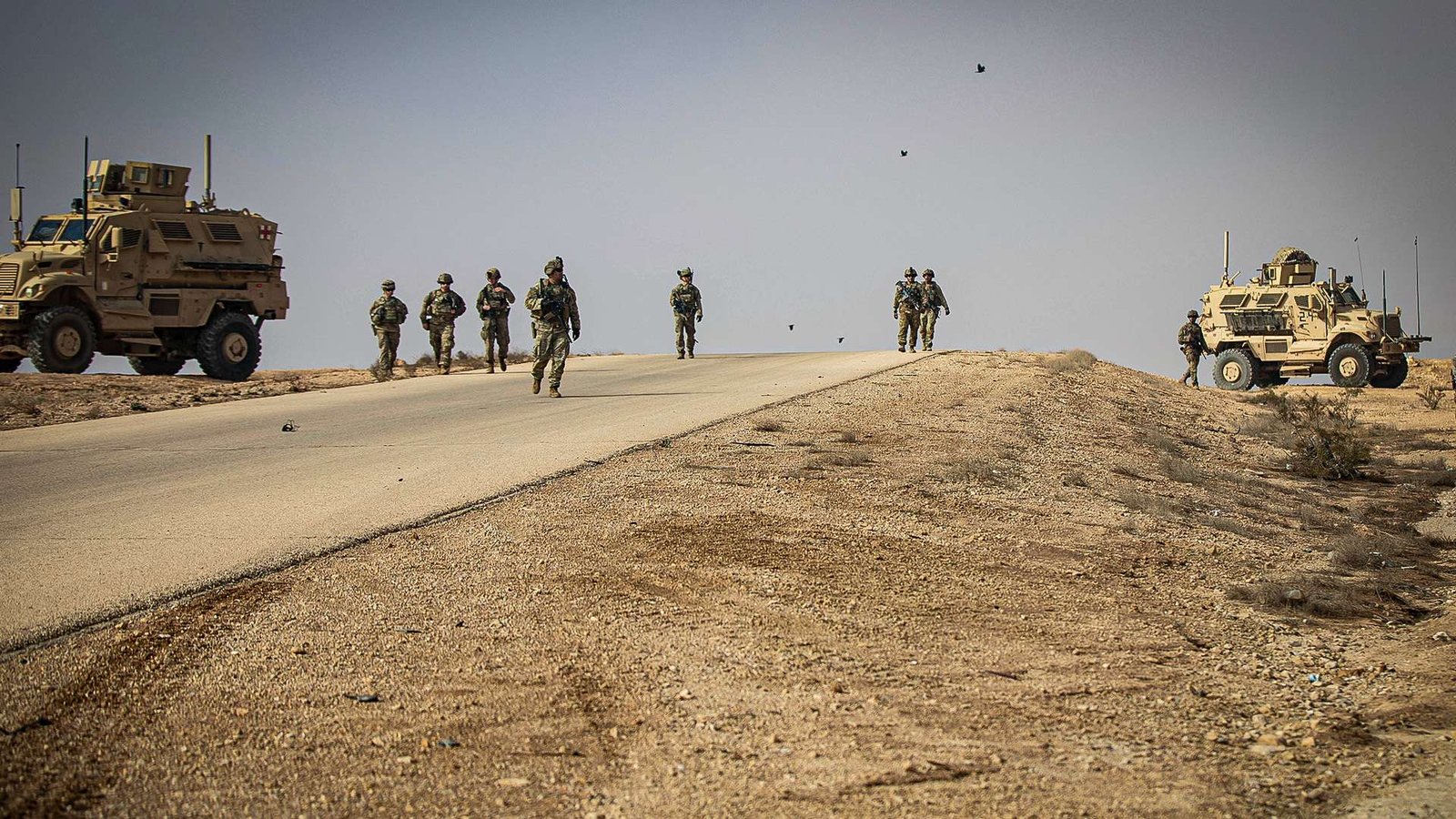
On Wednesday, Erbil Air Base in northern Iraq witnessed something remarkable: the final withdrawal of U.S. soldiers from the country. 

The exodus marked the end of more than two decades of U.S. intervention in Iraq, which began when President George W. Bush sent some 150,000 soldiers into the country to depose Saddam Hussein’s regime in 2003. Despite Bush’s infamously premature declaration of victory in May 2003, tens of thousands of U.S. forces spent the next eight years battling insurgents across the destabilized country. That war led to the deaths of 4,500 U.S. soldiers and over 120,000 Iraqi civilians. The U.S. withdrew the last of its soldiers from the conflict in December 2011, in a brief pause in the intervention. Just three years later, thousands of U.S. troops returned as part of Operation Inherent Resolve (OIR)—an international coalition meant to combat and contain the Islamic State group (I.S.) in the country—to support Iraqi and Kurdish soldiers, where they have remained for the past 12 years. 

The I.S. had lost all territorial holdings in Iraq by late 2017, which has muddied the justification for the OIR’s continuation, as the coalition took on a more training-focused role. Meanwhile, U.S. forces in Iraq have been increasingly targeted by Iranian-aligned militias in the country, a major concern for both the U.S. and the Iraqi government.

Jon Hoffman, a Middle East expert at the Cato Institute, tells Reason that the bases in Iraq have served as little more than a target for Iranian-backed attacks. He argues that the OIR had long overstayed its stated purpose of combating the I.S. and had turned counterproductive.

Keeping the troops there “presents terrorist organizations with a pretty immediate target,” says Hoffman. It also “fuels many of these grievances that allow [anti-U.S. groups] to recruit.”

This point rings true, especially since the October 7, 2023, attack on Israel and the ensuing escalations across the Middle East. The Congressional Research Service found that from October 2023 to February 2024, U.S. bases in Iraq and Syria were targeted by over 60 drone and missile attacks, most of which came from Iranian-aligned militias in Iraq, many of whom are members of the Popular Mobilization Forces (PMF).

These attacks on U.S. bases prompted counterattacks, transforming parts of Iraq back into a war zone. After a round of these attacks in 2023, the Iraqi prime minister condemned the Iranian-aligned militias and the U.S., saying, “such attacks…infringe upon Iraq’s sovereignty.” This prompted the Biden administration to negotiate a deal in 2024 to conclude the OIR in Iraq. Wednesday’s withdrawal was following through on that agreement.

“October 1 will be a new day in the course of the Iraqi state, with the country free of any foreign military presence and the completion of national sovereignty over its territory,” Iraqi Prime Minister Ali al-Zaidi said in a statement. 

While al-Zaidi has praised the removal of foreign forces as a boost to Iraq’s sovereignty, some experts worry it could also undermine it. “The issue of the militias…is chronic and will remain a major threat to the sovereignty of the Iraqi state,” Kamaran Pahlani, an expert at the Middle East Peace and Security Forum in Kurdistan, tells Reason. 

His concerns are well-founded; the PMF in Iraq numbers around 238,000, comparable in size to the Iraqi Armed Forces, and earlier agreed deadlines for disarming the militias have been delayed. The withdrawal could also present challenges to the Kurdistan Regional Government (KRG), whose people suffered genocidal violence at the hands of the I.S. when it rose to power. 

“The conditions are now different, but the fear is still there,” says Pahlani.

These concerns could be addressed beyond continued military occupation, though. “The US has significant tools at its disposal beyond security and war,” says Pahlani. Hoffman agrees, saying of the KRG’s potential concerns, “This is a diplomatic issue; this isn’t a military issue.”

That’s true. As the years since the U.S. first invaded Iraq have shown, securing Iraq’s internal sovereignty and crushing sectarian militias may not be a task the U.S. military can—or should—take on. “This idea that now we have to remain in the Middle East to politically engineer the region’s politics…is a recipe for indefinite entrapment,” says Hoffman.

While Wednesday’s withdrawal means America is out of Iraq for now, the U.S. has ramped up its more sizable deployments in neighboring countries. The OIR is still active and now headquartered in Jordan. Some 50,000 other troops across dozens of bases—from the Mediterranean Sea to the Persian Gulf—were positioned in the region as of August, fighting the ongoing war with Iran. Defense Secretary Pete Hegseth recently extended these forward deployments to last well into 2027. All this activity practically guarantees the United States will find itself back in a forever war. As Hoffman points out: “Our very military presence in the region makes it far too easy to reach for the use of force as the default tool.”

Still, the withdrawal is a step in the right direction; every U.S. soldier who is not in the Middle East is one less target for our enemies, one less occupier to radicalize locals, and one less weapon for the government to wield.

Read the full article here

Fact Checker

Verify the accuracy of this article using AI-powered analysis and real-time sources.

Get Your Fact Check Report

Enter your email to receive detailed fact-checking analysis

5 free reports remaining

Continue with Full Access

You've used your 5 free reports. Sign up for unlimited access!

Already have an account? Sign in here

#Democracy #MediaBias #PoliticalDebate #PoliticalMedia #PoliticalNews
Share. Facebook Twitter Pinterest LinkedIn Tumblr Email Telegram Copy Link
News Room
  • Website
  • Facebook
  • X (Twitter)
  • Instagram
  • LinkedIn

The FSNN News Room is the voice of our in-house journalists, editors, and researchers. We deliver timely, unbiased reporting at the crossroads of finance, cryptocurrency, and global politics, providing clear, fact-driven analysis free from agendas.

Related Articles

Media & Culture

The Cornell Rape Lawsuit Is Fueling a Deranged Social Media Mob

4 minutes ago
Media & Culture

Woman Who Served ~20 Years for Killing 3-Year-Old Daughter Can’t Get Conviction Sealed and Anonymized

2 hours ago
Debates

Sceptic vs. ‘Doomer’: How Scared Should We Be of Rogue AI?

2 hours ago
Media & Culture

Buschbacher: Did Prof. Adler File His Amicus Brief for the Wrong Side in Suncor?

3 hours ago
Debates

Trauma Culture and Catherine Liu’s ‘Traumatized’

3 hours ago
Cryptocurrency & Free Speech Finance

OpenAI Fires Three Safety Researchers Over Alleged Leak to Outside Group

3 hours ago
Add A Comment
Leave A Reply Cancel Reply

Editors Picks

Ethereum’s zkAPI brings privacy-preserving API payments to mainnet

22 minutes ago

U.S. Troops Finally Leave Iraq. When Are They Leaving the Rest of the Middle East?

1 hour ago

SEC Proposes Easing Crypto Custody Rules for Advisers

1 hour ago

Woman Who Served ~20 Years for Killing 3-Year-Old Daughter Can’t Get Conviction Sealed and Anonymized

2 hours ago
Latest Posts

Sceptic vs. ‘Doomer’: How Scared Should We Be of Rogue AI?

2 hours ago

NEAR Intents says its identified the hacker, gives 48-hour ultimatum

2 hours ago

Buschbacher: Did Prof. Adler File His Amicus Brief for the Wrong Side in Suncor?

3 hours ago

Subscribe to News

Get the latest news and updates directly to your inbox.

At FSNN – Free Speech News Network, we deliver unfiltered reporting and in-depth analysis on the stories that matter most. From breaking headlines to global perspectives, our mission is to keep you informed, empowered, and connected.

FSNN.net is owned and operated by GlobalBoost Media
, an independent media organization dedicated to advancing transparency, free expression, and factual journalism across the digital landscape.

Facebook X (Twitter) Discord Telegram
Latest News

The Cornell Rape Lawsuit Is Fueling a Deranged Social Media Mob

4 minutes ago

Ethereum’s zkAPI brings privacy-preserving API payments to mainnet

22 minutes ago

U.S. Troops Finally Leave Iraq. When Are They Leaving the Rest of the Middle East?

1 hour ago

Subscribe to Updates

Get the latest news and updates directly to your inbox.

© 2026 GlobalBoost Media. All Rights Reserved.
  • Privacy Policy
  • Terms of Service
  • Our Authors
  • Contact

Type above and press Enter to search. Press Esc to cancel.

🍪

Cookies

We and our selected partners wish to use cookies to collect information about you for functional purposes and statistical marketing. You may not give us your consent for certain purposes by selecting an option and you can withdraw your consent at any time via the cookie icon.

Cookie Preferences

Manage Cookies

Cookies are small text that can be used by websites to make the user experience more efficient. The law states that we may store cookies on your device if they are strictly necessary for the operation of this site. For all other types of cookies, we need your permission. This site uses various types of cookies. Some cookies are placed by third party services that appear on our pages.

Your permission applies to the following domains:

  • https://fsnn.net
Necessary
Necessary cookies help make a website usable by enabling basic functions like page navigation and access to secure areas of the website. The website cannot function properly without these cookies.
Statistic
Statistic cookies help website owners to understand how visitors interact with websites by collecting and reporting information anonymously.
Preferences
Preference cookies enable a website to remember information that changes the way the website behaves or looks, like your preferred language or the region that you are in.
Marketing
Marketing cookies are used to track visitors across websites. The intention is to display ads that are relevant and engaging for the individual user and thereby more valuable for publishers and third party advertisers.