

 Freedom Index
Listen to the article
The latest holding pattern for the bill to fully insert the crypto sector into the U.S. financial system was centered on Senator Thom Tillis’ request that bankers get more time to negotiate the Digital Asset Market Clarity Act’s approach on the contentious topic of stablecoin rewards. That may be over.
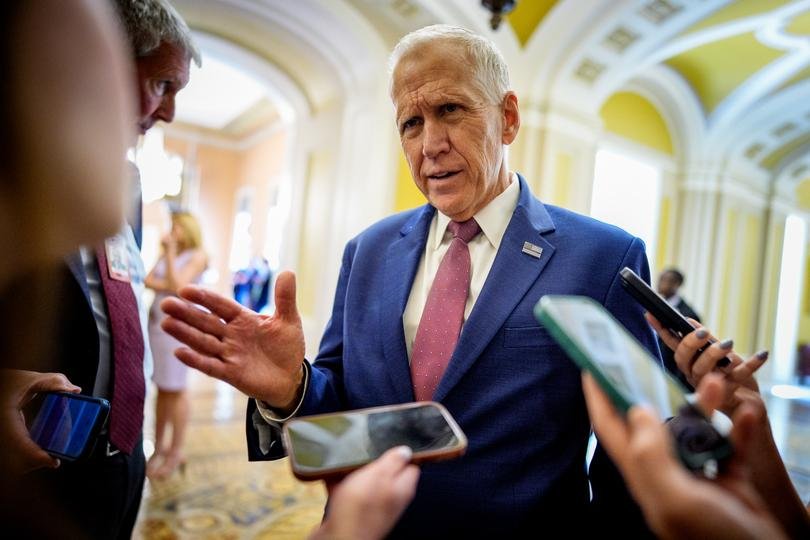
Tillis told reporters on Wednesday that the work on the Clarity Act — the industry’s top objective in Washington — has “addressed a lot of the concerns” of the banking lobbyists who have been defending the turf of interest-bearing deposits they argued could be threatened by stablecoin yield. The Republican lawmaker said, “I’m going to encourage the chair to move forward with the markup,” according to a Fox Business transcript of the remarks.
That could throw open the chance for a mid-May hearing of the Senate Banking Committee, which needs to advance the legislation before a final version can be hashed out for a vote of the overall Senate. If anything else gets in the way of that timing, it could be fatal for the 2026 Clarity Act, because the remaining Senate schedule has little room for flexibility.
The legislation faces several hurdles before it can hit President Donald Trump’s desk to be signed into law. First is a so-called markup hearing that gives lawmakers a chance to pursue amendments to the language. Tillis said he intends to give stakeholders a chance to see the compromise text on stablecoin yield days before the hearing, and he welcomed bankers to stay in negotiations if there are other points they want to get across.
“There may be a few more that we can get there, if they want to come and work in good faith,” Tillis said.
Crypto insiders have been critical of the banking industry’s apparent reticence to embrace compromises, as has Trump himself, who said over the weekend that he wouldn’t let bankers ruin the Clarity Act. The industry is taking Tillis’ latest remarks as a positive sign for movement.
“There is more momentum than ever for a markup in May,” said Cody Carbone, CEO of the Digital Chamber that advocates for crypto policy in Washington. “We support getting this bill on the committee calendar as soon as possible, and we are hopeful it will move imminently.”
Other sticky provisions remain to work out, potentially most notably a Democrat-driven section banning government officials from personal business interests in crypto — an effort targeted primarily at Trump and his family, who are heavily engaged in the industry. Tillis has reportedly said he agrees that the bill needs such an ethics requirement, though this issue wouldn’t come up in the Banking Committee’s work.
Another potential hangup that crypto advocates are eyeing is the push from Senator Chuck Grassley, the chairman of the Judiciary Committee, that some aspects of the legislation — including legal protections for decentralized finance (DeFi) developers — ought to pass through his committee.
Any additional delay to the bill will jeopardize its chances to get off the ground, with about 11 weeks remaining open in the Senate calendar before the lawmakers fully disperse for midterm election demands. A Senate passage would then land in the hands of the U.S. House of Representatives, which already passed its own version of the Clarity Act last year. Any uprising among House Republicans could add further issues to the bill’s chances, but advocates are so far counting on the House to approve the Senate’s final product.
The House has recently struggled to reach alignment with Senate efforts, such as over the funding of the Department of Homeland Security.
Read More: Crypto’s great hope in Senate’s Clarity Act still has a path to survive tight calendar
Read the full article here
Fact Checker
Verify the accuracy of this article using AI-powered analysis and real-time sources.