Close Menu
FSNN | Free Speech News NetworkFSNN | Free Speech News Network
  • Home
  • News
    • Politics
    • Legal & Courts
    • Tech & Big Tech
    • Campus & Education
    • Media & Culture
    • Global Free Speech
  • Opinions
    • Debates
  • Video/Live
  • Community
  • Freedom Index
  • About
    • Mission
    • Contact
    • Support
Trending

Elon Musk Becomes the World’s First Trillionaire. Is That Such a Bad Thing?

2 minutes ago

Bitcoin hit bottom at $59,000 marking end to the crypto winter, says Standard Chartered analyst

15 minutes ago

Will Bitcoin’s 200-Week Moving Average Ruin the BTC Price Comeback?

15 minutes ago
Facebook X (Twitter) Instagram
Facebook X (Twitter) Discord Telegram
FSNN | Free Speech News NetworkFSNN | Free Speech News Network
Market Data Newsletter
Friday, June 12
  • Home
  • News
    • Politics
    • Legal & Courts
    • Tech & Big Tech
    • Campus & Education
    • Media & Culture
    • Global Free Speech
  • Opinions
    • Debates
  • Video/Live
  • Community
  • Freedom Index
  • About
    • Mission
    • Contact
    • Support
FSNN | Free Speech News NetworkFSNN | Free Speech News Network
Home»News»Media & Culture»Two Senators Offer a Bipartisan Solution to Censorship by Proxy
Media & Culture

Two Senators Offer a Bipartisan Solution to Censorship by Proxy

News RoomBy News Room17 hours agoNo Comments5 Mins Read519 Views
Share Facebook Twitter Pinterest Copy Link LinkedIn Tumblr Email VKontakte Telegram
Two Senators Offer a Bipartisan Solution to Censorship by Proxy
Share
Facebook Twitter Pinterest Email Copy Link

Listen to the article

0:00
0:00

Key Takeaways

Playback Speed

Select a Voice

President Donald Trump and his allies rightly condemn the Biden administration’s censorial meddling with social media, which sought to suppress constitutionally protected speech that federal officials viewed as dangerous. Trump, who issued an executive order aimed at “restoring freedom of speech and ending federal censorship” on the first day of his second term, promised to end such bullying. Yet he has not been shy about using the influence of his office to restrict speech, as illustrated by his demands that ABC punish late-night comedian Jimmy Kimmel for saying things he did not like.

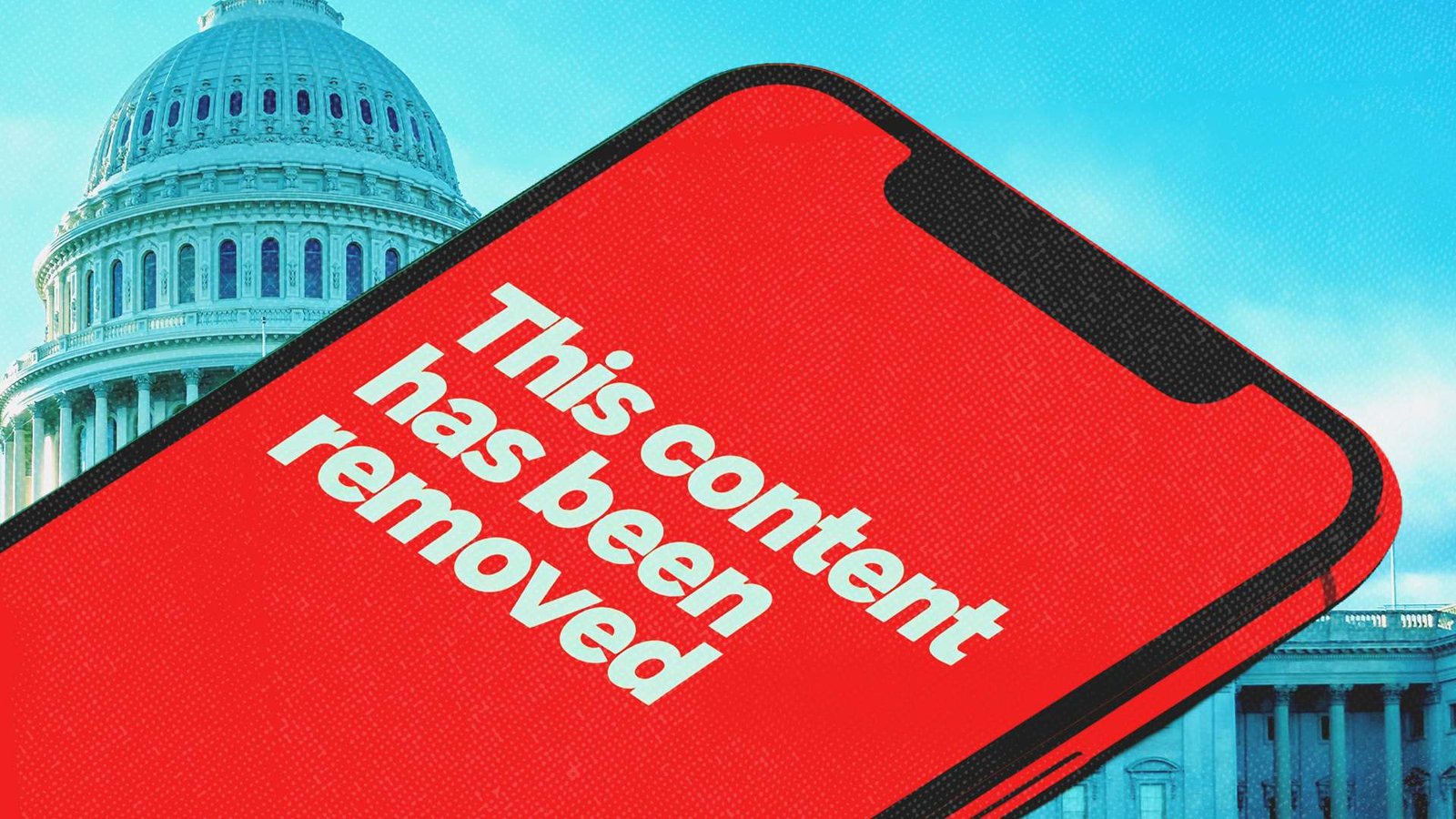
Sens. Ted Cruz (R–Texas) and Ron Wyden (D–Ore.) have teamed up to offer a more consistent and principled response to the dangers of “jawboning,” a form of indirect censorship that operates via government pressure on third parties such as social media platforms and TV networks. On Thursday, Cruz and Wyden introduced the JAWBONE Act, which would allow Americans affected by such pressure to seek damages from officials who exert it.

“JAWBONE” stands for “Justice Against Weaponized Bureaucratic Overreach to Networked Expression.” While that reach for an apt acronym is awkward and barely comprehensible, the bill itself makes considerably more sense.

“Holding the government accountable and giving Americans the tools to fight back is essential,” Cruz says. “The JAWBONE Act ensures the First Amendment is protected, not undermined.” Wyden adds that “nearly all of Americans’ speech—including TV news, online streams and social media—flows through private corporations that are highly susceptible to government pressure.” Since “regular Americans can’t count on those companies to stand up to government jawboning,” he says, “they need a way to level the playing field.”

A summary of the bill says it would create “a cause of action against any government agency or employee that jawbones companies involved in social media, AI, or broadcasting, regardless of whether the jawboning succeeds.” Plaintiffs could seek “money damages and reasonable attorney fees.” The bill also aims to increase transparency and accountability by requiring agencies to publicly disclose relevant communications with “social media companies, AI companies, and broadcasters.”

The JAWBONE Act has been endorsed by a bunch of civil liberties groups, including the American Civil Liberties Union, the Knight First Amendment Institute, the Center for Democracy and Technology, the Institute for Free Speech, Public Knowledge, Americans for Tax Reform, the Internet Accountability Project, and the Foundation for Individual Rights and Expression (FIRE). The bill “would mark major progress toward addressing indirect and unconstitutional government censorship of Americans’ speech,” FIRE says.

Beginning with the 1963 case Bantam Books v. Sullivan, which involved implied government threats against distributors of “objectionable” books and magazines, the Supreme Court has held that such “informal censorship” violates the First Amendment. The Court reaffirmed that principle in the 2024 case National Rifle Association v. Vullo, which involved a state regulator’s attempts to discourage financial institutions from doing business with the gun rights group. But as illustrated by the outcome in Murthy v. Missouri, which the Court decided a month later, it can be difficult for victims of informal censorship to vindicate their First Amendment rights.

That case involved plaintiffs who claimed their online speech had been suppressed as a result of the Biden administration’s crusade against “misinformation” about COVID-19. But the majority, which questioned the asserted causal link, held that none of the plaintiffs had standing to sue, adding that they had not adequately alleged that they were apt to suffer future injuries in the absence of an injunction.

Under current law, FIRE notes, victims of jawboning face several obstacles. First, they may not know their speech was deleted or downgraded because of covert government pressure. FIRE offers an example: Suppose you criticize the IRS on Facebook, triggering a private demand from an IRS official who says, “Delete this user or we’re going to start launching tax audits of Facebook executives.” Although “your First Amendment rights were violated,” FIRE says, “you have no idea it even happened.” The JAWBONE Act aims to remedy that problem by requiring disclosure of such communications.

Second, FIRE says, “the government can get away with attempted jawboning when the third party does not act.” The JAWBONE Act addresses that issue by allowing lawsuits based on such attempts.

Third, establishing a link between government action and ostensibly private decisions can be challenging, especially when companies that succumb to jawboning are not inclined to cooperate with potential plaintiffs. The JAWBONE Act “makes it easier for plaintiffs to obtain discovery, requiring the government to share more information about their jawboning,” FIRE says. “This will help victims prove their case in court.”

Finally, when jawboning involves federal officials, the statute that authorizes lawsuits alleging violations of constitutional rights, 42 USC 1983, does not apply. The JAWBONE Act fills that gap by expressly allowing lawsuits against federal officials.

“The JAWBONE Act enforces Americans’ First Amendment rights by making clear that the federal government cannot pressure [third parties] to censor speech,” says Greg Y. Gonzalez, FIRE’s legislative counsel. “Multiple administrations of both parties have engaged in jawboning, reflecting a broad and enduring problem. When federal officials cross this line, the JAWBONE Act ensures they can finally be held accountable. It’s a bipartisan solution for a bipartisan problem.”

Read the full article here

Fact Checker

Verify the accuracy of this article using AI-powered analysis and real-time sources.

Get Your Fact Check Report

Enter your email to receive detailed fact-checking analysis

5 free reports remaining

Continue with Full Access

You've used your 5 free reports. Sign up for unlimited access!

Already have an account? Sign in here

#Democracy #MediaAccountability #MediaEthics #NewsAnalysis #PoliticalCoverage
Share. Facebook Twitter Pinterest LinkedIn Tumblr Email Telegram Copy Link
News Room
  • Website
  • Facebook
  • X (Twitter)
  • Instagram
  • LinkedIn

The FSNN News Room is the voice of our in-house journalists, editors, and researchers. We deliver timely, unbiased reporting at the crossroads of finance, cryptocurrency, and global politics, providing clear, fact-driven analysis free from agendas.

Related Articles

Media & Culture

Elon Musk Becomes the World’s First Trillionaire. Is That Such a Bad Thing?

2 minutes ago
Cryptocurrency & Free Speech Finance

Americans Fear Job Losses Due to AI But Hope for Cancer, Alzheimer’s Cures: Anthropic Survey

17 minutes ago
Media & Culture

Maryland Court Rules Against Unconstitutional Stop-and-Frisk in Victory for State’s Gun Owners

1 hour ago
Cryptocurrency & Free Speech Finance

Tennessee Man Indicted for Alleged Crypto Ponzi Scheme That Stole Millions From Investors

1 hour ago
Media & Culture

Bill Introduced That Would Codify The Right To Record Federal Law Enforcement Officers

2 hours ago
Media & Culture

Steven Spielberg’s Disclosure Day Has Some Strange Assumptions About the Media

2 hours ago
Add A Comment
Leave A Reply Cancel Reply

Editors Picks

Bitcoin hit bottom at $59,000 marking end to the crypto winter, says Standard Chartered analyst

15 minutes ago

Will Bitcoin’s 200-Week Moving Average Ruin the BTC Price Comeback?

15 minutes ago

Americans Fear Job Losses Due to AI But Hope for Cancer, Alzheimer’s Cures: Anthropic Survey

17 minutes ago

Maryland Court Rules Against Unconstitutional Stop-and-Frisk in Victory for State’s Gun Owners

1 hour ago
Latest Posts

Ethiopia expels French journalist Augustine Passilly after reporting trip to Tigray

1 hour ago

SpaceX opens at $162 in blockbuster Nasdaq debut

1 hour ago

Sam Bankman-Fried Loses Appeal as Trump Pardon Bid Continues

1 hour ago

Subscribe to News

Get the latest news and updates directly to your inbox.

At FSNN – Free Speech News Network, we deliver unfiltered reporting and in-depth analysis on the stories that matter most. From breaking headlines to global perspectives, our mission is to keep you informed, empowered, and connected.

FSNN.net is owned and operated by GlobalBoost Media
, an independent media organization dedicated to advancing transparency, free expression, and factual journalism across the digital landscape.

Facebook X (Twitter) Discord Telegram
Latest News

Elon Musk Becomes the World’s First Trillionaire. Is That Such a Bad Thing?

2 minutes ago

Bitcoin hit bottom at $59,000 marking end to the crypto winter, says Standard Chartered analyst

15 minutes ago

Will Bitcoin’s 200-Week Moving Average Ruin the BTC Price Comeback?

15 minutes ago

Subscribe to Updates

Get the latest news and updates directly to your inbox.

© 2026 GlobalBoost Media. All Rights Reserved.
  • Privacy Policy
  • Terms of Service
  • Our Authors
  • Contact

Type above and press Enter to search. Press Esc to cancel.

🍪

Cookies

We and our selected partners wish to use cookies to collect information about you for functional purposes and statistical marketing. You may not give us your consent for certain purposes by selecting an option and you can withdraw your consent at any time via the cookie icon.

Cookie Preferences

Manage Cookies

Cookies are small text that can be used by websites to make the user experience more efficient. The law states that we may store cookies on your device if they are strictly necessary for the operation of this site. For all other types of cookies, we need your permission. This site uses various types of cookies. Some cookies are placed by third party services that appear on our pages.

Your permission applies to the following domains:

  • https://fsnn.net
Necessary
Necessary cookies help make a website usable by enabling basic functions like page navigation and access to secure areas of the website. The website cannot function properly without these cookies.
Statistic
Statistic cookies help website owners to understand how visitors interact with websites by collecting and reporting information anonymously.
Preferences
Preference cookies enable a website to remember information that changes the way the website behaves or looks, like your preferred language or the region that you are in.
Marketing
Marketing cookies are used to track visitors across websites. The intention is to display ads that are relevant and engaging for the individual user and thereby more valuable for publishers and third party advertisers.