

 Freedom Index
Listen to the article
President Donald Trump introduced sweeping tariffs last spring, boasting of how they would bolster American manufacturing. On Monday, just over a month before Americans head to the ballot box for the midterms, Trump announced a Minnesota company’s plan to build a $15 billion steel mill in Iowa.
“Mesabi Metallics will be building the largest steel plant in American history,” Trump said in a press conference at the Oval Office. “Once completed, Mesabi Metallics’ new steel plant will produce 10 million tons of steel per year using iron ore from the company’s Minnesota mine.”
Steel imports are currently subject to a 50 percent tariff rate, and unsurprisingly, Republicans are hailing the announcement as an example of tariff success. “This is what happens when you stop apologizing for tariffs and start putting American workers first,” said Vice President J.D. Vance in a post on X. Speaker of the House Mike Johnson (R–La.) shared a similar sentiment: “Thanks to Republicans’ pro growth policies, America is seeing MORE private sector investment in our economy. Mesabi Metallics’ $15 BILLION steel mill will create as many as 1,750 new jobs and help secure our supply chains. All we needed was a new President — and Republicans in charge.”
A new steel mill in Iowa might be evidence that tariffs can protect steel producers, but is that the same as showing that tariffs succeed? To answer that question, you need to look at the broader picture.
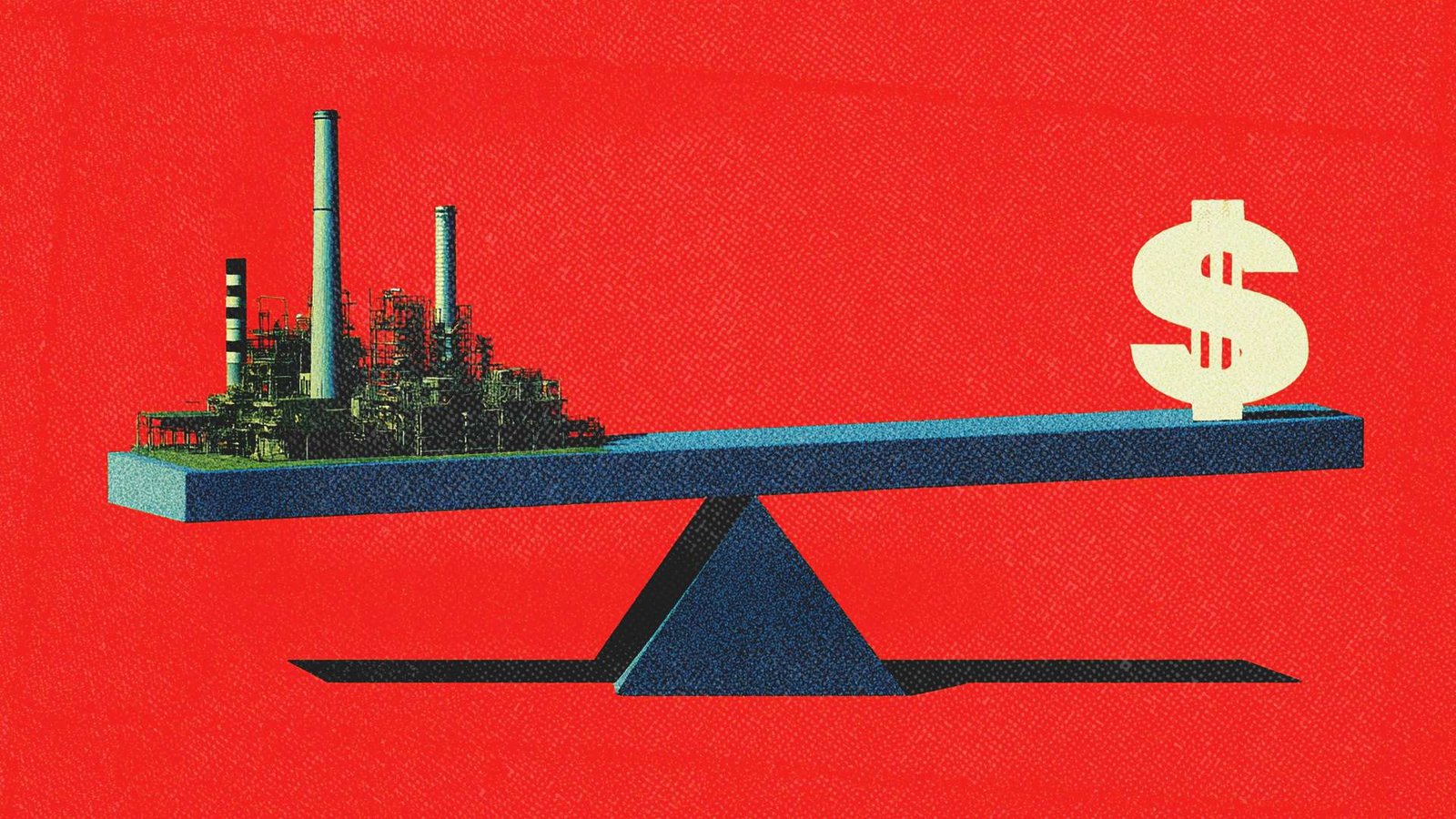
The 50 percent tariff makes an American steel mill more profitable because it raises the price of competing foreign steel, and so it is unsurprising to see domestic steel producers celebrate. Indeed, as Reason’s Eric Boehm noted in 2025, “It should be no surprise that American steelmakers would welcome (and lobby for) more protectionism like this. A tariff artificially inflates the cost of imported steel, which means domestic steel manufacturers face less competition from abroad and can charge higher prices.”
Those higher costs get passed down the supply chain. Steel is now far more expensive in the U.S. since Trump introduced higher tariffs in June 2025, jumping from $993 per metric ton in May 2025 to $1,293 per metric ton as of September 2026, a 30 percent rise. Over the same period, comparable steel in Western Europe rose from $715 to $842 per metric ton, a 17 percent rise—making U.S. steel now roughly 54 percent more expensive. While this means American manufacturers can make more money, it also means that domestic steel consumers must pay higher prices.
“Trump and the tariff fanboys are right that this is a perfect example of tariffs’ effects, but probably not for the reasons they think,” Scott Lincicome, vice president of general economics at the Cato Institute, tells Reason. “We’re paying the world’s highest steel prices today, and have been for years, and will for years. And all we’re getting in exchange is a somewhat empty promise of a new steel mill in Iowa.”
Lincicome argues that higher steel prices also put American manufacturers that use steel at a competitive disadvantage against foreign firms. A U.S. nail manufacturer, for example, may have to buy much more expensive steel than a German competitor, making it harder to compete both at home and abroad. The result, he says, is “cascading protectionism”: Downstream manufacturers then lobby for tariffs of their own. “Today we don’t just have tariffs on steel; we have tariffs on steel nails. We have tariffs on beer kegs and all sorts of other things that use a lot of steel,” he says. Those costs then continue down the supply chain, because “if you’re making nails, you pass them on to homebuilders, and the homebuilders then pass them on to homebuyers,” and “the harms [of protectionism] get broader and bigger.”
Trump also boasted that the Iowa project would “create up to 6,000 new construction jobs” and “nearly 2,000 manufacturing and mining jobs.” Indeed, job creation has been a primary selling point propagated by many of the protectionists in the administration. While employment in construction has increased by 90,000 since the month before the tariffs were introduced, and employment in primary and fabricated metal manufacturing has increased by 31,200 jobs, total manufacturing employment has fallen by 13,000. So, while tariffs have likely redirected resources toward those protected metal industries, they have not resulted in a broader manufacturing revival in America.
The winners from tariffs are easy to identify. Steelmakers get protection from foreign competition, new investment flows into the industry, and politicians get to point to new factories and jobs. The losers are harder to see. The costs are dispersed among manufacturers paying more for steel, consumers paying more for products, and businesses that never expand or hire because their inputs cost more. Indeed, the Peterson Institute for International Economics estimates that protecting steel jobs will cost steel users $650,000 for each new job. It is the familiar problem of concentrated benefits and hidden costs, and government policy picking winners in one industry while shifting the bill elsewhere.
Even the most visible touted benefit is not guaranteed. Lincicome says he’d “be glad to bet anyone out there that in 2030 there will not be a steel plant that is being described right now in Iowa,” calling the announcement “clearly a political messaging stunt right before an election.” Whether or not the plant ultimately materializes, Americans are already footing the bill for higher prices.
Read the full article here
Fact Checker
Verify the accuracy of this article using AI-powered analysis and real-time sources.