

 Freedom Index
Listen to the article
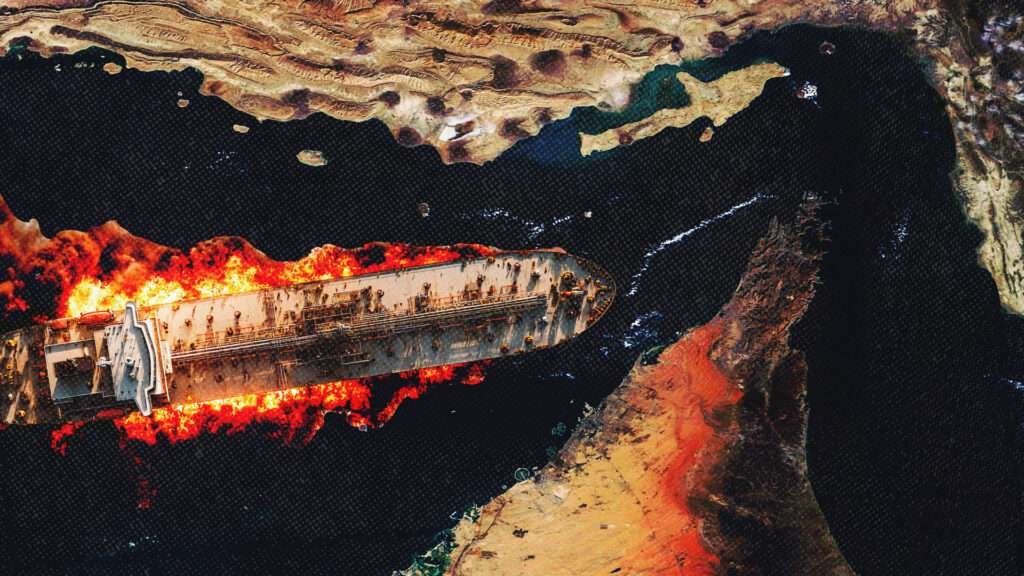
Project Freedom was over before it started. On Sunday night, President Donald Trump announced the U.S. military initiative to guide ships out of the Persian Gulf, where they have been trapped since the U.S.-Iranian war closed the Strait of Hormuz a month ago. On Tuesday night, Trump declared that Project Freedom was “paused” and the U.S. would keep up its blockade of Iranian ports.
The next morning, Trump confusingly wrote that the blockade will be lifted if “Iran agrees to give what has been agreed to, which is, perhaps, a big assumption,” and threatened bombing “at a much higher level and intensity than it was before” if the deal falls through.
U.S. officials told Axios early on Wednesday morning that they are ready to accept a framework for new peace talks. Iran would gradually reopen the strait while the U.S. lifts its blockade, and both sides would have 30 days to negotiate a detailed agreement, which would restrict Iran’s nuclear program in exchange for lifting U.S. economic sanctions. Disarming Iran’s missile forces, which the Trump administration had named as a major war goal, does not seem to be on the table at all.
Those terms were the same ones that Iran had proposed last week. Trump rejected them just before announcing Project Freedom.
A lot has happened in the days since then. The U.S. Navy escorted a ship through the strait and sank several Iranian speedboats harassing shipping. Iran bombed an oil export terminal in the United Arab Emirates and shot a cruise missile at a cargo ship trying to pass through Hormuz, wounding several Filipino sailors. The shipping industry simply did not trust U.S. assurances. Zero ships transited the strait on Tuesday, and dozens of ships actually sailed further away from the strait.
“The security of shipping and energy transport has been jeopardized by the United States and its allies by violating the ceasefire and imposing a blockade,” Iranian Speaker of Parliament Mohammad Bagher Ghalibaf, the country’s head negotiator, stated when Project Freedom began. After it ended, the Iranian navy announced the possibility of “safe, stable passage” through the strait under “new protocols.” A new Iranian government website was created for ship owners to pay ransom.
Despite telling Americans to be patient with the war, Trump himself has been fairly impatient. From the beginning of the war through the current ceasefire, he has repeatedly tried to find one weird trick that will make Iranian leaders fold instantly, saying publicly and privately that it will only take a few days. Iranian leaders, feeling cornered, have instead responded by escalating in return. The result has been a choice between counterescalating at an increasing cost to the U.S. or making concessions to Iran that Trump said he would not make.
After the first round of peace talks in early April didn’t get the results he wanted, Trump ordered the U.S. Navy to turn back all shipping out of Iranian ports. The goal was not only to cut off Iran’s export revenues, but also to force it to shut off its oil wells, a process that could cause permanent damage. Trump’s advisers clearly gave him an overly optimistic timeline. “They say they only have about three days left before that happens. And when it explodes, you can never rebuild it the way it was,” Trump told Fox News two weeks ago.
While the blockade is doing real damage to Iranians’ livelihoods and has led Iran to cut oil production, it didn’t cause the catastrophic collapse within days that Trump was promised. Iran experienced a similar export cut during the coronavirus pandemic and spent the last half-decade overhauling its infrastructure in preparation for another shut-in situation. Still, Trump was confident enough to turn down Iran’s proposal this weekend and try reopening Hormuz by force.
“I will soon be reviewing the plan that Iran has just sent to us, but can’t imagine that it would be acceptable in that they have not yet paid a big enough price for what they have done to Humanity, and the World, over the last 47 years,” Trump said on Saturday. He wanted Iran to surrender on vengeful terms.
Project Freedom instead made the shipping situation in the strait more uncertain and gave Iran a chance to assert its control again. Most alarmingly for countries in the region, the Trump administration declared that Iran bombing the United Arab Emirates was not a ceasefire violation. Less than two hours later, Iranian forces fired at the United Arab Emirates again.
At this point, the 30-day proposal for peace talks is not a bad deal for the United States. It would stop the immediate threat to Americans’ well-being (the closure of the strait) and create a path to resolving the long-term risk to world security (Iran’s nuclear program). But the latter problem was something Iran was already willing to negotiate away before the war, and the former problem didn’t exist at all. Thousands of lives and millions of livelihoods were destroyed to get back to square one.
“Our preference is for these straits to be opened to the way they’re supposed to be open, back to the way it was: Anyone can use it, no mines in the water, nobody paying tolls,” Secretary of State Marco Rubio told reporters on Tuesday. “That’s what we have to get back to and that’s the goal here.”
Read the full article here
Fact Checker
Verify the accuracy of this article using AI-powered analysis and real-time sources.